

Wild, Queer, and Unforgettable: Saying Goodbye to ‘Yellowjackets’
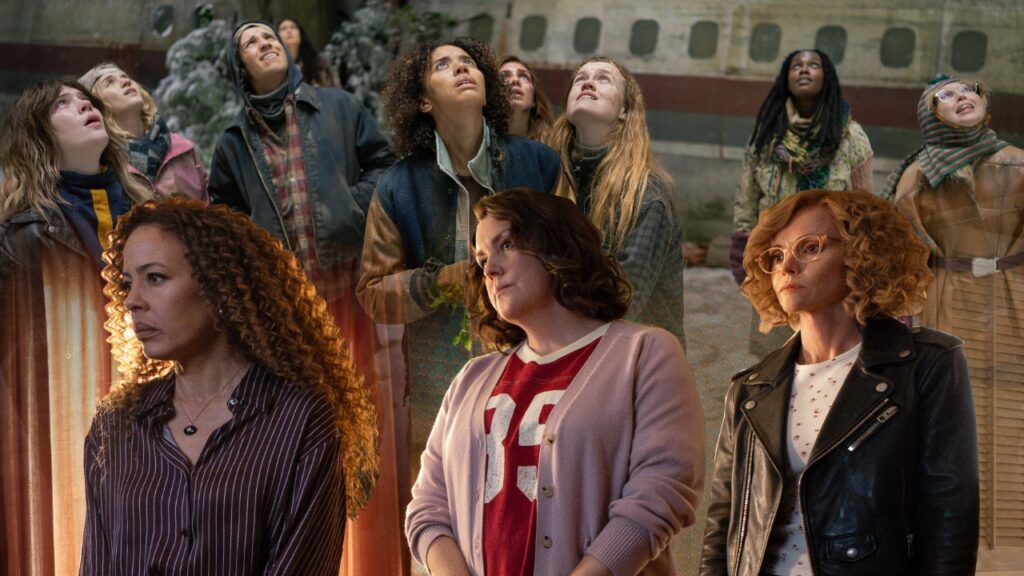
The cast and creators reflect on four seasons of wilderness horrors, queer joy, complicated women, and the bonds that will last long after the final episode.
This week marks the beginning of the end of Yellowjackets, bringing with it a mixture of bittersweet goodbyes and, finally, at long last, we hope, some answers to the mysteries of what really happened to the girls in the wilderness and how that experience will ultimately shape their fates as adults.
But what truly sets Yellowjackets apart is its incredible cast of characters, both young and grown. They’re complicated, messy, volatile, and sometimes downright monstrous. Allowing women to be all of those things is precisely what makes the series so rare.
Melanie Lynskey, who plays perhaps the most chaotic character, Shauna, as an adult, couldn’t agree more. “I love being part of something that’s transgressive. I wish it weren’t quite as transgressive as it is because I wish there were more representation,” Lynskey tells GO. She hopes it sparks more storytelling like Yellowjackets. “I just wish there were more queer stories. I wish there were more female-driven stories on television. I wish there were more stories about women who are absolutely nuts,” she says.
Beyond the mystery and intrigue, the richness of the storytelling in Yellowjackets in no small part comes from the show’s exploration of how girlhood experiences and trauma continue to shape the characters’ identities into adulthood. There is no question that the girls remain haunted in the present.
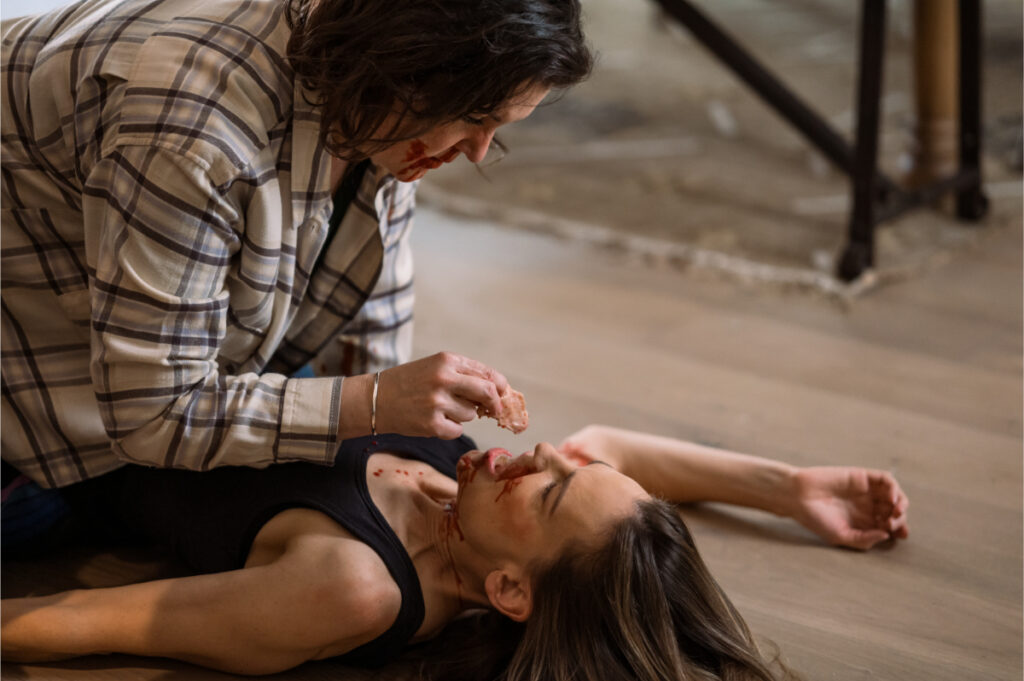
It’s one of the things that drew Hilary Swank to the role of adult Melissa, Shauna’s maybe-murderous ex. “We know brains don’t fully develop until you’re 25,” Swank points out to GO, saying that this adds to the characters’ sense of being trapped in a loop of the trauma they experienced at a young age. “[It] informs who you are as you become a woman, and how you can get out from under it or not. Our comfort zones continue to be in that trauma unless we can break out of that trauma. But how do you break out of the trauma that they’ve been through? I mean, that’s severe trauma.”
Yet somehow, the show managed to not become so mired in the trauma of it all that it lost its sense of queer joy. That was largely thanks to one central lesbian love story, that of Taissa and Van, who felt free to embrace their feelings for each other in the wilderness. However, season four sees the couple returning home to discover a new, perhaps insurmountable challenge: the pervasive homophobia of the 1990s.
It’s a story whose ending we’ve roughly known since the show began, thanks to its dual timelines and the fact that Van and Taissa aren’t together as adults when we enter the story. Jasmin Savoy Brown, who stars as the young version of Taissa, says this season we see how it all shakes out between the two.
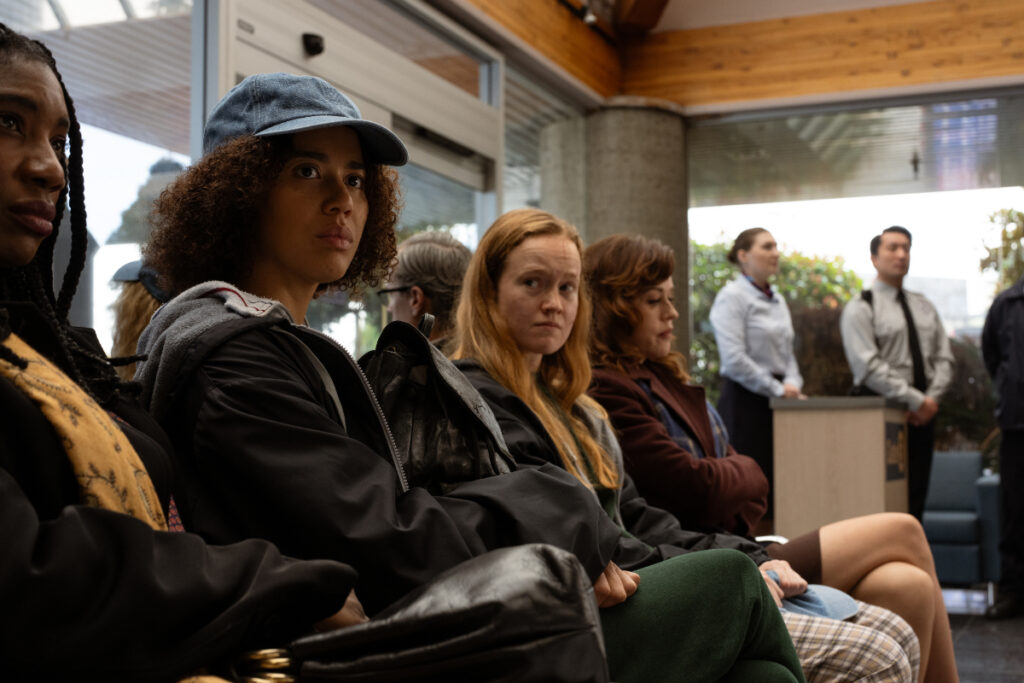
“We know how Van and Tai’s story ends in terms of they break up at some point … and returning back to the world means that they have to face their queerness, and that becomes an obstacle,” she tells GO. It highlights how, in some ways, the wilderness was a blessing for the two, whose struggles had nothing to do with their sexuality for three seasons, a dynamic that Savoy Brown was deeply grateful for.
“The tragedy in [Taissa’s] life isn’t that she’s queer. This show allowed these queer people to be in love and navigate trauma that had nothing to do with their sexuality, and I think that’s awesome,” she says, adding, “We need more of that. I just want to see queer people in weird situations, in hard situations, other than them being queer.”
But for all the queer joy, the show never shied away from presenting messy, toxic lesbian intimacy, namely between Shauna and Melissa, both in the past and present.
“There are moments that feel combustible, that feel like magic,” says Lynskey of representing a “toxic lesbian ex” alongside Swank. “It’s so important to be able to play the intimacy of that because many of my best friends are lesbians. Like, I know what that intimacy is. The breakup is sort of like half a regular breakup. There’s always an enmeshment, and you do need to be able to play that enmeshment and that chemistry … and I just feel so grateful that I got to do those things with somebody who’s able to play 1,200 different things at once.”
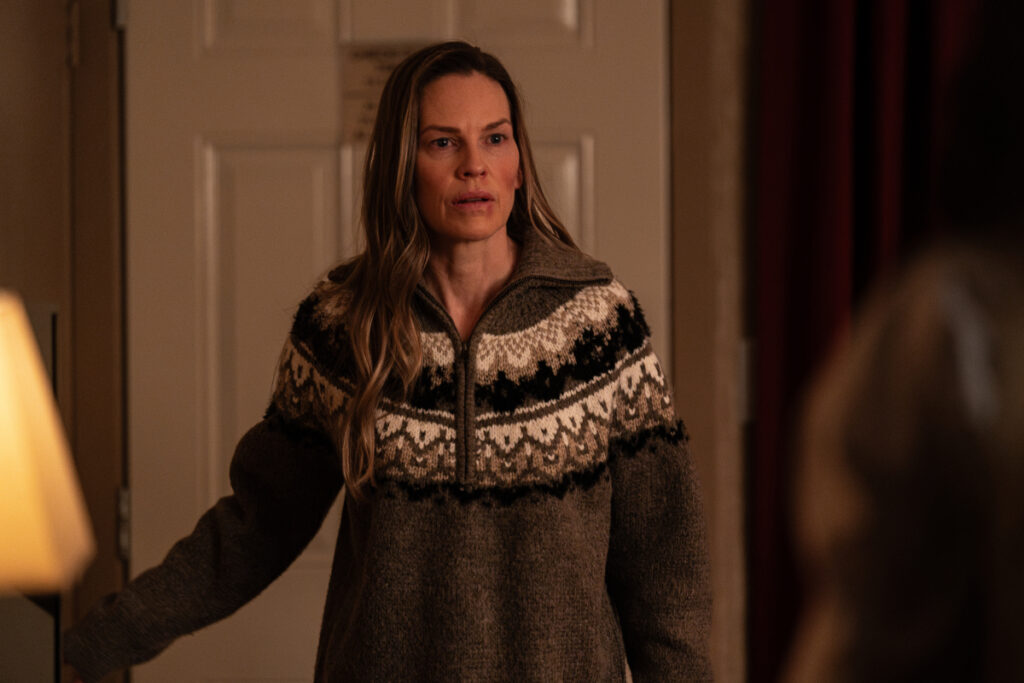
The feeling was mutual, as Swank also gushed about playing opposite Lynskey in the final season. “To be able to do a scene with someone who you know that every time you make eye contact with them, there is like a power coming back at you, a connection, a presence,” she says. “You’re never going to see someone who’s sort of checked out, wondering what’s for lunch. She’s so present. She’s so in it.”
Who Melissa becomes in the future is rooted in her past, and this season, Jenna Burgess, who stars as young Melissa, explains that evolution.
“You see Melissa finally standing up for herself, and with that comes a version of Melissa that’s way more true to herself than the version you kind of see with her at the beginning of season three. She’s kind of awkward and trying to put on a show as you do for a crush, and you’re not really yourself, and you don’t know how to hold your hands, and you know, like all those types of weird, idiosyncratic things that you do when you’re maybe in love,” she tells GO. “She just shows a side of her that’s willing to fight, and willing to trust her gut, and willing to stand her own ground against maybe the most dangerous person out there at the moment.”
While the cast and stakes do feel particularly high and dangerous in this final season, the actors themselves are already feeling nostalgic about their time working together and how it has changed them personally. For Savoy Brown, the show created a kind of stability in her life that she knows she will miss. “[Every] 18 months or so, when we would film another season, that was a constant in my life. Amid breakups, changes internally, new medications, whatever is going on in life, it was like, okay, for these five months I’m going to be with this group of people doing this thing, and that colored my late twenties,” she says.
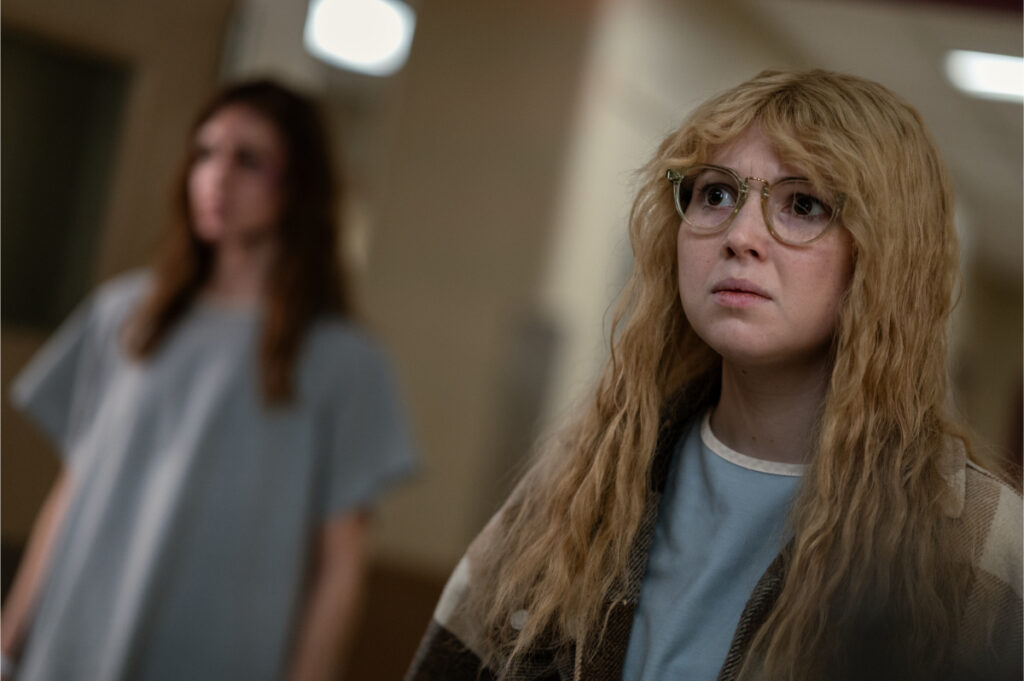
Like Savoy Brown, Samantha Hanratty, who stars as young Misty, says her time on the show was transformational. “My whole world has completely changed while doing this show,” she tells GO. Over the course of the four seasons, she went through a breakup, fell in love, got married, had a child, experienced mental health struggles, and truly discovered who she was. She credits much of that to having the opportunity to get inside Misty’s head.
“One of my favorite parts about my job is just getting to be with humans and getting to do life together and getting to create characters that are messy and confusing and conflicting and what does it look like when you’re stripped from civilization and social norms, and I think it’s just been so empowering,” she says. “But also … I found out that I had ADHD on this show … I started on antidepressant medication on this show. I came to terms with and was open … about being bisexual through this show. I found so much of who Samantha is in this world. This show has completely changed my life forever, for the best, and I’m eternally grateful for it.”
The friendships forged in the wilderness are ones the cast will carry throughout their lives, says Savoy Brown. They’re already showing up for one another. Savoy Brown says her Yellowjackets castmates have been showing up for her on Broadway, where she made her debut as Eurydice in the musical Hadestown. “Kevin and Alexa flew to New York last week to see the show. Samantha is coming this weekend with her mom. Liv has come. Nia has come. We’re showing up for each other, and it really means a lot.”
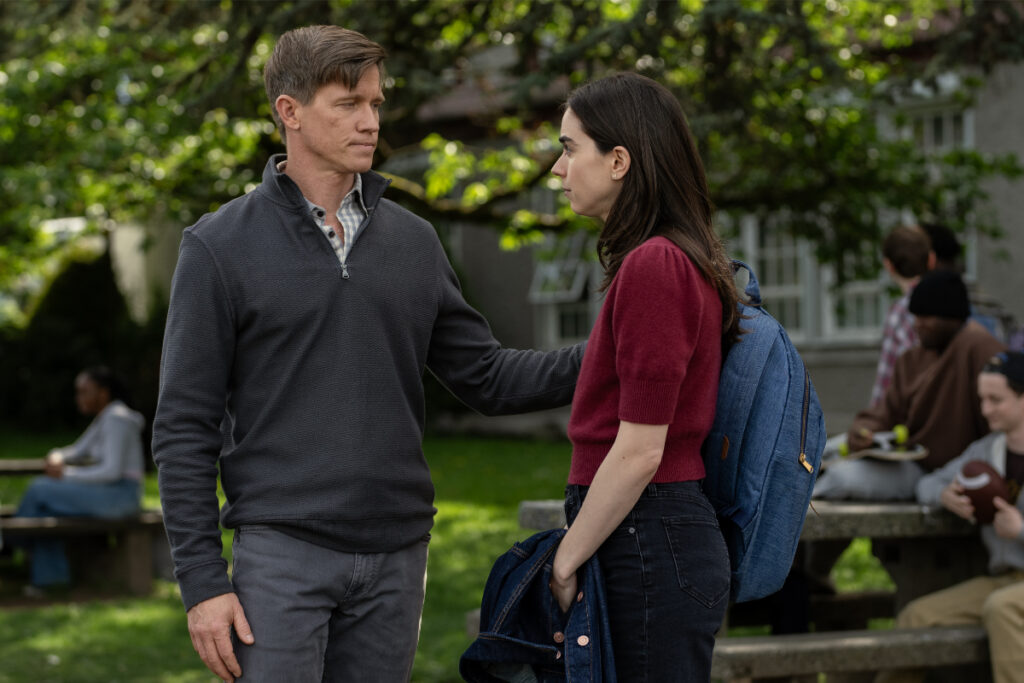
That sense of connection is particularly meaningful in a show so deeply concerned with the ways our relationships are shaped by the things we’ve survived. Because in Yellowjackets, the wilderness may be in the past, but its effects are anything but. They follow the women home, influencing how they love, raise families, and relate to the people closest to them. We see that most clearly in the impact being felt by Shauna’s husband Jeff (Warren Kole) and daughter Callie (Sarah Desjardins), who may have escaped the household, but, like the survivors of the wilderness, something has followed them, too.
For Desjardins, that has meant exploring how much of her mother’s trauma Callie has inherited and what that means for her own agency.
“Callie’s on this journey for the entire show of who am I, how much am I like my mom? Generational trauma is getting passed on. What is mine? What is hers? What agency do I have to be my own person?” she tells GO. “I’ve been so grateful to get to portray Callie on her journey to deciding who she wants to be, what is hers, and what isn’t hers, and at the same time having love and empathy for her mother … at the end of the day, she just wants to be loved.”
For Kole, his view of Jeff is that of someone just trying to do his best and weather the storm that has been raging since his teen years with Shauna. “What Jeff tried to do [is] just try to make it okay and accommodate it, and prove your loyalties. And you love this person. You understand they’re in pain. You can’t excuse the behavior, but maybe we can just go back to normal, a certain amount of denial is in place until hopefully you make a decision to protect what you have to protect and make some moral decisions,” he tells GO. But in the final season, Jeff’s perspective shifts, and protecting Callie, and to some degree himself, becomes his new survival mode. “Even though you love somebody, you still have to survive it and help other people that you care about survive,” he explains.
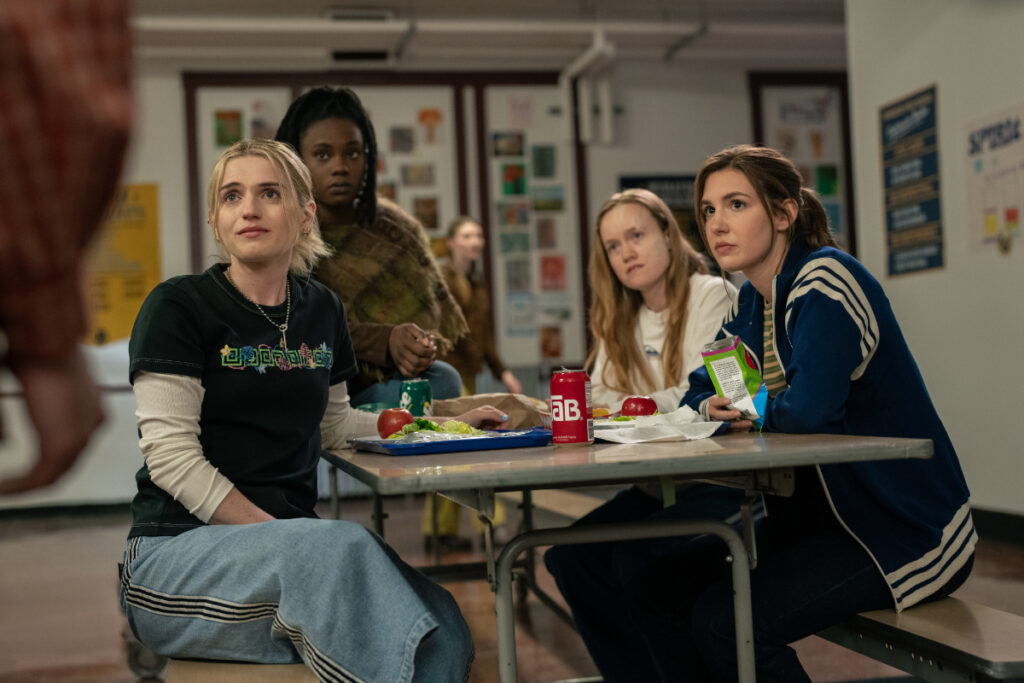
The fact is, no one gets out of the wilderness unchanged. For Nia Sondaya, who stars as Akilah, that shows in what she did while still there, whereas for Kevin Alves’ Travis, the impact of what he did — or didn’t do — truly comes to bear once he’s back home.
Looking back at her time on the show, Sondaya tells GO that Akilah’s defining moment was when she killed the animals that had been so lovingly under her care, an act of strength and bravery that was also a heartbreaking sacrifice for the cast.
“It took so much strength and bravery for her to do that. It wasn’t even for herself; it was for the entirety of the group,” she explains. “It was just a light that we don’t get to see Akilah in often, when she takes back her power and is brave enough to stand up to the group … we were like, ‘Oh, maybe she’s not as meek or as quiet as we thought, and maybe she does have a strength to her that we’ve never seen before’ … it was tragic, but defining.”
Alves’ reflection on Travis is darker. Returning home means having to truly face the death of his brother, Javi (Luciano Leroux), and confront his mother’s grief.
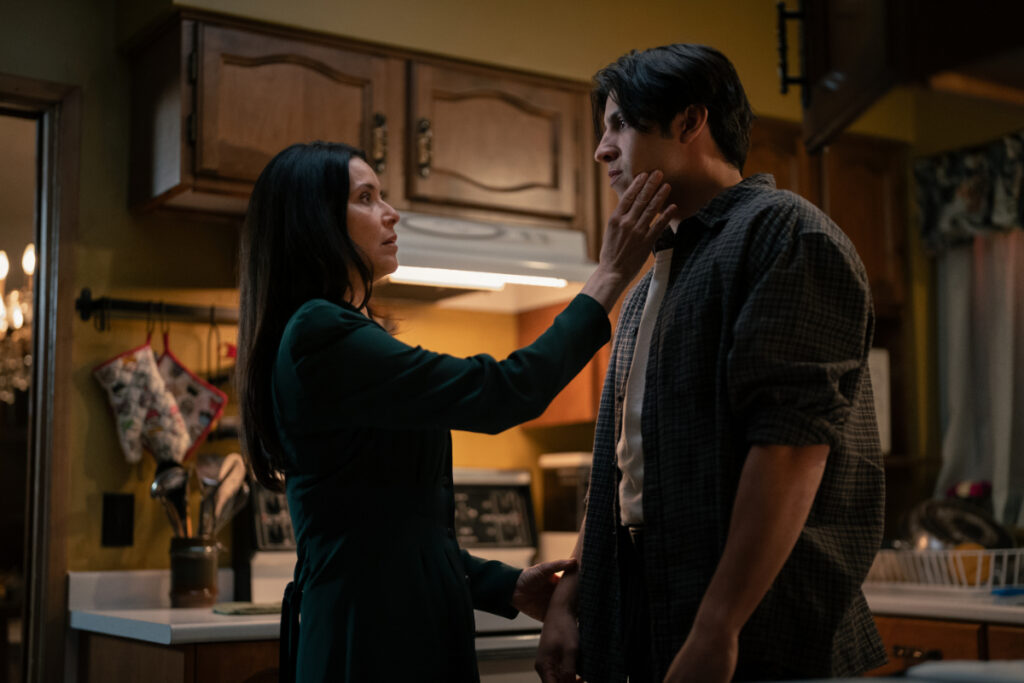
“For Travis, I think the defining moment, definitely this season, is going to be with his mom, and that relationship, and him having to come to terms with the fact that he’s never going to get to tell her the truth, and tell her what he knows,” he shares with GO. It’s an arc that began in season one, he adds, during the scene where he and Nat (Sophie Thatcher) kill a deer. “I remember just thinking, like, oh, watching life end is going to keep happening on this show forever,” he recalls.
It’s not just the cast and fans who are feeling nostalgic as the show draws to a close. Its creators, Ashley Lyle and Bart Nickerson, are reflecting on the journey and bringing the story to a conclusion — and, yes, they’re very aware of the fandom’s theories.
“We’ve definitely been surprised by fan theories in the best way. Just to see other people’s creativity kind of unlocked,” Nickerson recalls to GO. “We’ve never used one, but some of them have been incredible. It’s like the ‘Callie time traveler.’ That she was ‘Pit Girl.’ I was like, oh my God, that’s so wild, and I love it.”
While the fan theories might not have shifted the trajectory of the show, the ending did undergo some changes from what they originally envisioned nearly a decade ago.
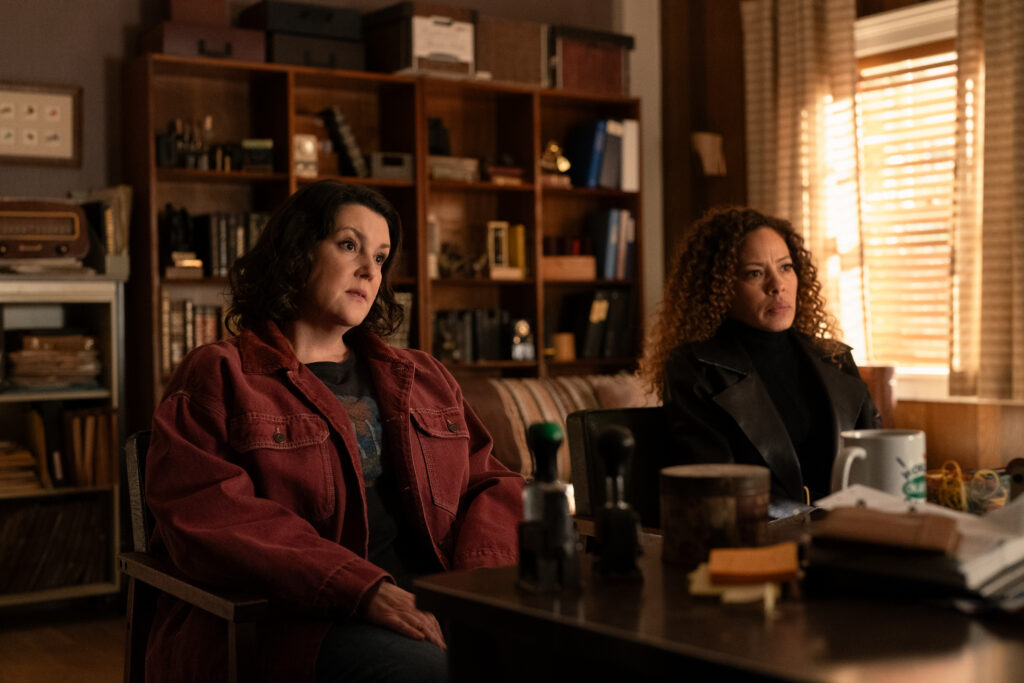
“We ended up in a place that was very much … in the register of the original intention, the original concept,” Lyle tells GO. “TV is a living organism. You spend so many years doing it. You have so many incredible collaborators along the way, and so we’ve always tried to be a little bit flexible. Whether it’s about overcoming, you know, production challenges or just being open to ideas that may not have been there when we first conceived of it alone, the two of us, in our little writer hole, nine years ago.”
Ultimately, some things evolved and changed over the course of that nearly decade-long journey, and some details may have shifted, but they ended up where they wanted to be. “The intention was very much what we had originally set out to accomplish, and so we feel really good about that,” she adds.
One thing is sure: It will be hard to say goodbye to the characters we’ve come to love and love to hate. That’s because, mysteries and supernatural teases aside, the draw of the show has always been about the women at its heart; characters who were free to be complicated, contradictory, loving, selfish, terrifying, and occasionally completely unhinged. Also, very unapologetically queer. Whatever the final season answers or the questions it leaves open, it’s these characters, their stories, their trauma, their love, and lives full of good decisions and absolutely terrible ones that will be the show’s legacy.