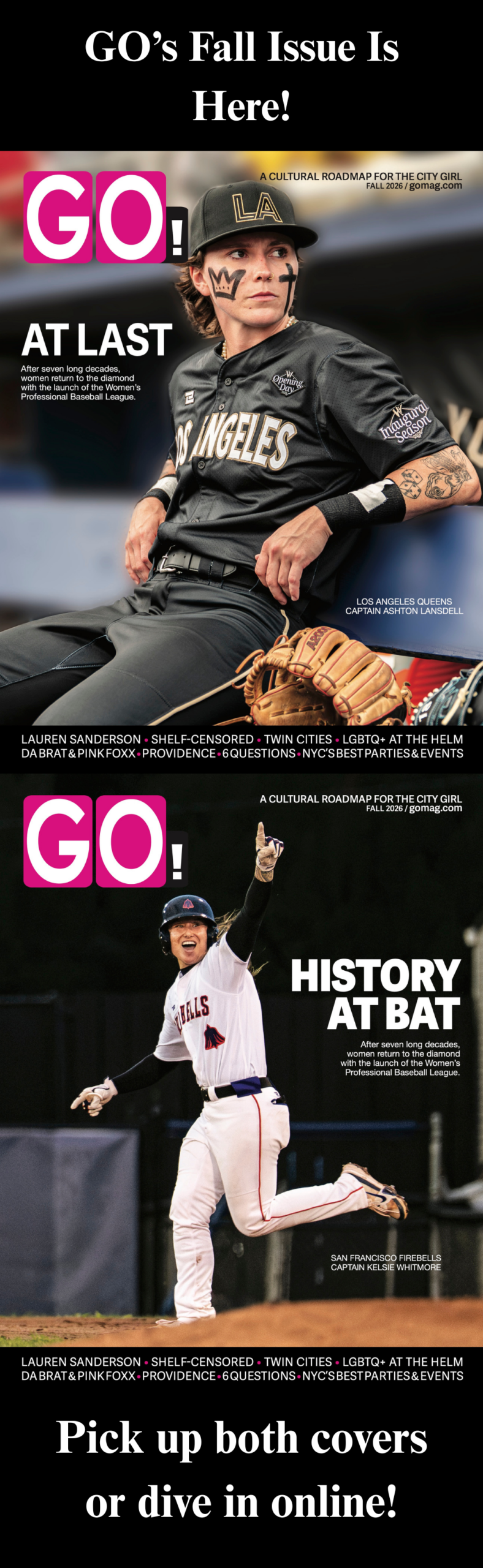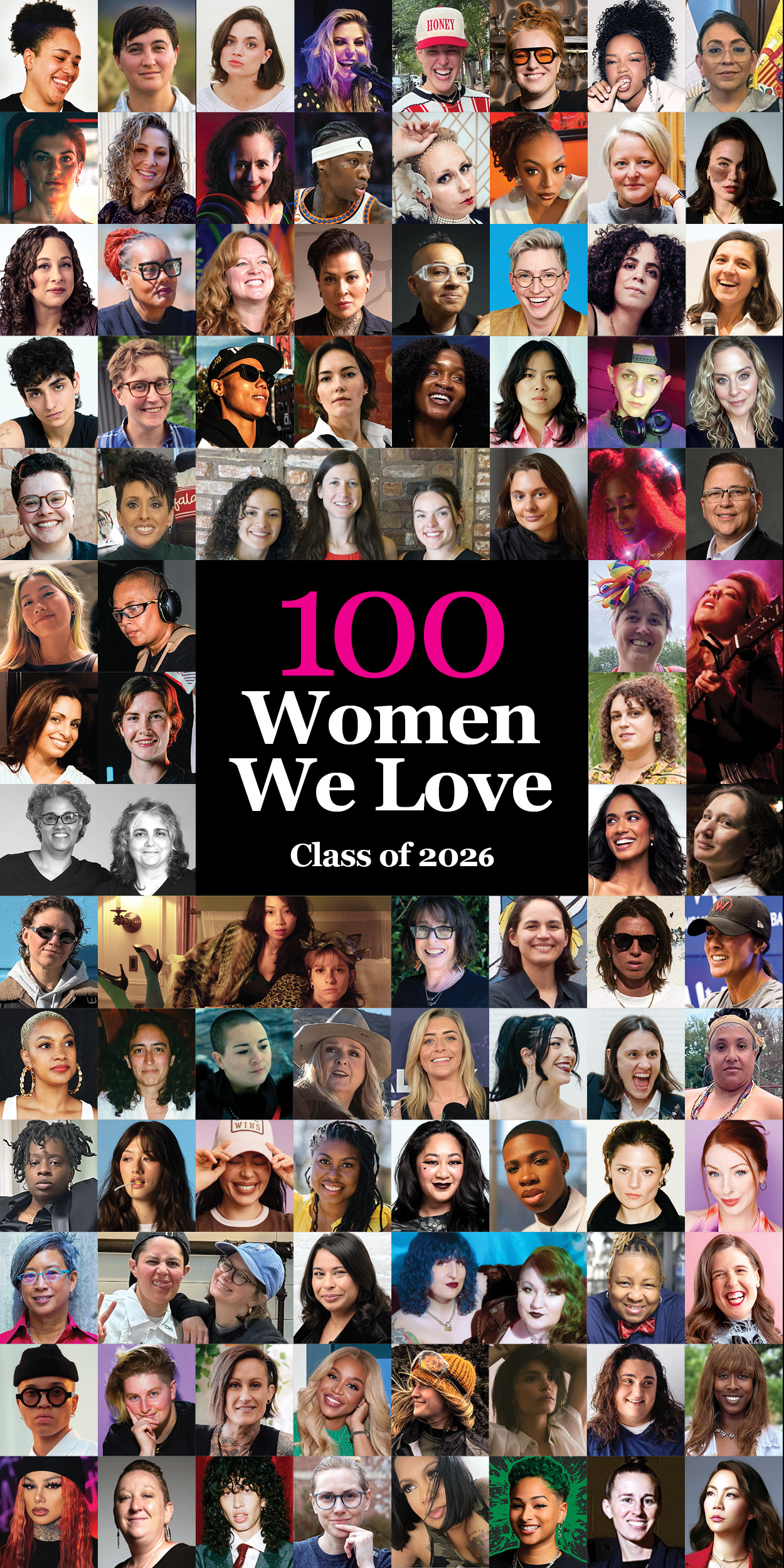


100 Women We Love: Class of 2026
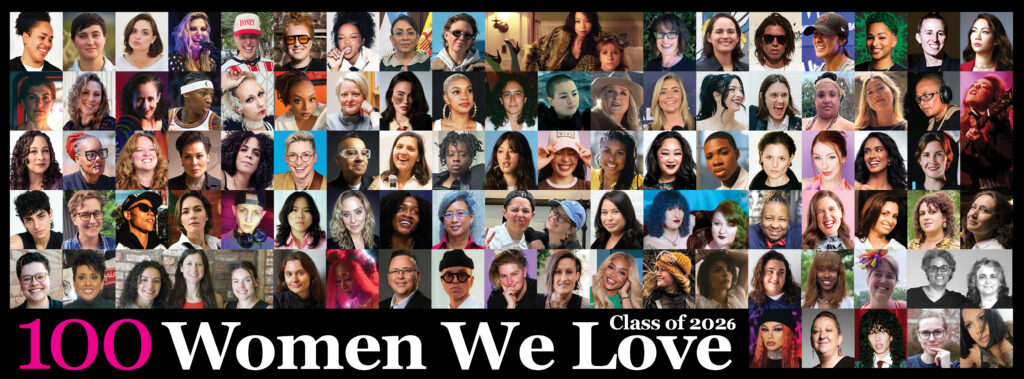
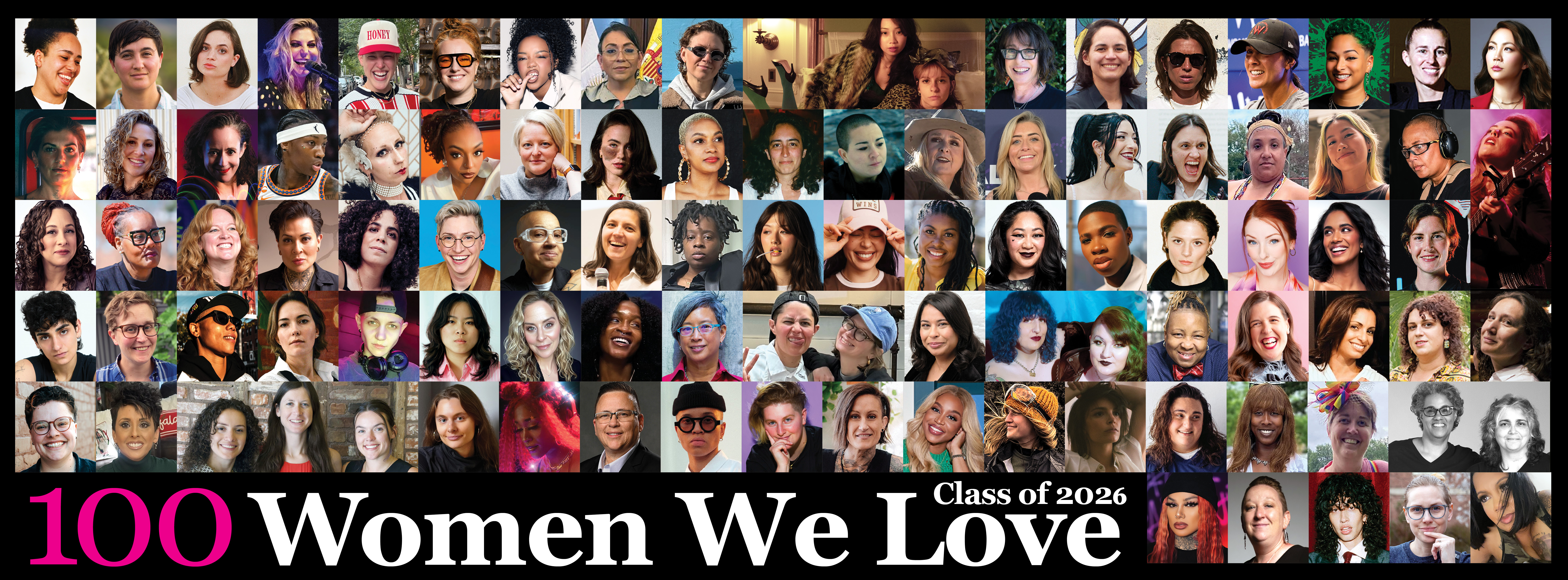
Every June, GO Magazine celebrates 100 queer women who inspire us, lead us, and remind us what resilience, brilliance, and unapologetic visibility look like. In 2002, we made it our mission to spotlight incredible women who, despite marginalization and oppression, continue to persist and lead. And thus, in the years that followed, the first class of 100 Women We Love was born.
Now, as state legislatures continue to target LGBTQ+ rights, lesbians and queer women, especially trans women and Women of Color, bear the brunt of the cruelty. Healthcare access is under siege. Reproductive freedom remains gutted. The very language we use to describe ourselves, our identities, and our experiences is being policed and politicized. We are proud to stand together and support each other, now and always.
GO has featured thousands of fierce women who make the world a better and more inclusive place for us all. We are moved by the support of those who don’t identify as women—including our nonbinary and gender nonconforming siblings, our gay and trans brothers, and our allies—who we are proud to feature online and in print.
This year’s honorees include entrepreneurs and artists, athletes and activists, educators, comedians, and everyday heroes. Some are household names; others are building vital change far from the spotlight. But all of them offer something critical in this moment: a reminder of what’s possible. A model of how to thrive, not just survive. We are proud to introduce you to the 100 Women We Love, Class of 2026. We hope their stories serve to inspire.
100 Women We Love Photo Credits
Shawnee Kish by Karly Watson Photography; Lauren Chan by Dave Picard; Stefanie Santiago by Tracy Toler-Phillips; Claudia Capriles and Alexandra Murray by Julie Strain; Tamara Leigh by Zaire Downs; Laura Cheadle by Liza Meiris; Jenny Hagel by Lloyd Bishop; Sekiya Dorsett by Bridget Badore; Debany Dávila, Caroline Kane, and Chandler Robertson by Luis Preciado; Nora McConnell-Johnson by Logan Square Photo; Lechen Zheng by Shou-An Chiang; Jona Xiao by Brett Erickson; Kayti “Träshique” McMyermick by Megan Denise; Alex Hugo courtesy of Women’s Pro Baseball League; Chef K by Claudio Robles; Meghan McDonough by Leandro Justen; DJ Monstar courtesy of DJ Monstar; Kate Cochrane by Jennifer Koch; Heather Shaw and Lilly Jean Coiner by Brizzy Rose & Emma Photography; Halie Torris by Isabella Mancebo; MJ Clark courtesy of MJ Clark; Monique ForceSetlock by JR Davis; Izzy Perez and Emma Fuente by Rina Mintz; Gefen Skolnick by Steven Lee; Kristen Renee by Sheridan Renee; Christen Strags by Trisha Lindsey; Gemma Leahy by demos soupashis; Dr. Shail Maingi by Darren Pellegrino; Malika Amanzi by TyLyn Ansen; Melissa Etheridge by Candace Lawler; Dr. Kaila Story courtesy of Dr. Kaila Story; Lydia Von Hof by Jessican Daniello; Brooke Raby by Sugar Maple Photo; Sunny Eaton by Joshua Corey; Amara Ogara courtesy of Amara Ogara; Kim Pham courtesy of Kim Pham; Trinette Johnson-Williams by Nicole Craig; Jamie Fine by Siamak Abrishami; Toni Branson by Chris Mansfield; Diana Rodriguez and Ann Marie Gothard by Stephen Kent Johnson; Mo Nikole by Bria Lauren; Kelsey Ference by Caitlin Chrisenée; Geraleese Gilbert by Tahlil Farrar; Towa Bird by Mikayla LoBasso; Adriane Ferguson by Terell Belin; Ann Mei Chang by Sarah Deragon; Angela Earl courtesy of Angela Earl; Julianne Merrill by Ryan Nava; Brianna Arps by Ryan Stokes; Alyah Baker by Katie Lovecraft; TB Markinson by Miranda MacLeod; Rose Christ by Marcus Middleton; Quinn Bishop by Stephanie Benitez; Dr. Frankie Bashan by Taryn Burkleo; Cassandra Naud by Richie Lubaton; Dykanite by Emily White; Keenan Artelli by Christie Abascal; Alex Koones by Z Walsh; Kristin Key by Danté Swain; Amelia Deibler by Anna Cannon; Hannah Yore by Kelly Florimon; Rosie Jones by Jiksaw; Lynn Harris Ballen by Amina Cruz; Joli Robinson courtesy of Joli Robinson; Nae courtesy of Nae; Supriya Ganesh by John Russo; Tiffany Truong by Ara Josefsson; Sabrina Von B by Leah Huebner; Lillian Bonsignore courtesy of the FDNY; Hannah courtesy of Hannah; LITA DA DOLL by Cori Black; Regan Aliyah by Timothy Fernandez; Mélisse Brunet by Darren Elias Photography; Kimia Behpoornia by Sela Shiloni; Angela Giarratana by Sarah Davis; Tobi Noble by Flora Driessen; Daisy Ifama by Ejatu Shaw; Emilie Tippins by Carter Tippins Photography; BJ and Harmony Coangelo by Rae Mystic; Lola Flash by Christa Holka; Jodi Balfour by Frances Davison; Tobin Heath by Erica Hernández; Louisa Jacobson by Anna Blundell; Tierna Davidson by Gotham FC; Lauren Esposito by Nate Dappen; Blair Baldwin by Conor P Murock; Xero Gravity by Andrew Fennell; Snow tha Product by Miguel Madriz; Anandrea Molina courtesy of Anandrea Molina; S. Ceren Uzman by Jules Diaz Petta; Haviah Mighty by Adeyemi Adegbesan.
Toni Branson
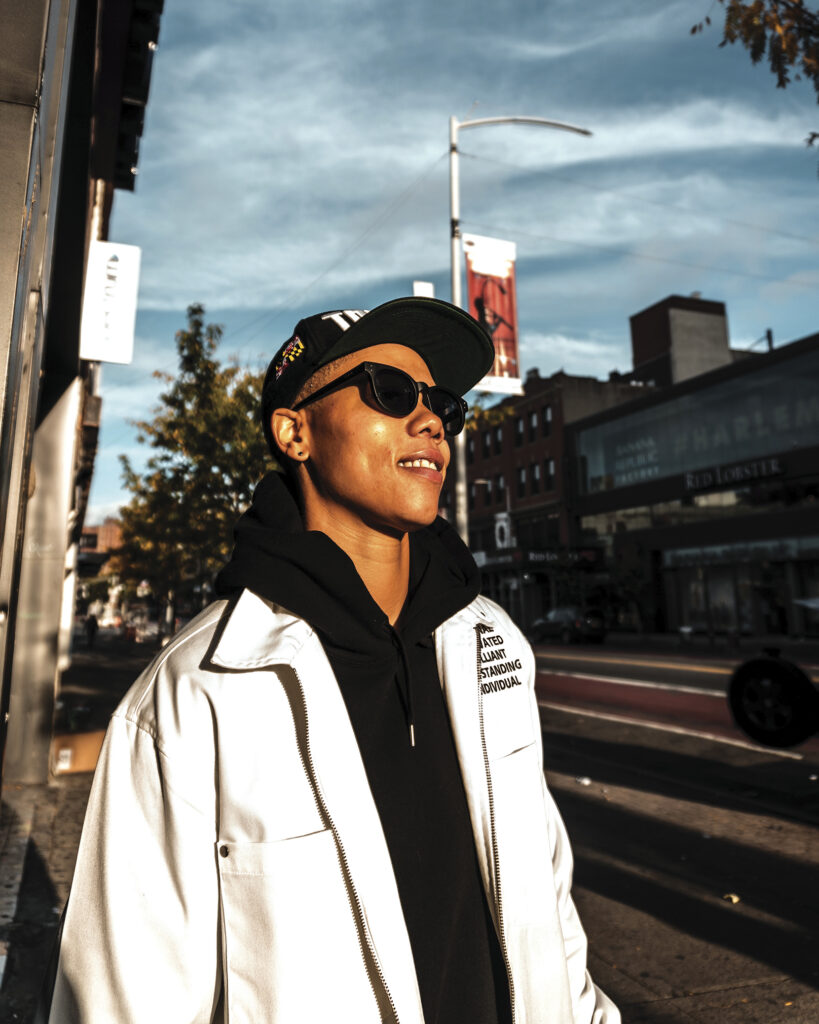
Filmmaker and fashion designer Toni Branson moved to NYC in 2008 to attend the New York Film Academy. In 2010, she founded STYLE IS FREEDOM, a TOMBOI lifestyle brand inspired by masculine women and the freedom that comes from authentic self-expression. As Branson explains, “I always loved being a tomboy and felt free and liberated because I was truly being myself—and that is a feeling I want everyone to have. Hence the name STYLE IS FREEDOM because style is truly freedom.” Branson released her first short film, The Education of Ellis, in 2013 and has continued building momentum ever since. Her goals remain clear: to be an accomplished fashion designer and filmmaker while expanding STYLE IS FREEDOM through partnerships with sports companies and incorporating women’s athletics into the brand’s vision. Though her journey has included setbacks, Branson credits prayer, faith, financial discipline, and a commitment to keeping things minimal as the foundation of her resilience. Most recently, her work in film and television production has included serving as the on-set prop master for The Equalizer. As she continues to balance both fashion and film, Branson says the most rewarding part of her work is inspiring others and living in her purpose. Branson is currently working on a new Netflix miniseries and resides in Brooklyn, NY. — SS
Tierna Davidson
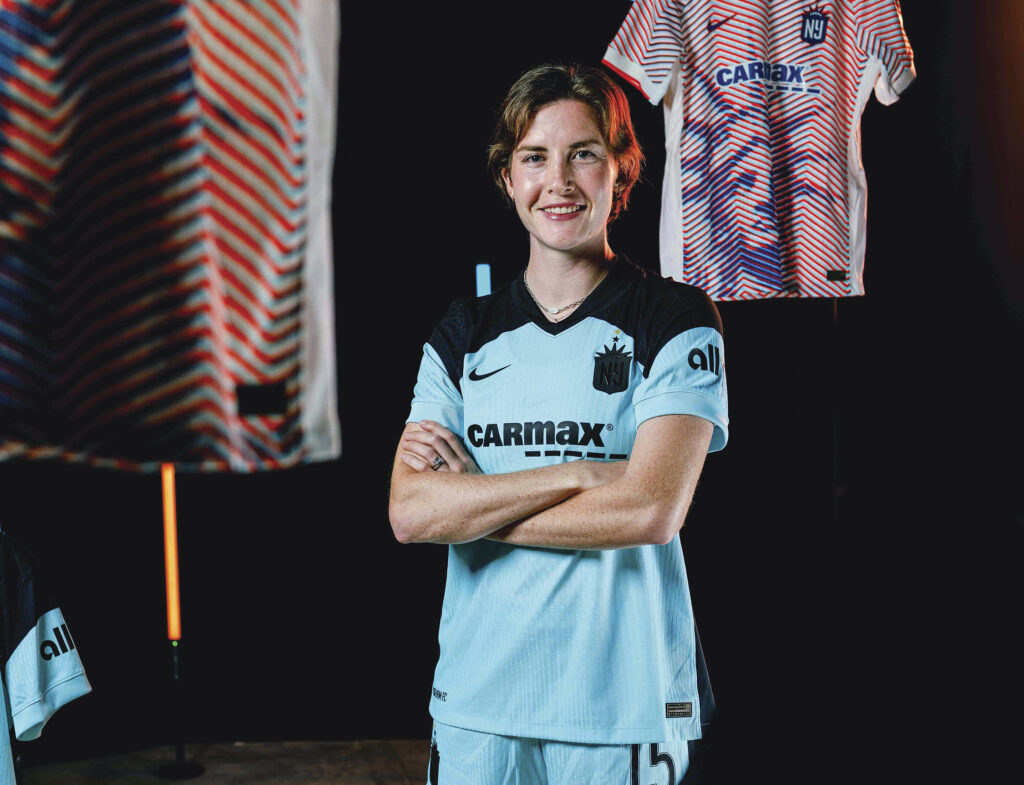
Olympian Tierna Davidson knows the exact moment that led her to professional soccer. “I was deciding whether to leave school early and enter the draft, and I was having a conversation with my academic advisor at Stanford,” says Davidson, who was one of the nation’s premier defenders while playing for the university. “I explained my situation, and she immediately said to me, ‘What are you still doing here? Stanford will always welcome you back. But you can’t postpone soccer.’” In 2018, Davidson was named U.S. Soccer Young Female Player of the Year and has added World Cup champion, Olympic gold medalist, and NWSL champion to her resume. “Watching women’s soccer grow in real time has been extraordinary, and knowing I’ve played some small part in that feels genuinely rewarding. But what moves me most is the work I do with players collectively,” says Davidson, who serves as the president of the U.S. Women’s National Team Players Association. “Fighting for better conditions, stronger infrastructure, fair treatment. So much of that work happens behind closed doors and never makes headlines, but it shapes the experience of every player in this league.” Davidson, who now plays for New York’s Gotham FC, is also developing a program for young female athletes that focuses on body literacy, injury prevention, and self-advocacy. A surprising fact about her? “I’ve been cutting my wife’s hair for the past six years,” she says. “No formal training, no real method. Somehow she keeps letting me do it.” – LE
Dr. Frankie Bashan
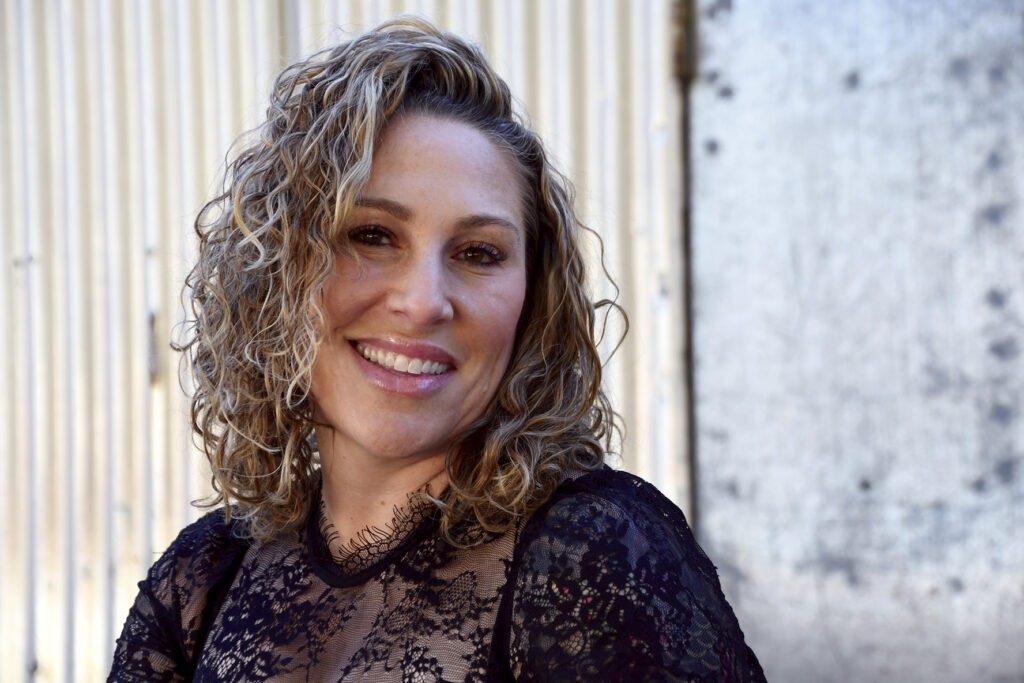
“It’s deeply rewarding to empower queer singles and remind them they don’t have to navigate the journey toward finding a life partner alone,” Dr. Frankie Bashan tells GO. “Having the opportunity and trust of my clients to create intentional connections, representation, and support for the LGBTQ+ community adds a deeper sense of purpose to my work.” Little Gay Book, which Dr. Bashan founded and leads as CEO, is approaching 18 years of queer matchmaking nationwide. Through Little Gay Book—which began as a service for lesbian and bi women, and now includes gay men and the trans community—Dr. Bashan has helped facilitate thousands of matches through personalized matchmaking and clinical insight. A licensed clinical psychologist and board-certified sex therapist, Dr. Bashan also served as the dating and relationship expert on season eight of MTV’s Are You the One?, the first sexually fluid dating show to appear on national television; delivered a TEDx talk on sexual fluidity during the pandemic; and appeared on Howard Stern’s SiriusXM show to discuss sexuality, relationships, and human connection. “I feel fortunate to be both a therapist and a dating and relationship expert, because my lived experiences allow me to connect more authentically with clients,” says Dr. Bashan. “The more I move through the difficulties and challenges in my own life, the more empathy, perspective, and grounded insight I can bring to the people I support as they navigate love and meaningful connections.” – LE
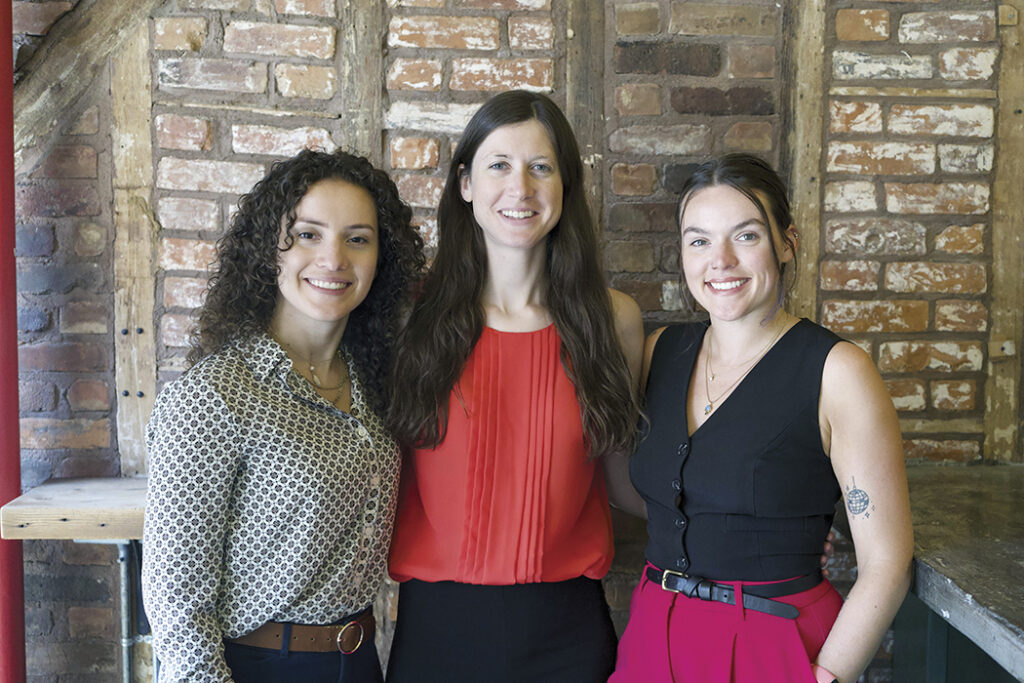
Debany Dávila, Caroline Kane, and Chandler Robertson
You might know them as the powerhouse trio that is Blazers Sports Bar in Brooklyn, but Debany Dávila, Caroline Kane, and Chandler Robertson are all amazing women in their own right. Dávila, a proud Latina from Laredo, Texas, grew up between two cultures and watched her single mother work full-time while learning English and earning her college degree. This fueled Dávila to play college basketball while she earned an accounting degree, but she didn’t stop there. She went on to complete her MBA in finance and became a lawyer. Robertson grew up in New Jersey and was a talent agent at WME before the trio opened Blazers. Kane grew up in Northern Virginia and moved to NYC to pursue a career in law. What brought these three together? A love of basketball and a desire to have community spaces that support women’s sports. In 2023, the three friends struggled to find bars to watch the Liberty’s playoff run, so their solution was to create one. Blazers Sports Bar opened in Williamsburg in December 2025, and it highlights women’s sports in every aspect, from the cocktail names to the art on the walls to what plays on the many television screens. Named after trailblazing athletes, the bar has also become a partner for local LGBTQ+ sports leagues. The Blazers team tells GO, “We are encouraged every day by who comes into the bar, and we are excited that so many people feel comfortable and happy in the space!” – SS
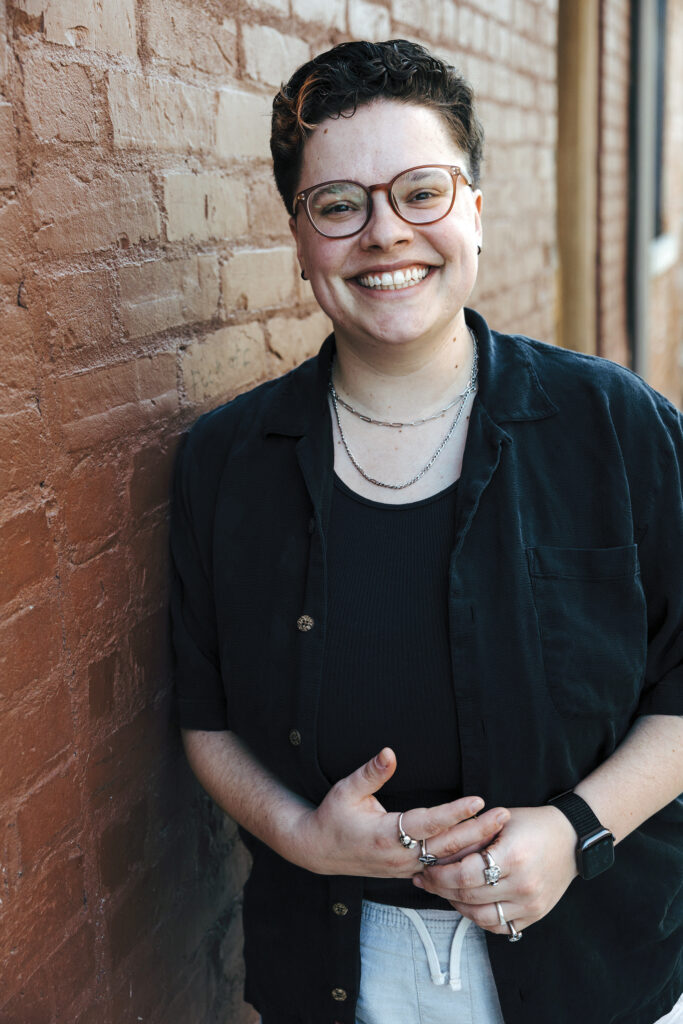
Kelsey Ference
Midwestern Lesbian began with the wish of bringing queer people together in safe and welcoming spaces. An idea sparked while founder Kelsey Ference was creating a weekly calendar of taproom events for the local brewery where she worked. Through the digital platform, founded in 2021, “We not only create events of our own for the community, but we also highlight all of the other incredible events happening inside and outside of the city,” Ference says. From drag brunches to “Sapphic Sips” to queer karaoke, this queer guide showcases LGBT-owned businesses around town, and gives queer Cincinnatians, visitors, and allies an easy way to find where to go and who to support. While currently Cincinnati-centric, Ference is excited to grow the team and expand Midwestern Lesbian to other cities like Columbus and Lexington. Just last December, with 50,000 followers across Instagram and TikTok, the community wrangler signed a lease for new office space in Cincinnati’s Over-the-Rhine neighborhood. “Seeing people come out of their shells, step out of their comfort zone and create genuine connections has been so rewarding and makes us want to continue to create more ways for folks to come together, build community, and spread joy,” she says. “Above all else, I want LGBTQ+ Midwesterners to know that they are loved, and we want to continue to show that the Midwest is queer, has been queer, and will always be queer.” – MH
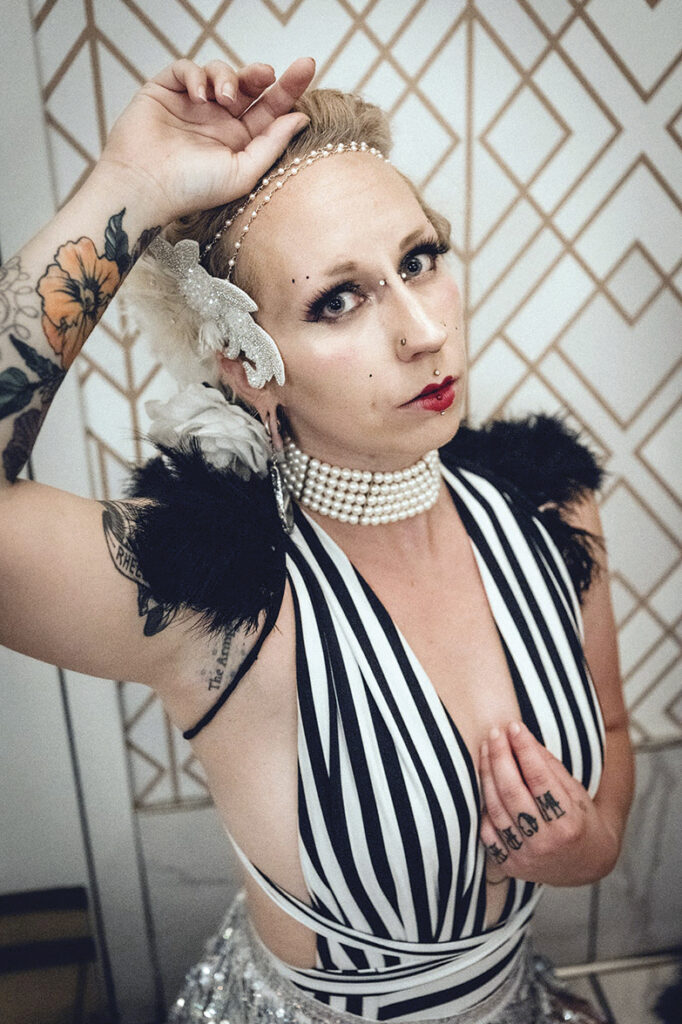
Kayti McMyermick
“My work is rooted in queerness, in body autonomy, and in rejecting narrow definitions of beauty, desirability, and worth,” says Kayti McMyermick. “I am deeply invested in creating environments where people don’t have to sanitize themselves to be taken seriously, where complexity is allowed, and where there is room for many ways of loving, living, creating, and surviving.” The Kentucky-based burlesque and sideshow performer, educator, and producer began her career in 2010 at 19 years old, and has since appeared in multiple regional and national burlesque festivals. She currently tours with Tinderbox Circus Sideshow and serves as entertainment director for the Oddities & Curiosities Expo, where she curates sideshow talent nationwide. In 2021, McMyermick founded BurLEX(ington), an inclusive burlesque education and production collective that supports up-and-coming performers in central Kentucky. “I spent years teaching myself, traveling, experimenting, failing, and figuring things out in real time, alongside other performers who were also building planes while flying them,” she says. “I didn’t want the next generation of performers to feel as alone or as lost as many of us did. I wanted to build the thing I needed when I was starting: accessible education, real community, and a space that says, ‘You belong here, exactly as you are.’” A surprising fact about McMyermick? “People often assume I’m endlessly extroverted because I perform and produce shows, but I’m more of a situational extrovert,” she says. “I thrive in creative chaos—and then I immediately go home and stare at a wall for a while.” – LE
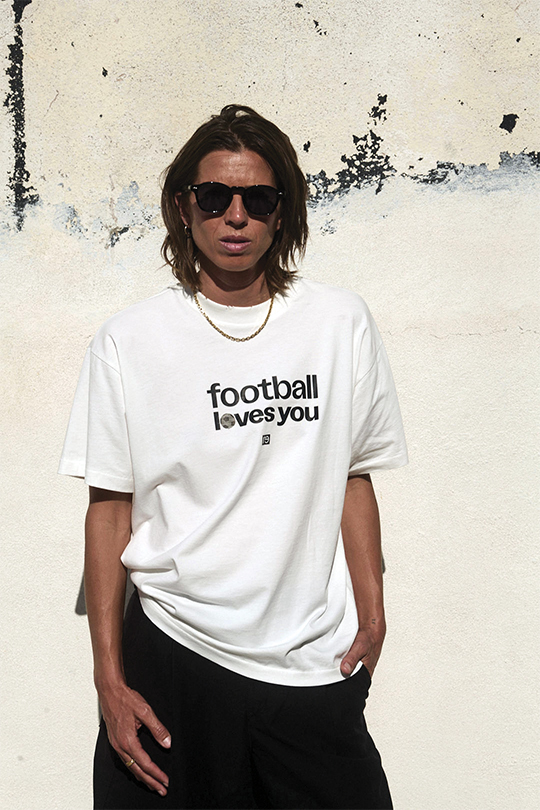
Tobin Heath
“From the first time I touched a soccer ball, I knew it was going to be my instrument,” two-time Olympic gold medalist and two-time FIFA Women’s World Cup champion Tobin Heath tells GO. “It became the way I created, the way I found freedom, and the way I found love.” The easygoing yet fiercely competitive footballer announced her retirement in 2025 after ongoing knee injuries. But even off the field, she hasn’t stopped building. Heath now leads RE, the media, community, and lifestyle company she co-founded with her wife and former teammate, Christen Press. More than a brand, RE was created to expand what sports can mean in people’s lives. Heath believes social media helped usher in a new era for women’s sports, one in which athletes could tell their own stories directly rather than relying on traditional gatekeepers to define them. “For so long, the stories told about athletes, especially women athletes, were narrow and incomplete,” she says. “Social media gave us the opportunity to speak for ourselves and connect directly with people in a way that felt honest and human. I want to help open that aperture even wider through authentic storytelling and culture-building, so the next generation defines its relationship with sports beyond gender.” For Heath, that philosophy sits at the heart of RE. “We believe fandom can be deeper, communities can be more inclusive, and the stories we tell can expand who sees themselves in sport.” – ER
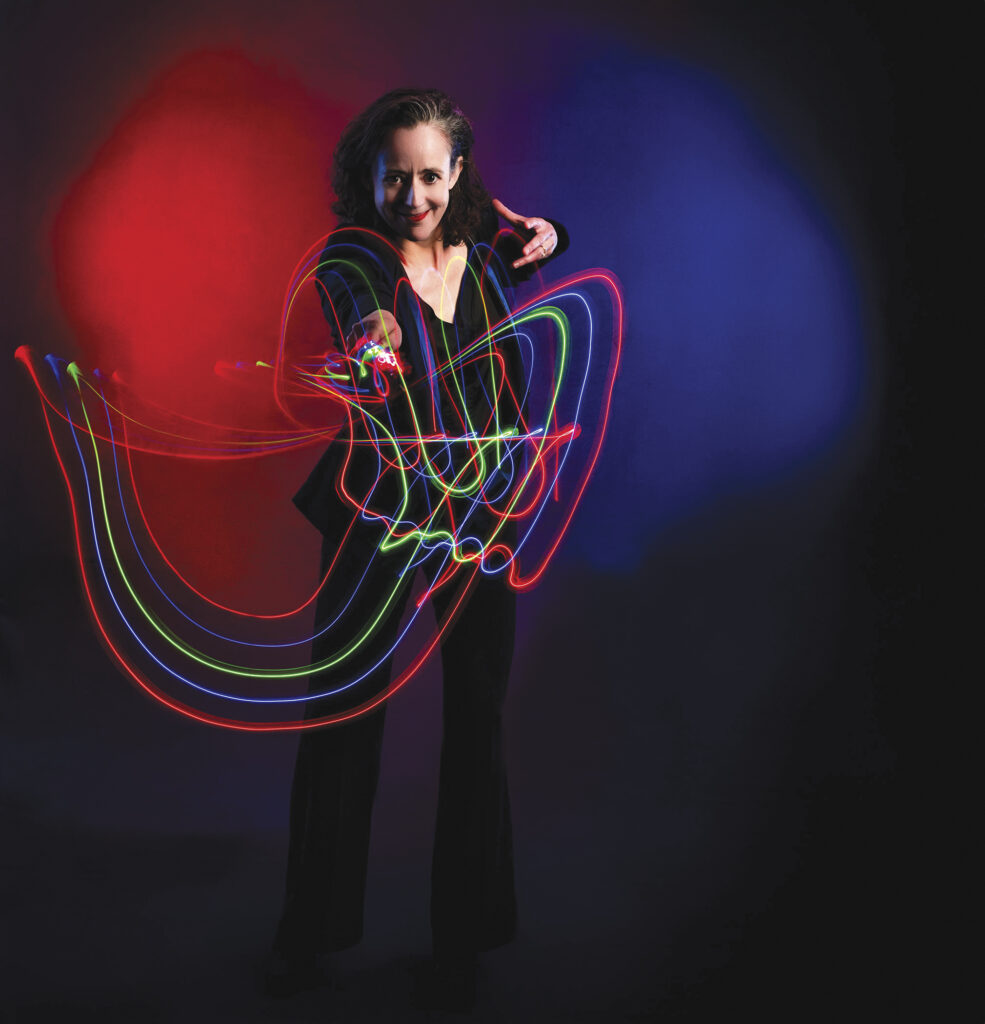
Mélisse Brunet
“Who would one morning wake up and decide that, as a job, they want to write the most boring music?” These were the thoughts in 14-year-old Mélisse Brunet’s head while she practiced cello for a Mozart piece. “That’s how I knew none of us understood Mozart’s message, and that is how my calling came to life, unforeseen and relentless: to become a conductor to find the message of the composers and share their passion with the musicians and the audience,” she tells GO. Fast forward a few decades, and the French-American conductor is now music director at The Lexington Philharmonic in Lexington, Ky., where she conducts orchestras and performances for audiences of thousands. Her identity as an LGBTQ+ woman has shaped her career, often requiring her to work twice as hard to get opportunities her straight counterparts were afforded. Brunet says, “Being an outsider and having to work much harder than most through incredible hardship has helped me be a lot more creative, resilient, perseverant, humble, and joyful. It could have destroyed me, and I am glad it had the opposite effect.” And she has had a lot of inspiration: “The L Word, Jodie Foster, Kristen Stewart,” and all women who are and were “badasses” have helped her learn more about her identity as a queer woman and a performer. – ER
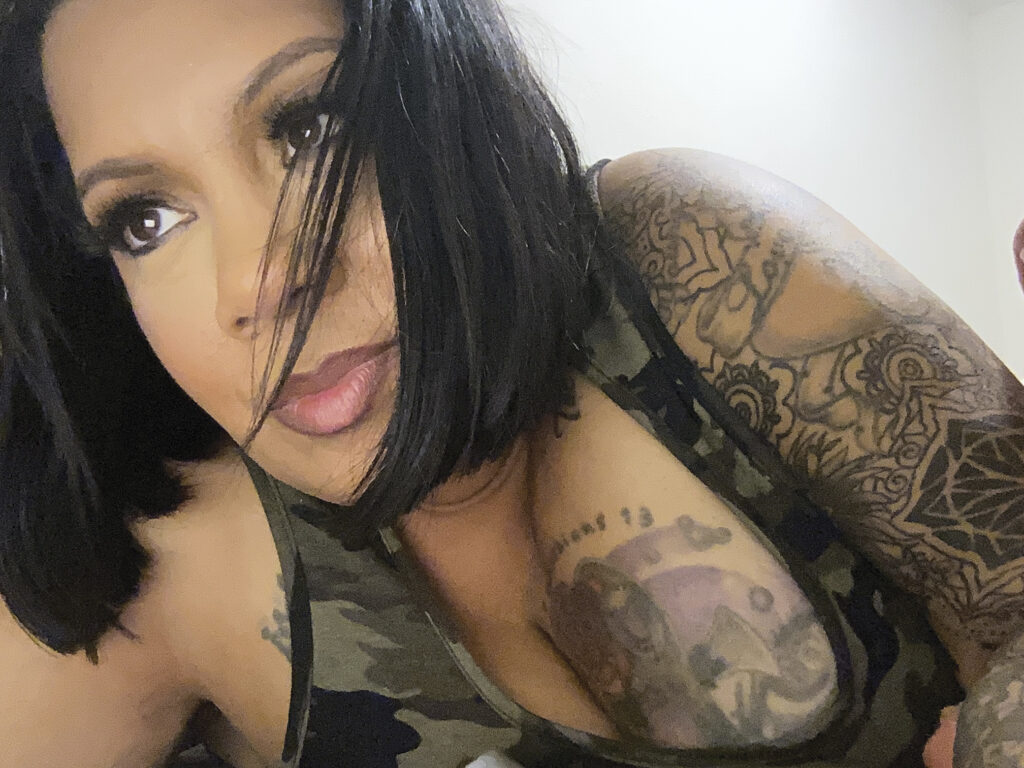
Tamara Leigh
“Black women are the least protected people on the planet, and being a queer Black woman only compounds that oppression,” says Tamara Leigh, founder of Blaque/OUT. “But it also magnifies and intensifies the magic. It gives us just enough privilege to protect and advocate for the only demographic more hunted than we are—Black trans women.” Driven to celebrate the brilliance and resilience of her family of trans communities, the activist has dedicated her life to creating space for a “community that often goes unseen.” As a former director of operations and PR for an LGBTQ+ Center in Rochester, NY, and editor of its magazine, The Empty Closet, Leigh steered the culture toward more inclusivity. When the agency shut down due to COVID, she moved from advocating in the boardroom to pounding the pavement, ultimately launching DEI consulting enterprise Blaque/OUT Equity and Inclusivity Architects. She also founded Blaque/OUT Magazine—a platform for Black and brown, queer and trans stories, news, politics, celebrities, and change-makers that now boasts over 60 digital issues. Blaque/OUT also serves to break down current political happenings, to ensure that people don’t get overwhelmed in the minutiae, and to prepare for what the government is throwing at the community. The proud mother of two says, “Fighting with and for my friends, community, and family of the trans experience is one of my greatest honors. They have loved and protected my womanhood, my queerness, my Blackness, my entire life, and I’ll dedicate mine to returning that deep blessing of respect and care.” – MH
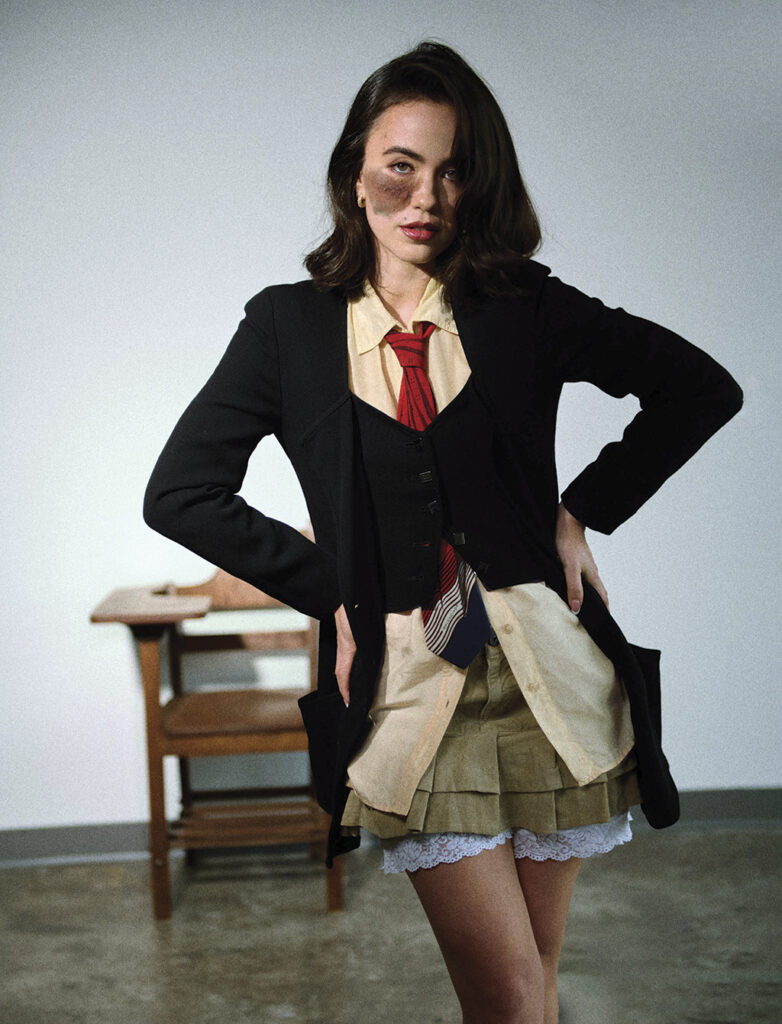
Cassandra Naud
“Even as a child, ‘blending in’ was never in my vocabulary,” says Cassandra Naud. “I’ve always wanted to shine my light proudly in front of a large audience.” Best known for her role in Influencer and its sequel, the actor, dancer, and entrepreneur left her small Canadian hometown for the bright lights of Los Angeles at just 19 years old. One Bachelor of Fine Arts degree and a couple of dance gigs later, Naud relocated to Vancouver—and her career really took off. “It was actually the Canadian casting directors who saw something in me that I hadn’t seen in myself,” Naud recalls. “I had always loved acting, but never considered it a career until I moved back to Canada.” Naud, whose TV credits include Snowpiercer, See, and Loudermilk, is also the co-founder of Somedays, an inclusive, mission-driven brand that helps those with menstrual periods through health literacy, community advocacy, and innovative products. Naud’s queerness, along with the distinctive nevus under her right eye, has impacted her career and life in positive ways. “Being a woman feels like a superpower, especially being part of the queer community with a birthmark on my face,” she says. “It’s taught me to embrace complexity and to question norms.” A surprising fact about Naud: “I daydream about becoming a professional curler.” – LE
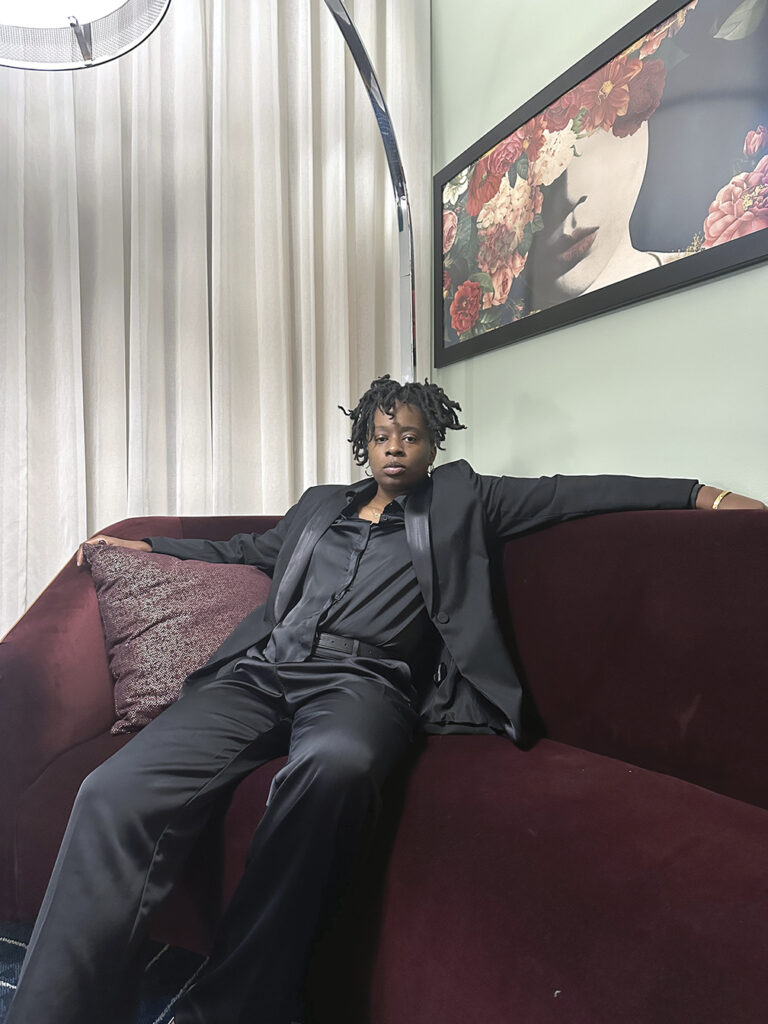
Nae
Nae, born and raised in Brooklyn, NY, always loved learning. That love inspired a career in education and eventually led to the creation of her social media persona, the “Strapfluencer,” which developed from her joking with friends. It also immediately brought an audience with a desire for an approachable version of queer sex education—with a focus on the lesbian experience—and strap-on recommendations. Nae’s first strap-related post began because she was looking for a comfortable harness. When she found one and shared her review on TikTok, the company reached out to send more toys. Viewers reached out with questions, so she created an educational series called Strap 101, where she shares history and educational information about straps. She quickly realized the popularity of her honest reviews and information was much bigger than her. “There’s a need for sex education, lesbian sex education, and queer sexual health wellness that we don’t get in our school systems. And the fact that we don’t talk about it makes it taboo and trivialized, so I wanted to create a safe space for people to have these conversations and ask questions.” The growth of the page brought back a love for education and teaching she didn’t think would return after leaving the school system. But now, in a non-traditional way, she’s able to educate another community she loves, the lesbian and queer community. In fact, it has inspired her to consider a PhD program in public health and a career as a sex educator. – SS
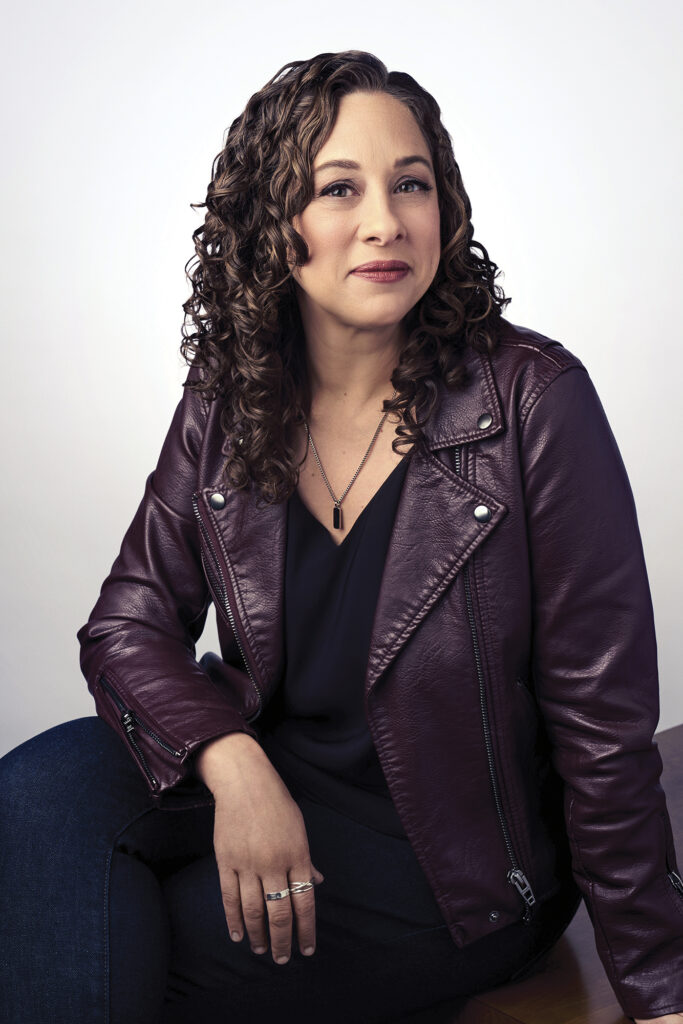
Jenny Hagel
“I realized I was gay while I was in a movie theater watching Kissing Jessica Stein,” Jenny Hagel tells GO. “Without [that film], who knows where I’d be? In the suburbs somewhere, married to a man named Brad? Instead, I’m living my best gay life.” The six-time Emmy-nominated TV writer and comedy performer can be seen on Late Night with Seth Meyers, where she created the popular recurring segment “Jokes Seth Can’t Tell.” “I tried very hard to do something normal with my life—I switched majors six times in college!” confesses Hagel, who served as head writer and executive producer for The Amber Ruffin Show and wrote for the Golden Globe Awards, Impractical Jokers, and Big Gay Sketch Show. “None of it took. It turns out the one thing my brain is wired to do is write and perform jokes. At some point, I decided to stop fighting my skill set and lean into it instead.” In addition to television writing, Hagel’s debut essay collection, Advice No One Asked For, was just published on June 2. When asked about the most rewarding part of her job, Hagel’s answer is simple: connecting with others. “The news is insane right now, and it’s a unique feeling to write or tell a joke about current events that resonates with audiences,” says Hagel. “If a joke makes people feel less alone in our current political climate, and provides people with a moment of relief from it, that feels really special.” – LE
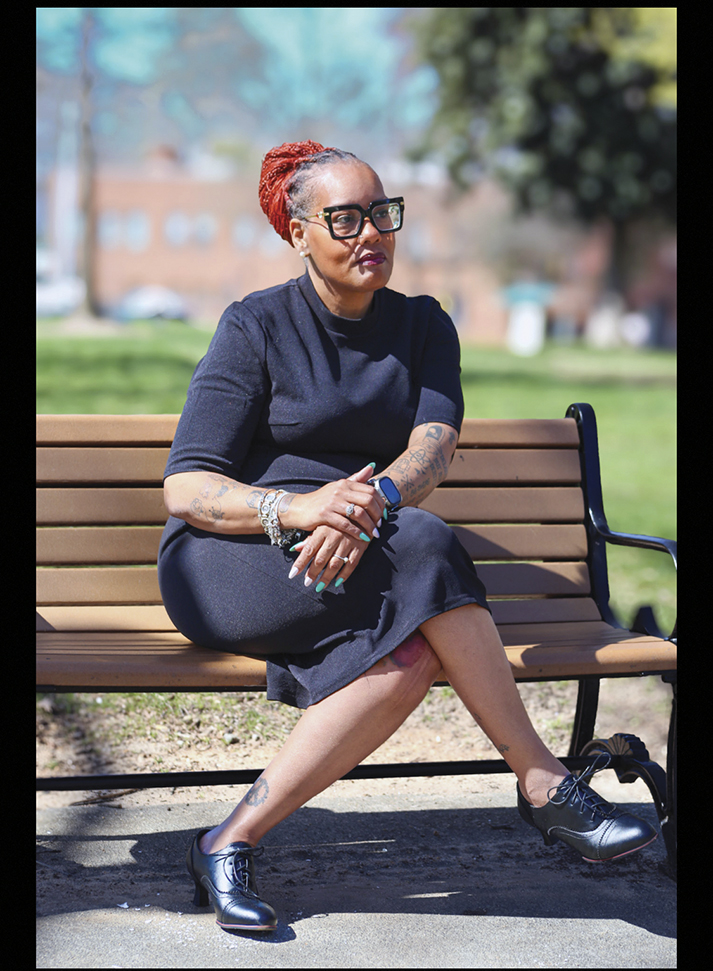
Geraleese Gilbert
In March 2020, when the world was watching Tiger King, sanitizing groceries, and making sourdough, Geraleese Gilbert was coming to terms with her recent bipolar II disorder diagnosis. Rather than go it alone, she decided to vlog her mental health journey on TikTok because she wanted to “put a face with a diagnosis.” The lesbian creator, who goes by @ms.dyagnosed, openly shared her experiences with her 89,000 followers because she felt Black representation in the mental health space was lacking. “I want people to know that they are not alone. Mental illness in the Black community is a touchy subject,” she says. “The inability to talk openly and freely about mental illness and sexuality led a lot of us down a rabbit hole, where we were harder to reach, because we drifted further and further into depression and into the darkness and away from the light.” Four years later, doctors told Gilbert she had been misdiagnosed. She had ADHD, not bipolar disorder, as “ADHD presents differently in Black women and is oftentimes misdiagnosed,” she says. Regardless of her diagnosis, followers love her for her raw, unfiltered thoughts, often sprinkled with equal parts laughter and tears. She’s real. “The way I have dealt with setbacks and adversities is that I am going to emote. I am a crier. I am going to cry about it first and foremost.” – ER
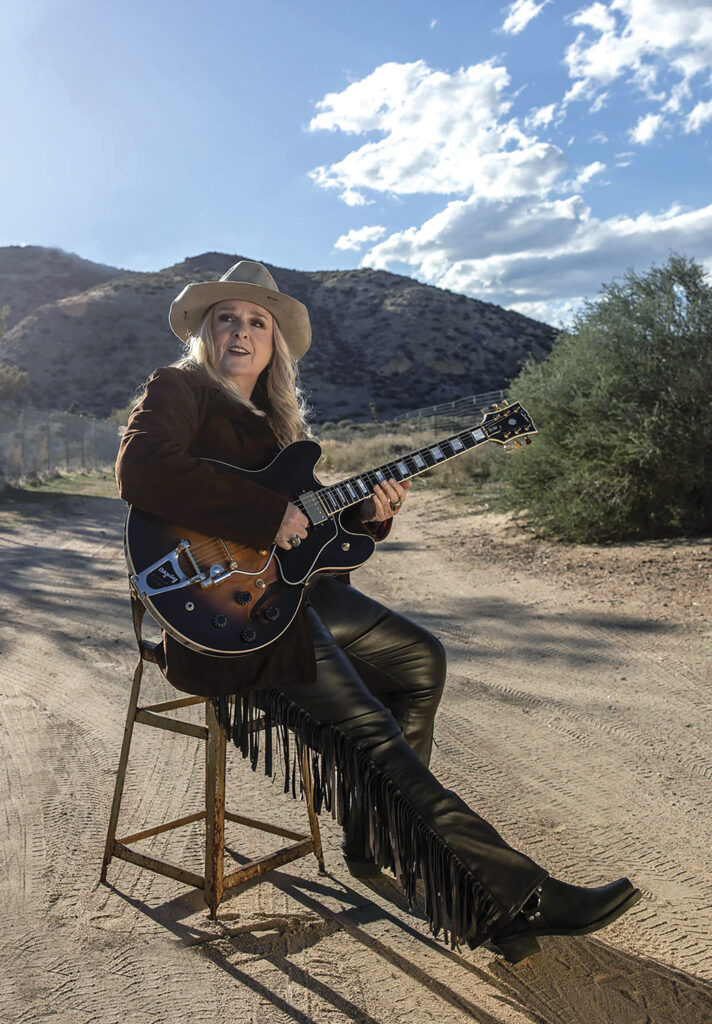
Melissa Etheridge
Since the release of her self-titled debut album in 1988, singer, guitarist, songwriter, and activist Melissa Etheridge has solidified her status as one of the greatest artists of all time—and as a lesbian goddess. Few people have had an impact like Etheridge, and she tells GO, “There was never a moment where I said, ‘Yes, this is what I’m going to do.’ It’s not that sort of thing. It’s the sort of thought that slowly, over time, overwhelms you with the desire to complete this task to succeed, to do what I love.” For more than 40 years, Etheridge has released hit after hit, and she’s used her platform to bring attention to causes close to her heart, including climate change, breast cancer, and opioid use disorder. She’s won Grammys, ASCAP Pop Awards, and an Academy Award for Best Original Song; had a one-woman show, My Window – A Journey Through Life on Broadway; and a docuseries on Paramount+, all while releasing over 18 studio albums. Even now, performing fuels her. She says, “It’s that love of doing it and then receiving the reward or the energy or attention or good feeling, and from then, you just can’t stop. You just keep doing it.” For Etheridge, it’s not about a career or looking to the next big thing. “I’ve had big, huge dreams in the past, and I’ve seen so many of them come true. It was never the actual destination, or dream, or the thing, or the experience. It was always the journey to it, the trying, the creating—that’s where all the fun is.” – SS
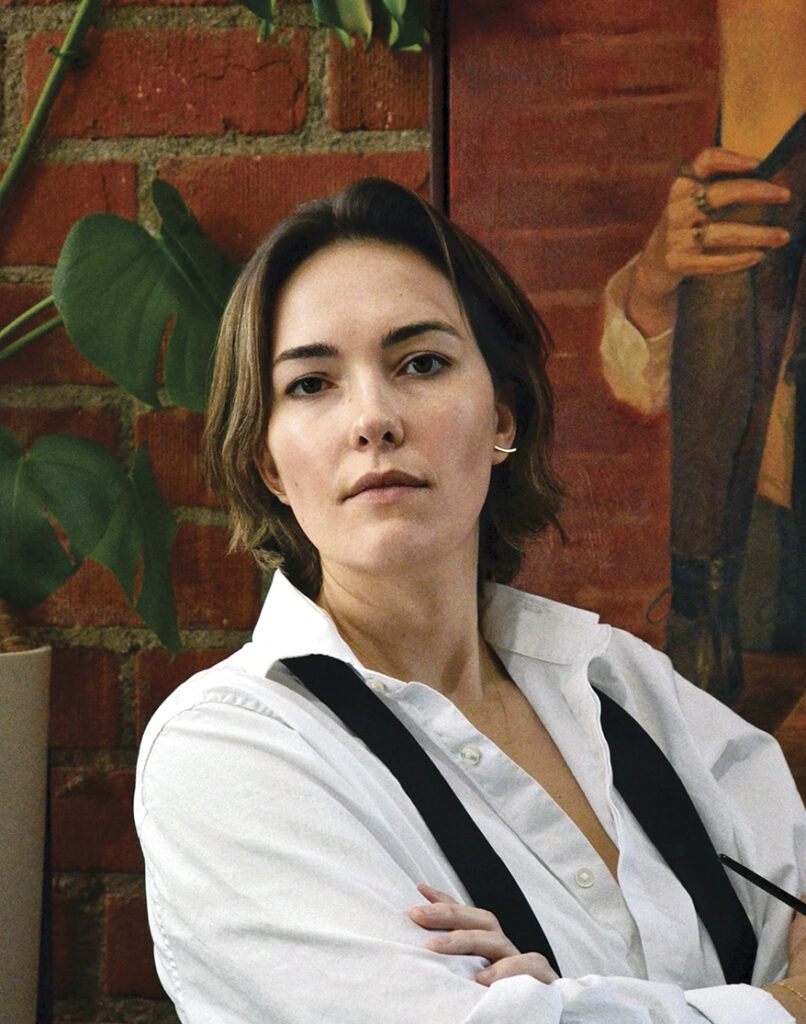
Halie Torris
Los Angeles-based figurative oil painter Halie Torris draws from personal experience and queer culture to capture charged moments between women. Torris originally attended school for graphic design but felt compelled to explore more emotionally driven work. She says, “Oil painting allowed me to slow down and explore intimacy, identity, and human connection in a deeper way. It ultimately led me to come out and explore myself more freely.” With a fast-growing social media following, her work clearly resonates, and her paintings and prints have been collected by over 15,000 collectors internationally. She also recently collaborated with MTV and exhibited at Felix Art Fair in Los Angeles with Weinstein Gallery in the exhibition SEE ME–Unapologetic Voices in Sisterhood, curated by Dominique Clayton. “After recently moving to Los Angeles, I’m excited to continue expanding my presence through more in-person exhibitions and opportunities to connect with the art community here.” She also wants to keep growing her connection with her online audience. Her focus, though, is always the art: “My goal is to keep evolving as an artist. I want to make work that comes from the heart. I believe that will lead me to where I am destined to go.” – SS
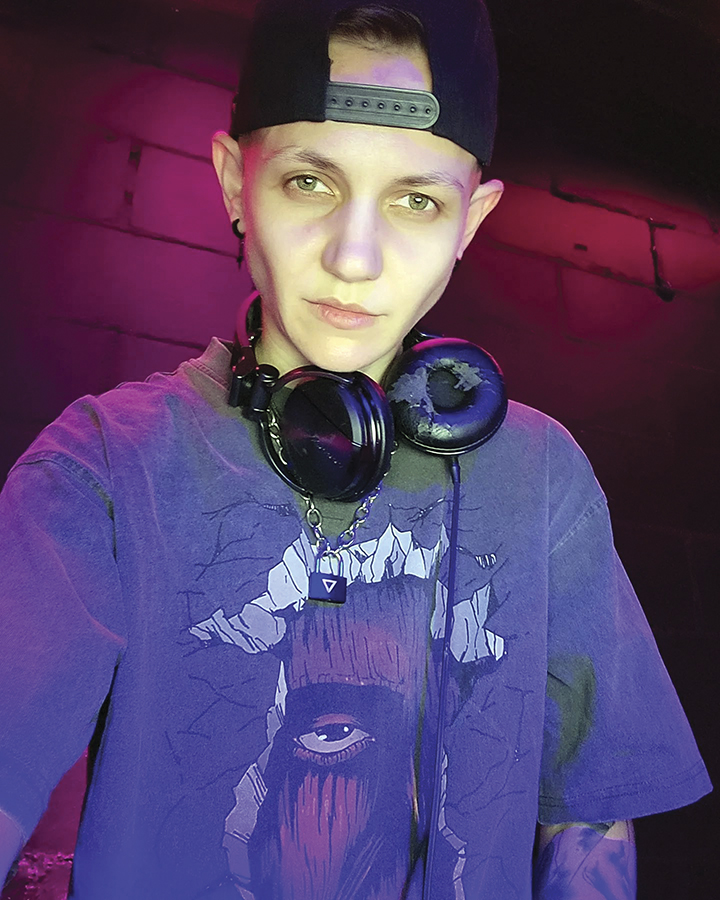
DJ Monstar
“When I put my stethoscope down, I pick up my headphones,” says DJ Monstar. “DJing is my release from the critical and demanding hours of the operating room. Both worlds require presence, endurance, precision, and the ability to read both the room and the moment, and both are deeply a part of who I am.” Born Mila Polyak, the Ukraine native is a cardiothoracic operating room nurse who worked in the ICU during COVID before transitioning into the operating room, and expanding into cardiovascular and neurosurgery. She also serves as an on-call sexual assault forensic examiner (SAFE) who works with survivors of domestic violence and other emergencies. As a DJ, she has opened for Ja Rule and played at multiple NYC Pride parades and festivals, as well as events for Showtime, Tiffany & Co., and HBO. She is now a regular DJ for the popular NYC queer dance party Hot Rabbit. What’s next for the New York-based multihyphenate? “My future is rooted in continuing my education and becoming both a nurse practitioner and a registered nurse first assist (RNFA), specializing in cardiothoracic surgery,” Monstar says. “I want to deepen my clinical knowledge and take on greater responsibilities in the operating room, contributing meaningfully at the moments when patients are most vulnerable. Moving forward, I am committed to continuing to save lives in the operating room while also helping create safe spaces for the LGBTQ+ community.” – LE
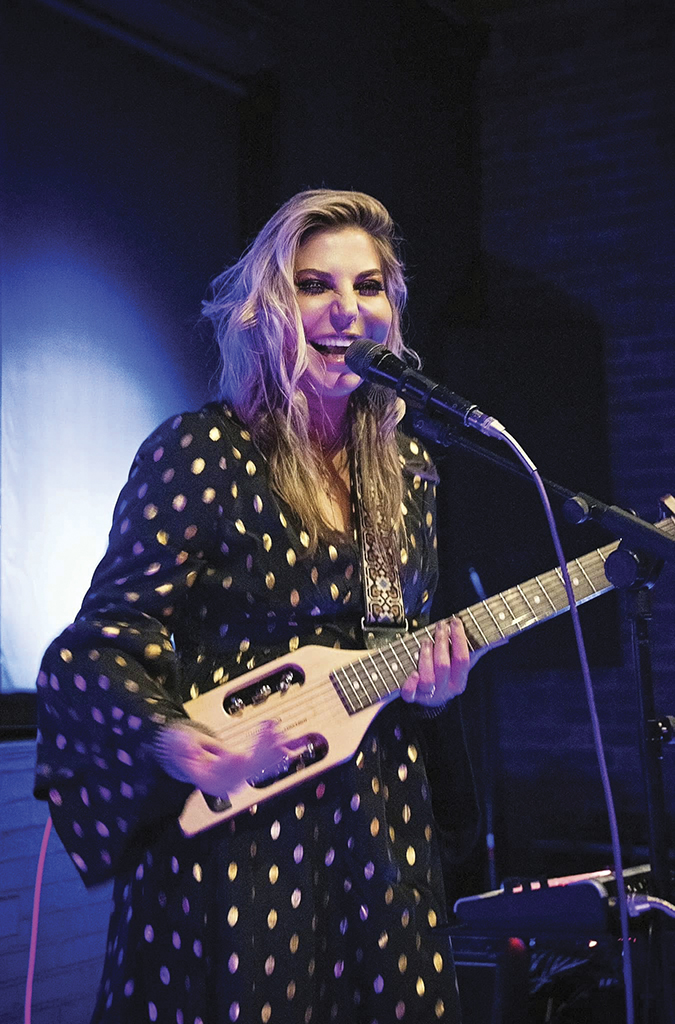
Laura Cheadle
Laura Cheadle came out of the closet at age 4 and “literally came out of the womb singing,” she tells GO. A self-described “old soul,” she grew up to wield a sultry voice and driving guitar rhythms for audiences seeking honesty and that intangible something that can help make life’s harder times easier to bear. “I grew up in an extremely musical family, so I fell madly in love with performing live at a very young age. When a girl broke my heart as a teenager, I just knew I was destined to write music and use it as an outlet,” the Philly-based singer-songwriter says. For over a decade, Cheadle has brought her pop, soul, and rock sound to the stage with her award-winning family blues band, opening for groups like Big Freedia, Sister Hazel, and many more. Now, she’s freshly launched an all-lesbian girl band with her wife, Michelle. Laura Cheadle + The Girls perform globally, joyfully advocating for women and the LGBTQ+ community. “Showing our love story amazingly helped several people come out of the closet,” Cheadle says. “I love hearing everyone’s coming out stories on the road, and [the band] is my passion project to show love is love and true authenticity.” The band’s debut album and music video for the lesbian-themed song “Lola Has A Girlfriend,” based on her real experience with a Lola, released in late March of this year. – MH
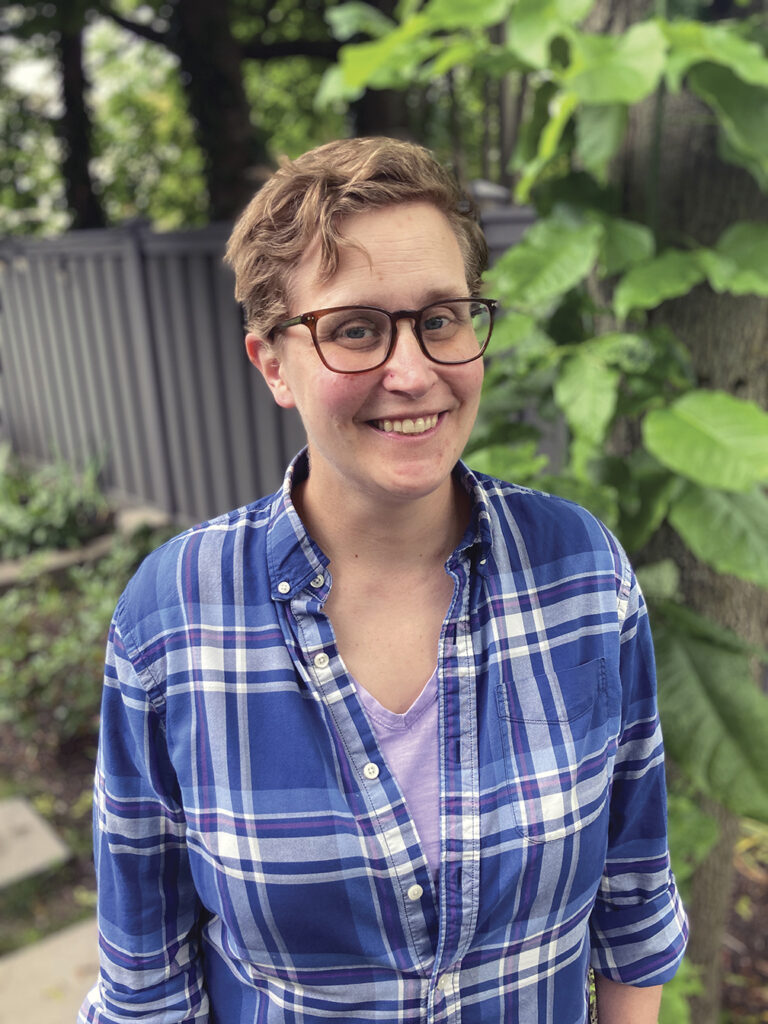
Kate Cochrane
“It’s a privilege to be able to write the kinds of books I want to read—books about queer athletes falling in love with each other, with non-athletes, during the Olympics, at the holidays, and in every kind of setting I can dream up,” author Kate Cochrane says. The author of three novels, Yours for the Season, Wake Up, Nat & Darcy, and the upcoming Pulling the Goalie, started writing when her youngest child was born. As a stay-at-home mom, she wanted something that was just hers, so she started writing a little every day. Her first book wasn’t published until her youngest was 13, and she “had plenty of time to get rejected by agents and then later, once I had an agent, by publishers.” But she kept writing. “I’ve heard people say that an author is just a writer who didn’t give up, and I don’t know if that is true for everyone, but it’s certainly true for me.” The author only plans to write books about queer women. “I have spent so much of my life consuming stories in many different forms about straight people, and I am happy to be able to read and watch so much now that is about people like me.” The most rewarding part of her work? The people who connect with her writing. She says, “I feel so lucky that I get to be a small part of these people’s lives by sharing stories I loved writing.” –SS
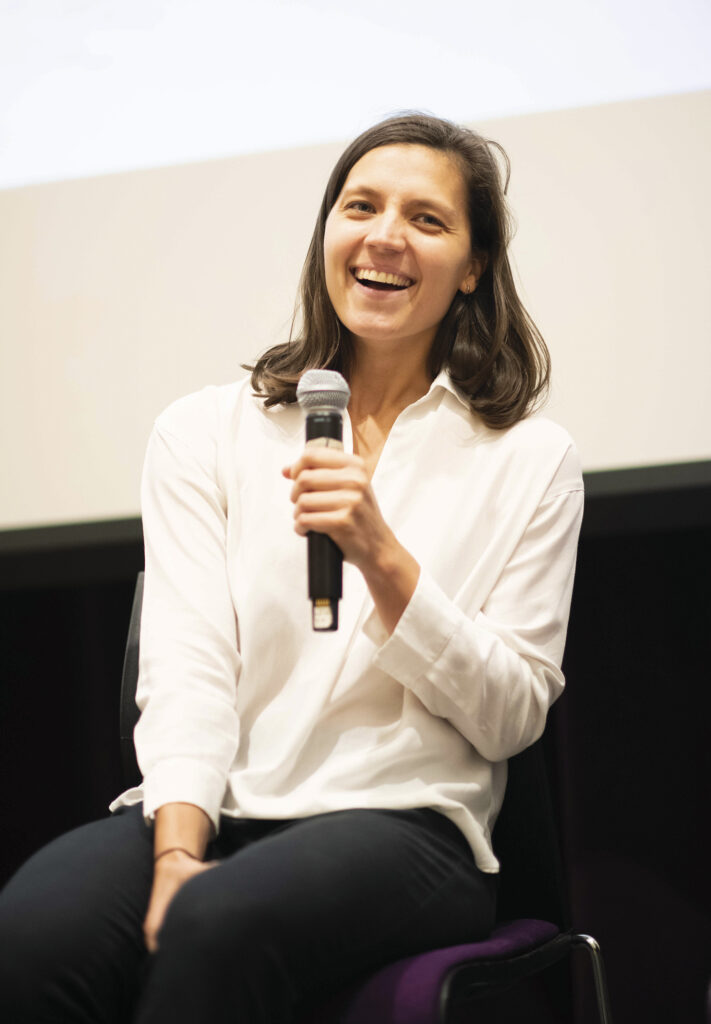
Meghan McDonough
Filmmaker, journalist, and herstory enthusiast Meghan McDonough is passionate about telling stories that center queer and lesbian history. “One of my main goals with Old Lesbians was to bridge the age gaps that exist in the lesbian/queer community,” she says of her documentary short, which uses animation to make Arden Eversmeyer’s “Old Lesbian Oral Herstory Project” accessible to younger audiences. The film made the 2024 IDA Documentary Awards Best Short Documentary Shortlist, was commissioned by The Guardian, and has screened at venues around the world. “After releasing the film, I was amazed by all the intergenerational connections I witnessed in person at screenings—older and younger members of our community sharing and learning from each other at LGBTQ centers, universities, and film festivals. There is so much desire on both sides to connect, but not many spaces to do so.” Inspired by the powerful friendships she formed with film participants, McDonough launched an intergenerational pen pal exchange in early 2026 in collaboration with the American LGBTQ+ Museum, which also screened Old Lesbians. McDonough is currently in production on a documentary project about Lesbian Connection, the longest-running continuously published lesbian periodical. She is also co-developing a documentary about queer archives around the world with German-Vietnamese writer/director Hồng Anh Nguyễn. “I firmly believe that we can’t be what we can’t see, and in that sense, the queer archivists I’m focused on are doing life-or-death work. We have always existed, and we will always be worth saving.” –MH

Heather Shaw and Lilly Jean Coiner
Stand-up comedian and popular TikTok personality, with nearly 3 million followers, Heather Shaw doesn’t mince words on her career path: “With this face, I kind of had no choice. I’ve always wanted to be a comedian and knew that’s what I was going to do with my life.” Her wife, Lilly Jean Coiner, on the other hand, credits her late father, Andrew T. Coiner, also an attorney in Kentucky. “I grew up seeing people thanking my father for helping them through some of their most difficult moments, and I wanted to emulate that positive impact,” she says. Coiner pays it forward with her expertise in professional license regulation, creating safe spaces at work for members of the LGBTQ+ community. The two tied the knot this past New Year’s Eve, and say they inspire and support each other, sharing a deep joie de vivre. Shaw has publicly said that Coiner is the funnier one in the relationship—and if anyone knows the power of comedy, it’s her. “If someone is going through a breakup or just has had a rough day, at least they can view my content and forget about it for a minute,” Shaw says. Looking ahead, Shaw is excited about her first stand-up special, Alright, See Ya!, which debuted May 14 on YouTube, a new tour, and acting. Coiner aspires to “continued happiness and inner peace.” Both look forward to doing life together. –MH
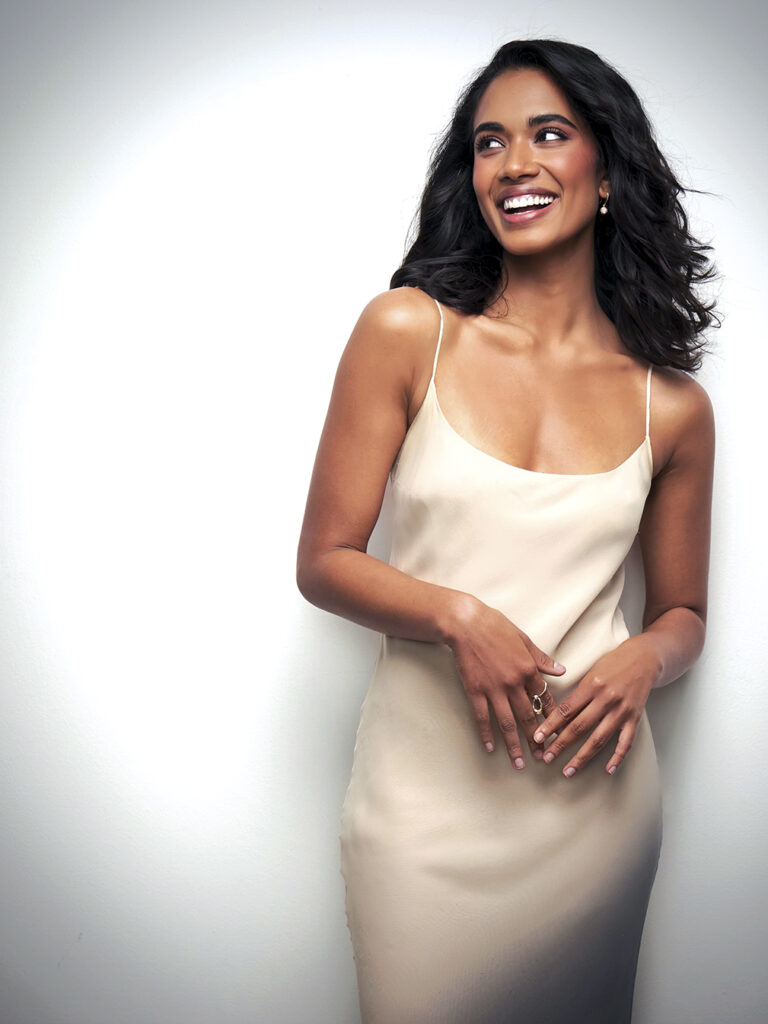
Supriya Ganesh
If you consider yourself an armchair ER doctor, you’re likely a fan of Dr. Mohan from The Pitt. And yes, Supriya Ganesh, the actor behind the beloved character, is just as likable in real life. The Indian American actor first broke into acting in New Delhi, where she grew up, and later moved to the United States to pursue her love of performing further. She says, “Getting to inhabit other people and characters that are vastly different from me is such a gift. It’s so lovely to constantly learn and be curious about the world and the people around me.” Even though Dr. Mohan has been her breakout role, Ganesh is no stranger to television. She has made appearances on Billions, NBC’s New Amsterdam, Law & Order: Special Victims Unit, and Chicago Med. When she’s not busy gracing our screens at home, she’s often jetsetting to new destinations. “Traveling is very important to my psyche! I try to take at least one trip a year, preferably internationally and in a country where I don’t know anyone or speak the language.” Amid her demanding schedule on set and her adventures abroad, Ganesh also finds time to relax at home in Los Angeles with her cat, Rosie. –ER
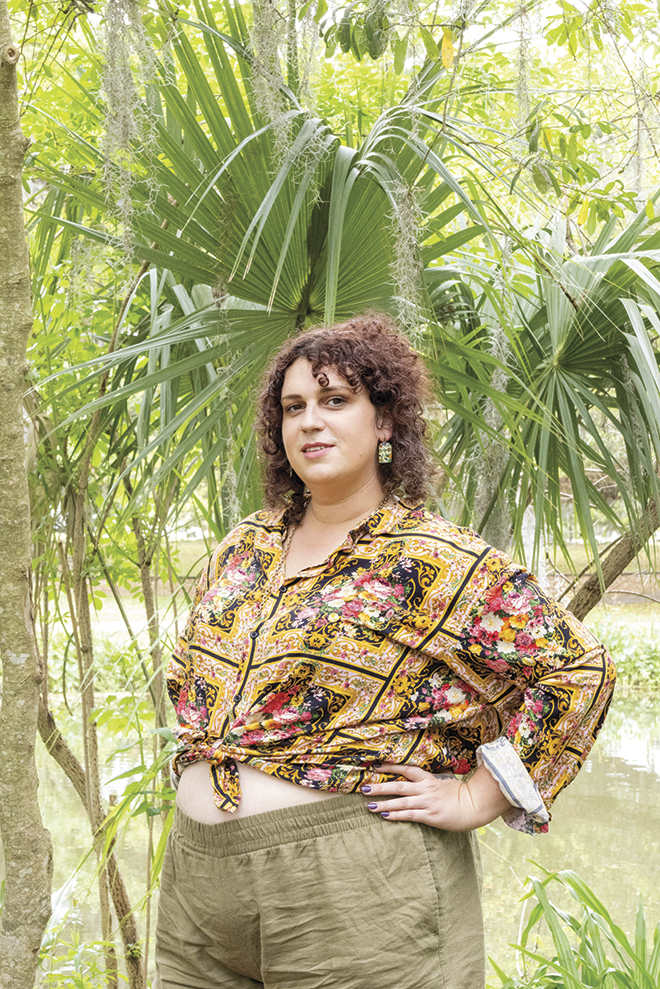
Quinn Bishop
Quinn Bishop is the ultimate history nerd when it comes to the New Orleans queer underbelly. From lesbian street gangs in the sex industry to drag queens under mafia employment to the rise of modern gay nightclubs, such are the gems to be discovered on her Queer Underground Tours, founded in 2019. Bishop also creates videos for her social media spotlighting lesser-known stories of queer history in the South, and penned the play Dixie’s Holiday Bar about an iconic 1950s gay club. “The most rewarding part of my work has been seeing how many people have been able to connect with the stories,” says Bishop. “Film is such a collaborative medium that I have learned to slow down and bring my team with me, which has also given me some true friends for life.” She is often stopped on the street by people who have connected to NOLA’s queer history through her work, including queer elders who lived through the very stories that Bishop guides others through. Bishop aspires to create a feature film adapting her tour for the big screen. “Queerness is central to everything about my work; it colors the kinds of stories I am able to tell.” But as a transgender woman, she has found that her work has been taken less seriously at times. In response, she created “a deeply silly persona as a kind of armor,” a character that ultimately allowed her to imagine herself as happy. Over time, “I learned to become so,” she says. –MH
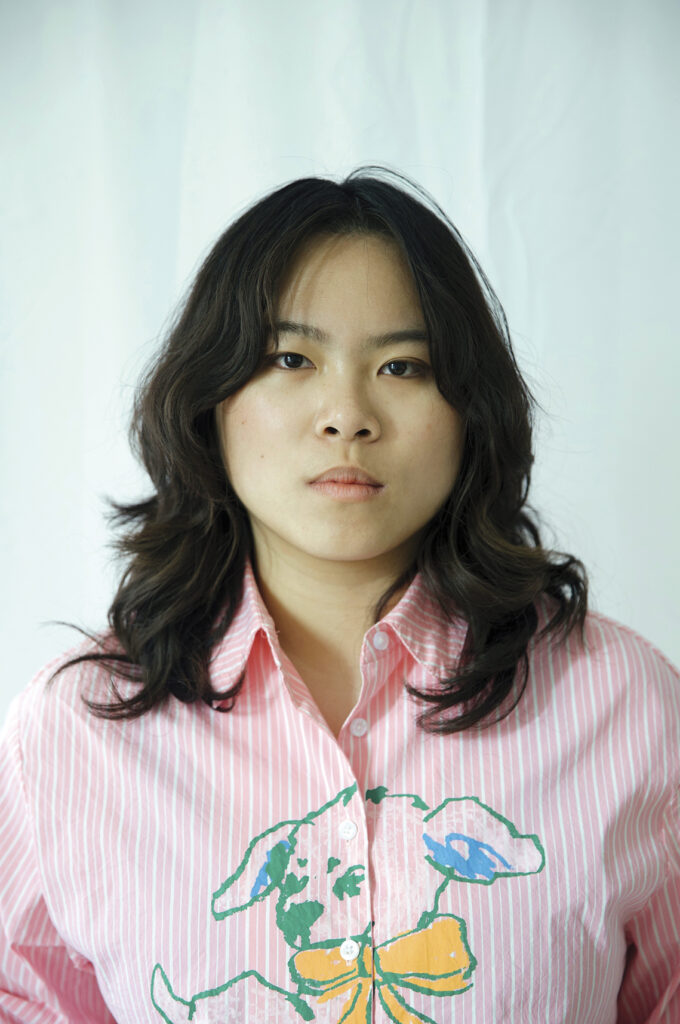
Lechen Zheng
“Even though many people don’t see eroticism as a serious topic, I am still trying to use my own art language to explore how it holds meanings in gender narratives,” says Lechen Zheng. “I often get inspiration from my own stories, and honestly, they can be a bit heavy. But I choose to present them with humor.” The London-based, cross-cultural artist and researcher focuses on desire and feminism, as well as queer intimacy and fetishistic cultures. She works across multiple mediums, including photography, ink painting, and edible sculptures. “I realize that I am sharing painful stories with a smile, and people respond by laughing and saying, ‘I relate to this,’ ‘Me too,’ or ‘This happened to me as well,’” says Zheng, whose work has won multiple international awards, been acquired by institutional collections, and displayed in London, Athens, and Detroit. “That’s when I feel the deepest sense of accomplishment—allowing myself and others to face past trauma that comes from being who we are more lightly. To find release through laughter means [more] to me than anything else.” Part of Zheng’s long-term plan is to pursue professional training in art therapy. “I want to be a person who can truly help people who are suffering from sexual issues, whether physically or mentally,” she says. “I wish to combine [art therapy] with what I’m doing now to find more possibilities between art, women, and society.” –LE
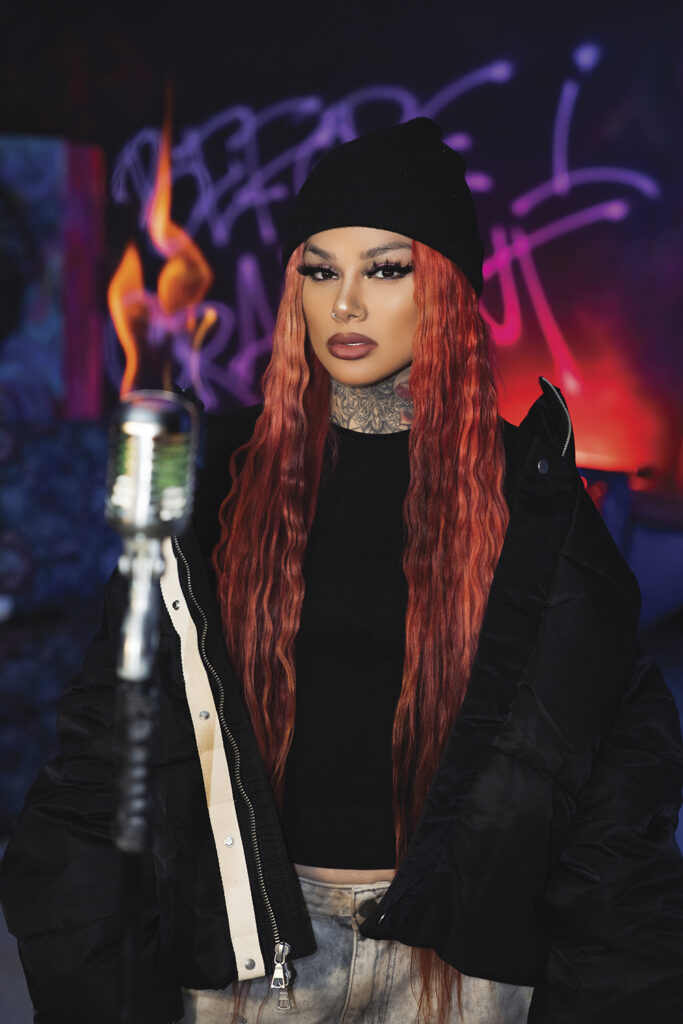
Snow Tha Product
“The most rewarding part of what I do is hearing from people who feel seen because of my music. Whether it’s women, LGBTQ+ people, children of immigrants, or anyone who’s ever felt like they didn’t belong, knowing that my story helped someone embrace their own means everything to me,” says Snow Tha Product. The Mexican American rapper, singer, songwriter, entrepreneur, and independent artist is known for doing things her own way—authentically. The mother and business owner burst onto the music scene in 2007 and hasn’t let anything slow her down. She tells GO that being an LGBTQ+ woman impacts everything. “Becoming comfortable with who I am allowed me to be more honest in my music, my relationships, and the way I move through the world. Representation matters, especially for people who grow up feeling like they have to hide parts of themselves. If me being open about my journey helps someone feel more accepted, then that’s something I’m proud of.” Snow Tha Product’s bilingual lyrics and outspoken advocacy have helped her build deep connections with her fans. As she keeps growing and making music, she says, “I want to keep building a legacy that’s bigger than music. I want to continue creating, growing my businesses, being present for my family, and using my platform to advocate for the communities I care about. At the end of the day, I hope people remember that I stayed true to myself, stood up for what I believed in, and always tried to leave things better than I found them.” –SS
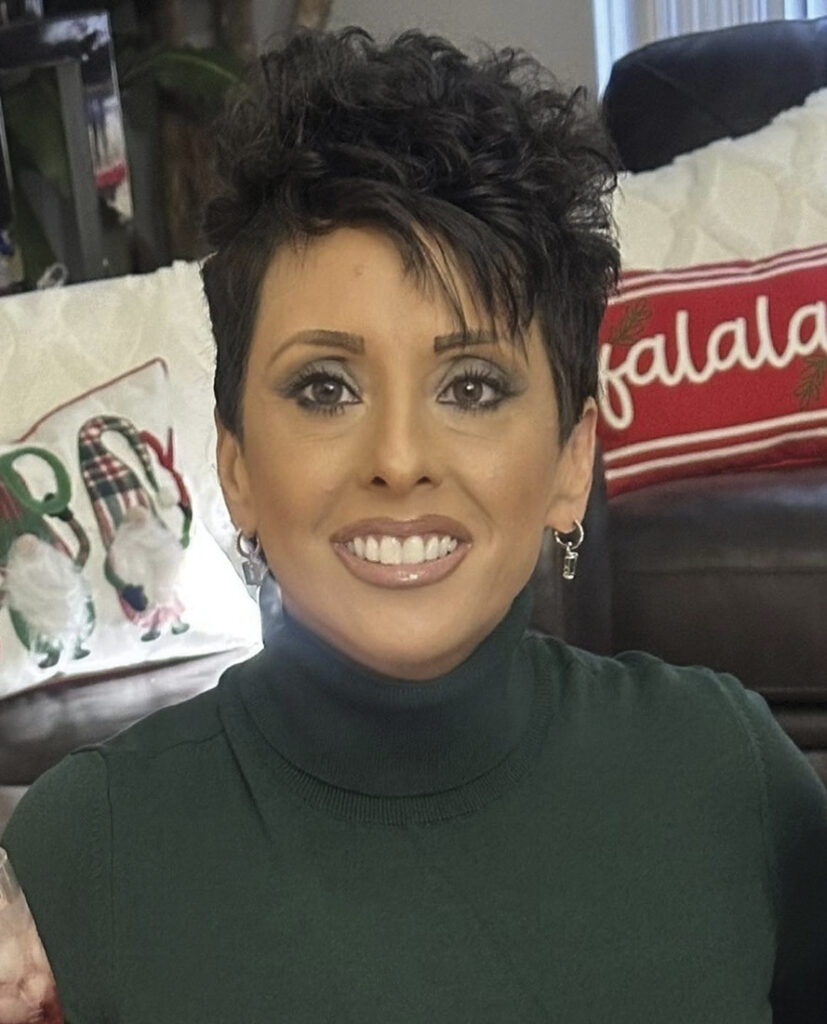
Monique Force-Setlock
“I chose a career in advocacy because I’ve always believed that our stories, especially women’s stories, shape the world we can imagine for ourselves,” Monique Force-Setlock tells GO. “I’ve seen how often LGBTQ+ women’s stories are overlooked or unrecorded. As Stonewall’s director of advancement and the National Women’s Fund, I’m committed to changing that by building the resources and visibility needed to ensure that queer women’s lives are preserved, celebrated, and centered in our national narrative.” A nonprofit development leader with over 20 years of experience, Force-Setlock oversees all fundraising efforts for the Stonewall National Museum, Archives & Library. She also serves as director of the Stonewall National Women’s Fund, where she helps grow Stonewall’s national presence, elevate LGBTQ+ women’s history, and extend the institution’s impact through community investment and strategic philanthropy. Force-Setlock’s previous position was director of development at Palm Beach County’s Aid to Victims of Domestic Abuse (AVDA), where she spearheaded robust fundraising initiatives and created signature events, including the Heart of a Woman Luncheon, which featured high-profile speakers like Elizabeth Smart and Olympia Dukakis. When asked what culture helped shape her own identity, Force-Setlock replied with a book title. “At a time when so many lesbian stories in books and films ended in sadness and tragedy, [Rita Mae Brown’s] Six of One offered something different,” she says. “It was the first time I encountered queer women living boldly, hilariously, and unapologetically, and it showed me that our lives could be central, joyful, and worthy of storytelling.” –LE

Daisy Ifama
“The YouTube web series The Peculiar Kind was really important to me growing up,” says Daisy Ifama. “I was able to see mostly Women of Color, embodying all different types of gender expressions, [and] living their lives in a community I quickly realized I wanted for myself—talking about relationships, culture, sex. That really made me see what kind of life I could be living as a queer Black child that played with gender expression.” Now a filmmaker and creative, Ifama’s work reflects her early influences, inviting viewers to consider identity, community, history, and power in different ways. From Netflix’s Twinkleberry: My Super Gay School Year, which examines queerness in small-town England, to RIP Seni for The Guardian, exploring police brutality, justice, and mental health in London, Ifama’s work is inspired by her own identity and aims to inspire communities to liberate themselves. “I’ve been very lucky to be raised in a fairly queer culture, and I feel blessed to have been given the gift of queerness, to see myself as existing outside of society’s expectations and to have forged my own identity and path,” Ifama tells GO. “It can feel very lonely to not see the way you see yourself reflected in the world, so I feel honored to be a part of building that up for future queers. I think we are always evolving as queer people and as humans, so I hope to keep evolving in the same way in my work.” –LE

Anandrea Molina
When Anandrea Molina entered the U.S. as an undocumented trans woman in 2001, she had no idea she would go on to lead Organización Latina Trans in Texas. Since 2015, OLTT has empowered trans Latinx people in Texas, offering shelter for trans-LGBTQIA+ migrants, name change and gender marker programs, support for survivors of sexual assault and human trafficking, immigration legal services for undocumented LGBTQ+ migrants, and more. Molina—herself a survivor of abuse, addiction, and homelessness—turned her lived experience into action. “It all stemmed from the discrimination and stigma against us, Latina trans migrants. It was a moment when you decide to say ‘enough’ to so much prejudice and discrimination—even from within our own LGBT collective,” she tells GO, referring to a pivotal incident when four trans women were excluded from a queer event in Houston. “For us Latinas, nothing is easy and even less so when we are migrants. We do not migrate alone. We migrate carrying everything that forced us to flee our countries. Our culture travels on our backs, loaded with all the suffering and stereotypes about who we are and who we are supposed to be: biological men or women. So how do you build yourself up to be real?” Promoting trans joy is one way. The organization celebrates Día de los Muertos, a Christmas posada, the Ms. and Mr. OLTT pageants, and last year’s “retro quinceañeras” for Latina trans women in their 50s who had long dreamed of participating in the traditional coming-of-age celebration. –MH

Joli Robinson
“Being a Black woman who identifies on the LGBTQ+ spectrum has been my superpower,” says advocate Joli Robinson. “My identities have given me a passion for equity work and honest and authentic conversations about race so that we can work to move towards a more equitable, inclusive, and affirming world.” Robinson is the current CEO of Center on Halsted, the leading LGBTQ+ center in the Midwest dedicated to securing the health and well-being of Chicago’s LGBTQ+ community. “The most rewarding part of my work has been service alongside and for the community,” says Robinson, who has two decades of leadership experience in the private, public, and nonprofit sectors. “The sense of caring for others, sharing what we have, and ensuring that all folks who sit at the table can be fed, literally and figuratively, comes from my upbringing and roots.” Robinson previously served as president and CEO of Housing Forward, changing the narrative around housing and homelessness and advocating for racial equity. When the going gets tough, Robinson chooses joy and faith. “I definitely feel all the feels of setbacks and adversity and ensure I never restrict myself from feeling those emotions, but I also remind myself that this moment will pass,” she says. “I am also a firm believer in a higher power, so whenever those setbacks come my way, I know that there is also something for me to learn or gain from experiencing what can be a valley in my life.” –LE
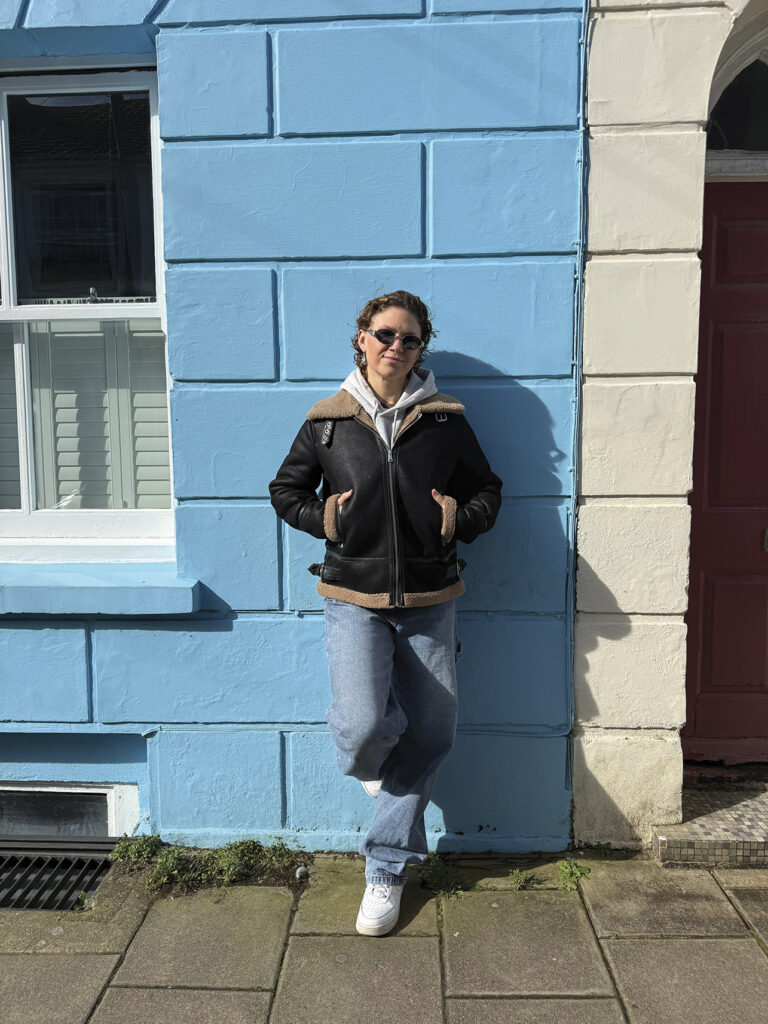
Hannah
Hannah may only use one name, but she is the definition of a multi-hyphenate. She’s a rugby player, content creator, children’s social care worker, and is known online as “Lesbimum.” Hannah tells GO that she loves connecting with people from all over the world. “I think we’re all intuitively drawn to human connection and community, and I love that I’ve been able to somehow nurture that through social media.” Hannah, who says that content creation is her hobby, has amassed a huge following on both Instagram and TikTok with her videos about being a lesbian parent and athlete. She covers everything from navigating awkward conversations with your kids and sharing funny mom reactions to providing workout and rugby coverage and discussing queer life and relationships. Hannah says she’d like to write a book on inclusive parenting next, “specifically addressing overcoming and unlearning societal norms and boundaries as a parent.” She also says she knows adversity exists for everyone, but as someone who is LGBTQ+, “it’s about showing up, building a support network, and having people around you to keep you grounded. I’m so lucky to have friends who will always be family, and I see it as a testament to our community that women and queer folks show up for each other time and time again.” –SS
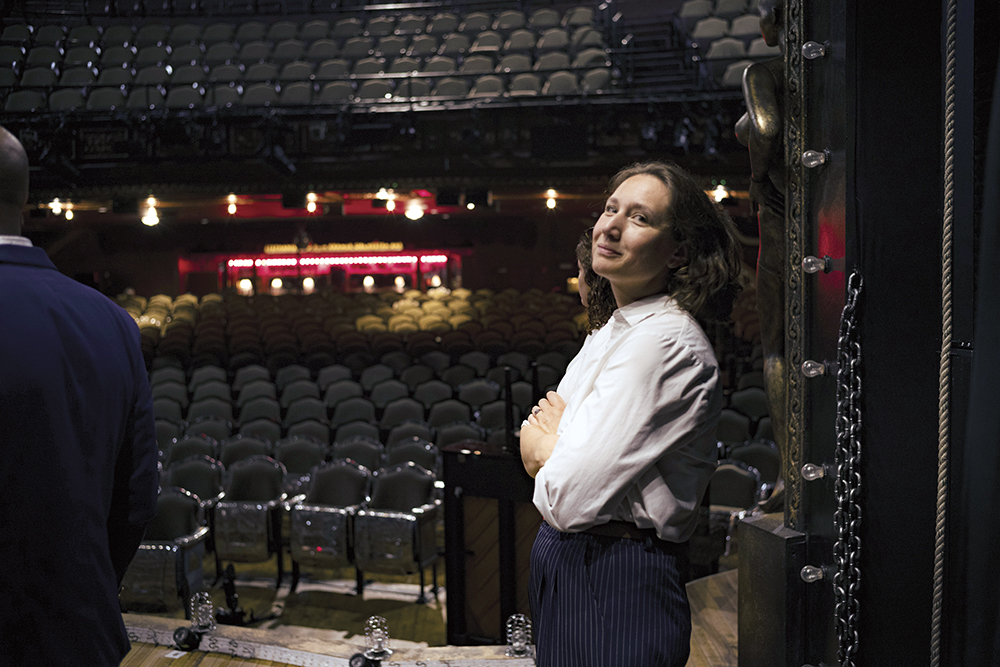
Rose Christ
Rose Christ built her career at the intersection of advocacy, government, and community impact and has shaped some of New York City’s most ambitious cultural projects. As co-chair of the New York Public Strategies Practice at law firm Cozen O’Connor, she has helped raise millions in funding for major public initiatives ranging from arts organizations to housing developments. For Christ, the most rewarding part of her work is building human connections. She tells GO, “My path was shaped by people who took the time to bring me under their wing and teach me advocacy, government, and business, and paying that forward is both a privilege and a joy.” Whether mentoring the next generation of leaders or collaborating with clients, she is driven by the relationships that define New York’s political and civic ecosystem. As a queer woman in an often intimidating professional landscape, Christ says her identity has helped her build meaningful relationships with others who share a sense of purpose and belonging. That sense of community continues to inform how she leads with intention and a commitment to authenticity. Her perspective on leadership has also evolved alongside her personal life. As a mother raising a young son on the autism spectrum with her wife, Heather, Christ brings a deeply personal lens to her work. She hopes to use “the skills I have built to advocate not only for clients, but also for greater support and opportunity for people with disabilities and their families.” –AK
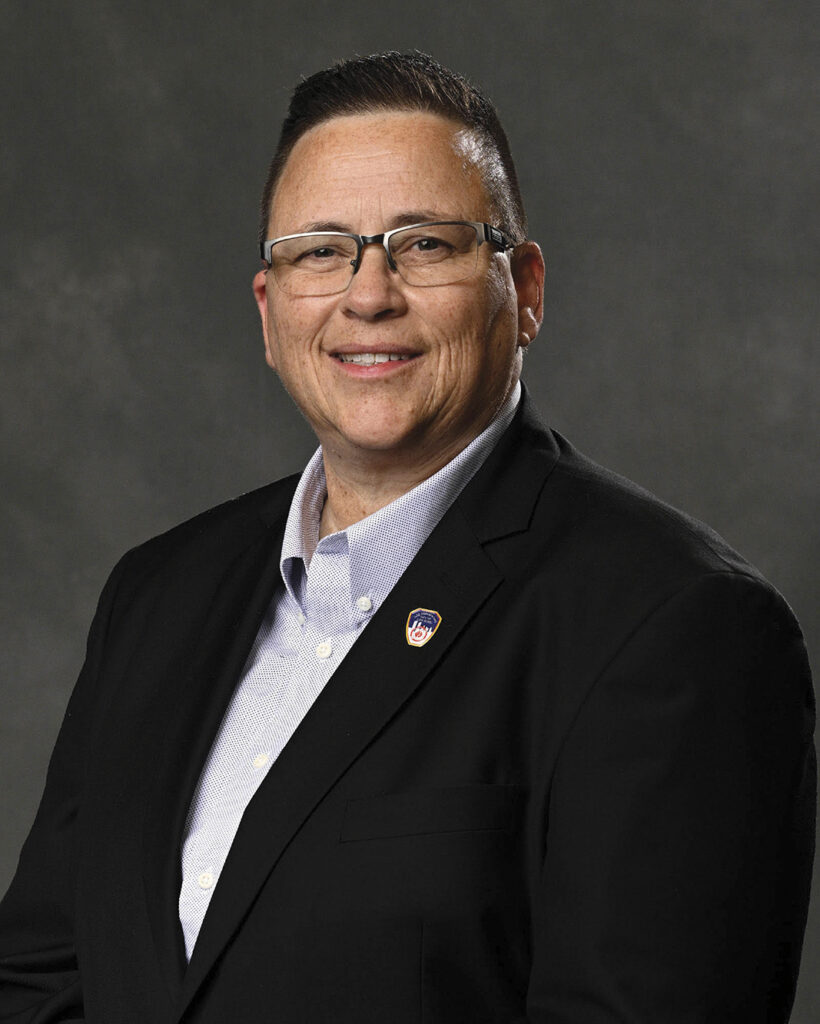
Lillian Bonsignore
“I am mindful of the history I carry as the first commissioner from the EMS ranks, but I don’t just lead a bureau; I lead the greatest all-hazards emergency response force in the world,” says Lillian Bonsignore, NYC’s 37th fire commissioner—the second woman, and first openly gay person appointed to the role. Since being sworn in on January 6, Bonsignore has set out to build a stronger, more resilient, and more unified FDNY. “Whether it’s a firefighter on a roof, an EMT or paramedic in a cramped hallway, or a civilian analyst at headquarters, every single one of our 17,000 members is a vital link in the chain of survival. To be the one charged with their safety and success is the greatest honor of my life.” Born in the Bronx, Bonsignore became an EMT in 1991 and moved up the ranks of the FDNY to become the first woman appointed chief of EMS. With unwavering courage, she has faced some of the city’s greatest challenges, including the 9/11 attacks, and being deployed on rescue and recovery operations. Over more than three decades, Bonsignore has seen the fire department at its most tested. “From the devastation of 9/11 to the sheer exhaustion of the pandemic, we have faced unimaginable adversity. But we never face it alone. We deal with setbacks by leaning on each other. Resilience isn’t a solo sport; it’s the collective strength of thousands of people refusing to give up on our city or each other.” –MH
Rosie Jones
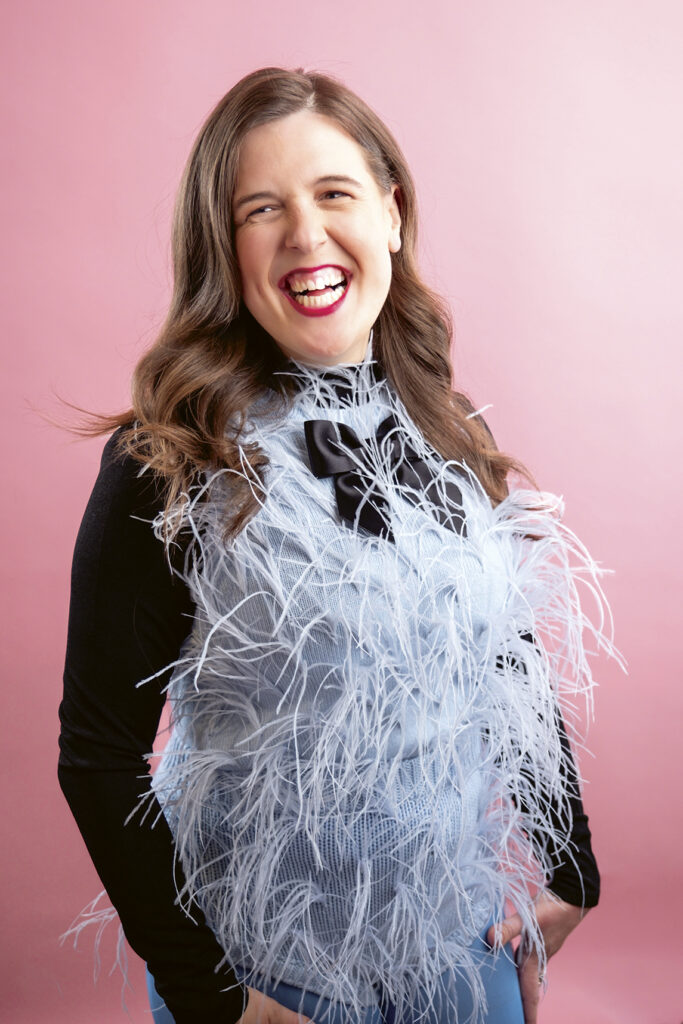
Rosie Jones is one of the most joyful voices in contemporary British comedy, carving out space as a proudly queer woman with a disability in an industry that hasn’t always made room for her. Known for her razor-sharp wit and unapologetic delivery, she is a familiar face across television, appearing on panel shows and series like Taskmaster and hosting Out of Order, while also creating and starring in her own work, such as her BAFTA-nominated sitcom Pushers. Her comedy is rooted in lived experience, blending humor with honesty about disability, identity, and belonging. She tells GO, “I come from a funny family, so I grew up in a home full of laughter and joy. That gave me an understanding of the importance of comedy, and a little light relief amongst this increasingly scary and overwhelming world.” Jones speaks openly about the challenges of navigating a male-dominated space and says she draws strength from her queer community, who “have always been my loudest supporters, and I feel confident going into the world knowing that I have their support. I always joke that every audience member at my tour shows [is] disabled, or gay, or both!” Offstage, through The Rosie Jones Foundation, she works to support people with cerebral palsy, focusing on mental health and visibility. Whether writing, performing, or campaigning, Jones is driven by a simple goal: to make people laugh and to make a difference while doing it. –AK

Kristin Key
Even though Kristin Key’s hilarious viral videos on social media—including the iconic “Lesbian National Anthem”—have over 100 million views from her more than one million dedicated followers, the comedian tellsshe first got into comedy because she was depressed. “I’d had a rough time coming out. I’d lost my church family. My family and I were not getting along, and I went back in the closet to try and salvage what few family and friends I still had. I was in college to become a paramedic, and I was miserable. I tried stand-up when I literally had nothing to lose.” She chose to be a comedian because it brought her joy in the darkest point in her life. Key supports local nonprofits with every tour date, and she says the most fulfilling part of her work is, “I get to create a safe, inclusive space for people. The most rewarding aspect of my work is when people come up to me after the show and tell me how much they needed to laugh.” Key has seven full-length comedy albums, one studio music comedy album, one Dry Bar comedy special, and has appeared on NBC’s Last Comic Standing. Her debut feature-length comedy special, Lesbian Army, is available on Apple TV+, Amazon, and more. Her vision for herself is to become even gayer. She says, “My goal is to use my voice and my platform to showcase queer joy as an act of resistance.” –SS
Dykanite
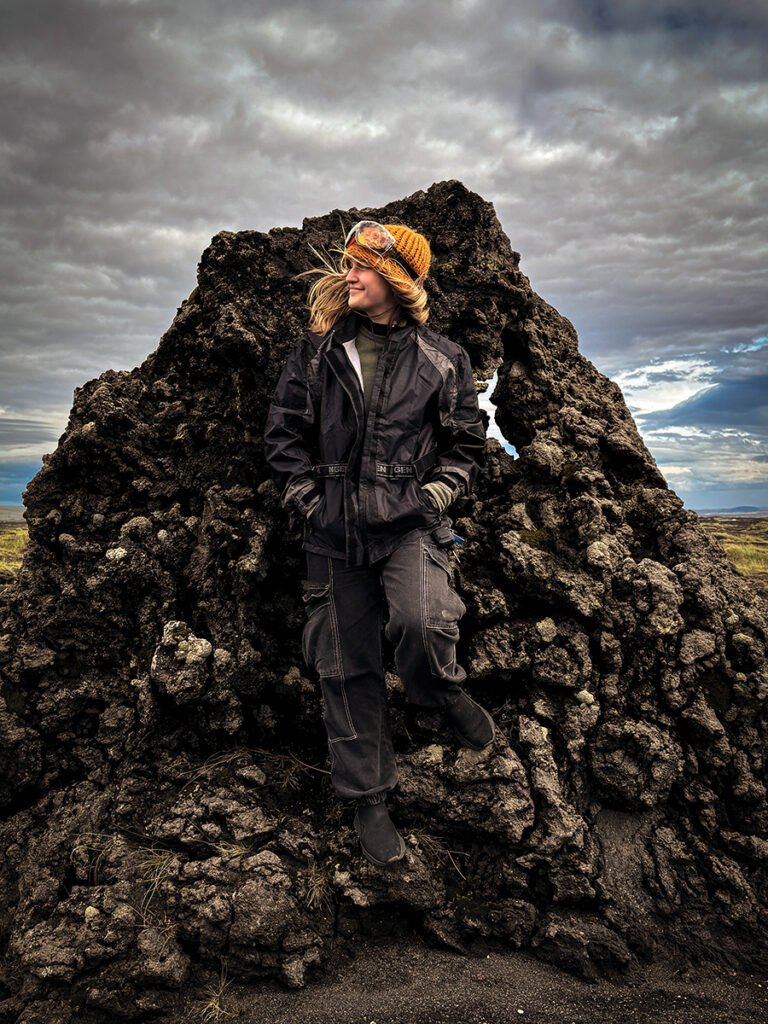
Dykanite is a researcher and science communicator in volcanology who graduated from the University of Florida, where she focused on underwater volcanoes. She worked as a laboratory technician in Alaska and a deep-sea geologic contractor, and now she’s a PhD candidate who researches volcanic processes above and below the water. But she didn’t always know she wanted to study geology. She started in pre-med and even went to nursing school before discovering her love for Earth science. Dykanite tells GO that she partially grew up in Alaska, and “the ocean was a big part of my everyday life back then, so I was inspired to take an oceanography class. It was in this class that I learned about mid-ocean ridge volcanism—a 40,000-mile-long chain of underwater volcanoes that form our entire ocean floor…and from that moment on I was completely hooked.” Despite having found her calling, her career doesn’t come without challenges. “Women in science are often expected to shrink themselves to conform to what the men in that field find acceptable, putting us in a position where we are judged as too feminine for science but not feminine enough for society at large,” she says. Dykanite started sharing online content because she was passionate about her job and has since garnered a massive following. She’s stayed active “due to the thousands of messages I’ve received from students and peers about how much it meant to have that kind of representation in the sciences and realized what I was doing was bigger than myself now.” –SS
Jona Xiao
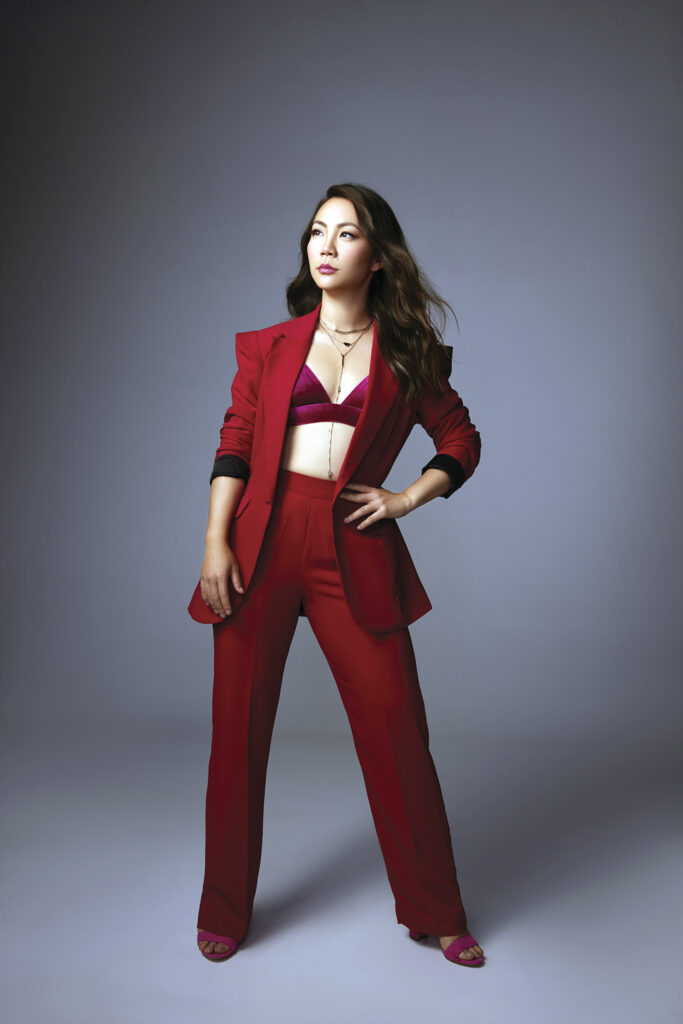
As a kid living in a trailer in Upstate New York, Jona Xiao found her refuge in movies and television, using them as windows into worlds beyond her immediate surroundings. She landed the lead in a sixth-grade play and discovered she loved making audiences laugh, feel, and connect. “That spark never left,” Xiao says. Today, the actor is known for roles on The Pitt, The Flash, Hightown, and for playing the first female Iron Fist in the MCU. The best part of her work? “Seeing the ripple effect: helping people expand what they believe is possible for themselves,” whether a viewer feels seen through a character, actors reaching goals through Career ACTivate, or a little girl deciding to pick up a football—Xiao represented the U.S. National Flag Football Team as a quarterback! She has also seen challenges, including battling a poker addiction and bulimia simultaneously. Eventually, she experienced a perspective shift: “I stopped seeing myself, or anyone else, as broken.” As a Chinese queer woman, Xiao struggled to belong, which fueled her desire to create belonging for others. “I want people to feel seen, empowered, and included in rooms they were told weren’t for them,” Xiao says. “Because when you’ve spent years wanting a seat at the table, you don’t just take one when you get it, you pull up more chairs.” –MH
Amara Ogara
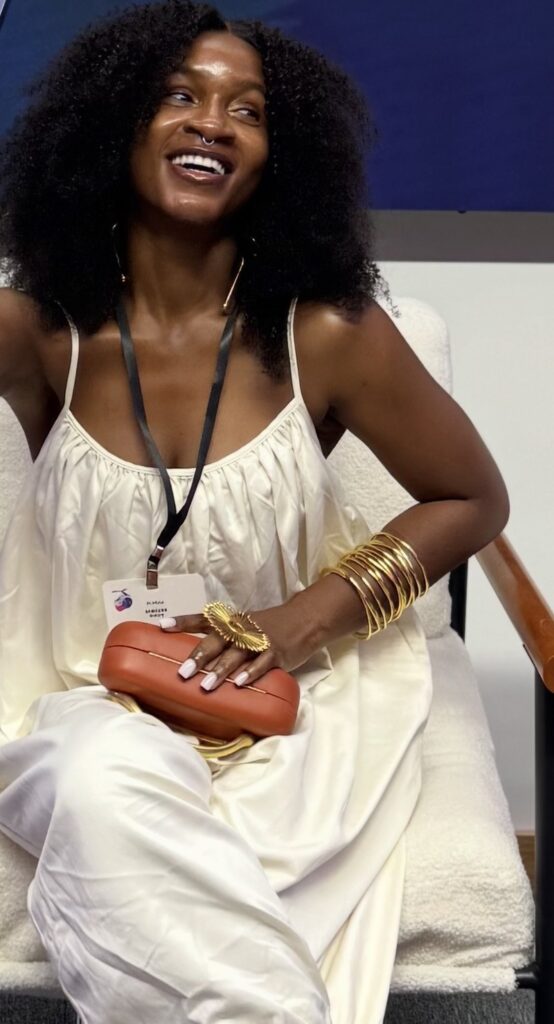
Amara Ogara has a clear mission in her work. “I wanted to tell stories that humanized the existence of queer Africans,” she tells GO. “Being from a homophobic country means you don’t get media representations or movie inclusions, and when it happens, it’s portrayed in a negative way.” Ogara continues, “I wanted to tell stories that would help to reconstruct the way people see us, the way we [see] ourselves. I wanted to tell stories that capture humanity at its soft spots, its vulnerable places, and what’s softer than when a woman loves a woman?” Her short film, This Is Not You (TINY), embodies Ogara’s storytelling style, which aims to cultivate communal wellness and enact social impact. The Minneapolis-based filmmaker, director, and content producer offers her social media followers an intimate look into her day-to-day existence as an African lesbian woman navigating relationships, migration, and selfhood. Ogara documents her daily wellness practices, which include using food as a form of medicine and care. When asked about the most rewarding aspect of her work, Ogara says, “Being a person I respect because my work isn’t that I tell stories or I plan to change the world with stories. My work is first that I exist in these stories. And I see myself. I follow myself, I witness myself, and I respect who I am.” –LE
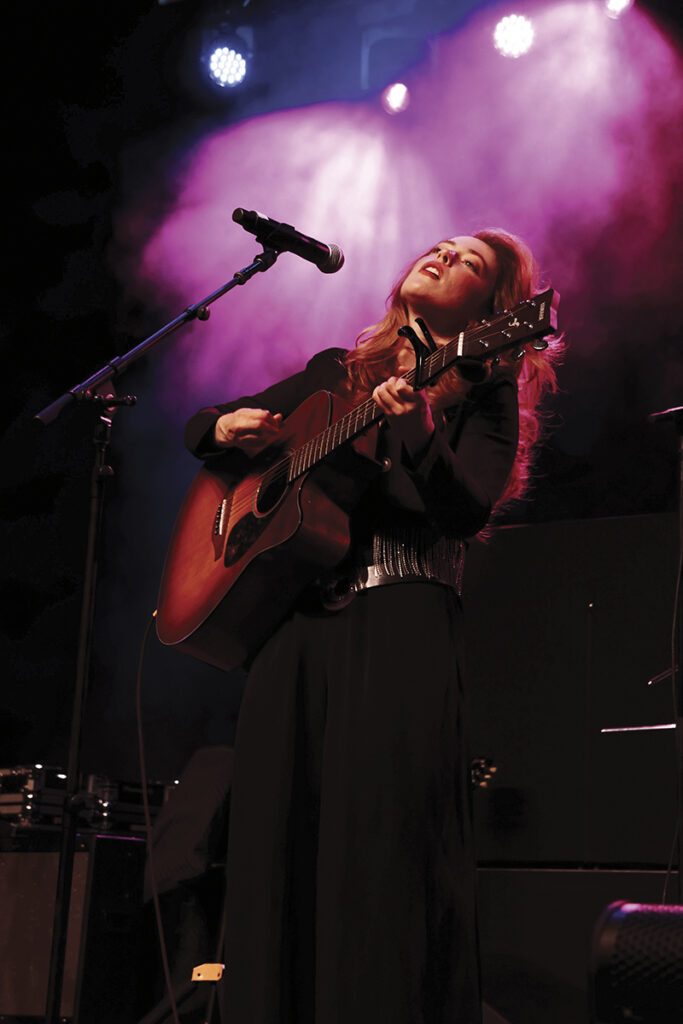
Lydia von Hof
“I think for a lot of queer people, identity is something we’ve had to examine closely in order to truly understand ourselves,” says musician and songwriter Lydia von Hof. “Uncovering my bisexuality was a journey of self-discovery, one that deepened my understanding not just of who I love, but of who I am. That kind of introspection naturally finds its way into my work, bringing a more layered and nuanced perspective to everything I write.” The New York-based artist’s music, which blends folk, rock, jazz, and country, has garnered millions of streams on Spotify. She’s performed at SXSW, the O+ Festival, and venues like Madison Square Garden (as part of a halftime show for the New York Knicks), NYC’s The Bitter End, and The Hard Rock Cafe in Boston. Recently, von Hof was named winner of the ASCAP Writers’ Showcase at Belmont University, her alma mater. The inspiration for her work dates back to watching Glee at 9 years old. “The battles that come with learning who you are, especially in the face of bullying and the already turbulent setting of high school, really stuck with me, and I do believe it played a big part in the acceptance I was able to provide myself when navigating my own identity and sexuality.” The most rewarding part of her career? Connecting with people, von Hof says. “Music is a wickedly powerful bridge, and witnessing its impact in real time has been the greatest affirmation of what it means to be a songwriter.” –LE
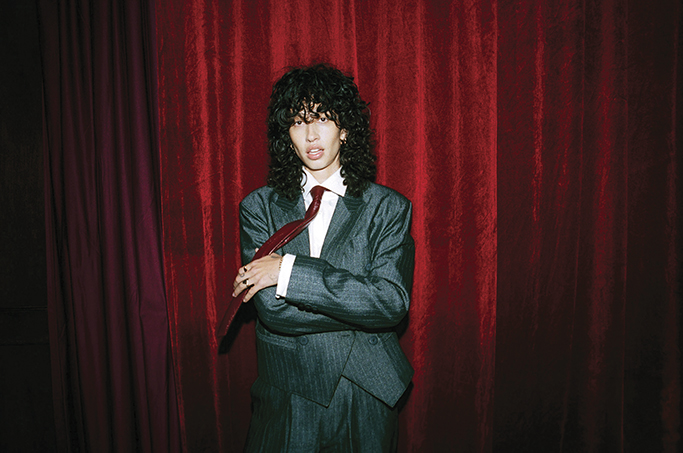
Towa Bird
It’s easy to see why Towa Bird is rock ’n’ roll’s latest “it girl.” Armed with her signature shaggy, textured mullet and carefree swagger, the 27-year-old effortlessly blends the masculine and feminine in her rock anthems. The Hong Kong-born singer-songwriter and guitarist released her sophomore album, Gentleman, on May 15, exploring themes of androgyny, sex, and self-expression. The moody album pays homage to classic ’70s rock with undertones of ’90s punk, culminating in an atmospheric tour de force that’s hard to pause. She says, “I really like the word musician. Huge fan. I watched a Jimi Hendrix documentary when I was 12 years old. His magnetism on stage was just so compelling. I wanted to be like everything he was! I wanted to play like him, dress like him, and sing like him.” That passion for performance still fuels Bird today, especially when she’s connecting with fans in queer spaces at her live shows. “My favorite part of my job is playing live shows. It’s such a cool opportunity to facilitate a space where people can feel safe, enjoy themselves, and make friends with like-minded people. So many amazing queer kids in the audience, and they’re all so goddamn funny.” –ER
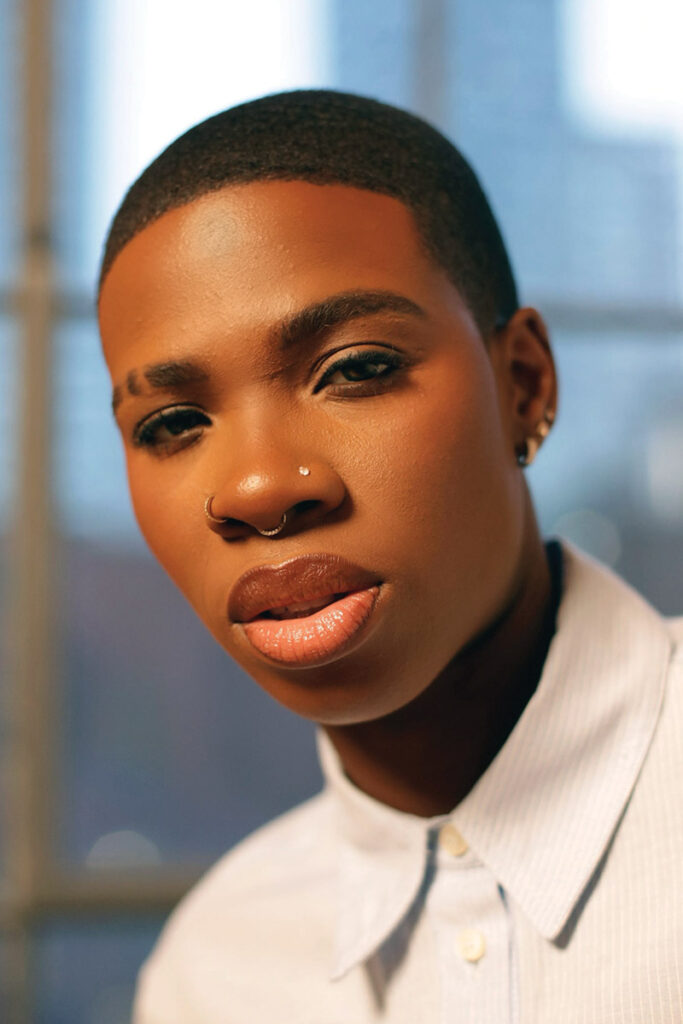
Haviah Mighty
Toronto-born rapper Haviah Mighty lives up to her name. She blends her skills as a vocalist, producer, songwriter, and performer to create deeply personal tracks that also feel accessible to her millions of listeners. Exploring themes of Black empowerment, queerness, and feminism, you can’t help but hear her passion in every bar. “I love making music with my entire soul,” Mighty tells GO. Having landed several award nominations and accolades since her debut album 13th Floor, released in 2019, the artist is only moving up in the rap world. “I want to keep making great music and taking artistic chances. I want to magnify the things I don’t even know that I know,” she says. “I want to tell stories through my albums and release art that I’m proud of,” she continued. Her identity as a Black queer woman is central to her work, especially in a male-dominated genre like rap. “Confronting discomfort has always been an anchor in my music. Being queer challenged the identity I ascribed to myself. It fragmented the artificial parts of my identity that I clung to. It exposed truths I wasn’t ready for.” –ER
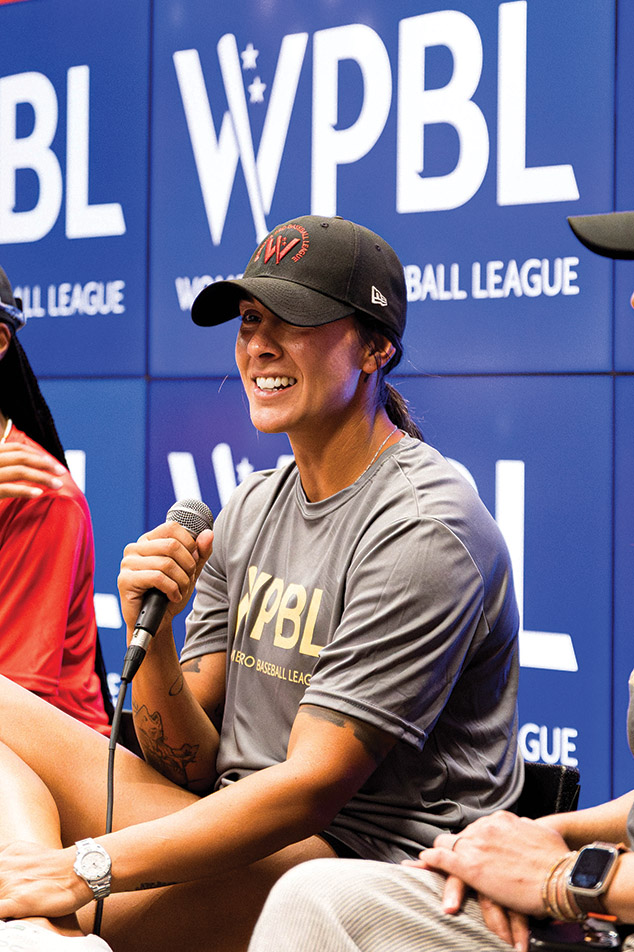
Alex Hugo
Alex Hugo has been a member of the USA Baseball Women’s National Team since 2018. She led them to gold at the 2019 COPABE Women’s Pan-Am Championship in Mexico and is a 2024 WBSC World Cup silver medalist. Hugo is the only two-time USA Baseball Sportswoman of the Year Award winner and has been recognized with multiple tournament MVP honors in her career. Last year, she stepped away from second base and into a player development and recruitment role, becoming special advisor to the Women’s Pro Baseball League (WPBL). “I really wanted the next generation of baseball players to have something stable to work towards, to have a league and a baseball platform in which they could pursue and thrive,” the infielder says. “I think with all my adventures within the sport, those players deserve a voice from someone who has been on [the] field and in their shoes.” Hugo hit the radar back when she was a softball starter at both the University of Kansas and the University of Georgia from 2012 to 2016. She also played for Team USA in 2018 at the World Baseball Softball Confederation (WBSC) Women’s Baseball World Cup. “I have been rewarded in so many ways; once in a lifetime baseball events, meeting some of the best people, and much more!” says Hugo. “But the best thing for me is being able to set a good example for my kids, and every little girl who dreams of playing at a high level.” –MH
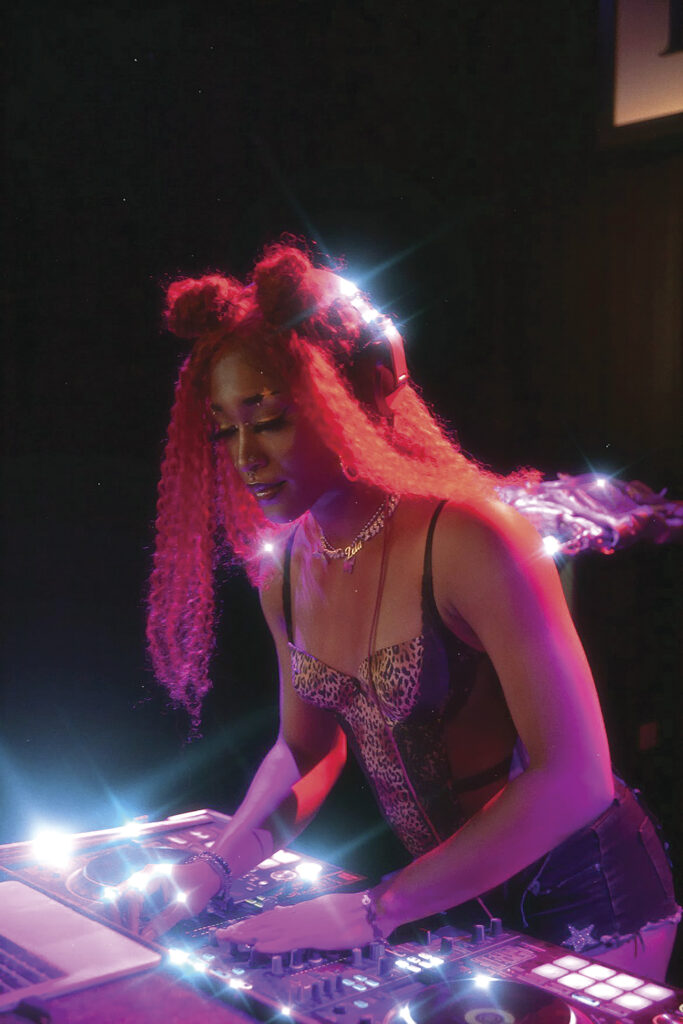
LITA DA DOLL
LITA DA DOLL has always had a song on her mind and a rhythm in her fingertips, so it’s no surprise that the Chicago-based musician found DJing as an extension of her passion. “I play, perform, create, and compose to evoke change and inspiration in others,” she says, “whether that looks like dance, yelling, clapping, singing, or creation.” Known for tracks like “It’s Nasty” and “Peggy Battle Beat,” this self-described pioneer of the ghetto gospel studied vocal performance with a focus on gospel, blues, and jazz at Columbia College Chicago, with a playwriting minor for good measure. She draws influence—and empowerment—from artists like Sylvester, BbyMutha, Twinkie Clark, Sarah Vaughan, Gangsta Boo, Odetta, and, most importantly, her family. “My chosen sisters have been pivotal in how I see myself and how I’ve pushed myself to grow,” says LITA. “My mother has also been a huge influence in how I’ve learned to learn about and develop compassion for myself.” Her LGBTQ+ identity has contextualized the entirety of her existence—adding nuance to how she’s heard, seen, judged, and perceived. “I don’t concern myself with what opposes or closes itself to me. I know what I’ve been chosen to do, and it is undeniable.” On the horizon: crafting electronic EPs, producing tracks for collabs with other artists, more projects featuring her vocals and lyricism, and becoming a “force, and [an] undeniable and revolutionary influence” in the genres she creates in. –MH
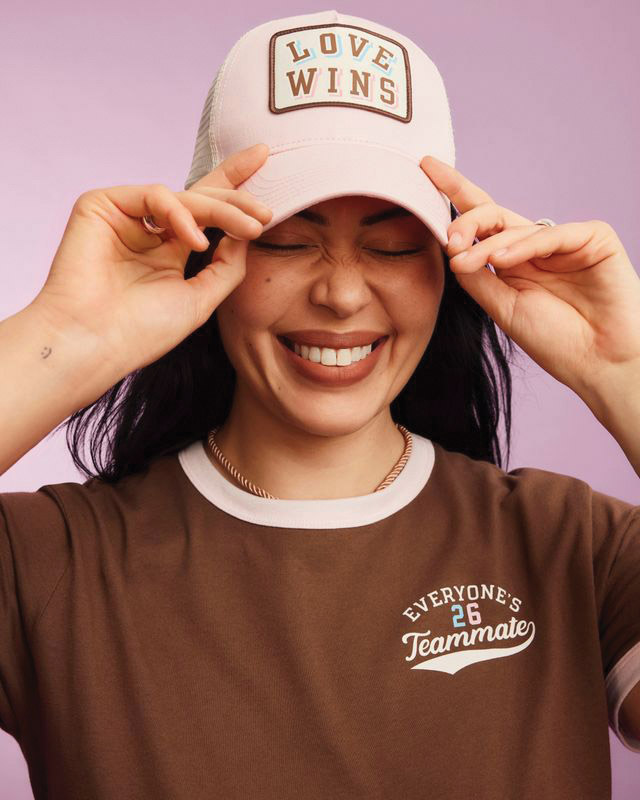
Lauren Chan
Being the first out lesbian model on the cover of the Sports Illustrated Swimsuit Issue in 2025 wasn’t necessarily on Lauren Chan’s vision board. But spreading queer joy and empowering others like herself, long-excluded from fashion culture, was. Today, this Canadian model’s accomplishments extend beyond the runway into the ranks of recognized clothiers as the founder of Henning, a workwear line catering to people above size 12. “All of my work is rooted in representation for marginalized communities, especially those that make up my own identity,” Chan says. “Because I’m not a thin, straight, white woman, I take pride in breaking down the beauty ideal and expanding the idea of how women are allowed to exist in our culture—whether that’s been with inclusive fashion content while editing at Glamour, plus-size clothing for Henning, Pride merch for Joe Fresh, or as the first [out] lesbian model on the cover of the Sports Illustrated Swimsuit Issue.” Among her most prized possessions? The L Word: A Photographic Journal signed by Jennifer Beals. “When I was coming out, I binged The L Word, start to finish,” she shares. “After years of mainstream rom-coms missing the mark, I felt my identity finally click into place while watching Ilene Chaiken’s lesbian Los Angeles.” Formerly one of Toronto’s best-dressed, the current Bed-Stuy resident is excited for Run-A-Muck, a joint media venture between Ilene Chaiken, Jennifer Beals, and Pam Drucker Mann. “Because lesbian representation can change lives—ahem, speaking from experience.” –MH
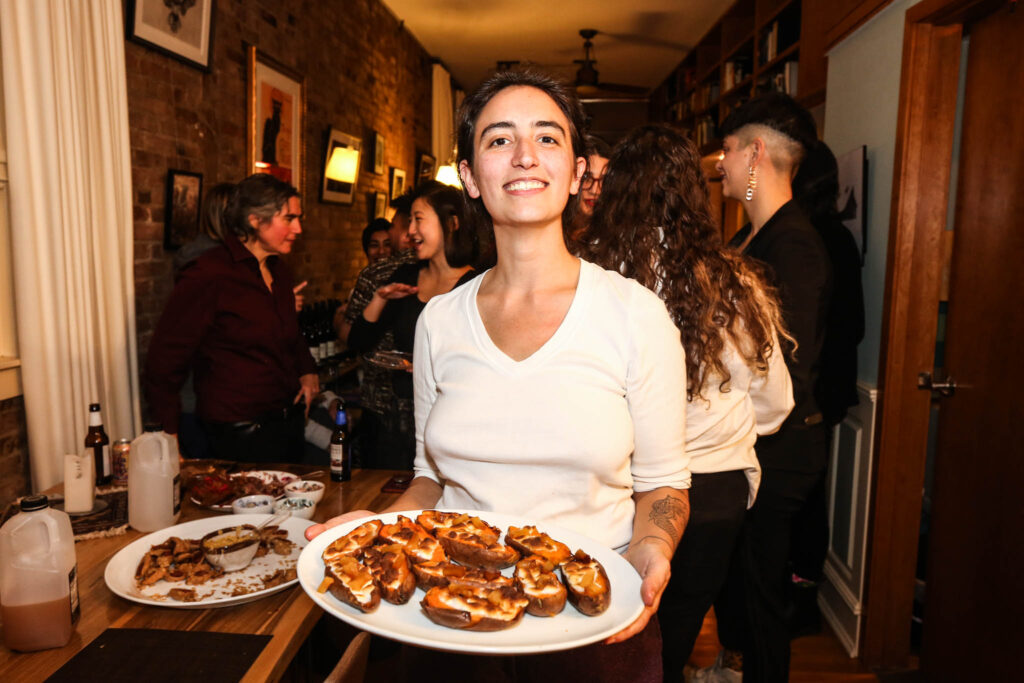
Alex Koones
“I wish I could say there was some deeper political reason,” says Alex Koones on the origins of her pop-up queer supper club Babetown. The truth was that she saw herself as a little misunderstood, and when she cooked and showed people a good time, she liked that they understood her better. By 2016, her college dinner parties had expanded into a ticketed queer pop-up dinner series. By then, she had grown increasingly concerned about how social media and the gentrification of queerness were separating people, how badly people needed one another, and how important it was to create spaces where they could truly connect and have meaningful conversations. “What better place to do that than over a meal? Babetown became more about those things to me,” she says. When Koones started, cooking was not a welcoming space for women. “They definitely weren’t trying to teach us to cook the way they taught young men coming up in the industry. And especially as a queer person…men in kitchens just really didn’t know what to do with me.” From the beginning, Babetown was a space for queer women, trans, and nonbinary people only. “Today, this is very popular,” she says, “but at the time, it was a lot less common… I was very proud of my party as kind of this homespun, guerrilla event.” On the bucket list: a brick-and-mortar space that houses the elements of the dinner party spirit. –MH
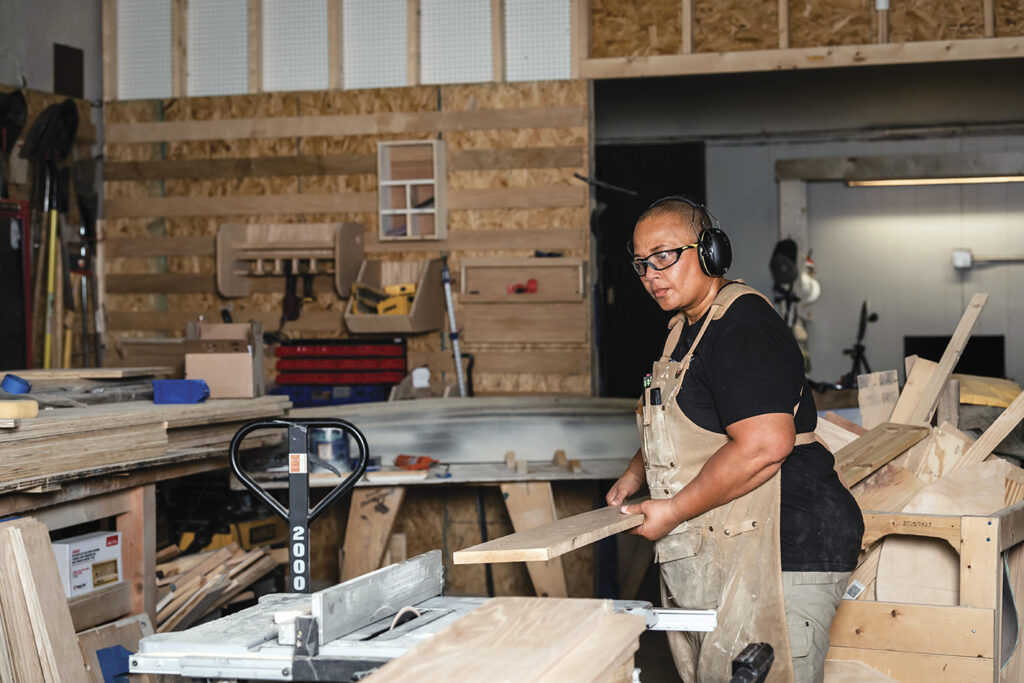
Trinette Johnson-Williams
Trinette Johnson-Williams is a Memphis-based construction professional, entrepreneur, and advocate. She is the founder of TJ Builds, LLC, which specializes in custom woodworking, construction project management, and owner representation services for both residential and commercial clients. Since her childhood in Mississippi, Johnson-Williams has been excited to build and create. With a technical background in construction and home renovations, plus her wife’s nudge to follow her dream, this craftswoman has carved a place for herself to do what she’s most passionate about. “The most rewarding aspect of my work is that I have created a legacy of unique bespoke pieces that will last a lifetime,” says Johnson-Williams, whose work can be found in people’s homes, businesses, and the Memphis Museum of Science and History (MoSH). While she’s walked terrain largely occupied by men, she’s made it a point to join women-led spaces, network, and be present in her industry. She’s also expressed a desire to build out a large space to teach classes to empower other women in construction, woodworking, and tool skills, and she credits her parents for inspiring her with their own skills for repair and woodcraft. Johnson-Williams also credits loved ones for their support during difficult times: her wife, Dr. Adriane Johnson-Williams, her mother, and close friends—and she’s grateful for her therapist. “With their help, as well as a strong will to never give up on myself, I’ve been able to pull through in this male-dominated field.” –MH
T.B. Markinson
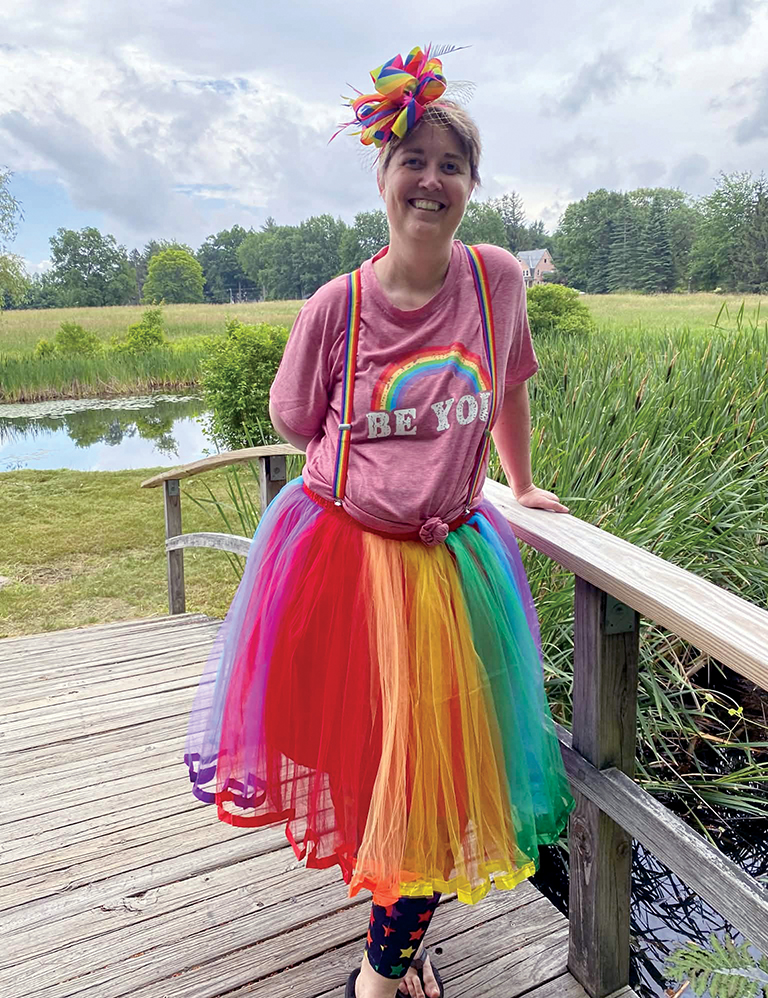
“I started publishing in 2013, which was an amazing feeling,” says T.B. Markinson. “However, it was a struggle to get noticed. Even sapphic websites and reviewers shut their doors in my face because I was a new, untested author.” Now the winner of two Golden Crown Literary Awards, the Massachusetts-based author also co-owns I Heart SapphFic, a website she founded in 2017. “I started I Heart SapphFic to help all sapphic authors avoid gatekeepers and gain visibility so they could have their stories seen by readers,” Markinson says. “I wanted to create a community of readers and authors who lift each other up.” In 2022, I Heart SapphFic launched the BookFinder, a searchable database that began with 1,000 sapphic titles and now has over 11,000 titles and growing. How does Markinson deal with setbacks? “I have a rule…I can wallow for three days if it’s a major setback,” she replies. “Then, on day four, I have to get up and find a solution. More than likely, it won’t happen on that day, but I know if I face a problem head-on and map out a way out of it, nothing can defeat me.” Even the toughest challenges, however, can’t deter Markinson and her mission: increasing visibility for sapphic books. “Being able to spread rainbows in a world that’s become increasingly terrifying for the queer community is so rewarding,” she says. “It’s my way of fighting fascism.” –LE

Jamie Fine
“The safest place in the world is in my head,” says Jamie Fine. “Sharing my music is like opening that space to others, aiming to create a safe place for them to explore their own emotions.” Born in Ottawa, the singer-songwriter and LGBTQ+ and mental health advocate is a four-time JUNO nominee whose music has over 100 million streams globally. Fine’s single “If Anything’s Left” hit platinum status in Canada and double platinum in South Africa, and Fine herself has about 1.5 million followers worldwide. When asked if she’s dealt with setbacks or adversity in her career, Fine says, “There have definitely been moments where I’ve had to push through bias or unfairness, but ultimately it taught me something I really believe in: the difference between the people who make it and the people who don’t is the ability to keep going. To put one foot in front of the other and keep moving forward, even when things get hard.” Fine uses her music to convey intense emotion, inspiring listeners everywhere to explore more complex feelings that can be a struggle to express, from anger and isolation to joy and connection. When asked about the most rewarding part of her work, Fine doesn’t hesitate: “Being able to connect with people on a larger scale through something that means as much to me as music does, that’s really special to me.” –LE

Brooke Raby
Stepping into the role of executive director of the Lexington Philharmonic was “honestly a bit of a fluke” for Brooke Raby. First a board member, then interim executive director, Raby’s role was never intended to be permanent, but very quickly, it felt like home to her. “I’ve always been around music, and I felt incredibly lucky to find a way to build a career in such a vibrant field with an established organization that was on the brink of an extraordinary new era,” says the seventh-generation Kentuckian. As a queer woman among other strong, talented women in the Philharmonic, her identity has been a blessing. “Being part of a marginalized community makes you more empathetic to so many people and ideas and communities beyond your own,” Raby says. “One of the greatest joys of my work is watching the orchestra perform, and champion works by diverse artists whose voices have historically been excluded from what is often viewed as a very white cisgender male canon. Bringing these works to the fore validates their place in that canon and ensures that more people can see themselves represented in this art form.” Raby, whose career has spanned publishing, bookselling, nonprofit development, and the humanities, is also driven by her passion for Kentucky. “The reality is that we are constantly innovating in the arts and humanities, among other things, and I would consider my life a success if I can help shine a brighter light on what Kentucky is accomplishing.” —MH
Sabrina Von B
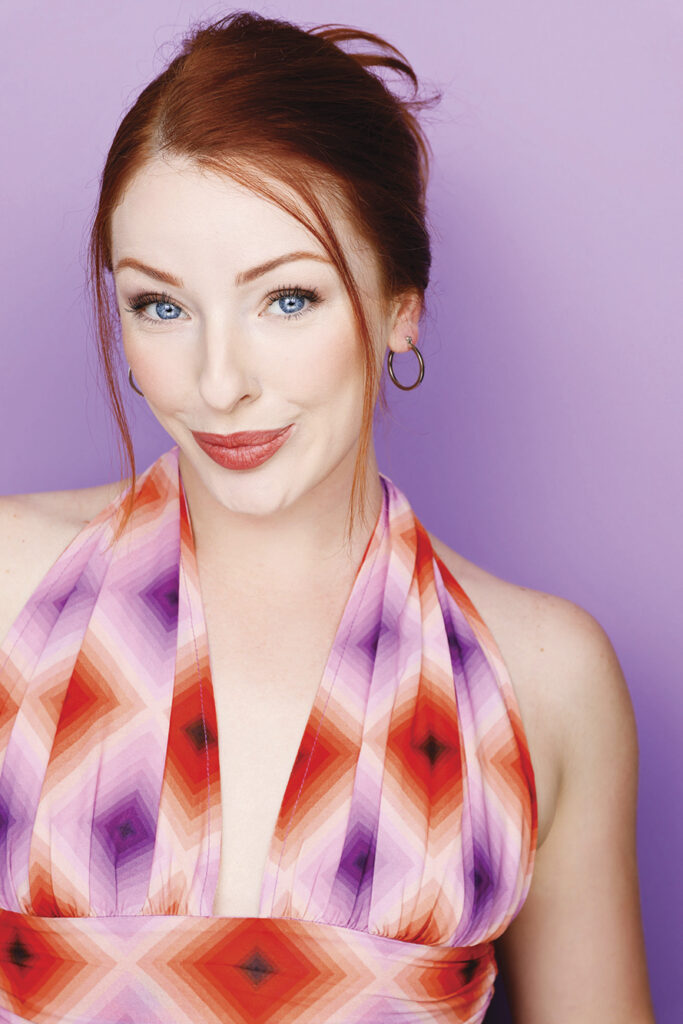
You might recognize Sabrina Von B from the viral videos of her playing the Evil Queen at Disneyland, a role that earned her viral recognition across social media. She tells GO, “My passion is performing, and getting to incorporate that and working at my favorite place was a dream come true, especially getting to portray a strong queen that people of all ages can look up to literally, I’m [5-foot-10].” Von B said the role allowed her to inspire confidence in young women all around her, and she found inspiration in LGBTQ+ and drag culture. “I would do things like a ‘compliment circle,’ or strutting down a drawbridge like it was a catwalk. I’m so proud to be part of a community that welcomes fun and joy, and I brought that energy into my work every chance I got.” The most rewarding part of her work included meeting her girlfriend, a costumer, backstage, and the connections she made with people and viewers. “Getting to be a part of babies’ first photo books, making kids laugh, bonding with a special needs child…and roasting the adults, of course…Not to mention getting to flip a gorgeous cape around all day. I mean, c’mon.” And she’s just getting started! As she embarks on what is next, Von B says, “Nothing is off the table for me, from starting my own YouTube channel, music, to continuing to pursue my dream of being in movies and on the Broadway stage.” —SS
Chef K
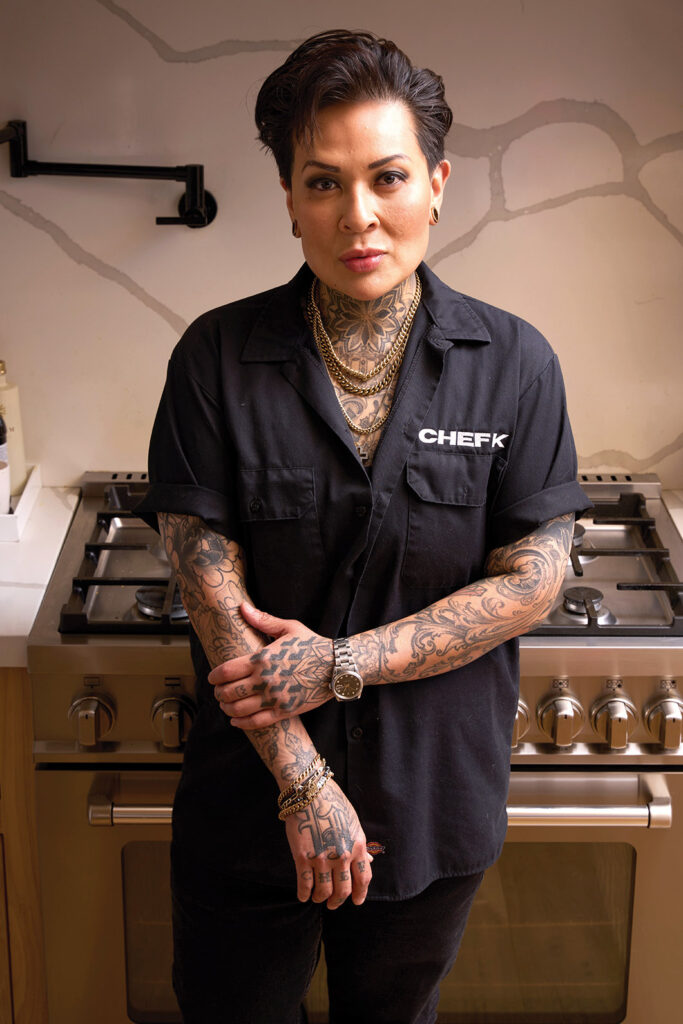
You might know Filipino-born Chef K for winning the inaugural season of ABC’s The Taste or for her work as a private chef for celebrity clients like the Kardashians, Charlize Theron, and the Jonas Brothers. Chef K says, “As a private chef, the most rewarding part of my work is witnessing the immediate joy my cooking brings to clients. Food becomes more than just a meal—it becomes a shared experience.” After more than a decade as a private chef, she is shifting her focus to bring more creativity and confidence back into people’s kitchens. These days, she’s using her social media platforms to inspire people to get back into the kitchen. “To me, cooking isn’t just a task, it’s an act of love and nurturing,” she says. “It can be creative, grounding, and even a way to reduce anxiety while caring for yourself and the people around you. I want people to rediscover the magic of a home cooked meal and the joy that can be found in the kitchen.” You can find her on TikTok, where she shares simple recipes and tips and encourages people to feel confident cooking at home. Chef K says, “my goal is to help bring people back to the kitchen and celebrate the wellness, creativity, and traditions that are passed down through generations.” –SS

Hannah Yore
Hannah Yore, an end-of-life doula, public health practitioner, and oral historian, works at the intersection of illness, queer life, and collective care to support people through loss and transition. “I integrate storytelling, oral history, and intergenerational dialogue into the care continuum as core practice,” she says. Her practice is grounded in narrative medicine. “As a queer woman, I belong to a long lineage of people who have always known that care is political and who lifted the veil on illness, grief, and interdependence, and refused to let those things remain private, shameful, or unspoken.” Yore is also recognized for documenting lesbian elders’ stories across six continents through her In Time oral history project. “It is memory work and legacy work at once: an effort to ensure that what these women know, survived, and built does not disappear with them.” Yore cites The Lesbian Herstory Archives among her influences. “Across nearly every progressive movement of the last century, lesbian labor was absorbed, depended upon, and largely written out of the history that followed.” She continues, “I have been shaped by the lesbian elders I’ve conducted oral histories with, the lesbian caregivers who came before me in the HIV/AIDS crisis, and the people who have trusted me to help them during times of difficult transitions and diagnoses. My identity has been formed in community.” –MH
Gemma Leahy
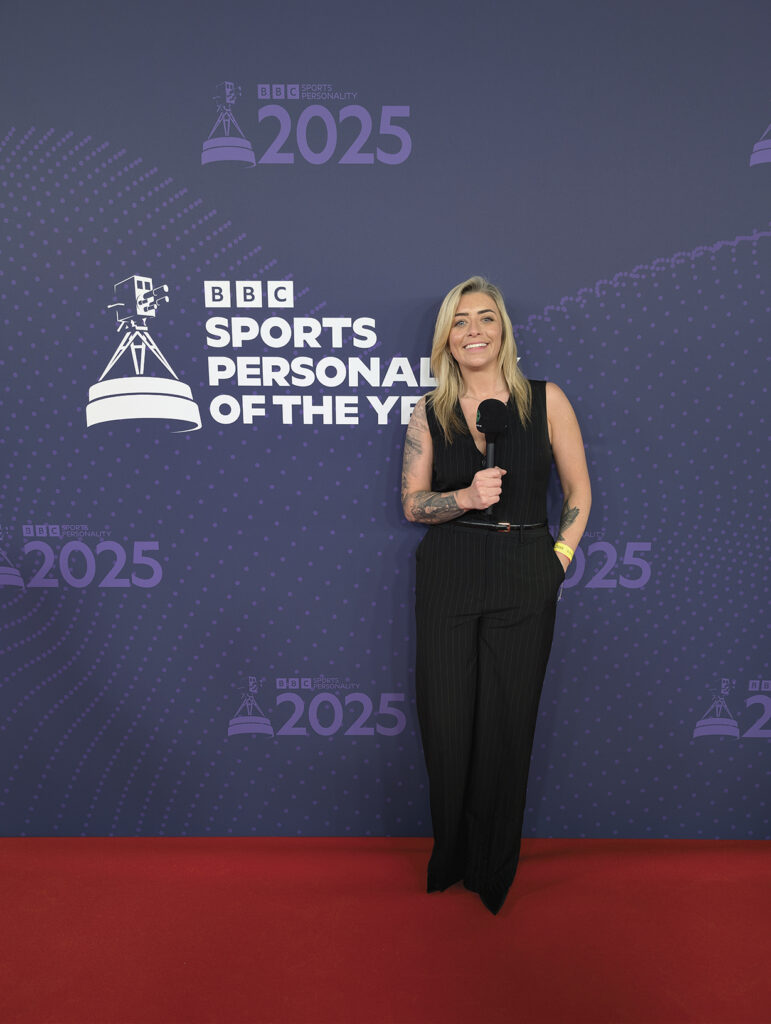
Gemma Leahy is a storyteller at heart, using travel as her medium to connect people more deeply with Ireland’s culture, history, and identity. Based in the UK, she balances a full-time career in learning and development with a growing platform dedicated to sharing a more meaningful vision of Ireland, rooted in neighborhood guides and local insights. “Living outside Ireland made me realize how big the world is when you step outside your comfort zone, but it also made me more aware of how special Ireland is,” Leahy explains. “Being away made me more proud of where I come from, and I found myself wanting to share that with people who had never been. What started as simply talking about Ireland online slowly grew into something much bigger, and now it’s become a huge part of my life alongside my main career.” As a queer woman, Leahy is open about the challenges of being visible online, particularly in spaces where her voice and identity aren’t always expected. “If anything, those experiences have made me more determined to be honest about who I am. If calling things out and continuing to do what I enjoy helps even one younger person feel more confident being themselves, then that’s enough motivation for me to carry on.” In the future, Leahy aims to transform her platform into a personalized travel business, helping first-time visitors discover a richer, more authentic Ireland. —AK

Ann Mei Chang
Ann Mei Chang is all about transparency. That’s why she’s the CEO of Candid, a nonprofit that collects data on foundations and nonprofits to help donors and researchers better understand how and where funds are allocated. A pioneer in social innovation, the Stanford University alumnus has also served as chief innovation officer at the United States Agency for International Development (USAID), Mercy Corps, and Pete for America. She spent more than 20 years in the tech industry at companies including Google, Apple, and Intuit. Those experiences culminated in her book Lean Impact, in which she explores how nonprofits can adapt the same strategies as startups to maximize social impact. Chang’s love of technology began early. At 12, she convinced her parents to buy her an Atari 400 and taught herself to program, a skill that continues to influence her work to this day. She says, “Since getting into tech, the field just seems to keep getting more interesting and impactful—from personal computers to the advent of the web to smartphones becoming ubiquitous and now the incredible pace of AI advancements.” –ER
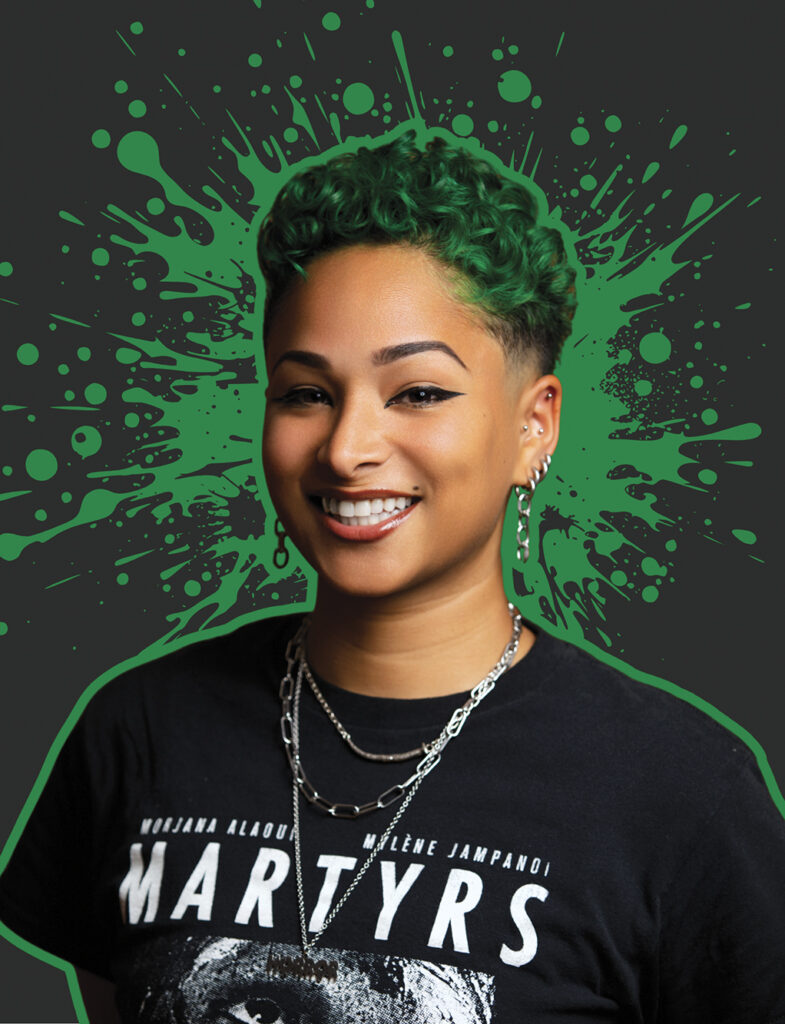
Xero Gravity
Xero Gravity, a genre journalist and media personality with a strong focus on horror, sci-fi, and dark fantasy, says she’s always loved fandom culture. “It gave me the greatest escape and the ability to think critically—comparing and contrasting my own life to the dramatic lives of the characters I followed in genre entertainment,” she tells GO. Variety recognized her as one of their top 30 most influential voices in horror in 2025. Gravity curates content and drives diverse fan engagement across live events, digital platforms, and the club. She says, “My drive to make those spaces more abundant and accessible is what moves me. We can all be better when our theories and opinions on pop culture can be heard and challenged by people who share a common hobby and life perspective.” When faced with adversity, Gravity says, “The identities that classify me as marginalized bleed into all of my work, especially outside of February and June…I know I can always rely on my network of diverse journalists, filmmakers, content creators, and programmers to hold me down. It’s the responsibility that we all have to each other that keeps the wheels turning.” She’s also a proud product of New York. “I spawned in the West Village of Manhattan in the late ’90s, only a few blocks from Stonewall. The loving righteousness of the community I was born into gave me a huge head start into activism by way of media literacy, education, and fellowship.” —SS

Malika Amanzi
Walking tour guide Malika Amanzi saw an inequity in the New Orleans tour guide industry, and she worked to fill it. “I was working for tour companies where I routinely reported to caucasian male bosses, who often disregarded the oral history I was getting from the BBIPOC [Black, Brown, Indigenous and/or People of Color] residents who still lived in New Orleans, and were multi-generational,” she tells GO. “I was being told there was ‘no way to verify their accounts’…I realized I was being pushed by my ancestors to start my own company, where we control the narrative of our own stories.” In 2022, Amanzi cofounded Anansi’s Daughters, which now offers three intersectional walking tours of New Orleans, including the city’s only Voodoo tour led by a high priestess of Louisiana plantation Vodou/Voodoo. Anansi’s Daughters has been featured on Entertainment Tonight, the BBC, and Condé Nast Traveler, and Amanzi hopes to grow the company by putting the tour guides first. She says, “The goal is to have steady work and turn a profit, enough that our guides can afford to only work for Anansi’s Daughters if they so wish, and fully be able to support themselves, while doing a maximum of one tour a day, four days a week. I would love to be able to offer healthcare and 401(k)/retirement options to my guides.” When asked how she handles setbacks and adversity, Amanzi quotes Audre Lorde: “When I use my strength in service of my vision…it becomes less and less important whether I am afraid.” –LE
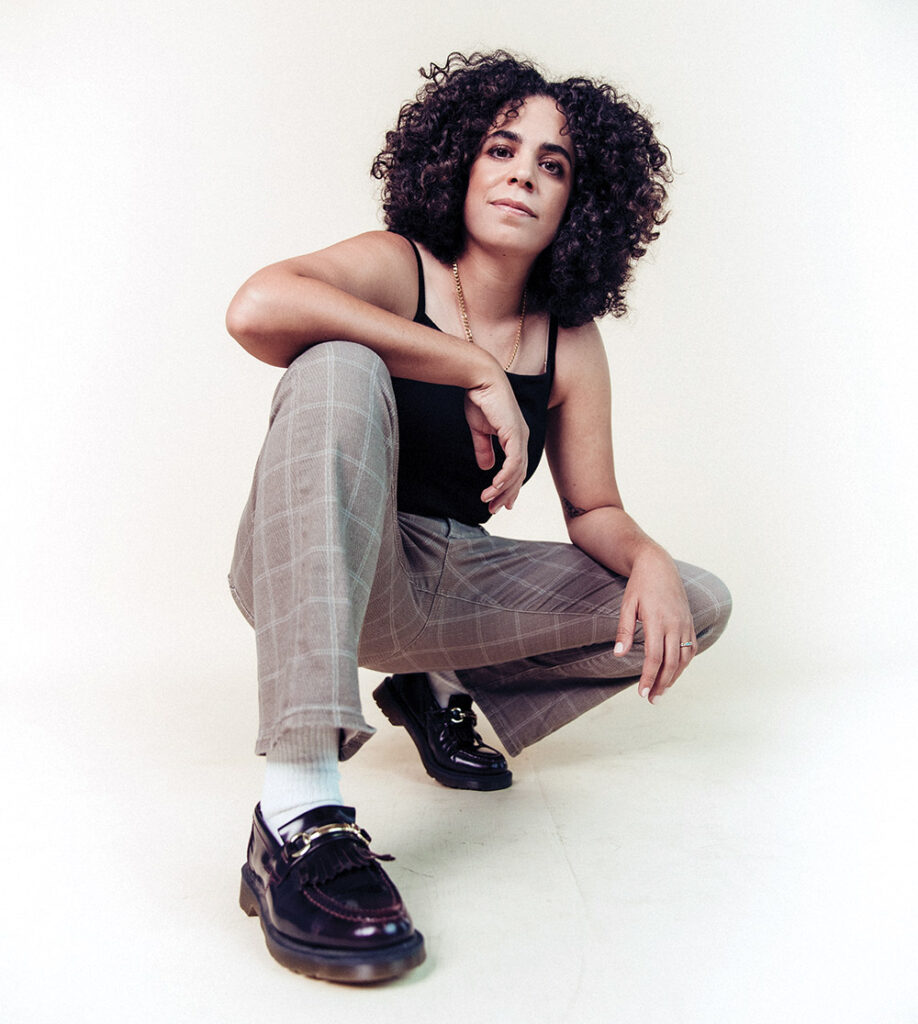
Kimia Behpoornia
Kimia Behpoornia’s life in comedy all started in fourth grade when her dad signed her up for after-school improv in hopes of boosting the shy girl’s confidence. “That really backfired. I loved it!” says the comedian and actress. “So much so that I did the school play after that, and it all snowballed from there. I had to come out to my immigrant parents as an artist. So really it’s my dad’s fault. I could’ve been a doctor or a lawyer if he let me stay shy.” Growing up, she didn’t see characters that really resonated. “I gravitated toward cartoons because at least in those worlds the girls could be little weirdos or everyone is a robot or a piece of furniture,” she says. “They are essentially genderless and behave beyond the binary that most live-action characters have to stick to.” The desire to help people feel seen drives her work. “It’s the whole reason I’m out here. I play characters as different shades of myself so anyone who grew up like me and didn’t see themself represented in film and TV can relate.” The actress is known for her roles on Abbott Elementary, Hacks, Reboot, and Atypical, as well as her recurring appearances on Dropout and in the Los Angeles improv scene. Looking ahead, Behpoornia wants to take chances on creators with slice-of-life perspectives, work in more indie spaces, and tell niche stories. “Also, I really want to work with more queer Iranian creatives, find me!” –MH

S. Ceren Uzman
When S. Ceren Uzman left Abu Dhabi to attend NYU in 2019, she was looking for an education. She was also, like many queer people, searching for community. She graduated summa cum laude in 2023 and completed her master’s in social work the following year, all while quietly building something that would grow far beyond a pickup game: Froot Hoops. As a college student, she found the only reliable way to meet other LGBTQ+ people was through parties and bar circuits. Uzman founded Froot Hoops, a queer basketball collective, in July 2022 to offer an alternative. It began with the simple idea that queer community shouldn’t have to revolve around nightlife. Froot Hoops is a casual, welcoming place where lesbians, queer women, and nonbinary people can gather to play basketball, cheer from the sidelines, or just flirt a little. The first meetups sometimes had only a handful of people. But growth, persistence, and an “army of lesbians,” as Uzman jokes, transformed the group into a vibrant community. Today, Froot Hoops has expanded beyond sports, using its platform to fundraise for LGBTQ+ causes and provide direct support to community members, from helping cover gender-affirming medical costs to amplifying urgent housing requests. Uzman also works as a licensed social worker within New York City’s shelter system, supporting clients navigating complex mental health and substance use challenges. Her work, both on and off the court, hinges on the same belief: community, environment, and care are drivers of resilience. —AK
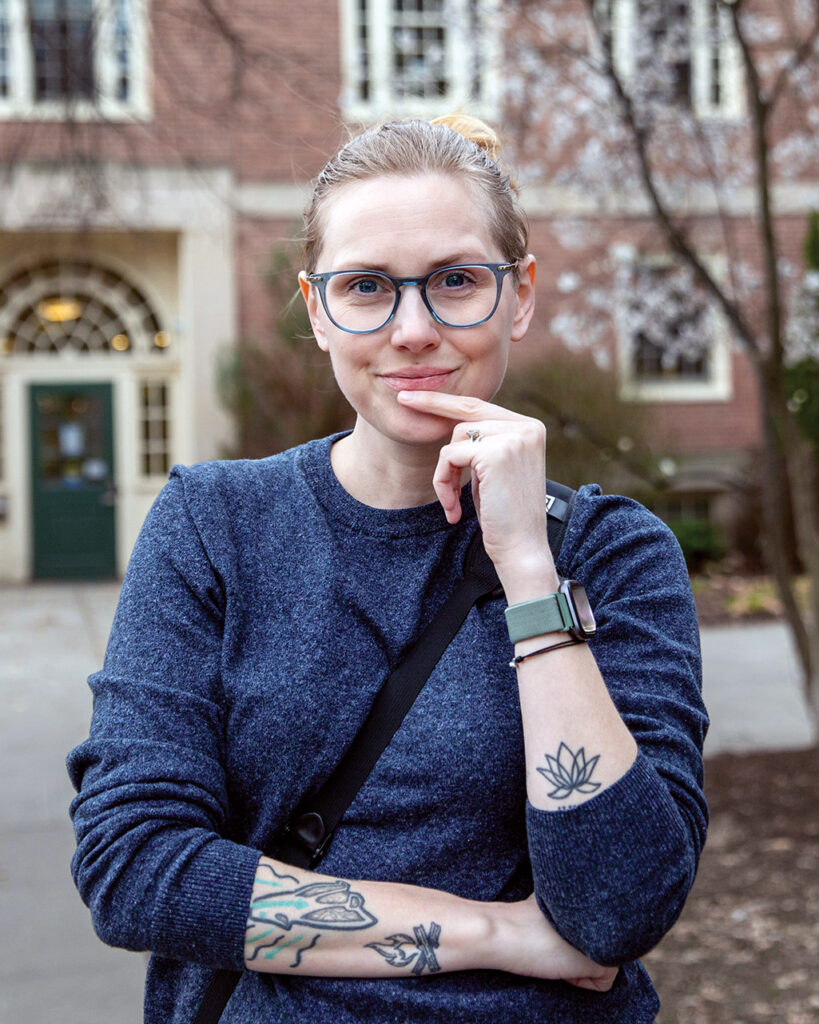
Kristen Renee
Photography has been part of Kristen Renee’s life for as long as she can remember. “I’ve always had a camera in my hands. It started as something I loved, but it didn’t become a career right away,” the Upstate New York-based photographer tells GO. Then, while working as a middle school teacher in 2011, she realized she wanted to build a life that aligned with that passion, and Kristen Renee Photography was born. “Over time, photography became something much deeper than just a creative outlet. I’ve always been drawn to noticing the things that often go overlooked—small moments, subtle emotions, quiet interactions, the way people look at each other, or reach for each other without thinking. I’m interested in bringing those details forward, pulling them into the light so they’re seen and remembered,” Renee shares. Working with couples and families, especially within the LGBTQ+ community, she saw how meaningful it was for people to feel truly seen in their photos. “For many LGBTQ+ people, being photographed—especially during major life moments like weddings or family sessions—can come with a level of vulnerability that isn’t always understood,” says Renee, whose wife works alongside her. The most rewarding moments happen after the wedding is over, when she receives emails, texts, handwritten cards, or reviews from clients. “That’s when I really see the impact of the work, not just as a business, but as a human connection.” –MH
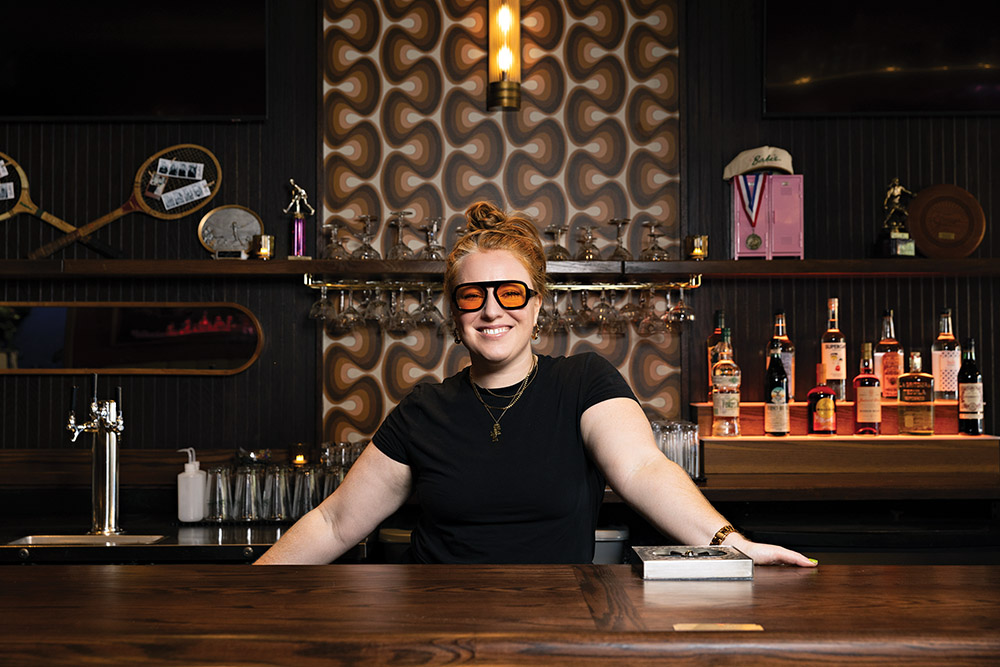
Nora McConnell-Johnson
When Nora McConnell-Johnson opened Chicago’s Babe’s Sports Bar in September 2025, the former public school educator envisioned a space to watch women’s sports—and knew it would be special given the excellence and powerful community surrounding women’s athletics. “What I didn’t anticipate was how Babe’s could be a catalyst for others to feel moved and radicalized,” the Minnesota native tells GO. “I’ve been so touched by women who go out of their way to find me when they visit and tell me that they went to college before Title IX and never imagined they’d see a place like Babe’s in their lifetime.” McConnell-Johnson’s own experience informed her understanding of gender inequality—playing on a co-ed high school team, having other schools refuse to play them, and being mocked by spectators. “I had grown up being taught that girls were just as capable and athletic as their counterparts, and to be met with such hostility and disrespect because of my gender revealed some ugly truths about how the world works.” But the former collegiate rugby player and UChicago head coach—where they won the National Championship in 2022—found grounding in queerness. “Both women’s sports and the queer community have provided spaces where I’ve felt the most empowered, joyful, strong, impactful, and connected to others, both due to and in spite of the systems of inequality that try to hold back women’s sports.” McConnell-Johnson works to embed those feelings into the community experience at Babe’s. By every measure, she’s kicking it well beyond the posts. –MH

Dr. Shail Maingi
Dr. Shail Maingi is a medical oncologist, hematologist, and palliative care physician on faculty at Dana-Farber Cancer Institute in Boston, where she sees patients at one of their regional campuses. She is also involved with their Cancer Care Access Program, which works to expand access to high-quality oncology care for patients who face barriers to receiving it. Her clinical, academic, and teaching work focuses on oncology, hospice and palliative care, and LGBTQ+ health equity, including collaboration with the Harvard Medical School Fenway Health LGBTQIA+ Health Fellowship Program. She says, “Becoming a physician felt like a way to not only treat disease, but to advocate—to make care more humane, more equitable, and more responsive to the full identities people carry with them into the clinic.” Nationally recognized for her leadership in LGBTQ+ health equity, Dr. Maingi currently serves as chair of the American Medical Association LGBTQ+ Section Governing Council. She previously served on the board of GLMA: Health Professionals Advancing LGBTQ+ Equality, where she led the Lesbian Health Fund for six years, supporting research focused on improving the health and well-being of LGBTQ+ women and girls. Her academic work focuses on LGBTQ+ experiences across the cancer continuum, including palliative care and hospice. “It’s especially meaningful when LGBTQ+ patients share that they feel safe being themselves in a healthcare setting, sometimes for the first time,” she says. “Those moments—when someone can exhale, be honest, and fully engage in their care—are deeply meaningful and remind me why this work matters.” –LE
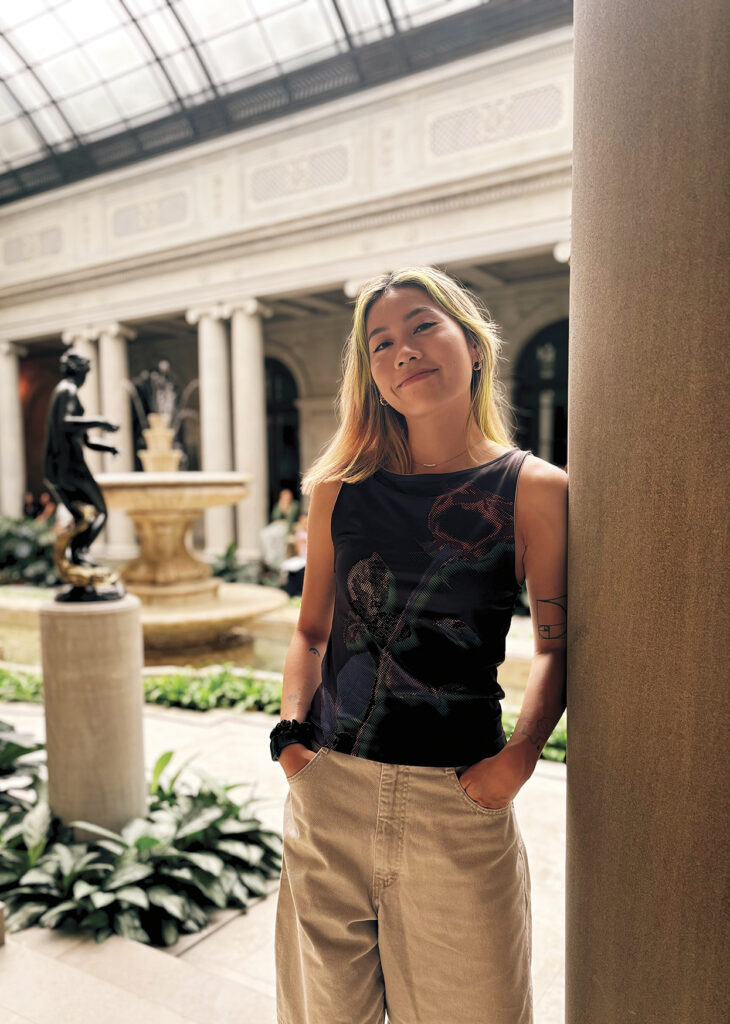
Tiffany Truong
Product designer Tiffany Truong always wanted to understand why things are the way they are and how to make them better. The former biologist says she turned to the tech field because “I kept noticing how broken the tools around me were. We were still recording data on pen and paper in the lab and manually transferring everything into digital systems.” After a friend introduced her to UX design, Truong researched the field, started small by taking a class and a bootcamp, and eventually decided to change careers. She says, “It just clicked in a way that science never did, and it remains one of the best decisions I’ve ever made.” The most rewarding moments are when her work creates an impact that goes beyond her day-to-day. Truong described one instance: “During a hackathon volunteer opportunity with Out in Tech, my team built a website from scratch for an LGBTQIA+ organization operating in a country where being queer is criminalized. Knowing that what I do can extend beyond the workplace by helping this organization provide safer access to their resources and share stories for a community that needs it, that’s a different kind of fulfilling.” What does she do when she’s not working? Truong is also a street photographer who has volunteered with various organizations. —SS
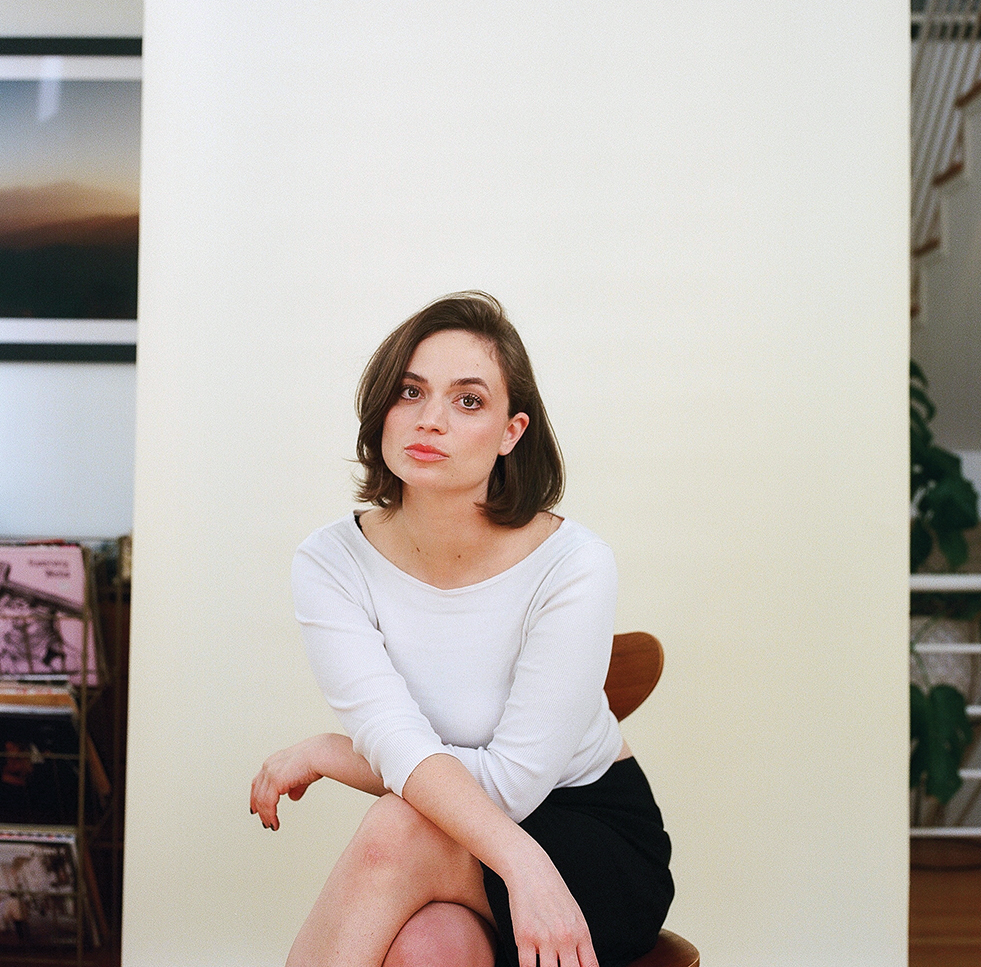
Angela Giarratana
Southern California native Angela Giarratana does it all; she’s an actor, writer, comedian, television host, and podcast host. Best known for her work in Starz’s Minx and on the prestigious award-winning short film GUTS, Giarratana has spent the past few years as a breakout star on the comedy YouTube channel Smosh. “It’s been one of the most rewarding experiences of my life. My training and background as an artist has always been centered around classical acting/theatre and improv comedy. Now with Smosh, I’ve gotten to work with so many different types of creators and YouTubers who have expanded my scope of what it means to make art and create community for people online, without the traditional entertainment industry red tape. It’s been so rewarding and exciting for me as a creator,” she says. And she’s not slowing down. Giarratana wants to act in more dramatic roles, launch her own YouTube channel, write and perform in more musicals, and buy an expensive vacuum cleaner. “I find that I do my best creating when I’m a part of a team or ensemble. I’m hoping to accomplish more things with autonomy and confidence in myself and my abilities in this next season.” At the rate she’s going, we’re likely to see her do all that and more! –SS
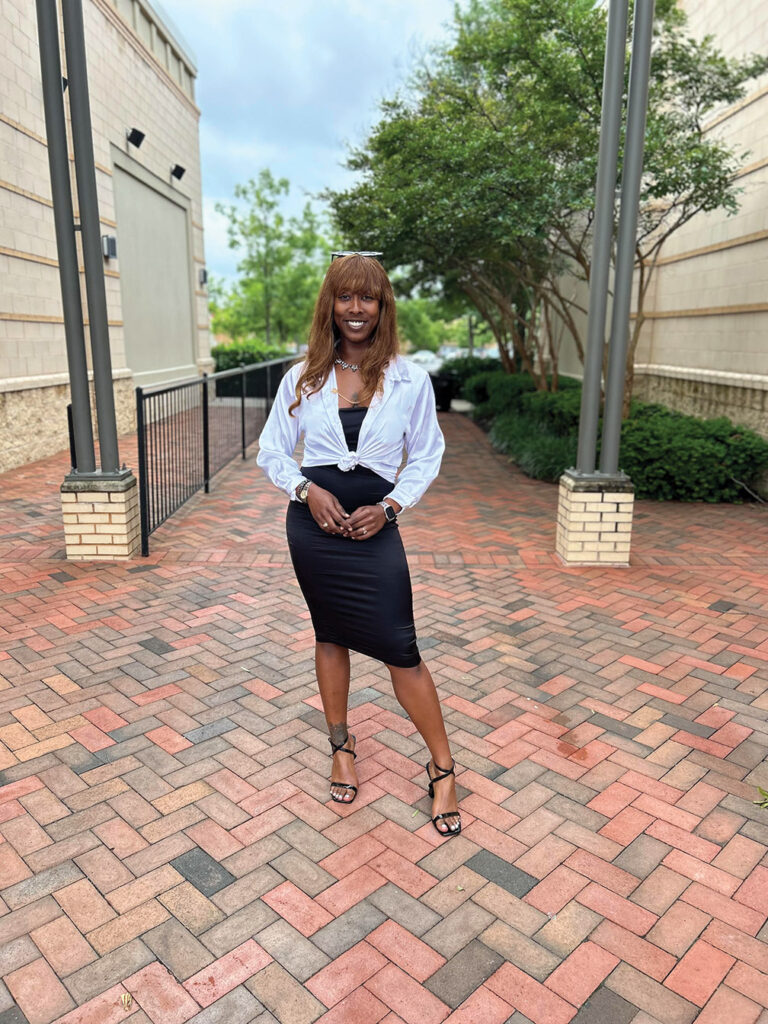
MJ Clark
During Black Pride Weekend 2025, Washington, DC-born, New Orleans-living MJ Clark attended a party with friends that was billed as “for all LGBTQ” but turned out to be primarily for gay men. “The girls and I still enjoyed ourselves, but definitely felt as if we weren’t in the right space, shoes being stepped on and all!” she recalls. Clark wondered: “Where do the femmes actually frolic?” Nobody seemed to know. Inspiration began brewing, and within months, Clark founded Where the Femmes Frolick—a sapphic lifestyle club rooted in mental health, physical wellness, and global exploration. It quickly became a growing hub for community in New Orleans, hosting regular events and launching the Fye Femme Decadence Festival, the first all-women-centered fest during Southern Decadence, NOLA’s Labor Day Weekend LGBTQ+ celebration. Clark also serves as a leader within Black Pride New Orleans, having joined the event committee in 2024 and being named Youth Empowerment Chair in 2026. Through mentorship, wellness programming, and intentional community building, this visionary continues to uplift and inspire the next generation while expanding visibility and opportunity for queer women in the South. “The most rewarding aspect of my work has been seeing how the spaces I’ve curated have impacted other women in a safe, fun, and healthy way,” Clark says. “Seeing other queer women living their best life is why I do this.” –MH
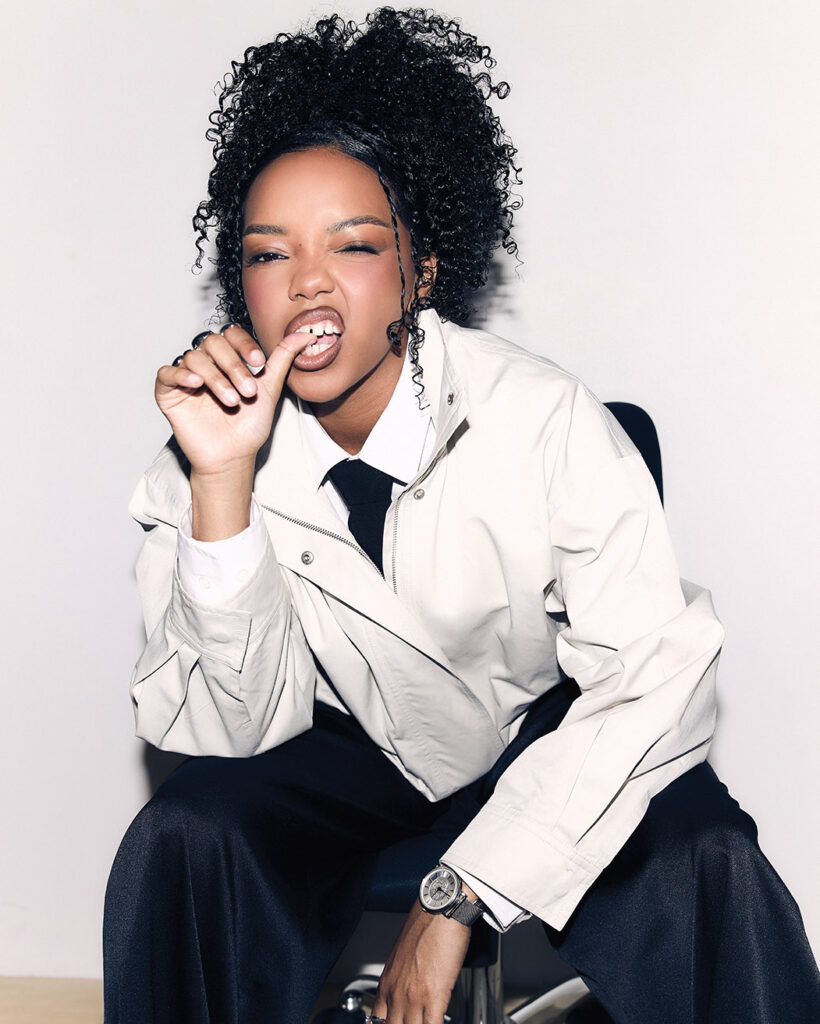
Regan Aliyah
Regan Aliyah, former cast member of the Disney digital series Club Mickey Mouse, has left behind her child star days to become a multi-hyphenate powerhouse: rapper, actor, dancer, and model. Coming from a family of performers, her trajectory seemed inevitable. “I grew up in a family full of musicians. My grandma would be in the living room playing her congas, my aunt would be playing bass, and my mom would be dancing. I was surrounded by the arts from birth, so it wasn’t a big shock when I told my family I wanted to pursue this professionally,” recalls Aliyah. Best known for her roles as Juliana in Netflix’s XO, Kitty, and Zelma Stanton in Marvel’s Ironheart, the 26-year-old has stolen the hearts of audiences and listeners alike. Musically, she blends rap, alternative pop, and R&B, culminating in bops that make you want to get up and dance. Despite her sound being distinctly current, Aliyah finds inspiration in Black artists, activists, and educators from decades past. Assata Shakur, Angela Davis, Toni Morrison, bell hooks, Audre Lorde, and her own mother have all influenced her work. She says, “I would not be the person I am today without them. I would not navigate this incredibly tough industry and life with so much integrity, grit, love, and light without their knowledge.” –ER
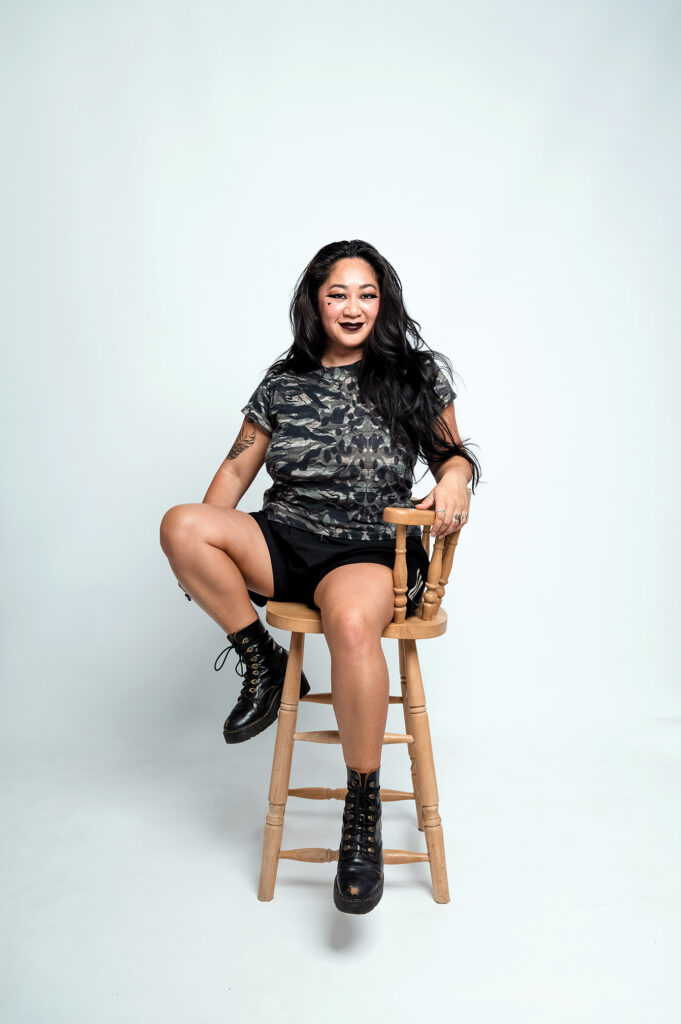
Kim Pham
From being the award-winning founder of a proud and loud Asian food brand to an influential BDSM practitioner and educator, Kim Pham has built her platform of more than 200,000 followers around niche subcultures. In a quest to reclaim and celebrate the “multitudes in Asian flavors,” the first-generation Vietnamese American launched Omsom with her sister in 2020. They scaled the “Saucy Noodles” product to more than 2,000 stores, including Whole Foods and Target, before selling the business in 2024. This entrepreneur’s ambition is guided by a queer lens focused on the intersection of horny and wholesome. “As a daughter of refugees and a bi woman, I have seen the many ways that the world does not seem built for me, and I have made it my north star to help folks build thoughtfully nontraditional lives, whatever that means to them,” she says. “From my BDSM education work to writing about my experience as a Vietnamese woman, all that I create is to help folks find freedom, connection, and joy outside of societal norms not often made for us.” Pham’s boundary-shattering work in kink, sex positivity, and non-monogamy as a queer Woman of Color has led to features in publications like Elle, New York Magazine, and The Kitchn. Recognized as a Forbes 30 Under 30 and an Adweek “Young Influential,” Pham is now pivoting to being a full-time writer and creative. “I have learned so much running a business rooted in culture and identity, and would love to bring that same care and intentionality into my work celebrating non-normative eroticism and lifestyles!” –MH
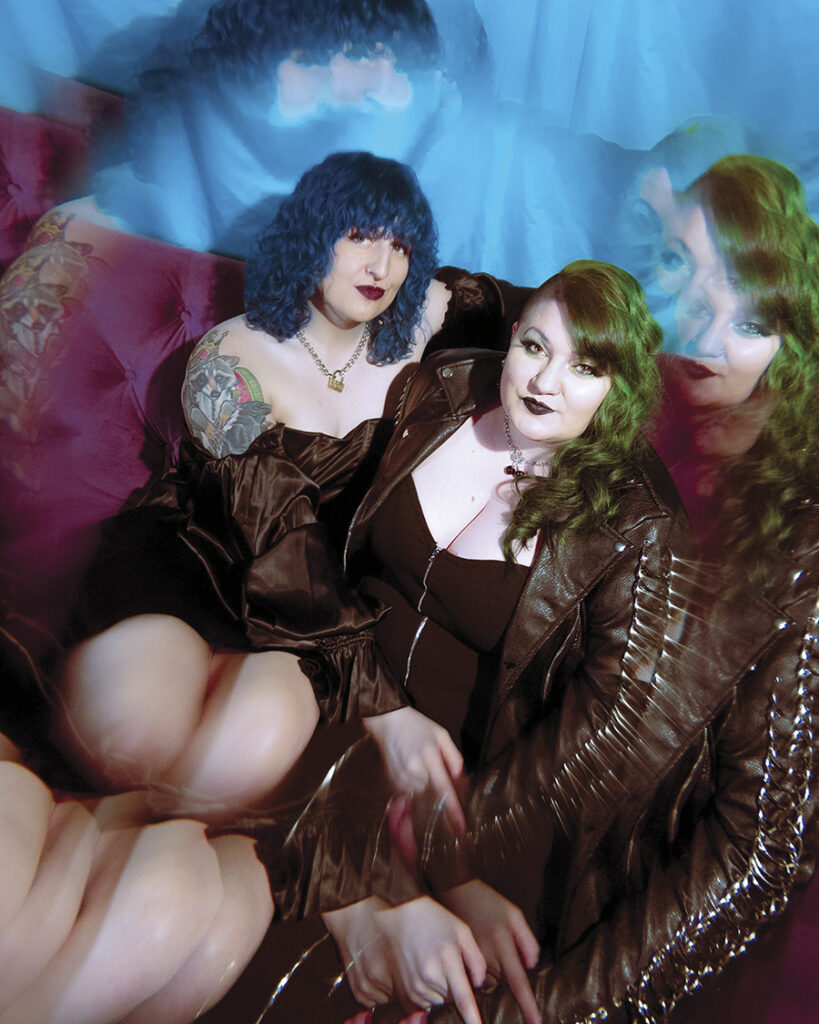
Harmony and BJ Colangelo
“Being women, let alone visibly queer women in a male-dominated industry, has meant there’s never been a seat for us at the table, so we’ve built our own damn table,” BJ and Harmony Colangelo tell GO. “In a field like entertainment analysis, LGBTQIA+ people have a god-given right to engage with art of all genres and varying degrees of quality and love it fiercely.” The Los Angeles-based couple are writers and film analysts and host the popular coming-of-age podcast, This Ends at Prom. Collectively and individually, their writing has been published in Fangoria, The A.V. Club, Playboy, Vulture, Shudder, and Bloody Disgusting. They’ve spoken at Comic-Con International: San Diego, frequently host and moderate talkbacks and panels, and appeared in the docuseries Queer for Fear and the Double Take documentary series on Shout! TV. They also (literally) wrote the book on the cult horror film Sleepaway Camp and hosted a talkback on the film at the Academy Museum. When asked about formative pop culture, both Colangelos have answers at the ready. “I am the woman I am today because I saw Elvira: Mistress of the Dark at a formative age and have dedicated my life to embodying everything she represents, including being a certified ‘ghoul kisser,’” says BJ. Harmony chimes in: “I am the woman I am today because I saw Alexis Arquette threaten to beat a transphobe with a patio umbrella on The Surreal Life, and it was the first time I realized that was a possibility for me.” —LE
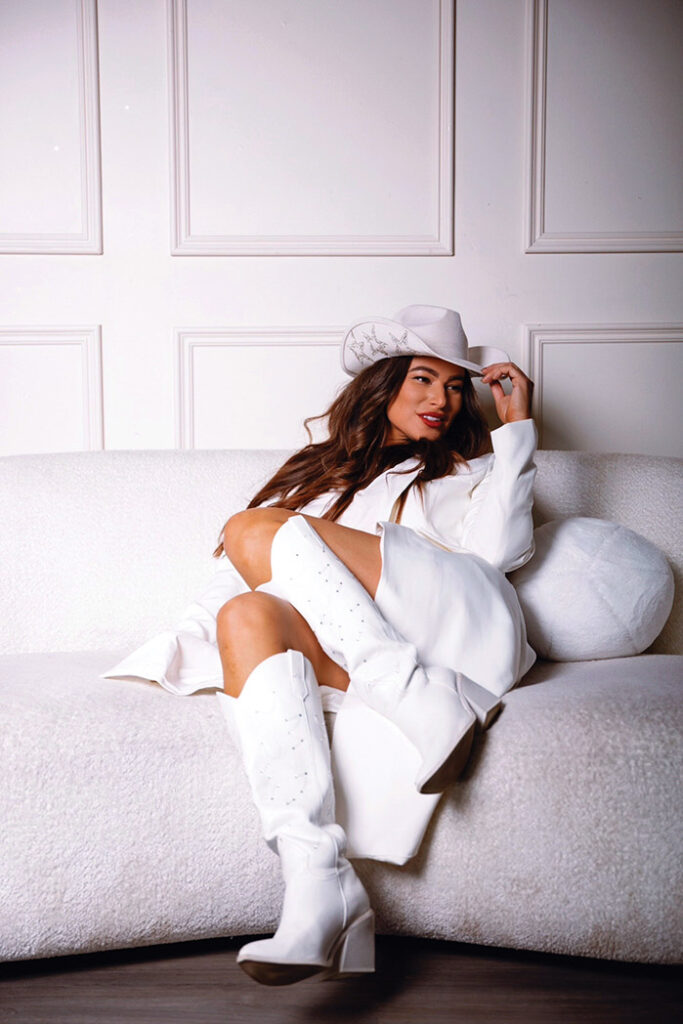
Shawnee Kish
Shawnee Kish is the kind of artist who makes vulnerability look powerful. A Two-Spirit Indigenous singer-songwriter blending alternative country, soul, and rock, the Canadian delivers songs that feel both intimate and undeniable. There’s a steadiness to her sound. “Strength isn’t about never breaking,” she says. “It’s about learning how to bend without losing who you are.” And she means it. For Kish, music is survival, helping her make sense of chaos and feel connection. Over time, she realized it wasn’t just refuge, it was responsibility—something she focuses on. “Understanding my purpose didn’t happen overnight, but once I felt it, I fought hard to grow into it—not because it was easy, but because it was necessary. And even now, when I stumble or feel lost, I return to that mindset,” she says. Her stories, voice, and perspective were meant to take up space and inspire others to do the same. Since winning CBC Music’s Searchlight talent competition in 2020, Kish has become a four-time JUNO Award nominee, earned the Queen Elizabeth II Platinum Jubilee Medal, and commanded stages from Pride festivals to national broadcasts. In 2026, she continues her rise as a Female Artist of the Year nominee at the Country Music Alberta Awards and a semi-finalist in the SiriusXM Top of the Country contest, alongside the release of her latest single, “Ride at Dawn.” With her most recent album, Chapter 1, Kish continues to carve out space for underrepresented voices—bold, unapologetic, and impossible to ignore. –AK
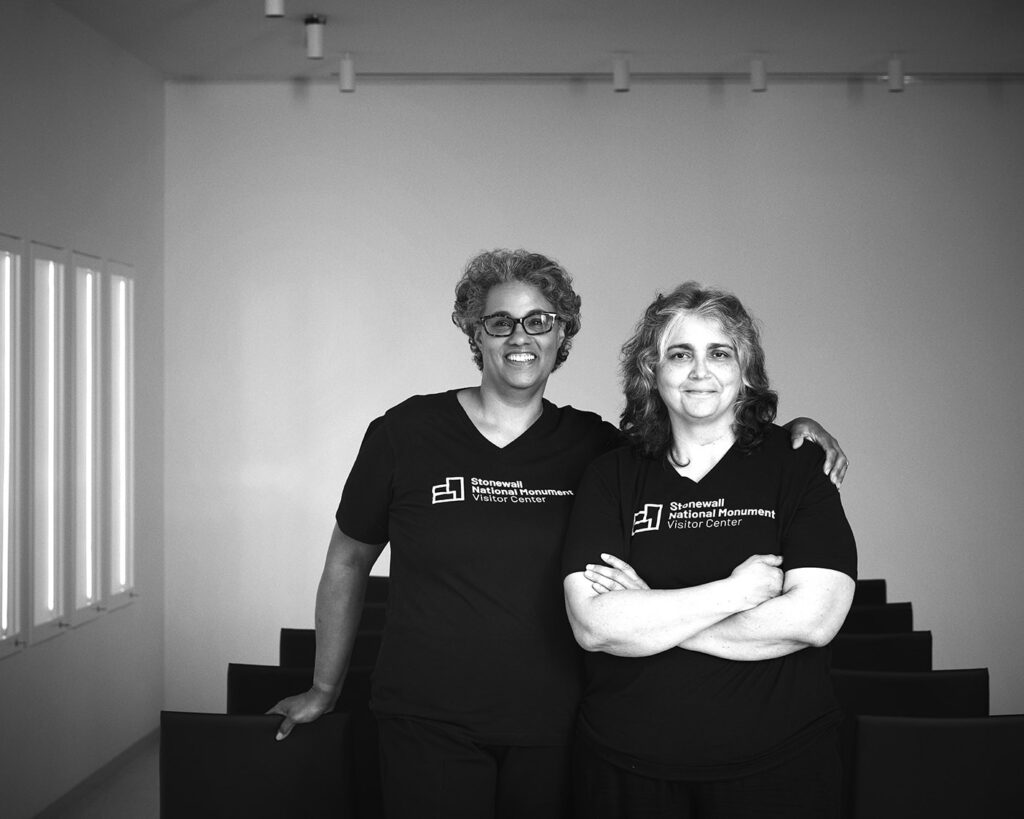
Diana Rodriguez and Ann Marie Gothard
“I’ve always believed that our true legacy isn’t defined by the titles we hold, but by the barriers we break down for those who come after us,” says Diana Rodriguez, who, with her wife Ann Marie Gothard, co-founded Pride Live, a national organization dedicated to LGBTQ+ community awareness and support, via social advocacy and community engagement. On June 28, 2024, Rodriguez and Gothard opened the Stonewall National Monument Visitor Center in New York—the first LGBTQ+ visitor center within the National Park Service. “When we launched Pride Live nearly 14 years ago, the landscape for LGBTQ+ rights was vastly different,” says Gothard, whose 20-year communications career spans healthcare, Fortune 500 companies, and global organizations. Rodriguez, a previous executive producer of the GLAAD Media Awards, says of the Stonewall National Monument Visitor Center: “I saw a unique opportunity to create a physical bridge between the legends of the 1969 uprising and the generation of activists leading the charge today.” The most rewarding aspect of their work? “You can read about history in a book or study it on a screen, but there is something deeply significant about standing on the exact ground where history was made,” Rodriguez tells GO. “Providing that experience to our community has been the crowning achievement of my work.” Adds Gothard, “The most fulfilling part of this journey has been the ability to give back to our community in such a significant way, alongside the woman I love, ensuring that our stories—and those of people like us—are never forgotten.” –LE
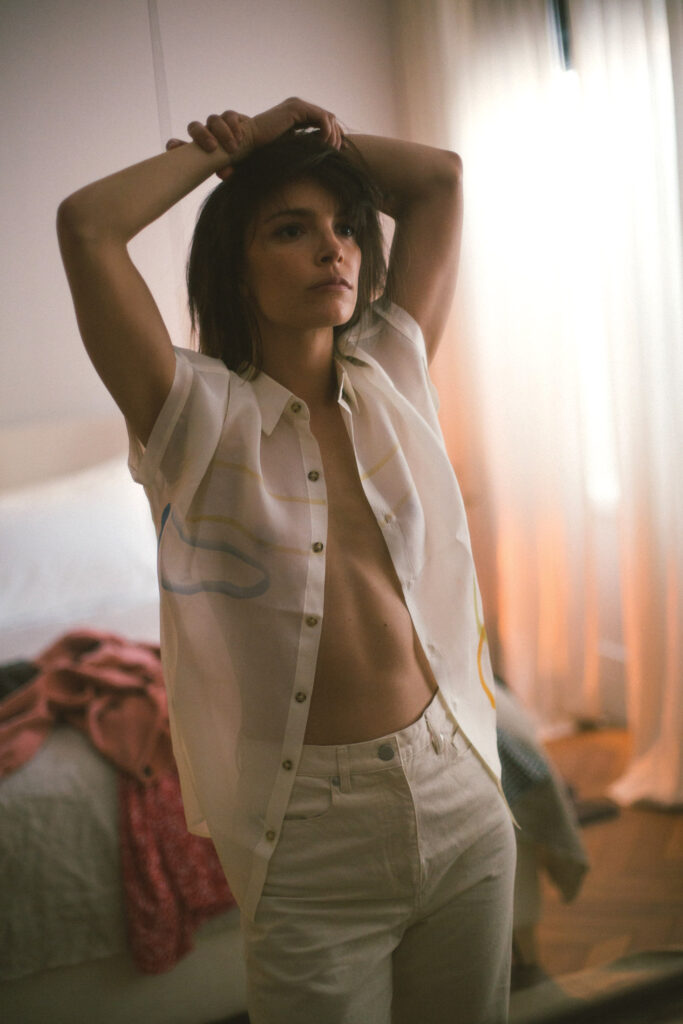
Jodi Balfour
“For as long as I can remember, live performance made me feel completely lit up. Artistic expression through dance, music, plays, and later, on-screen work offered a connection to something hard to define…something sort of multi-dimensional,” says Jodi Balfour. The South African actress and creative force is widely known for her breakout role as Gladys Witham in Bomb Girls, Ellen Waverly Wilson in For All Mankind, Jackie Kennedy in The Crown, venture capitalist Jack Danvers on Ted Lasso, and leading roles in Quarry and Rellik, along with notable film work in between. “I saw my first ballet around age 5 or 6, and I was hooked. I wanted to explore every form of performance. Ultimately, that led to acting. It wasn’t a rational choice; it was an undeniable impulse I only really stopped to question a few years ago. But here we are!” Balfour says the most rewarding aspect of her work is “getting to live in places I probably wouldn’t have otherwise, learning skills I wouldn’t have otherwise, and digging into specific human experiences with each character I play.” In recent years, the artist has expanded into writing and directing with an eye toward working across stage and screen. She came out publicly in 2021, writing, “how undeniably freeing it has been to finally embrace and explore my queerness…even though it took me a long time to get here, it feels like coming home to myself in a way that’s burst life right open.” Balfour married her wife, actress Abbi Jacobson, in 2023. –MH
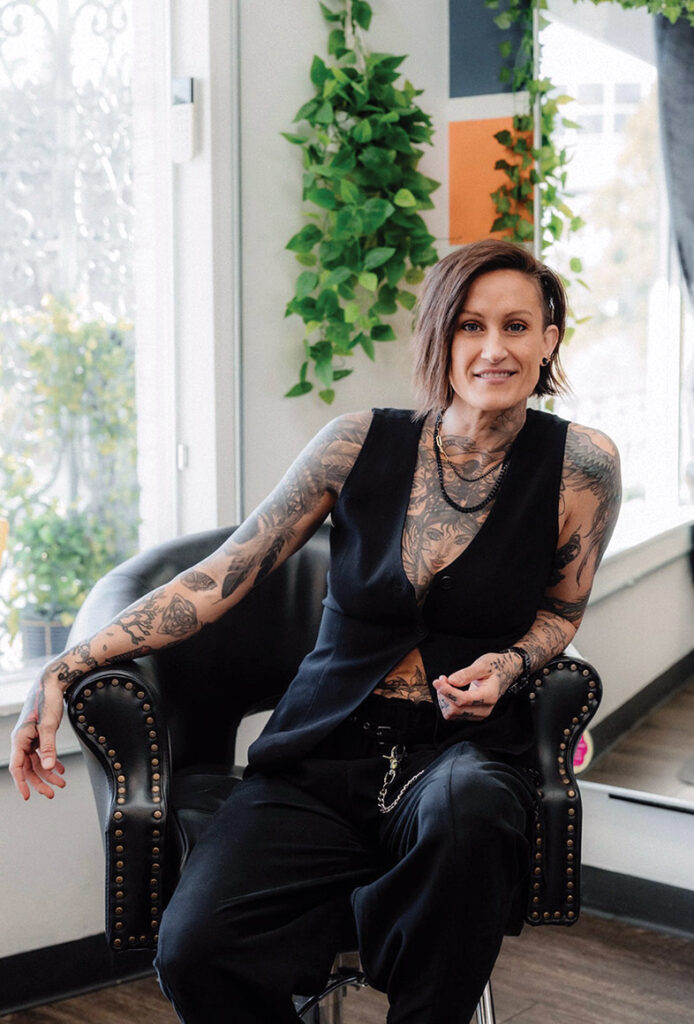
Keenan Artelli
“Getting your hair done is supposed to make you feel like yourself, to feel authentic. That should start from the moment you try and book an appointment,” Keenan Artelli tells GO. “It was important to me that my salon be a safe and welcoming space for clients from start to finish.” Launched in 2020 in a 300-square-foot suite with a staff of two, Keenan Salon now boasts a large space in Atlanta, Ga., and a staff of 15. Artelli also teaches advanced consultation and cutting techniques at other salons and mentors stylists through Bloom Academy, Keenan Salon’s in-house training program. Inclusion for clients and stylists, as well as price transparency, are two of Artelli’s highest priorities. “We don’t accept tips [at Keenan Salon] because we believe professionals should be paid fairly by their employer, not depend on customer generosity,” she explains. “Tipping in the United States has historical roots in systems that allowed businesses to underpay workers, particularly Black workers after the Civil War, and later women in service industries. By building fair wages directly into our pricing, we create a more transparent and equitable system where our team is valued for their expertise and great service is simply the standard.” In addition to her salon and education efforts, Artelli has built a widely followed social media platform as well as Love is Love, an inclusive events and wedding team that brings beauty, artistry, and creativity into every celebration and aims to make all clients feel seen and celebrated. –LE
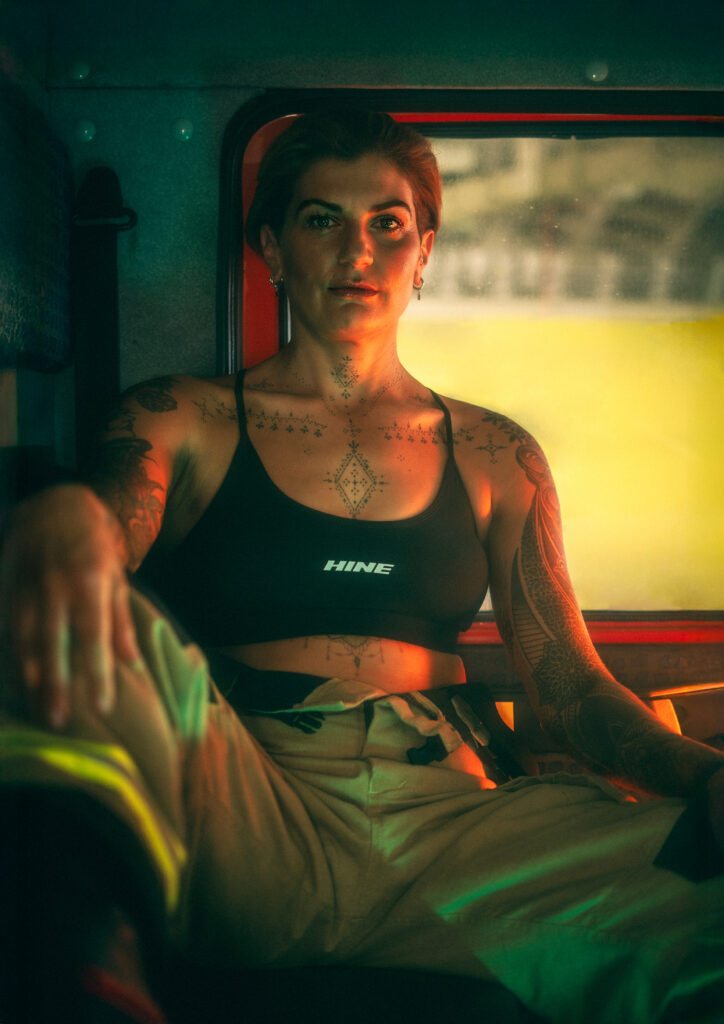
Tobi Noble
Tobi Noble always knew she didn’t want an office job. “I wanted an active career and something that would challenge me.” Being an urban career firefighter in New Zealand is not an easy job, but Noble finds it rewarding. “I show up for people on their worst day and do everything I can to make their situation better. The outcome may not always be successful, but the intention is always to help.” She also enjoys the camaraderie with her fellow firefighters and says she learns something new every shift. But it hasn’t always been easy to be a female firefighter. “Not a lot of women are in this job, and I have always liked pushing boundaries and questioning the assumption you can’t do something because of your gender. I am also passionate about helping people and want to give back to my community,” she explains. She continues to look forward and push herself. Currently, she’s training to become a station officer—something there are very few of, but Noble says, “it is important to me to increase representation of women in this space.” –SS
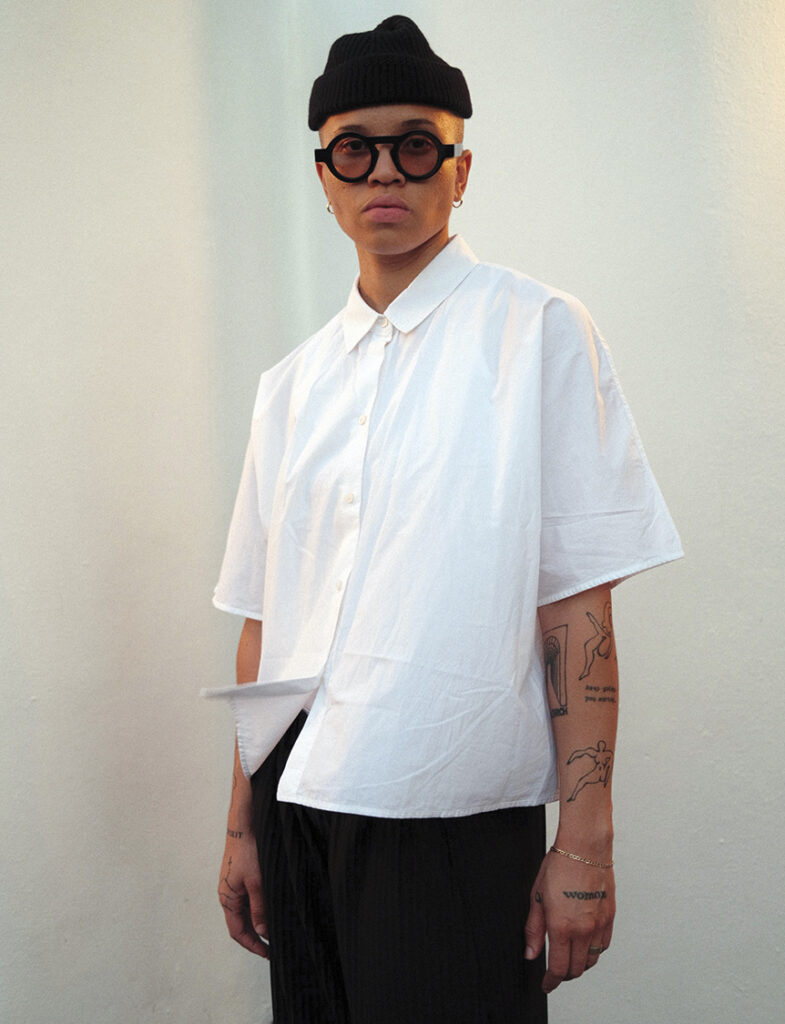
Mo Nikole
“Toni Morrison said if the book you want to read hasn’t been written yet, you must write it. I’ve lived that as instruction,” Mo Nikole tells GO. Nikole, a sonic memory worker, independent essayist, and writer from Houston, says her practice centers memory, care, and the sacred labor of listening. Curiosity was the compass that led to her work in sonic memory. “I came up through the more traditional DJ format, learned the craft and loved the rooms, but burnout came fast because I was performing ‘presence’ without practicing ‘depth,’” she says. “I needed work that required me to stay, to listen longer, to ask what was underneath the sound instead of what was sitting on top of it.” Nikole founded blkpplchrch, a fellowship honoring the Southern Black aesthetic through sound and gathering, and blkwomanmusiq, a living archive dedicated to listening to and remembering Black women in music through physical media. Her identity as a woman on the LGBTQ+ spectrum has lit her path, and she honors the influences. “Women raised me. Not as abstraction but as fact. The women in my family, in my community, in the music I was handed, they are the reason I know how to listen the way I do. Audre Lorde taught me that silence would not protect me. Pat Parker showed me that a Southern Black queer woman could be direct and devastating and tender all at once. Gwen Avery reminded me that joy is not frivolous; it is resistance.” –MH

Amelia Deibler
Movement has always been the through-line of Amelia Deibler’s life, from elementary school ice hockey to competing as a two-sport Division I athlete and playing semi-pro tackle football. But the big shift happened when she fell in love with weightlifting. “The gym didn’t just change my body; it built my confidence, forged lifelong connections, and gave me a deep, unshakeable trust in myself,” she tells GO. “The kind that tells you: I can do the hard thing. I can show up for myself.” Today, the Philly-based fitness and gym lifestyle content creator has built a career around helping others find strength, confidence, and community in the gym. As a “proudly out, masculine-presenting queer woman,” she is driven to help those who may not see themselves reflected in traditional fitness culture feel more competent and confident in that space. Deibler competes in the OCB and NPC natural bodybuilding federations and coaches clients in person and online, all while creating content for her growing audiences on TikTok and Instagram. “My vision is to be a visible, unapologetic face for queer people in bodybuilding and in the fitness industry at large,” she says. “There is a version of representation that keeps queer, masculine-presenting women tucked into niche spaces, celebrated quietly, in the margins. Masculine-presenting queer women deserve to be in the conversation, not as a novelty, but as a matter of course. That’s the future I’m working toward, and I’m just getting started.” –MH
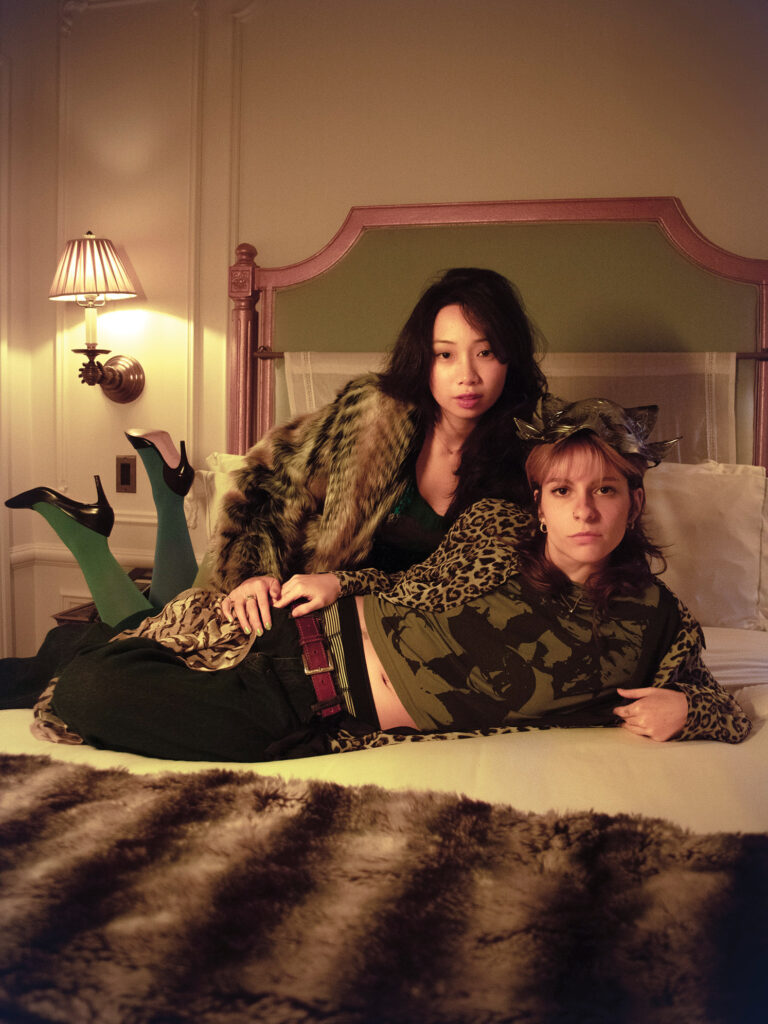
Emma Fuente and Izzy Perez
“When we first started posting online, it seemed like that would be the extent of it: short TikToks to make people laugh, and it didn’t matter who got a kick out of it so long as we did,” Emma Fuente and Izzy Perez, known as @Turtlewithhat, recall. “We started posting on YouTube, and it became a beautiful mix of our love for filmmaking and social media. With longer videos and more production value, we were no longer restrained by short-form limitations.” Over the course of their online career, the couple has amassed over 1.7 million TikTok followers, as well as over 300,000 followers on Instagram and YouTube. Through everything from videos to short films to live performances, their awkward and witty humor is a funny and comforting trademark. However, queer social media life has its own set of challenges. “As lesbian women online, we find that people are quick to criticize and hold us to impossible, ever-changing standards,” Fuente and Perez say. “We think we’ve learned a lot from the challenges of being present online, and an important one would be to embrace the messiness.” What’s next for @Turtlewithhat? “The vision for our future is ever-changing, and there are so many opportunities, but we definitely look towards the realm of film or television,” the duo says. “We hope to make films or shows together—directing and writing them—and hopefully sharing pieces of our lives as lesbian creators through every project.” –LE
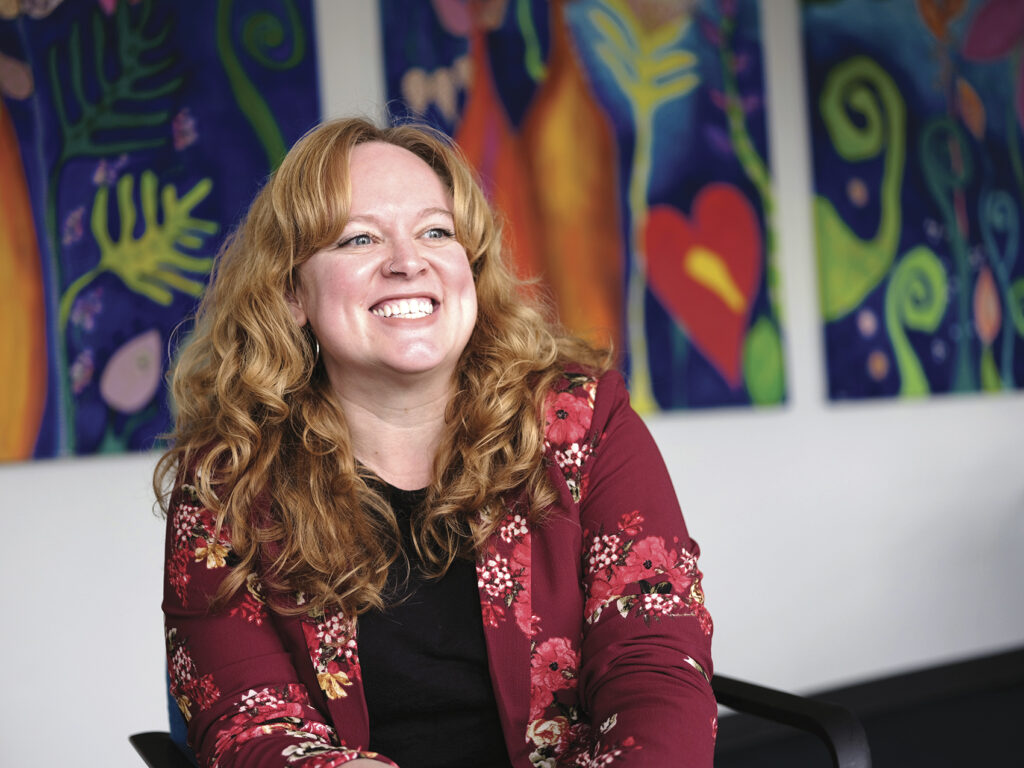
Emilie Tippins
“I was a preacher’s kid in a time and place where the church took care of people and wasn’t a mouthpiece for hate,” says Emilie Tippins, vice president of communications & development for Community Health Action of Staten Island. “As I got older, it became clearer that charity alone won’t dismantle the systems that keep people down. Advocates emerge from necessity and desperation as often as passion, and that’s who I want to emulate.” Today, Tippins channels her creative energy and curiosity into her work for CHASI. The nonprofit, founded in HIV/AIDS advocacy, serves almost 20,000 New Yorkers annually with services for healthcare navigation, domestic violence, substance abuse and recovery, incarceration alternatives, food pantries, and more. “I try to change the odds—making it easier for anyone to find help when they need it, encouraging people with money to donate, and helping those with influence find the words to use their power for good.” Through her job and her volunteer work at the Pride Center of Staten Island, where she also serves as Board Chair, Tippins strives to facilitate local access to free resources to make life easier for people. “Everything we know about how to help each other is innate. You hold a door, you lift half of a stroller on the train stairs—these person-to-person connections, our social ties, keep us engaged with each other.” –MH
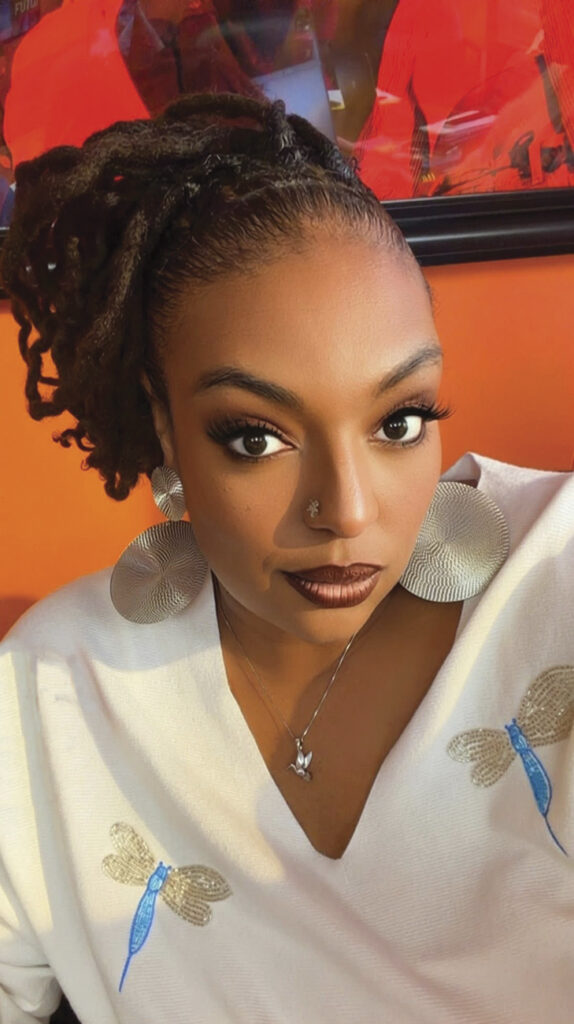
Dr. Kaila Story
Dr. Kaila Adia Story, PhD, is a professor of women’s, gender, and sexuality studies, with a dual appointment in the Department of Pan-African Studies at the University of Louisville. She holds the Audre Lorde Chair in Race, Class, Gender, and Sexuality Studies. Author of The Rainbow Ain’t Never Been Enuf: On the Myth of LGBTQ+ Solidarity and co-creator of Louisville Public Media’s “Strange Fruit: Musings on Politics, Pop Culture, and Black Gay Life,” Story credits her parents for the inspiration to educate, write, and advocate. “Although neither my mother nor father identified, verbally or explicitly, as feminists, both used Black feminist and Black queer feminist tools, like movies, books, and television shows, to teach me about the specific inequities that I would encounter as a Black girl, eventual woman, and later as a Black lesbian femme,” she says. “They both introduced me to the expansiveness of being Black, providing me with the space and understanding to bring my whole self into any room.” Today, Story seeks to inspire and transform students to feel challenged and ignited socially and politically by her classes. “Like the late, great Toni Morrison, who charged her students to go off and free others…this is what I was also called to do. To free others through my advocacy and education.” –MH
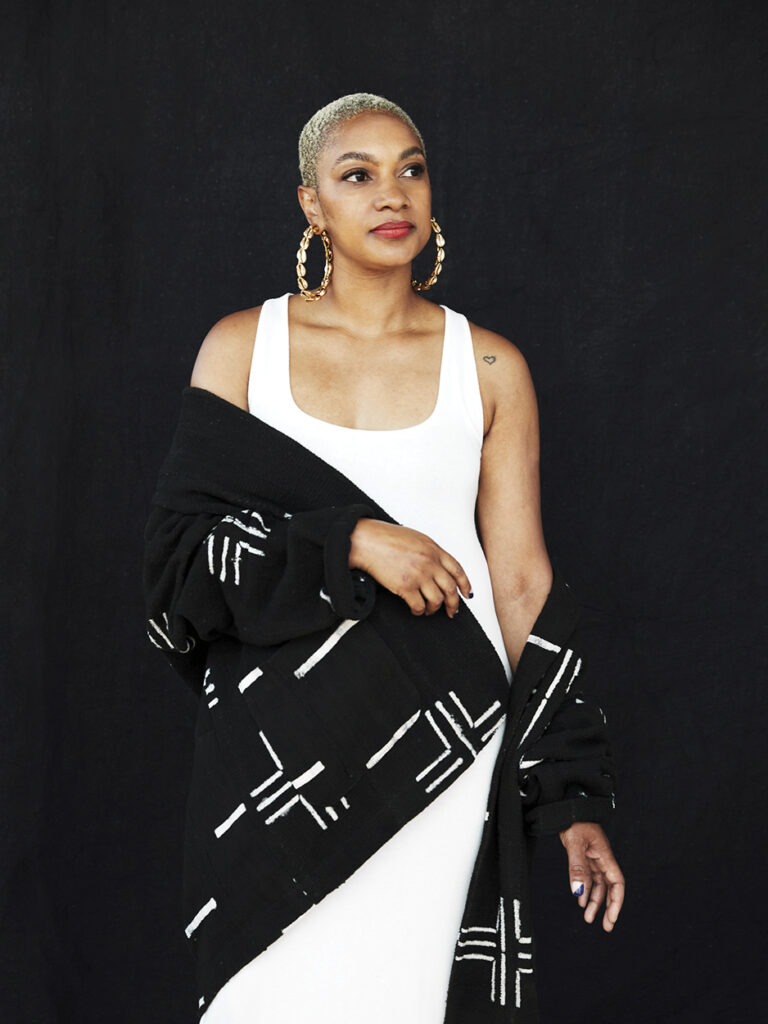
Alyah Baker
“I’ve known since I was young that I would have careers in fashion and dance,” says Alyah Baker. In 2011, after a 12-year career as a salesperson, buyer, and product merchandiser, Baker and friend Nichole Payton launched Show & Tell Concept Shop, a lifestyle platform that features products from Black- and LGBT-owned brands. “It was important to us to create a warm and welcoming environment where folks of all genders and orientations, from different walks of life, felt comfortable experimenting with personal style,” says Baker, whose work has been featured in The New York Times, USA Today, and dapperQ. A former professional dancer who holds a BA and MFA from Duke University, she is also the founder of Ballet for Black and Brown Bodies, an education and advocacy platform for culturally relevant dance training. “It was one of the best decisions I’ve ever made,” she says of founding the platform in 2017. “The class is a joyful, radically inclusive environment that caters to a diverse range of beings, centering POC as well as older, queer, fat, trans, and gender-expansive movers. I also curate an epic playlist to dance to. Dancing alongside community members is a life-affirming practice that more people should try.” Who inspires Baker? “I love researching Black feminist theory, performance, and aesthetics,” she says. “Some sources of inspiration include the Combahee River Collective, Lucille Clifton, bell hooks, Faith Ringgold, Meshell Ndegeocello, and the ultimate icon, Josephine Baker.” –LE
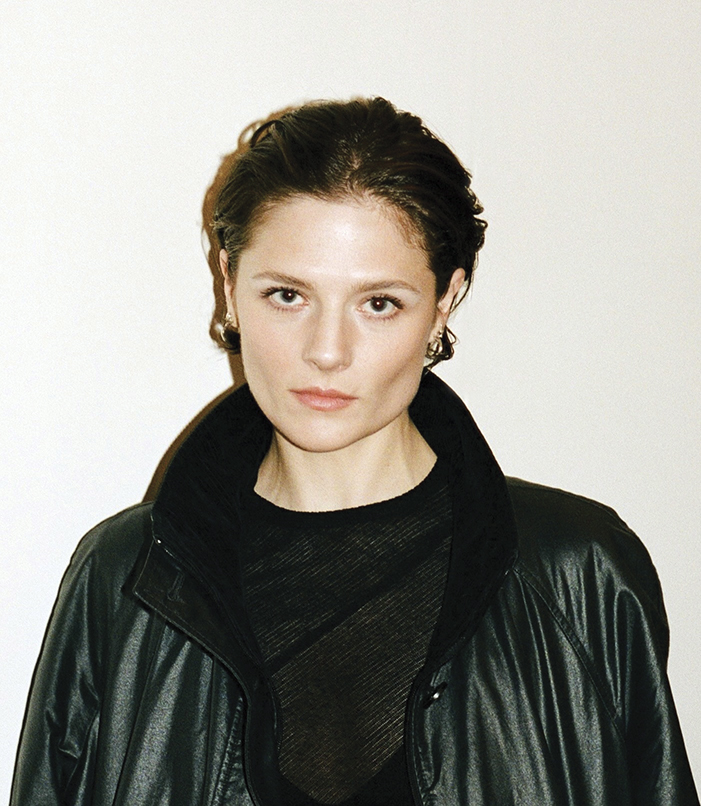
Louisa Jacobson
Louisa Jacobson made her professional acting debut in 2017 in Native Son at the Yale Repertory Theatre, and she’s blazed a thespian trail ever since. After graduating from Yale in 2019, Jacobson was cast as Marian Brook in The Gilded Age, a role she still plays on HBO’s hit historical drama. She says the most rewarding part of her work is “when people share with me how the stories I tell or the characters I play resonate with them on a deeply personal level. It’s really moving to learn how a story or a character helped someone through a difficult time, or made them feel seen.” This seems fitting for the actress, who came out publicly during Pride month in 2024 and credits multiple books with helping her learn more about her identity. One such book was When Brooklyn Was Queer by Hugh Ryan, which she describes as “really moving because I feel these stories were always left out of the history books I grew up reading.” Jacobson also loves the film Blue is the Warmest Color and says she was touched by the film The World to Come. “Lastly, there are so many women who have helped me personally, but it was largely Kristen Stewart’s visibility that really made an impact on my own coming out journey. I don’t know her personally, but I identified with her story.” –SS
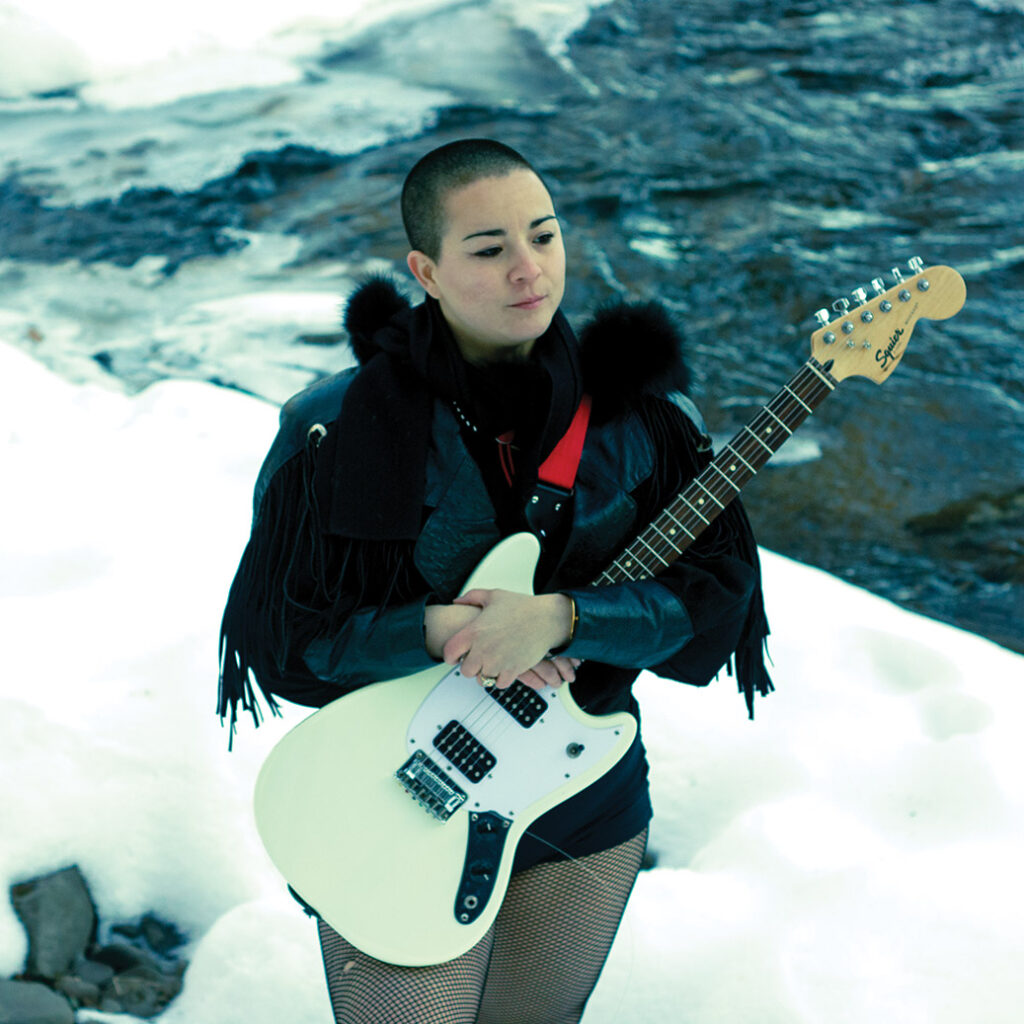
Blair Baldwin
“I’ve always felt things deeply, and even before I understood it, I was using music to process and heal,” says Woodstock-based musician and singer Blair Baldwin. “As I got older and stepped more fully into the world, I realized I needed to be part of something bigger than myself. For me, that became creating music that offers a space for expression—especially for female emotion, power, and what I think of as divine feminine rage.” Originally from Houston, the queer artist is known for her fiery performances, shaped by a commitment to activism and a background in theater. It means everything to Baldwin to know that something she created from a place of survival has reached someone else in a similar position. “When people connect to the music and feel seen in it, it reminds me that I’m not alone—and neither are they. There’s something powerful about turning emotion into something shared.” Baldwin is active across the Hudson Valley, putting energy into building live connections and emotional honesty with audiences. “I want to create spaces where people can feel everything fully—especially the emotions that don’t always get room.” Baldwin released her debut album, Proof of Life, in May. “This project feels like a real marker of survival and becoming,” she says. “It’s the most honest version of myself I’ve put into the world so far.” –MH
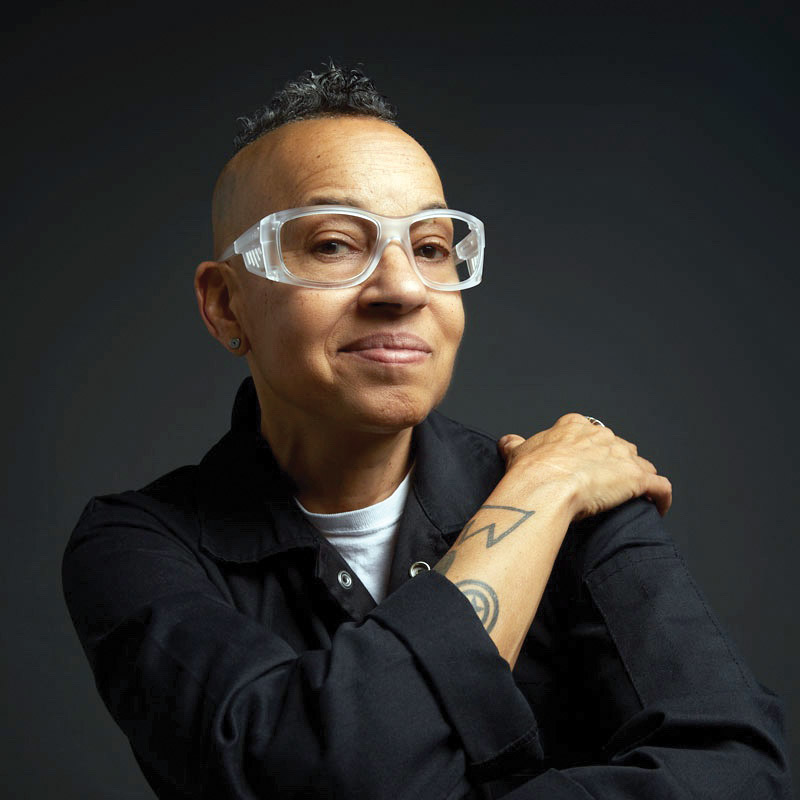
Lola Flash
“My identity—queer, female, Black—has totally been the reason why I became an activist/artist,” Lola Flash tells GO. “It has given me so much joy to collaborate with my community and create gorgeous images which show that we were [and] are here and we have not only survived but soared above all expectations.” The photographer, who primarily works in portraiture, has been at the forefront of genderqueer visual politics for over four decades, challenging both stereotypes and preconceptions of gender, sexuality, and race. Flash’s artistic practice has deep roots in social justice advocacy and engaging those who tend to be considered invisible. “I think a lot about my ancestors and how they fought against slavery and other forms of systemic racism,” says Flash of their response to adversity. “The DNA that they passed on to me makes me know that if they were able to create change and basically hang in there, that I too can overcome!” In 1989, Flash—then an active member of ACT UP—was featured as a subject in the iconic “Kissing Doesn’t Kill” poster during the height of the AIDS epidemic in New York City. Since then, their work has been included in collections at the Whitney, the Museum of Modern Art, the National Museum of African American History and Culture, the Brooklyn Museum, and the Victoria and Albert Museum in London. –LE

Alexandra Murray and Claudia Capriles
Alexandra “AL” Murray is the co-owner of Athena Keke’s, a Brooklyn women’s sports bar which, adorably, is named after the founders’ tabby cat. The space was built alongside her partner, Claudia “Clau” Capriles, out of love, community, and a shared vision. The two met in 2015 while working at a Lower East Side restaurant and were, as Murray jokes, “properly U-Hauled by 2016.” On their nights off, they spent their dates searching for the perfect place to watch a game. But in NYC, finding a bar that would show women’s sports with sound, over a good meal and a good martini, proved nearly impossible. At that moment, they knew there was a gap in the market that needed to be filled. Capriles had always been an athlete, but Murray had drifted away from sports after struggling to see a place for herself in that world. Together, they imagined something richer: a welcoming space where women’s sports are centered, celebrated, and served with style. What began as a shared frustration became a business plan, and eventually, a beloved community hub. Before opening their doors in 2025, the couple organized watch parties and formed relationships with groups like Women’s Sports Rally and Working Families Party Basketball House, building the community that now anchors Athena Keke’s. Through setbacks and the roller coaster of NYC small business ownership, they stay grounded in joy, resilience, and good company. Successfully, Murray and Capriles are building a space where queer sports fans see themselves reflected on the screens, behind the bar, and in every victory celebrated together. –AK
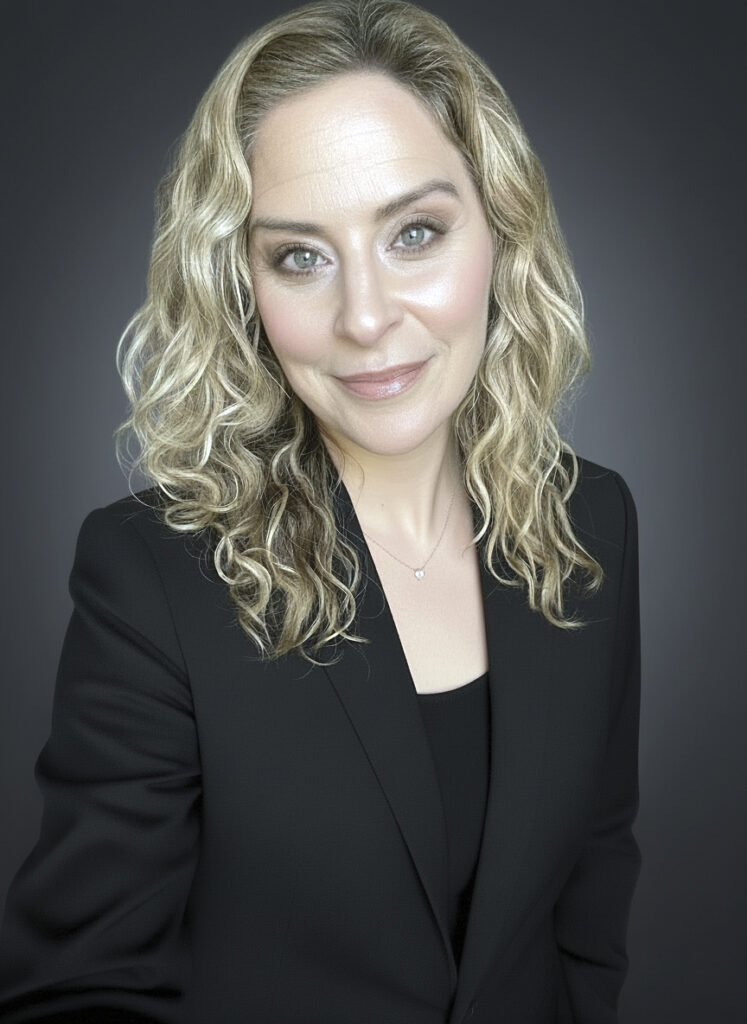
Angela Earl
Angela Earl helps companies thrive. Her main goal is to “create systems that allow people to do their best work,” she says. And with over 20 years of experience in business-to-business marketing, she ensures both startups and established businesses have the tools to work efficiently and grow. “I’ve always loved building things, whether that’s a brand, a team, a category, or a company itself.” As a member of the LGBTQ+ community, Earl has honed her skills in brand strategy and growth over the years and now serves as board chair at Uncloseted Media. The independent LGBT-focused news outlet covers queer politics and culture while specializing in accountability journalism. She wants to guide the next generation of queer doers, makers, and innovators. “I care a lot about mentorship, especially for women and LGBTQ+ leaders navigating executive spaces that still lack representation,” she says. Earl is committed to creating inclusive environments. “As a queer woman in executive leadership, I also don’t take visibility for granted. Representation matters, especially for younger LGBTQ+ professionals trying to imagine what their future could look like.” –ER
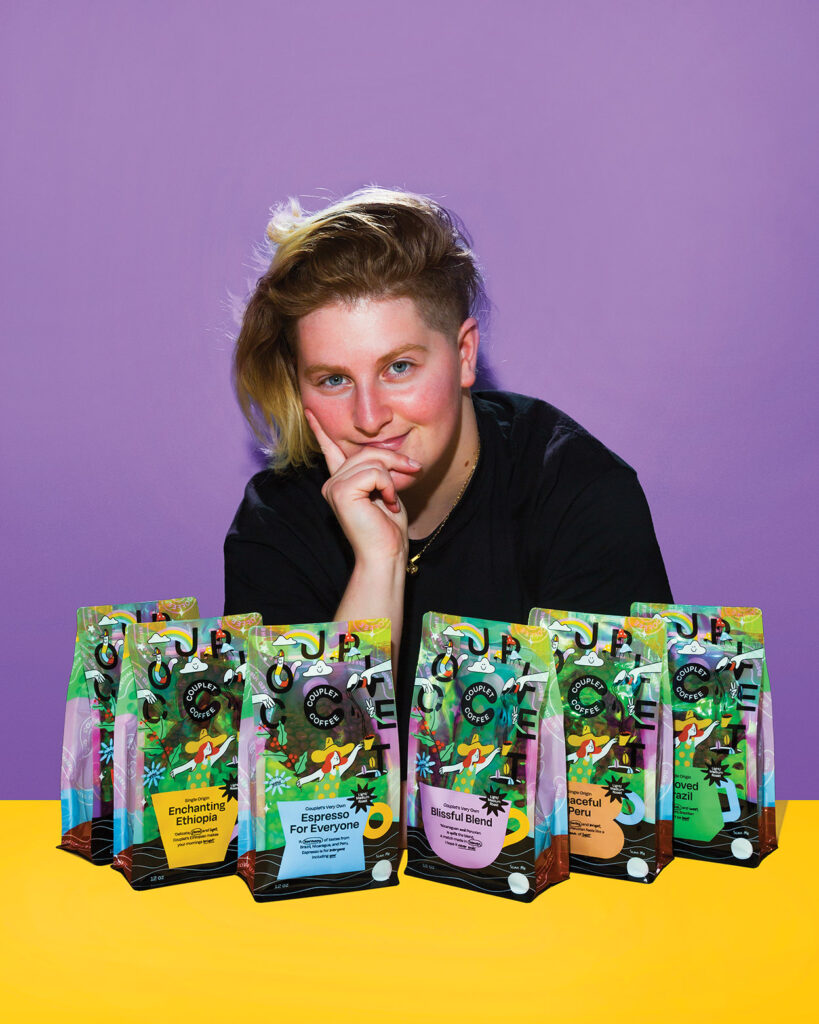
Gefen Skolnick
Gefen Skolnick is redefining what a coffee brand can look and feel like. As the founder and CEO of Couplet Coffee, she has built a vibrant, irreverent, specialty coffee company that challenges the industry’s often minimalist, serious aesthetics. Originally working in tech, Skolnick carried a “gnawing passion” for coffee in the background before turning it into a full-fledged business. “I hadn’t seen anyone truly test the boundaries of branding and fun with specialty coffee, and I wanted to put out the wackiest, most vibrant brand I could,” says Skolnick. Recently, her Los Angeles shops have become community hubs, where customers return again and again, finding both connection and a sense of belonging. For Skolnick, Couplet is just the beginning. Driven by a growth mindset and an ambition to build lasting, culturally relevant brands, she’s focused on creating food and beverage experiences that are unique and deeply personal. Being a masc-presenting woman has shaped her journey. She says, “Nobody ever expects me to be an investor and the CEO of a highgrowth, investor-backed business when I walk in a room. I love seeing people’s attitudes visibly shift towards me on a near-daily basis the second they find out who I am and what I do. I love being nonconforming in a very male-dominated industry!” –AK
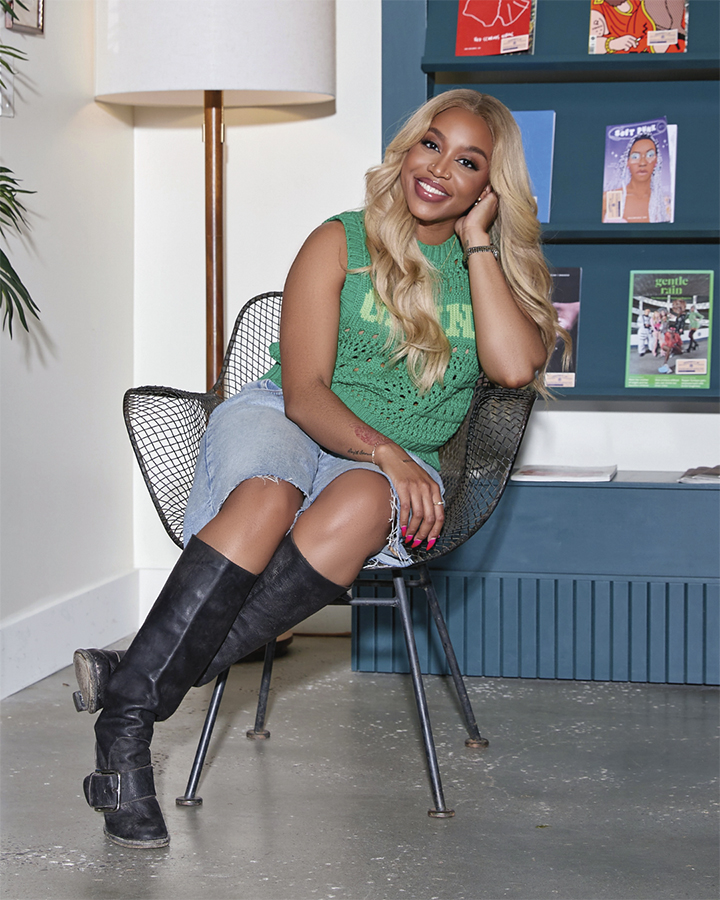
Brianna Arps
“I like to call myself an accidental entrepreneur,” Brianna “B.A.” Arps tells GO. “Truth is, I never ever, ever set out to build a fragrance company…but life had other plans.” After a decade-long career as an investigative journalist and beauty, fashion, and lifestyle editor, Arps was laid off in 2018 and turned to her lifelong passion for fragrance. Her frustration with “the lack of inclusive, transparent, values-driven options in the space” led Arps to form MOODEAUX, an award-winning fragrance brand, which promotes self-expression through eau de parfums and scented body care products scientifically developed with quality ingredients and sustainable packaging. Alongside launching MOODEAUX in 2021, Arps—a St. Louis native and graduate of the University of Missouri School of Journalism—established MOODEAUX’s Black in Fragrance initiative, which aims to create a holistic, worldwide support system for Black perfumers and fragrance entrepreneurs. Since then, MOODEAUX has won various awards, received grants and investment funds from Glossier and Pharrell Williams’ Black Ambition Prize, been featured on TODAY and Good Morning America, landed a partnership with Sephora Accelerate, and debuted as the first Black-owned fragrance brand sold at Credo. “In fragrance—an industry historically driven by rigid gender norms and narrow ideals—I felt compelled to build something more expansive,” says Arps. “MOODEAUX was born from the belief that identity is fluid, emotions are layered, and self-expression shouldn’t be boxed in or explained away.” –LE
Lynn Harris Ballen
Longtime lesbian and queer organizer Lynn Harris Ballen is based in Los Angeles and currently serves on the steering committee for Circa: Queer Histories Festival and is a board member of Dyke Day LA. Born and raised in South Africa, Ballen has co-produced conferences, publications, and lesbian art/history exhibitions like “GenderPlay in Lesbian Culture” and the “Lesbian Legacy Wall” at ONE Archives, and she was a member of the Lambda LitFest founding committee. Ballen and her late partner, Jeanne Cordova, created the queer magazine Square Peg, and she credits Cordova as being a huge inspiration: “When we met, she was already a groundbreaking journalist and pioneering West Coast LGBT activist. I learned how to live a deeply community-connected life from her.” Currently, she serves as the senior producer of Feminist Magazine on KPFK, an intersectional radio show and podcast. Ballen isn’t slowing down any time soon. She’s working on a documentary about the iconic ’70s Lesbian Tide magazine and says, “As a first-time filmmaker, I’ve been thrilled to discover how incredibly supportive the independent queer filmmaker community is.” Her goal is for the film to reflect the lineage of 1970s lesbian organizing and community building, and she hopes “it will also be relevant and thought-provoking for younger queers who want to learn more about how we can create communities to sustain and support us now!” –SS
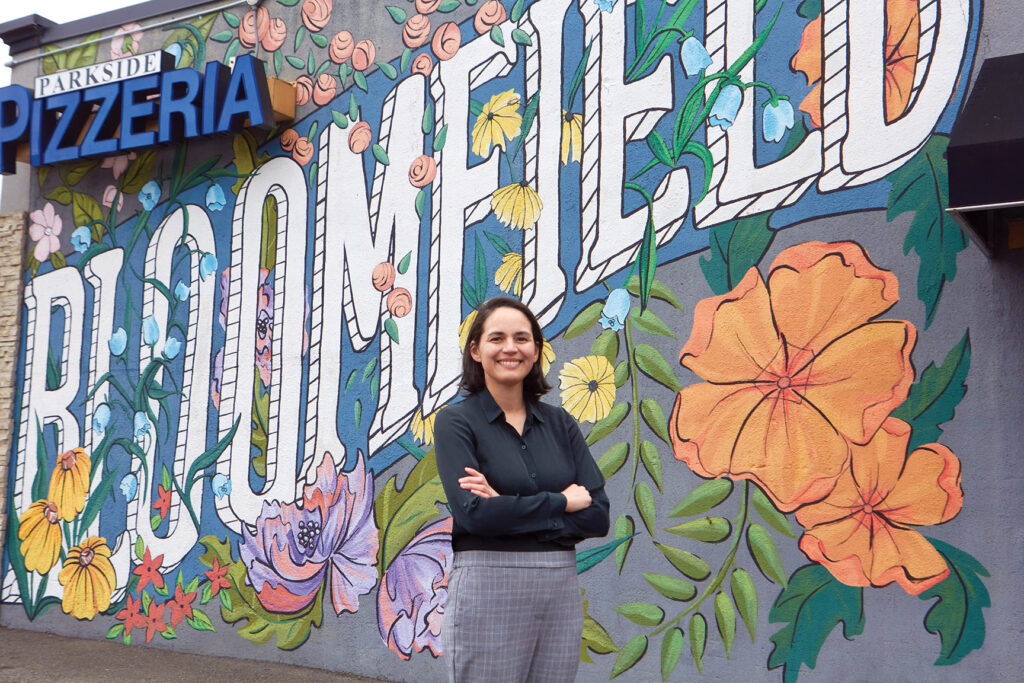
Stefanie Santiago
“As a queer Puerto Rican woman, I believe I was born with the right mix of character traits that enable me to speak out against any forms of injustices, big or small,” says Stefanie Santiago. After an encounter with a local representative regarding a homeowner issue, the New Jersey-based marriage and family therapist and addiction specialist was inspired to get into local politics. She ran for office for the first time in November 2024, when she was one month postpartum. “Becoming a parent reignited a deep motivation to set a good example for our son and the community he will be a part of,” says Santiago. She has committed herself to community aid—co-founding a private telehealth practice for individuals, couples, and families throughout New Jersey and Virginia; founding the Bloomfield Immigrant Justice Network, a hyperlocal coalition dedicated to supporting the local immigrant community; and co-hosting a community vigil in response to the murder of queer Minneapolis woman Renee Good and others who have lost their lives to ICE. Last year, Santiago ran for Bloomfield, New Jersey’s First Ward council seat, and plans to try again in 2026. “I hope to continue looking for ways to leave a positive impact on my community and use my voice to shine a light on issues left unaddressed,” Santiago says. When asked what pop culture helped shape her queer identity, Santiago replies: “I am a ’90s child, so I default to The L Word original series.” –LE
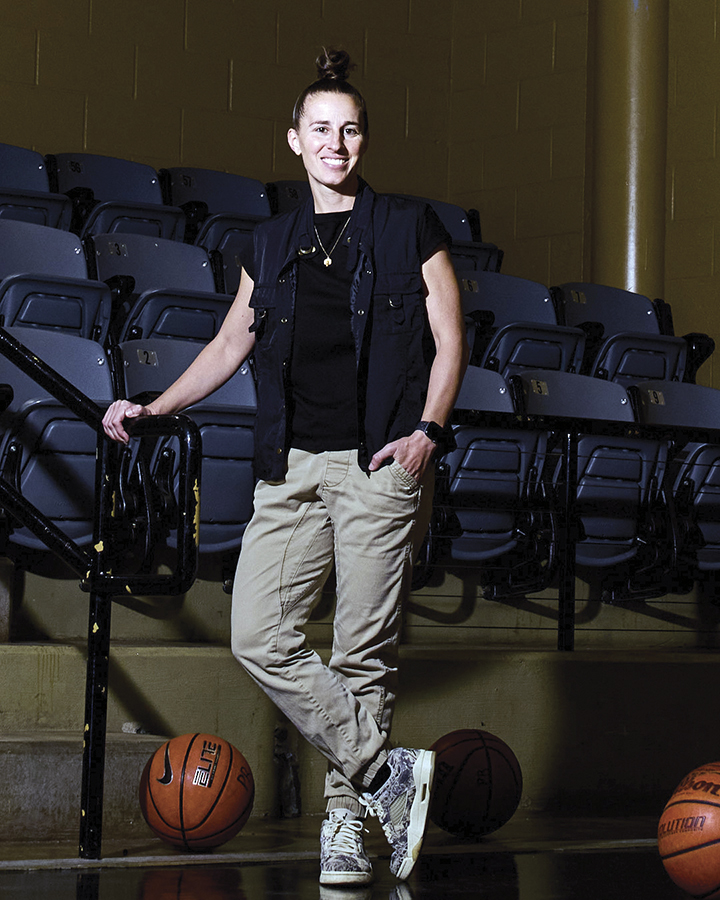
Christen Strags
“The most rewarding part of my work is taking what I learned training the best women’s basketball players in the world and sharing it with people who’ve never seen it before,” Christen Strags tells GO. “Most people don’t realize what it actually takes to be great at that level. I spent years watching it up close, and now I teach it.” Strags spent seven seasons with the WNBA as a strength and conditioning coach. During this time, she trained 15 All-Stars as well as eight Olympians representing five countries, and two Women’s Basketball Hall of Famers. Today, Strags is a keynote speaker and founder of Strags Performance Training, a resource hub for girls’ basketball coaches and athletes, and Sports Bra Strength, a lifting community for women’s sports fans. Strags’ queer identity has been a pivotal factor in her career, both in building specific fitness spaces and setting an example of physical and mental strength. “Being a woman on the LGBTQ+ spectrum has always made me feel a little outside the box, and I’ve leaned into that,” says Strags. “The women’s sports fandom is one of the most LGBTQ+-rich communities out there, yet for a long time, there wasn’t a fitness space built with us in mind. I wanted to change that. We can be tough, strong, playful, and adventurous, and we don’t have to shrink ourselves to do it. Plus, it’s a lot more fun when we do it together.” –LE
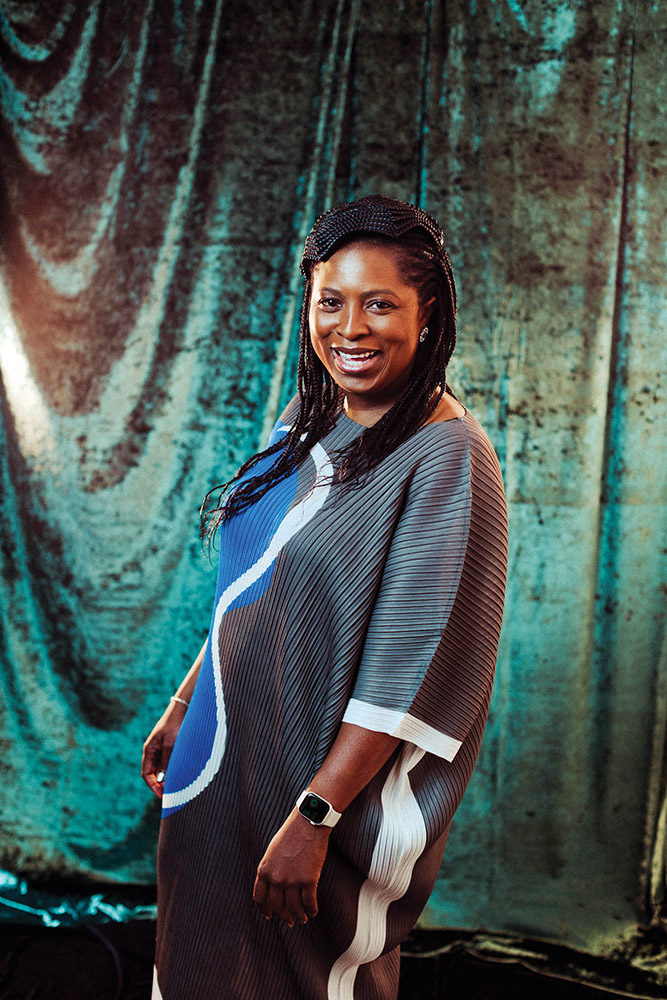
Sekiya Dorsett
Some filmmakers chase spectacle. Sekiya Dorsett chases truth, finding it in quiet conversations, lived histories, and the resilience of queer life. The GLAAD award– winning filmmaker has built a body of work that centers the rich, complicated lives of Black women, queer people, and the working class—stories that are often overlooked but always unforgettable in her hands. Her first feature, The Revival: Women and the Word, followed a group of Black lesbian poets on tour across the United States, capturing a vibrant community in motion. Later, her four-part NBC News series Stonewall 50: The Revolution helped bring the history of the uprising to a new generation, earning both a GLAAD Media Outstanding Digital Journalism Award and the NLGJA: The Association of LGBTQ Journalists Excellence in Digital Journalism Award. Dorsett’s filmmaking is as personal as it is political. Growing up in the Bahamas, she remembers the moment everything clicked: watching Gia alone during an HBO preview and realizing that she liked girls. “Queer films saved my life,” she says. Dorsett honors the queer films that once helped her understand herself. “If I had given up after the first ‘no,’ I would not be here,” she says. Faith, many tears, and the dedicated support of her wife of 20 years keep her grounded as she continues to dream bigger. Those dreams include 20 Years of Longing, her deeply personal feature documentary about Black queer love, migration, and building family; a surrealist short film; a future queer superhero story; and I Love Bed-Stuy, a cinematic love letter to her home base in Brooklyn. –AK
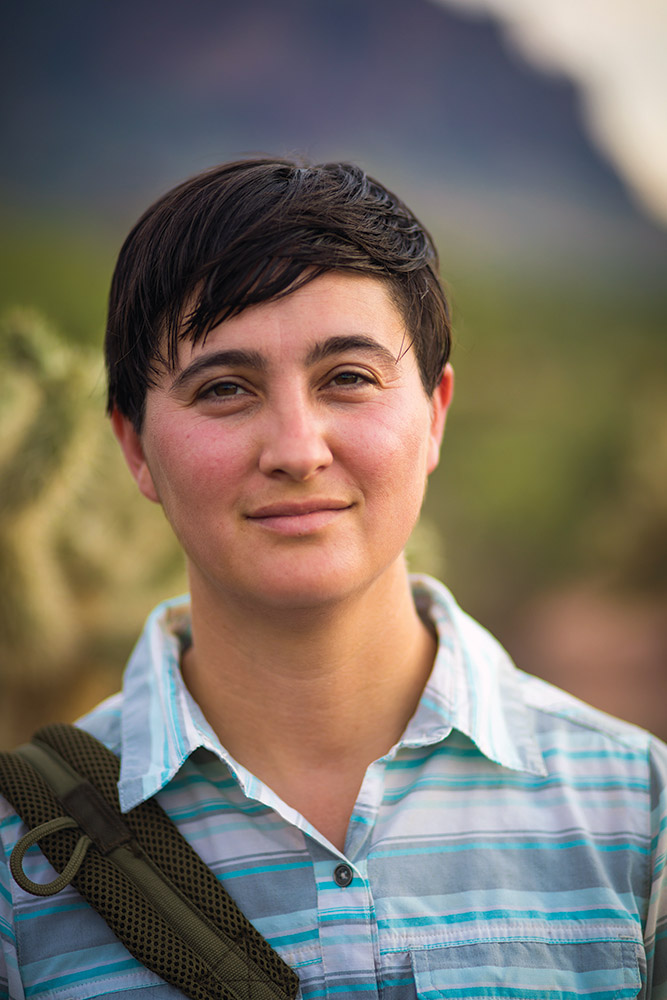
Dr. Lauren Esposito
Evolutionary biologist Dr. Lauren Esposito, PhD, credits her parents with inspiring her to become a scientist. “It was really their love of nature and their encouragement of exploration that inspired my scientific pursuits from an early age.” That passion continues today. “For me, science has always been a place for creativity, and nature has always been a place where I was truly free to be myself. As an evolutionary biologist studying arachnids—spiders and scorpions—I am able to travel the world, explore places I have never been, and try to help answer questions about the history of our natural world,” she says. On top of her work, Esposito is also an activist for LGBTQ+ equity and inclusion in science, tech, engineering, math, and medicine careers. “Hands down, my favorite part of my career has been creating a space for young scientists to feel like they are safe to bring their full identities into the lab. That wasn’t something I felt as I was entering this career. That’s the beautiful thing about queer resilience—we get to imagine the world we want and create our own communities.” Her activism led to the launch of a visibility campaign, 500 Queer Scientists, which has shared the stories of thousands of LGBTQ+ students and professionals, celebrating their whole identities and creating greater awareness and feelings of belonging in professional spaces. “The visibility campaign I created was in response to my own experiences feeling exclusion and isolation, and was intended to be a virtual space for the community to share their stories of joy, success, and resilience,” she says. –SS
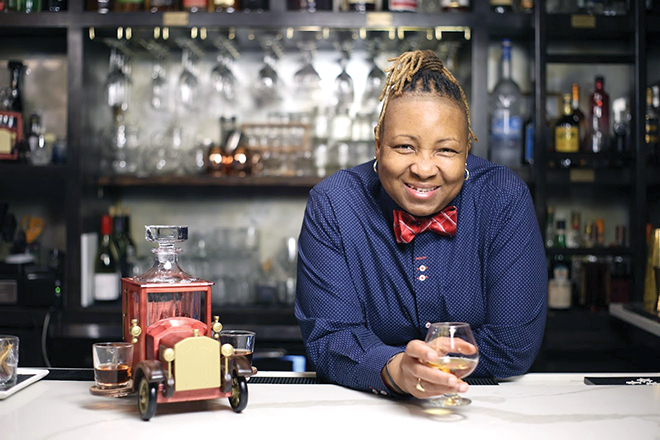
Adriane Ferguson
Adriane Ferguson, a Harlem native, embodies the belief, “You can accomplish anything by affirming who you are and doing what you love.” Her love for community has led her to own and operate her restaurant on 119th Street and St. Nicholas Avenue for 20 remarkable years. Ferguson’s culinary journey started when she hosted a New Year’s Eve event at her home with nearly 200 guests. This led her to leave an 18-year career in the U.S. Postal Service to pursue her true passion. Billie’s Black, a soul-food-style restaurant named after her mother, opened in Harlem during Pride week in June 2006. After a decade of success and the loss of her father, Ferguson rebranded the space as B² Harlem, an upscale seafood spot with a touch of soul food. Today, her restaurant is known as The Nephew Supper Club, and over the years, Ferguson’s commitment to supporting her community has never wavered. She’s hosted countless LGBTQ+ events, drag shows, and HIV awareness sessions. Ferguson says the most rewarding part of her work is “creating a safe haven for the community to gather and be an inspiration of what a positive reality can look like.” The Nephew Supper Club does that even down to its name, which Ferguson tells GO is “an endearing term of what I have been to generationally transplanted gay men in NYC. To Harlem, I’m the ‘auntie.’” What motto has kept her going through change and challenges? Ferguson says, “Keep moving!” – SS
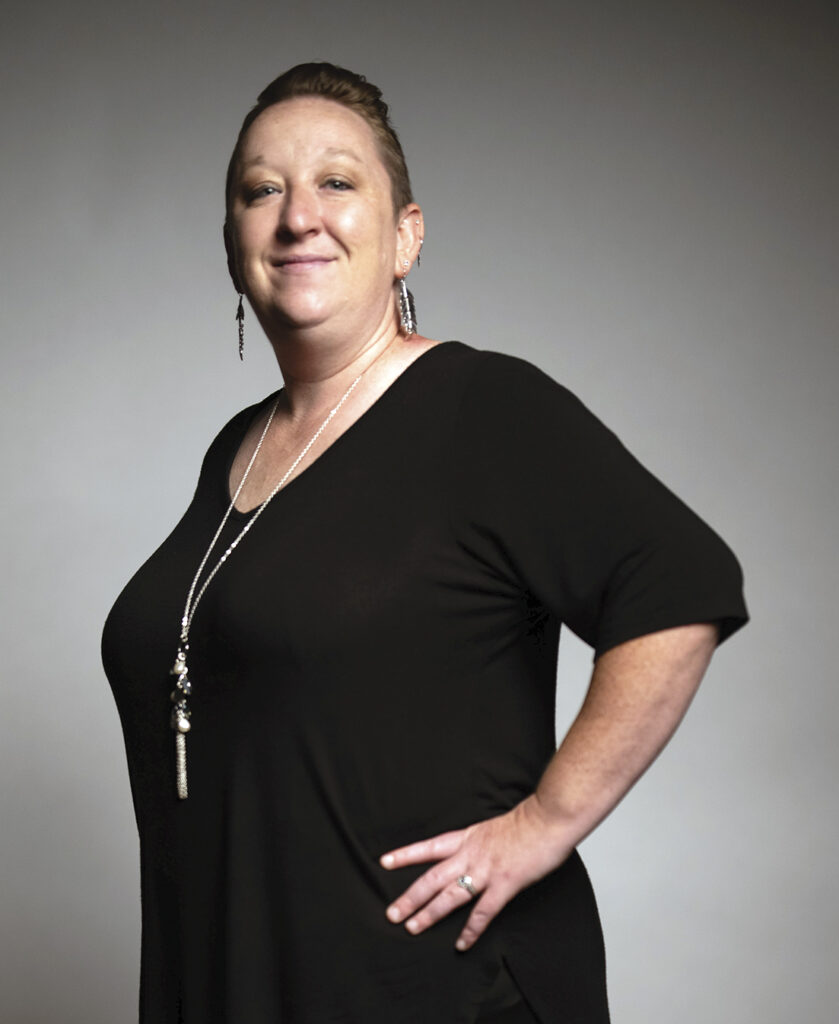
Julianne B. Merrill
Growing up surrounded by church music and opera, music director Julianne Merrill took to the piano at age three and hasn’t stepped back from the keyboard since. Whether on Broadway, at concerts and galas, or in workshops, the Indianapolis native has earned a reputation for bringing a spirit of creative partnership to every show. “Everyone has such a vibrant, creative vision and life,” she says. “I love meeting new people and collaborating with them and taking their ideas and shaping them into something truly meaningful.” Merrill also works her magic on the computer as a keyboard programmer and playback engineer. As a queer conductor and musician, she hopes her presence onstage and in the pit might inspire others who see themselves in her. Merrill credits The L Word for her awakening, and says it gave her the courage to accept her own truth. She hopes her visibility might encourage others to live authentically and confidently. Also known by the artist name PatchMaster, Merrill shows up prepared for anything and doesn’t expect favors. “I strive to live by three guiding principles: to thine own self be true, love one another, and trust the process.” She adds, “Setbacks and adversity certainly happen; they can tank me emotionally, and I can feel like a total failure and imposter. But I continue to try to remember to trust the process…It all seems to work out. Especially if you live your truth and treat others with kindness and respect.” –MH
Sunny Eaton
“A huge part of my work now involves looking carefully at assumptions—assumptions made by investigators, prosecutors, experts, jurors, and sometimes entire systems,” Sunny Eaton tells GO. “Being LGBTQ+ sharpened my awareness of how often people are flattened into narratives that erase complexity.” As director of the Conviction Review Unit for the District Attorney’s Office in Nashville, Tenn., Eaton investigates systemic failures and wrongful convictions in the criminal justice system. Thus far, her work has contributed to the exoneration of five wrongfully convicted people. Eaton is also an adjunct professor at Vanderbilt Law School, an author, and a national speaker on trauma-informed advocacy, bias, and justice reform. Her work has been featured on Good Morning America, CBS Sunday Morning, CNN, and The New York Times Magazine. Outside of the legal field, Eaton’s mental health advocacy work includes serving on the boards of Healing in the Margins, an organization that provides therapy for queer and BIPOC individuals, and Oasis Center, an emergency shelter for teenagers where Eaton herself was once a resident. “A difficult divorce and my own experiences with trauma changed me profoundly,” says Eaton. “They made me more reflective, softer in some ways, and far more aware of how deeply survival shapes people. I think that personal healing work ultimately made me a better advocate, a better leader, and a more compassionate person.” –LE