

Judges In Texas May Now Legally Decline To Officiate Same-Sex Weddings

The Texas Supreme Court has amended its judicial code to let judges refuse to perform same-sex marriages if it conflicts with their religious beliefs.
Featured image via Getty Images
In Texas, judges can now legally refuse to officiate same-sex weddings if doing so conflicts with their “sincerely held religious beliefs.” The Texas Supreme Court quietly amended its Code of Judicial Conduct on October 24, adding a line that reads, “It is not a violation of these canons for a judge to publicly refrain from performing a wedding ceremony based upon a sincerely held religious belief.”
The change follows years of legal battles involving conservative judges Dianne Hensley of McLennan County and Brian Umphress of Jack County, both of whom declined to perform same-sex weddings while continuing to officiate ceremonies for heterosexual couples. Hensley, who described her refusal as an act of “Bible-believing” conscience, was publicly sanctioned in 2019 by the State Commission on Judicial Conduct. The commission warned that she was “casting doubt on her capacity to act impartially to persons appearing before her as a judge due to the person’s sexual orientation.”
Related: What If Same-Sex Marriage Is Overturned? Here Are 7 Legal Steps To Protect Your Family
Hensley sued the commission with help from the First Liberty Institute, a Texas-based conservative legal group, arguing that the sanction violated her religious freedom. After the state Supreme Court’s ruling, she said, “I am deeply grateful that the Supreme Court clarified the judicial canon to protect religious rights, and going forward, every judge in Texas will enjoy the freedom to follow his or her conscience on this issue.”
Chief Justice Jimmy Blacklock, who supported Hensley in a concurring opinion last year, defended her actions, writing, “Judge Hensley treated them respectfully. They got married nearby. They went about their lives. Judge Hensley went back to work, her Christian conscience clean, her knees bent only to her God. Sounds like a win-win.”
Legal scholars and LGBTQ+ advocates see it differently. Jason Mazzone, a law professor at the University of Illinois, said the amendment could face constitutional challenges. “One of the claims that I think will be made in response to litigation that is likely is that, ‘Well, there are other people who can perform the wedding ceremony, so you can’t insist that a particular judge do it,’” he said. “But that, of course, is not how equal protection works, and it’s not how we expect government officials to operate.”
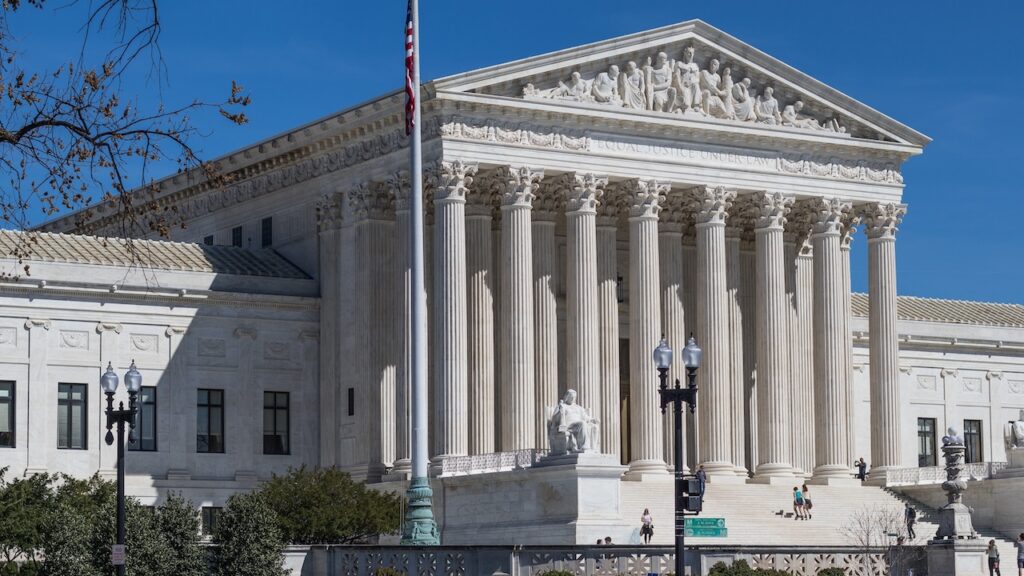
The ruling comes as the U.S. Supreme Court prepares to consider whether to revisit Obergefell v. Hodges, the 2015 decision that legalized same-sex marriage nationwide. While the Texas court’s move doesn’t undo marriage equality in the state, it gives public officials license to deny participation in those marriages, turning a constitutional right into something couples may have to work around.