

The U.S. Joins List of Countries Where Risk for LGBTQ+ Travelers Has Worsened: Report
A recently released global risk map shows that the United States is among the countries where conditions for LGBTQ+ travelers have deteriorated.
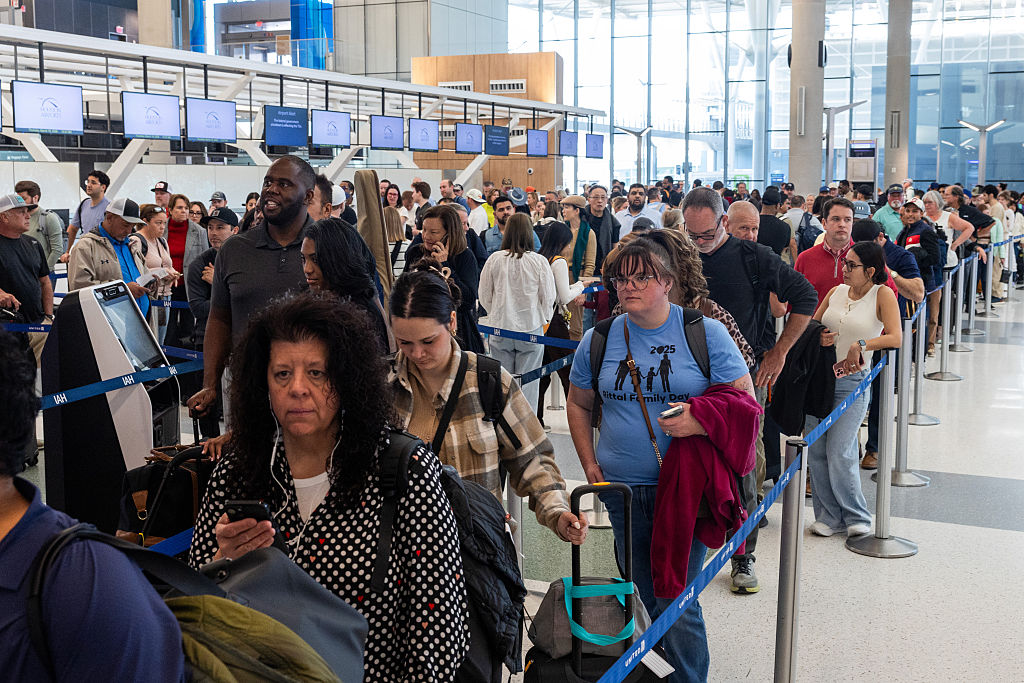
Featured image: Travelers wait in line at George Bush International Airport in Houston, Texas. Photo by Antranik Tavitian/Getty Images.
Alongside Belarus, Burkina Faso, and Senegal, the United States has seen the risk to LGBTQ+ people traveling to the country increase, according to a global risk assessment report released this week.
The LGBTQ+ Risk Map 2026, released by Swedish travel risk management company Safeture and in partnership with travel intelligence provider Riskline, assessed the situation for queer travelers going to 233 countries and territories around the world.
The majority of countries would be considered “high risk” for queer travelers, according to the report, with 91 countries falling into that category. Sixty-two countries would fall into a “medium risk” category, and 80 would be considered “low risk.”
Several countries have seen their risk scores increase. Other countries besides the U.S. noted to have become riskier for LGBTQ+ travelers to travel to include Belarus, Burkina Faso, India, Japan, Kazakhstan, Senegal, and Slovakia.
“The reasons vary but include restrictions on existing rights, legal rollbacks, harsher penalties, and new limitations on the recognition of gender identity and on travel documents,” a release about the map states.
“LGBTQ travelers face very different realities depending on where they travel. In some destinations, the risk may be primarily social. In others, it may be legal, with serious consequences,” added Magnus Hultman, CEO of Safeture.
The assessment notes that Burkina Faso approved its first law criminalizing same-sex relations following a 2022 coup. In Senegal, prison sentences for those who have same-sex relations have been doubled since a law was passed earlier this year. Both Belarus and Kazakhstan have targeted so-called LGBTQ+ “propaganda” — that is, sharing information about LGBTQ+ identities. Slovakia has also targeted LGBTQ+ rights under its recent right-wing government.
India is listed as newly riskier because of a new proposed law that would restrict trans people from self-identifying. In Japan, a court ruled the country’s ban on marriage equality was not unconstitutional.
Then in the U.S., travel documentation has been targeted by the Trump administration, with trans people receiving the wrong gender marker on their passports and an attempt by the government to disregard a previous X option.
Some countries have become less risky. Safeture notes that both Botswana and St. Lucia have become less risky for LGBTQ+ travelers after the countries repealed anti-homosexuality laws.