

The Hidden History of the Women Who Changed Baseball
Before the historic inaugural season of the WPBL, get caught up on the long, often forgotten, history of women in baseball.
While baseball has long been relegated to the world of men, women have been stepping up to the plate for almost as long as their male counterparts. From wool ankle-length uniforms and required charm school to the Baseball Hall of Fame and the brand-new WPBL, women have always had just as much claim to the game as anyone.
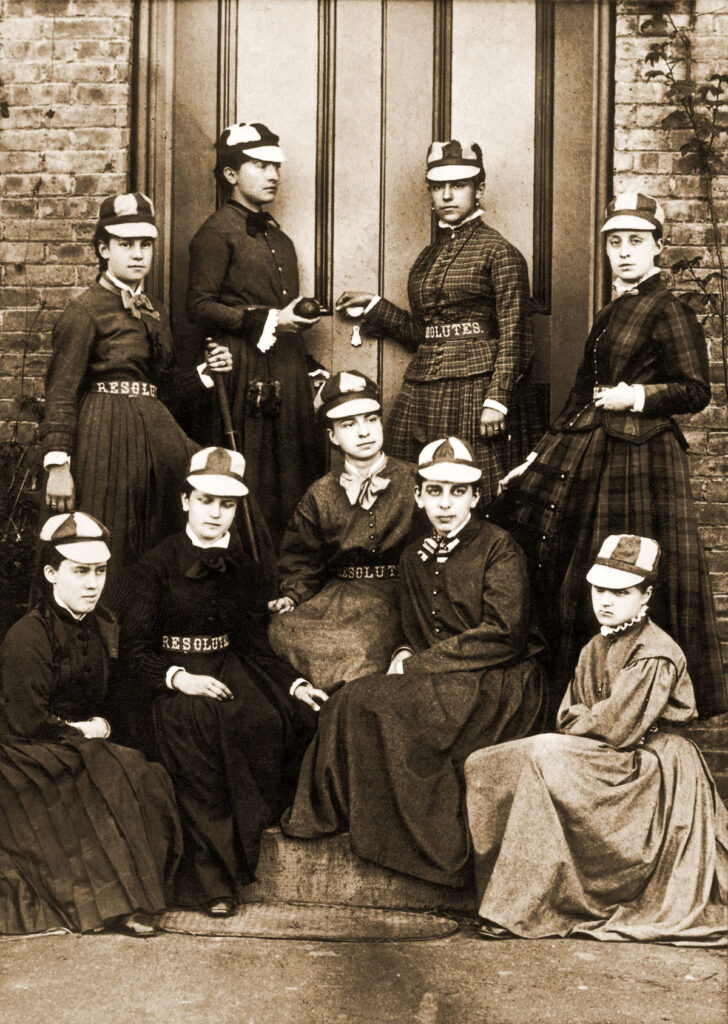
Photo Courtesy of Vassar College. Public Domain.
The 1800s: The Rebels in Cleats
Donning wool, ankle-length dresses, the Vassar College Resolutes became the first organized team of women players in 1866. Other teams began to form shortly after at women’s colleges Smith College, Wellesley College and Mount Holyoke College. In 1867, women in Philadelphia created the Dolly Vardens, the first team composed of Black women. Captain of the Dolly Vardens, Ella Harris, was reported wearing pink dresses and caps to games against the second Dolly Vardens team. The Dolly Vardens were created as a novelty team by John Lang, a white barber, who hoped to capitalize on the growing love for the sport.
In 1875, The “National Amusement Association” advertised the novelty of women playing ball and creator Frank Myers even split the teams into “blondes” and “brunettes.” While the venture ultimately failed, the love for the sport only continued to grow.
In the 1890s the Bloomer Girls league began to tour the country taking on men’s semi-professional, club, and collegiate teams. Named after the comfortable pants that they wore instead of long skirts, the Bloomer Girls traveled throughout the country via train, lugging their own grandstands to towns throughout the country. For 40 years, the Bloomers continued to grow in popularity and talent, drawing crowds at all of their games and even gave some male future Hall of Famers, Rogers Hornsby and Smoky Joe Wood, their major league start on Bloomer Girls teams.
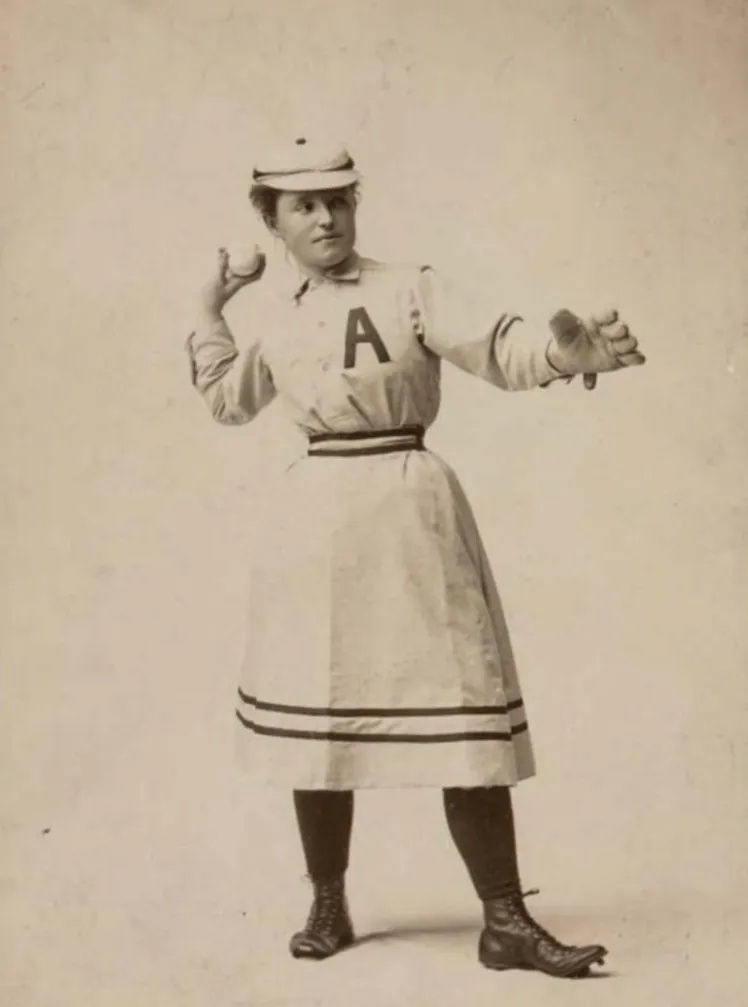
Lizzie Arlington became the first woman to play on a men’s professional team in 1898 when she pitched for the Reading Coal Heavers for one inning against the Allentown Peanuts.
The Early 1900s: A Series of Major Accomplishments
In the early 1900s, baseball found its first female to ever umpire a game in 16-year-old Amanda Clemente who raised enough money by 1910 to pay for her college education. Also using baseball money for education was 17-year-old Alta Weiss who played on the men’s semi-professional team the Vermillion Independents as a pitcher. Weiss eventually attended medical school and became a doctor.
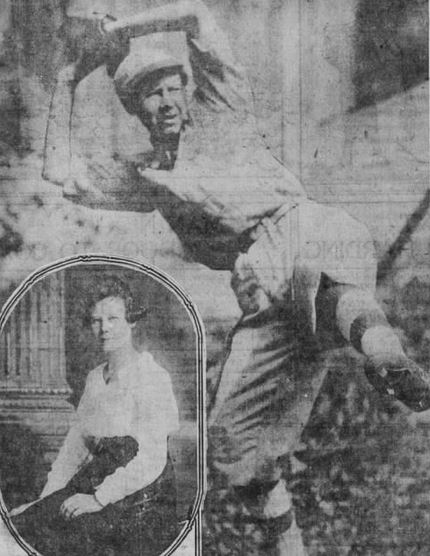
The first woman to play baseball against major league players was Rhode Island icon Lizzie Murphy known as the “Queen of Baseball.” After playing for a number of semi-pro teams, including a very successful stint at the Providence Independent, Murphy signed to Ed Carr’s semi-pro team of former major league players, the “All-Stars.”
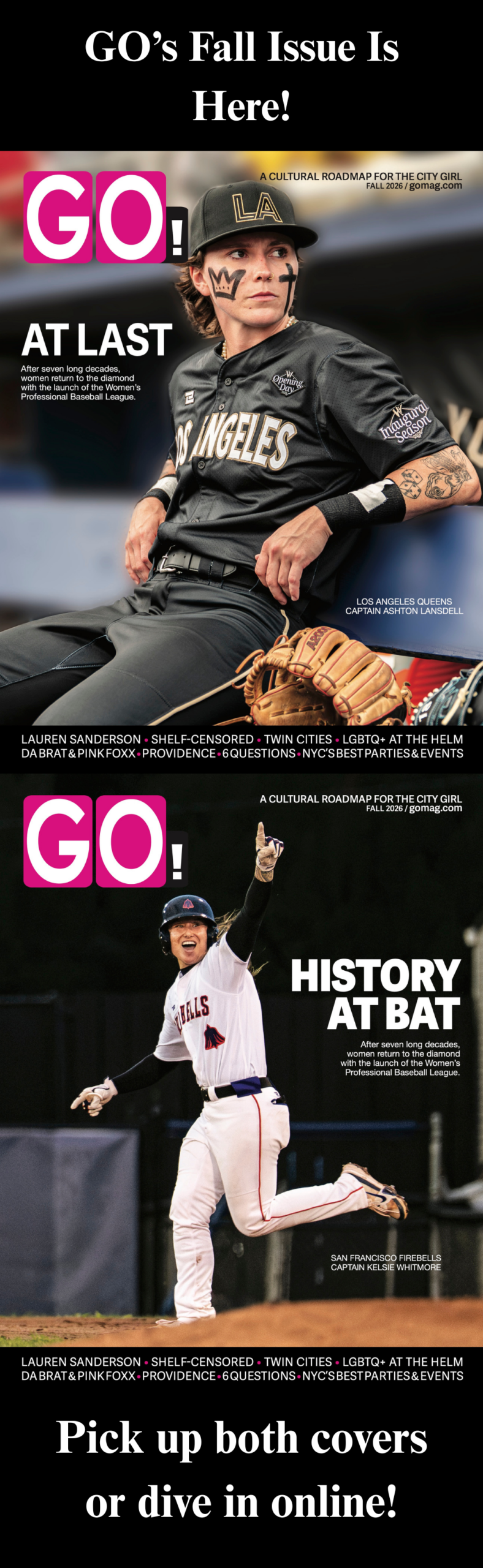
On August 14, 1922, Murphy joined a team of active major league players on an All-Star’s team to play against the Red Sox in a tribute exhibition game. Alongside a player from every active ball club, Murphy started the game at first base and batted third in the order. To this day, she remains the only woman to have played baseball with a team of major league players in a big-league ballpark. She is honored as the inspiration for the team name of the WPBL Los Angeles Queens.
When 16-year-old Jackie Mitchell signed a contract with minor league team Chattanooga Lookouts in 1931, no one expected for her to strike out both Babe Ruth and Lou Gehrig in one game. Those very sinkers pushed MLB commissioner Kenesaw Mountain Landis to rule that Mitchell’s contract was null and void and he quickly began a ban of women players that would last until 1993.
1940s – 1950s: A League for “Ladies”
When the United States enacted its first-ever peacetime draft in 1941, millions of American men were conscripted into military service—including baseball players. By 1943, many team owners were worried that the future of the major leagues was doomed, with stadiums sitting empty. Philip K. Wrigley, chewing-gum mogul and owner of the Chicago Cubs, had a groundbreaking idea: what if they finally let women play?
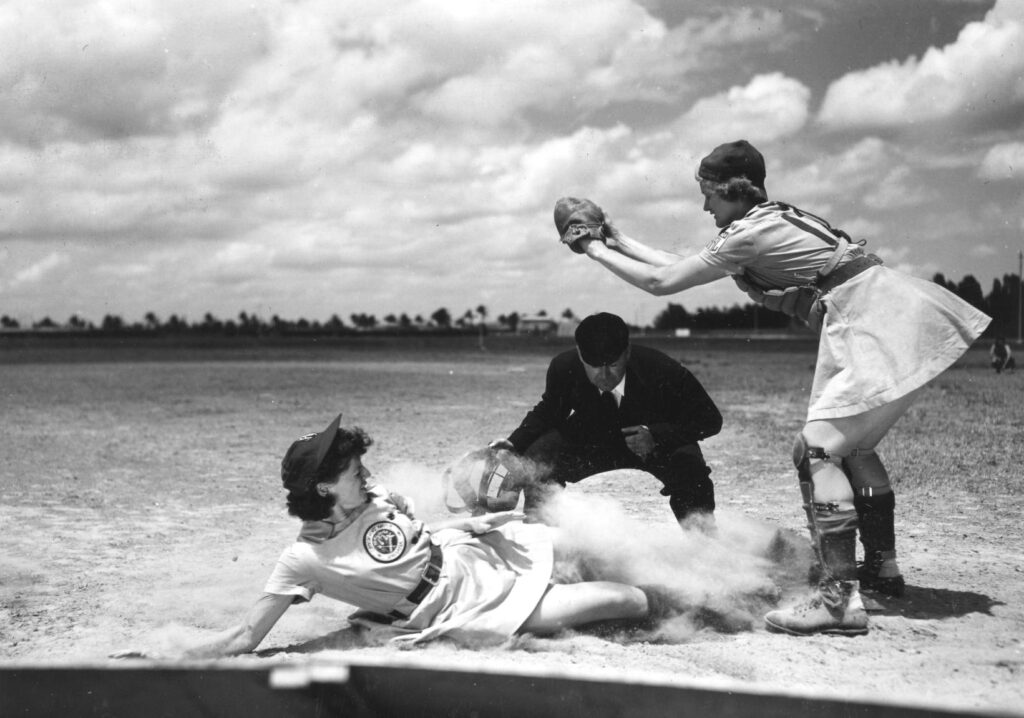
Thus, the All-American Girls Professional Baseball League (AAGPBL) was born in May 1943. 280 women attended tryouts at Chicago’s Wrigley Field, and only 60 made the final cut, where they were divided into four teams. Throughout the league’s 12 years, over 500 women played for the league, with the largest attendance reaching over 900,000 spectators in 1948.
The league had major flaws. First, it was segregated and thus no Black women were recruited or hired. Additionally, women were selected for their talent but equally for their feminine marketability. Players wore short-skirted uniforms, were required to wear lipstick on and off the field, and were required to attend charm school to maintain their ‘ladylike’ images.
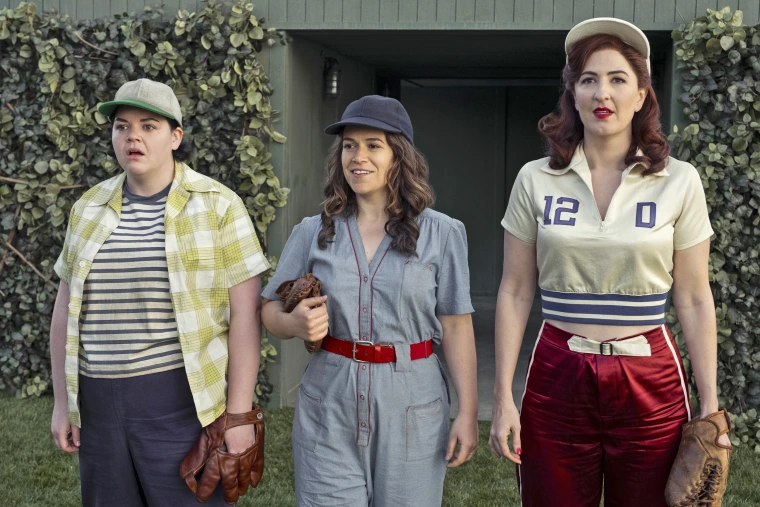
After the opening of the AAGPBL exhibit at the National Baseball Hall of Fame in 1988, the league was portrayed in the 1992 film A League of Their Own, drawing national attention to the groundbreaking league and four-time champions, the Rockford Peaches. The league was further commemorated in a 2022 television series, A League of Their Own (Greta and Carson, we still think about you!).
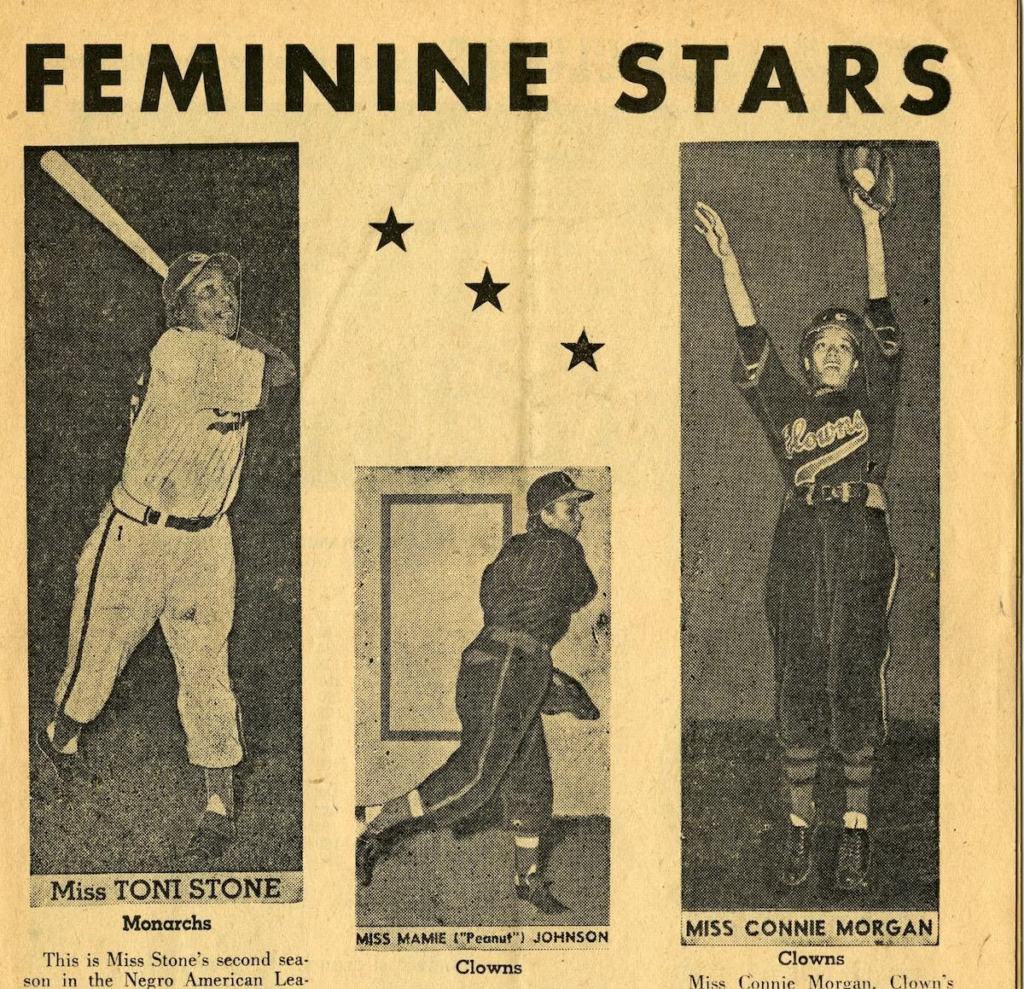
While denied entry into the AAGPBL, Black women had been playing on Bloomer teams and other independent teams for just as long as their white counterparts with much less media coverage. From the Black Bronchos in the 1910s and Chicago pitcher Madam J.H. Caldwell to Texas’ Kingsville Girls and Houston Girls and LA’s Harlem Belles, Black players have just as much claim to the history of women’s baseball, even if they continue to be left out of the narrative.
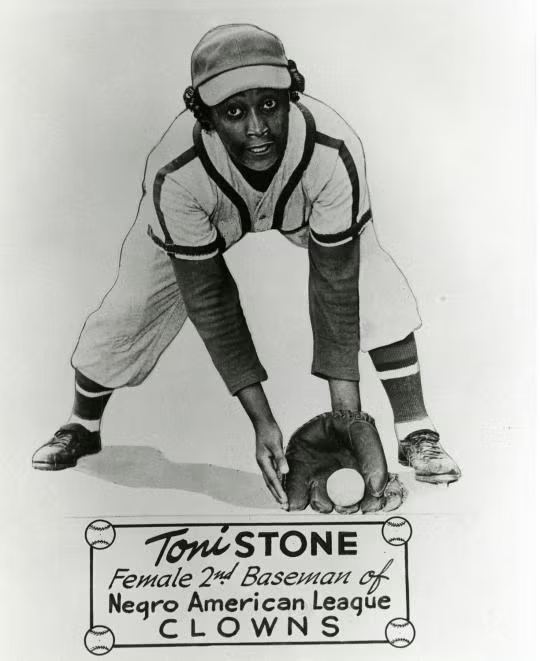
In the 1950s, three Black women began playing in the Negro Leagues: Toni Stone, Connie Morgan, and Mamie Johnson. Stone made history as the first woman in the Negro League, where she refused to wear a skirt or give in to the hecklers resisting the idea of a female ball player.
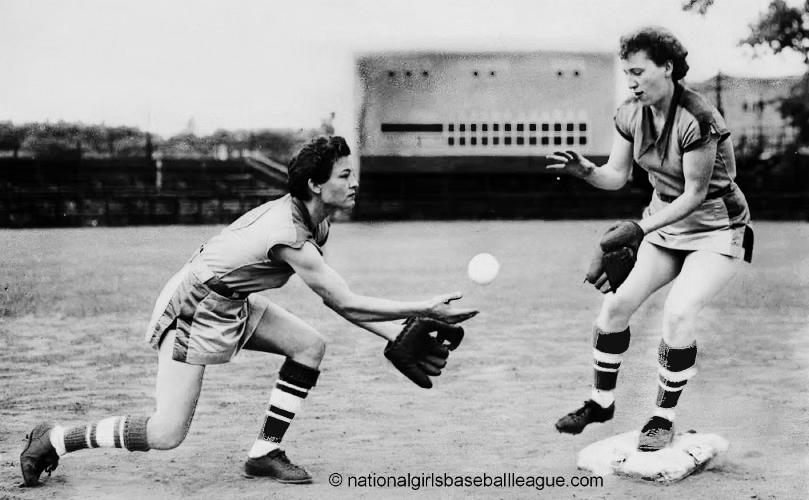
Founded for similar reasons as the AAGPL, the National Girls Baseball League ran from 1944 to 1954. The Chicago-based league was a fast-pitch softball league that was home to six teams: the Bloomer Girls, Blue Birds, Chicks, Queens, Cardinals, and Music Maids. Unlike the AAGPBL, the National Girls Baseball League included a tiny amount of diversity: Betty Chapman, a Black player; Gwen Won, a Chinese player; and Nancy Ito, a Japanese player. The league saw success over its 11 seasons but eventually folded due to declining attendance.
Little League & Big Wins
In 1950, there was no rule prohibiting girls from playing Little League Baseball, so 13-year-old Kathryn Johnston, dressed as a boy she called “Tubby Johnston, joined the King’s Dairy team. After she revealed her gender to her coach, Johnston was allowed to finish the season. However, when the season ended, Little League Baseball ruled that no girl was allowed to play—a decision that lasted until 1974.
When Maria Pepe was invited to join the Young Democrats Little League team in 1972, she excitedly joined and pitched three games. However, Little League threatened to take away the team’s charter if Pepe continued to play. The National Organization for Women (NOW) caught wind of the situation and, on behalf of Pepe, filed a court case that resulted in the 1973 New Jersey Superior Court decision allowing girls to play. In 1974, President Ford signed a bill that amended Little League’s charter by removing gender restrictions.
1970s – Now: We’re In the Bigs
The 1952 Major League Baseball ban on women signing contracts was finally lifted in 1992 when the Chicago White Sox drafted left handed pitcher Carey Schueler. While Schueler is the first woman ever drafted by a MLB team, she chose not to sign with the White Sox and pursue college basketball instead.
In 1992, Camden Yards, the Baltimore Orioles’ ballpark, was designed by Janet Marie Smith who is now regarded as the pioneer of a new era of retro-style major league parks.
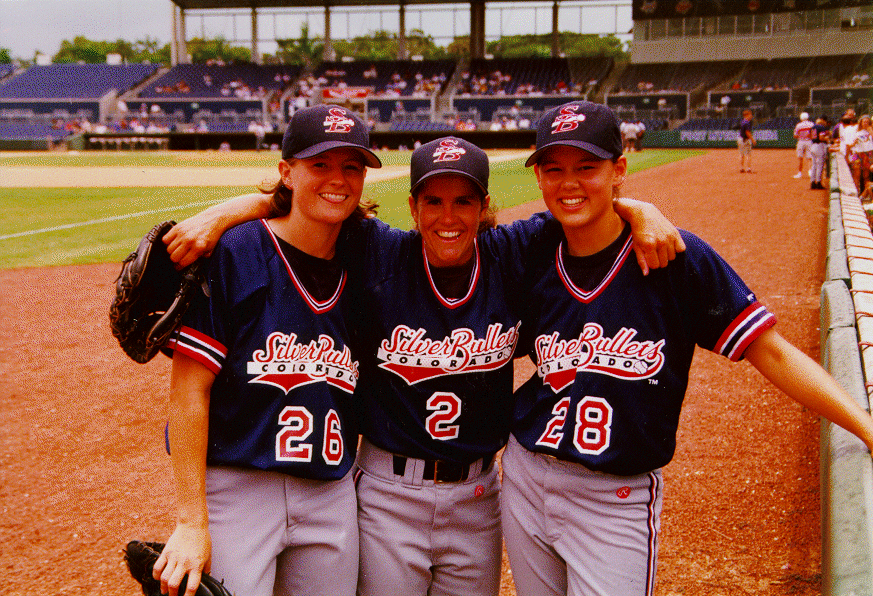
Photo via the Colorado Silver Bullets.
The Colorado Silver Bullets, the first professional female baseball team since the AAGPBL, was founded in 1994. Made up of top college softball players, the league barnstormed the country playing men’s all-star amateur and semi-pro teams. Approximately 1,300 women tried out for the team, but only 24 made the final roster.
In 2004, the Women’s Baseball World Cup began, in which national women’s baseball teams from around the world compete. In the nine times it has been held, Japan has won seven times, and the US has won twice.
History was made in 2006 when Effa Manley, who owned the Newark Eagles of the Negro National League, became the first woman elected to the National Baseball Hall of Fame. Manley was instrumental in the success of the team and dedicated much of her life to fighting for civil rights.
In 2009, Justine Siegal became the first female coach of a men’s professional baseball team. In 2011, she became the first woman to throw batting practice for an MLB team, and in 2015 Siegal was hired by the Oakland A’s, becoming the first female coach employed by an MLB team. Siegal has been involved in gender equality in sports, founding Baseball For All, the largest all-girls baseball organization in the US. In 2024, Siegal and Keith Stein founded the Women’s Professional Baseball League, and Siegal was named the League’s first-ever Commissioner in 2026.
At age 13, Mo’ne Davis already pitched a 70 mph fastball. In 2014, the Philadelphia native became the first girl in the Little League World Series to pitch a winning game. She drew massive media attention, appeared on the cover of Sports Illustrated, and brought Little League its highest ESPN rating. Davis was picked 10th overall in the WPBL draft and will join the Los Angeles Queens.
Throughout the 2020s, women have entered into numerous roles in the MLB—Alyssa Nakken for the SF Giants, Kim NG as the general manager of the Miami Marlins, and Bianca Smith, who became the first Black woman to coach in the history of professional baseball.
Kelsie Whitmore, signed with the Staten Island FerryHawks in 2022 where she became the first woman to sign a contract with a league affiliated with the MLB. In 2024 Whitmore became the first woman to play for the Pioneer League. Now playing for the Savannah Bananas, Whitmore once again made history as the 1st overall draft pick in the inaugural WPBL draft.
From college campuses to the professional league launching this summer, women have never stopped playing baseball, they simply weren’t given a chance. Women’s baseball history is one of persistence, talent and resilience. As the WPBL prepares to add a new chapter to the history book, it’s not creating a place for women in baseball but rather, it’s restoring one.