


Women at the Helm 2014
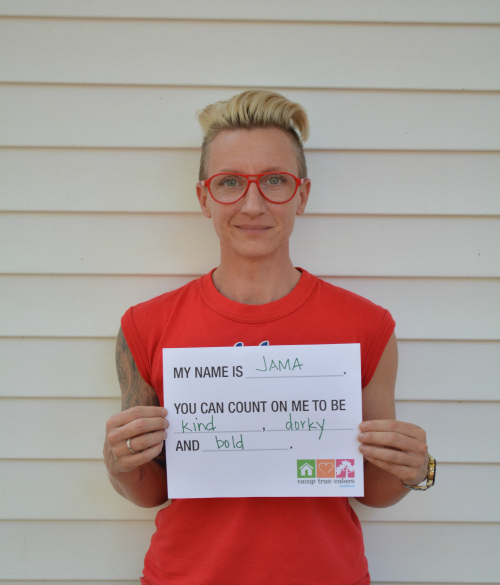
Director, Forty to None Project at the True Colors Fund
There is a crisis of LGBT youth homelessness in this country and Jama Shelton, LMSW, PhD, has been fighting to end it for more than a decade. A former homeless youth herself, Shelton’s life goal was forged while working with queer kids as a community-based artist in Texas. “Young people would disclose things that had happened to them in their lives that I did not have the skill set to address. It felt irresponsible to continue doing that work without learning more about how to handle such disclosures, so I decided to pursue an MSW,” she says. “After years of providing direct services to LGBT youth experiencing homelessness, I knew I wanted to do more.” She went back to school to work on her PhD, which she completed. Currently, she is the director of the Forty to None Project at the True Colors Fund, an LGBT organization co-founded by Cyndi Lauper. She’s also a professor at Hunter College and NYU School of Social Work. “I remember the first young woman of transgender experience who I helped get her own apartment 10 years ago,” she says. “I think about how hard she worked and how many barriers she broke through to get there. Her story, and countless others like hers, keep me going.”
Meet the next wave of out leaders!

ERIN COCHRAN AND STEPHANIE BRUCE
Co-Founders and Co-Owners, C&B’s Bottling
“When you go out to a bar and don’t intend to drink alcohol,” says Erin Cochran,” your options are pretty limited—soda, juice and tonic water. Soda and juice made my partner [Stephanie Bruce] and I feel like we were back in elementary school, and tonic water was so sickly sweet that it wasn’t fun to drink.” That changed following a visit to a restaurant where they saw how delicious tonic water could be and realized they might be able to produce the stuff on their own. They researched many, many recipes, did some “tinkering,” and—voila—they had a business, C&B’s Bottling (the “C” and “B” stand for their last names), selling tonic water throughout the world. That, of course, is not to say it was easy. “There were permits and licenses and inspections, and nowhere could we find a list that said, ‘Do this first,’” says Cochran. “… So we basically started everywhere at once, which ended up being a good plan. Starting a business can be frustrating at first, but once you get the ball rolling, it all just comes, and you have to try to hang on for the ride, while deciding how fast to let it roll.”