

Vic Michaelis Is A Very Important Person
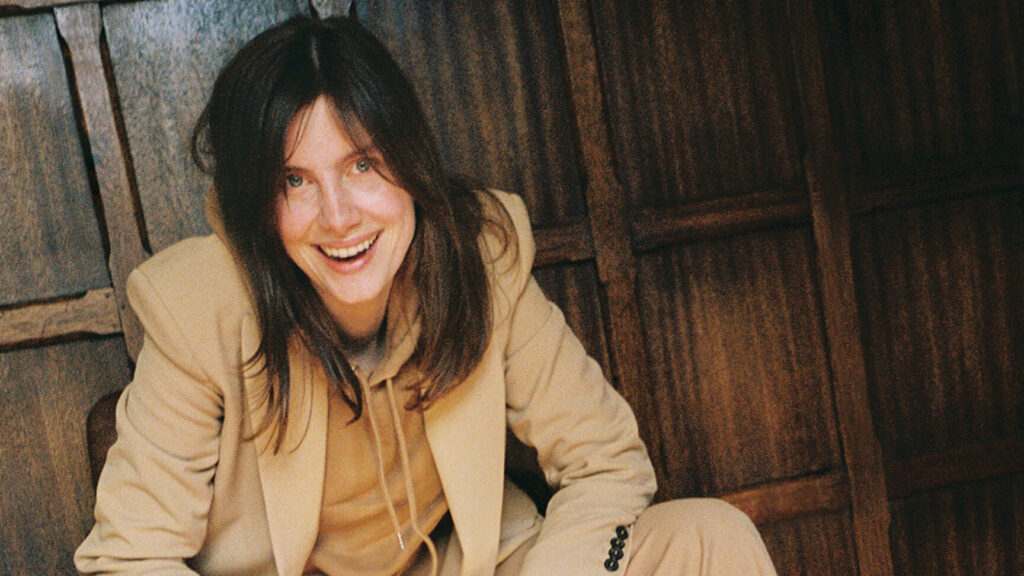
GO sat down with the comedian in between tour stops to dish on all things Pride, the power of listening and, of course, the ‘Horny for Jesus’ era.
Featured Image: Lauren D Zbarsky
It’s officially the year of Vic Michaelis. With two shows currently up for Emmy nominations, a growing list of acting credits and powerful charm, the comedian is sure to take over the world—and we need it. The Dropout TV star is best known as the host of Very Important People, a fictional talkshow in which guests are given surprise makeovers, tasked with creating characters for their new look and interviewed by Michaelis’ character. While Michaelis’ quick wit has made them a fixture in the online comedy world, they have recently conquered the dramatic acting as Cheryl Symanski in the Peacock spy series Ponies and as Joyce Harris in the award-winning queer short film Dandelion.
GO was lucky enough to sit down with Michaelis in between Dropout’s Improv tour stops to dish on all things Pride, the power of listening and, of course, the ‘Horny for Jesus’ era.
GO: On a Smosh Try Not To Laugh, you famously said that, as a bisexual, you’re only gay during Pride Month, so it’s an honor to speak to you on the first day of you being queer this year. How’s it been going so far?
Vic: It’s been amazing. I get to let my hair down, both physically and metaphorically. I’m walking around, I’m referencing Marsha P. Johnson. It’s been a beautiful experience. And I really just think we’re gonna feel good about this country when bisexuals could do this every day of the year, and that’s sort of the last stop in queer liberation.
Speaking of bixsexual voices, how is the Dropout tour? What is it like to bring something that’s so online into an in-person live event?
It’s crazy, like I personally started at the end of lockdown, so a lot of my experience was going into a studio where everyone was wearing masks. I wasn’t even seeing a lot of people’s mouths that I worked with, let alone communicating with anybody that was watching the show.
So, coming on the tour and really seeing these pretty massive theaters has been crazy to actually visualize how big Dropout has gotten. Going from sort of this niche little internet thing with all my weirdo friends to now it being something that, you know, you’ll walk down the street in your D 20 hoodie and people will sort of scream D 20 facts at you. It’s incredible.

I was actually going to ask about that. I feel like for so long, internet comedians were kind of a separate entity from mainstream comedy. It feels like that barrier is dissolving. Do you agree?
It took a little while, but I …think people have a better understanding of improv as an art form, because for a long time the only way to make money doing improv was hoping that a casting director would come to your black box theater show and pick you to be a quirky best friend in their show and then you would make enough money that you could go back to do those black box theater shows for free. Now there is this revenue stream outside of “Whose Line Is It Anyway.”
You’ve had such a huge year. Very soon you’ll be appearing on Emmy ballots for both Very Important People and Ponies. How does it feel to be in those conversations?
Oh, thanks, dude. You spend so long performing for people that you beg to come to shows and to have any kind of success, to even be a part of conversations like this, feels so surreal and so truly crazy.
What have you learned from improv?
I’m sorry. This is sort of the worst thing that I’m going to say in this whole interview, and then I promise I’m done. I think it is truly just listening. You have to listen. You absolutely will get nowhere if you are not listening to the person sitting across from you, and I think that that is just a general life skill that we are lacking as a society. If somebody is not properly listening, you can’t then move on to what the next thing is, because then you’re saying two different things. The big tenet in improv is we need clarity over cleverness, and if we’re not clear on what’s happening, you’re confused, I’m confused, nobody in the audience understands what’s happening. So, as silly as it is, it is just listening.
Well, I’m gonna move to a separate topic, completely shift the conversation.
There we go, and it’s done.
We’re gonna get into queerness now. You identify as non-binary and queer, and I’m curious, looking back, do you see any connection between the kind of freedom of character creation in improv and your own gender journey?
Oh my god, for sure. The ability to sort of be and do anything was so freeing, and I always am truly so grateful, because I don’t know if I would have gotten there on my own as fast. I’m very grateful that I’m also surrounded by a community of people that are so diverse and express gender in a lot of different ways, and so I had language and examples to sort of go ‘oh yeah, that’s me too.’
It’s a big thing that I really thought about [are] the people who carved the path for me. If my identity can be even a small thing that is helpful for somebody else, then it is worth it, even though it felt very scary and unbelievably stressful at the time, now it’s the thing I’m most grateful for.
We are huge Dandelion fans here at GO. Your character in that short film is part of the Youth Advocates Organization and in life you use your social media to spotlight queer organizations throughout the country. What is it like to get to be part of a project that bridges performance with activism?
It was really cool. It was a part that did not make any sense logistically to take, and there was no money involved in it. But I read the script, and I was like, ‘I want to do this so badly.’ It is incredible. It was so fun to make, and it’s a story I didn’t know a lot about. It’s a story about people that are still alive, which is also the interesting part about that kind of history. There’s people that were a part of that movement in the ’70s that are still around, and certainly the kids are still alive today. It’s a really cool piece of queer history, and in a scary way, feels a little bit timely now with a lot of these bills that are coming out.
An interesting part of Dandelion was that religion played the backdrop for it, and we got that incredible moment of your character speaking to Margaret and saying sometimes “it’s easier to point at you instead of themselves.” I am coming to you as a former youth group leader, and I’ve heard you mention that you were a former youth group member…
Of course, you were. I knew it, Abbie. I felt it in my bones. I knew it the second you popped on the Zoom. I went ‘That was maybe my youth group leader.’ Congratulations, and congratulations for being here.
We both made it! Did any of your own experiences with religion or faith shape your approach to this project?
It’s such a massive part of who I am, and even though I don’t believe the things in the way in which I was sort of taught, it gave me such a backdrop for belief in general. I do think it’s a little bit of a radical rebellion to go, ‘You can’t take God from people.’ The homophobes in the church don’t own God, and they’re not allowed to be the end-all, be-all of what religion is, and who a potential creator of everything looks like. We live in this world, especially in the United States, where there’s seven white guys who own the idea who God is and who gets to be a part of the club or not.
It was cool to play somebody that is like actively going into those like religious spaces and trying to help place kids, and is working within a system to try and make a better life for queer kids. It was just like it was a very cool thing to get to play with, because it’s something that feels very important. Where do you fall with faith now?
I left the church but still sometimes crave a good worship song every now and then.
I came up during “Horny for Jesus” era in like 2006 to 2008. There’s that song, “How He Loves,” that literally says “He is jealous for me, loves like a hurricane, I am the tree, bending beneath the weight of his wind and mercy,” and then it goes “Heaven meets earth, like a sloppy, wet kiss, and my heart turns violently inside of my chest.” It all is just sort of like you can’t have sex with people, but you can be horny for Jesus, and that’s okay…I think it kept me in the church maybe longer than I would have otherwise.

That song has truly always sounded like a beautiful queer love song. Okay walk with me…you’re a contestant on A Shot At Love with Tila Tequila, which Very Important People character would you want to be to impress her and win her love?
I kind of want to be like Tommy Shriggly in body, but in face, hair and demeanor maybe Leighanna-Jean Gruthers, with the curly long hair, pageant queen sort of thing in the outfit, but I want to be jacked, absolutely buff.
That’s beautiful, and I think you would win.
I think so too. I actually feel pretty strongly about that combo.
Well, this has been wonderful. Are there any future projects we should look out for?
You know, I’m doing a video game that’ll come out at some point here.
Mostly there’s a lot of really terrible anti-trans bills happening across the country, and there are so many local organizations to go follow and support. I really love Zebra Youth in Orlando, and Lost-n-Foud Youth in Atlanta, Georgia.
I would highly recommend just taking a look at them. Even if you’re in a safe place, go take a look at a local trans organization or queer organization. Even if you can’t donate money, they could use time. They could use sort of anything you got.