

The Lesbian Storyline in ‘Legally Blonde’ Prequel ‘Elle’ Is the Queer Representation We’ve Waited 25 Years For
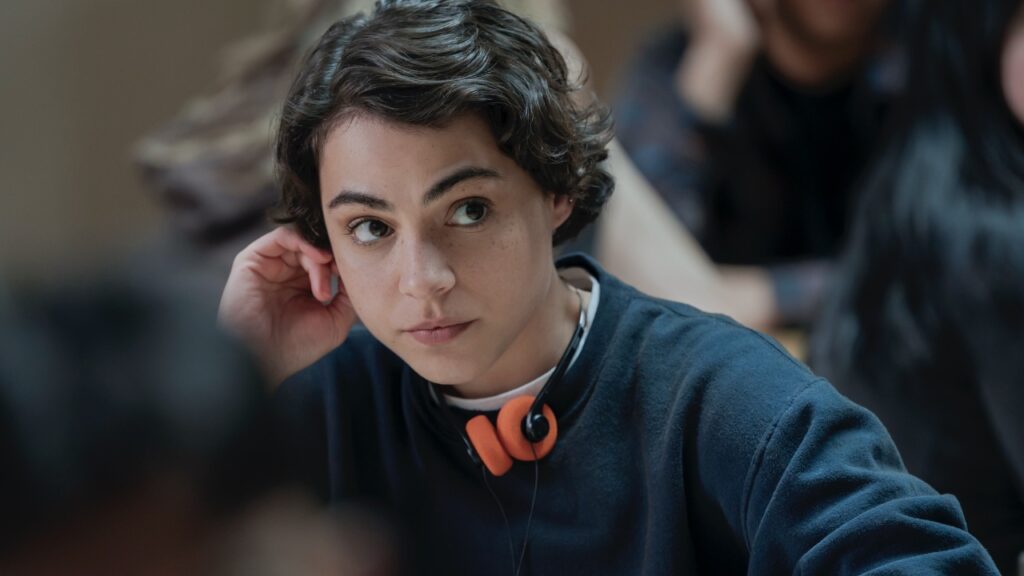
Why Elle’s ‘Lizbian’ storyline hit differently — and why its ’90s setting made it matter even more.
The new series Elle has been making waves across sapphic social media since the Legally Blond series arrived on Prime Video on July 1, because it gave longtime fans something they have been craving for years — a lesbian character, finally.
Legally Blonde fans all know that Bruiser is more Bear than dog. But it’s kind of a problem when a canine’s coming-out storyline is the only tangible queer representation throughout an era-defining franchise — in a sequel, no less. Let’s face it: Elle Woods’ lukewarm romantic relationships in Legally Blonde have nothing on her status as an OG girl’s girl.
Queer femme representation wasn’t exactly thriving in the mid-’90s to early aughts. Most of us survived on Buffy x Faith fanfiction when we weren’t rewinding Vivianne and Elle’s Legally Blonde scenes. Despite the ’90s arguably, largely birthing modern queer femme culture, the lack of on-screen lady love was more stifling than our favorite chokers. Even Willow’s future lesbian arc in Buffy was tainted by her bi-erasure. Similarly, the lesbian makeout scene in Cruel Intentions feels like the patriarchy’s response to Elle’s favorite question, “What, like it’s hard?”
Elle Woods: The Lovingly Clueless Ally
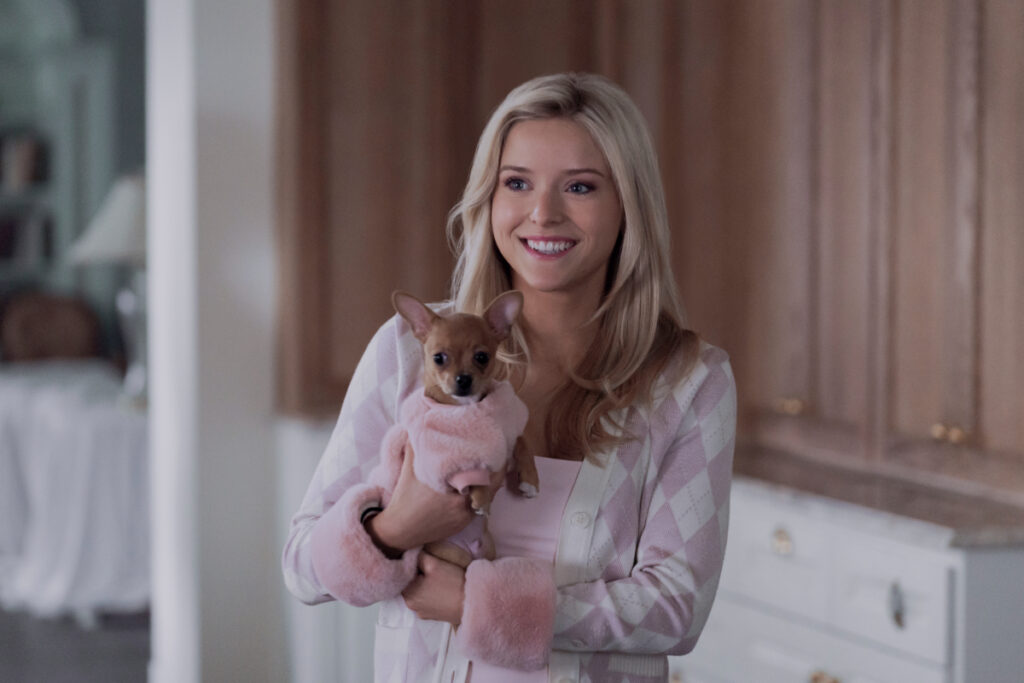
But Elle Woods (Lexi Minetree) is back, and she has a new bestie in the Prime Video prequel series, Elle. The best part? Her unlikely BFF is a lesbian. Well, actually, she’s a ‘Lizbian,’ if you ask Liz (Gabrielle Policano) herself. There’s just something deeply satisfying about a ’90s teen reclaiming a potentially demoralizing nickname before a bully could come up with it first.
Liz makes Elle work for their friendship. Okay, the future lawyer isn’t quite as suave as she becomes in the courtroom. Elle asks if Liz made up a gay rumor because she’s in witness protection and describes herself as “sexual preference blind” because she “had a crush on Freddie Mercury ‘til sixth grade — post-Live Aid.” Gurl.
But as soon as Elle gets past the awkward blunders, she immediately accepts Liz, who quips, “If everyone had your gaydar, the world would be a safer place.” That’s a subtle nod at the state of the queer movement at the time, but the show doesn’t dive too deeply into coming-out trauma or harassment.
Let’s Hear It for the Gurls
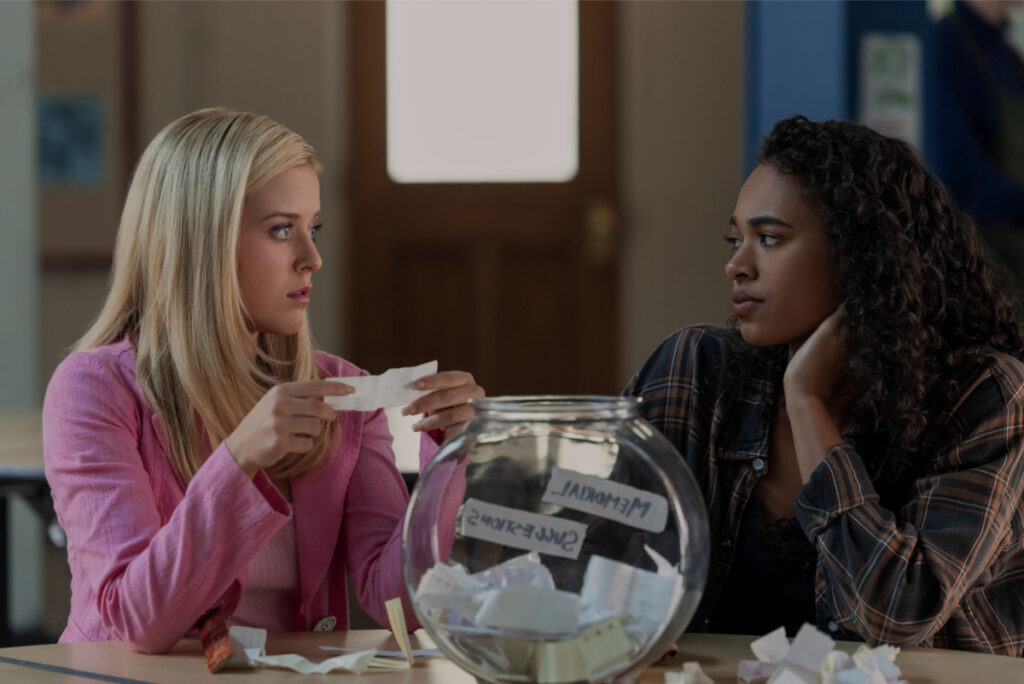
Since the Rainier West High School cheerleaders perform for themselves instead of a football team, Elle cheers for the girls. Somehow, our Queen-loving socialite clocks the sexual tension between Liz and her love interest Kimberly (Chandler Kinney).
Elle muses, “Now you’re caught in this whole Sam and Diane thing … from Cheers! You don’t hate each other. You like each other. It’s so cute!”
Who doesn’t dig a good Cheers reference? Honestly, I’m pretty ambivalent about Liz’s will-they, won’t-they former camp summer lovin’ arc with the school bully. Yet said bully (slightly) wins me over a bit when she calls herself Freddy Krueger. We do love a self-aware scream queen.
While the show doesn’t focus on it, our diva hints at a homophobic family. Yet her struggle feels more self-discovery-adjacent without leaning into damaging tropes — other than the fact that she’s lashing out at others because she doesn’t accept herself. Walking that trope tightrope isn’t easy, but Elle makes it work.
The Lizbians Have Entered the Zine
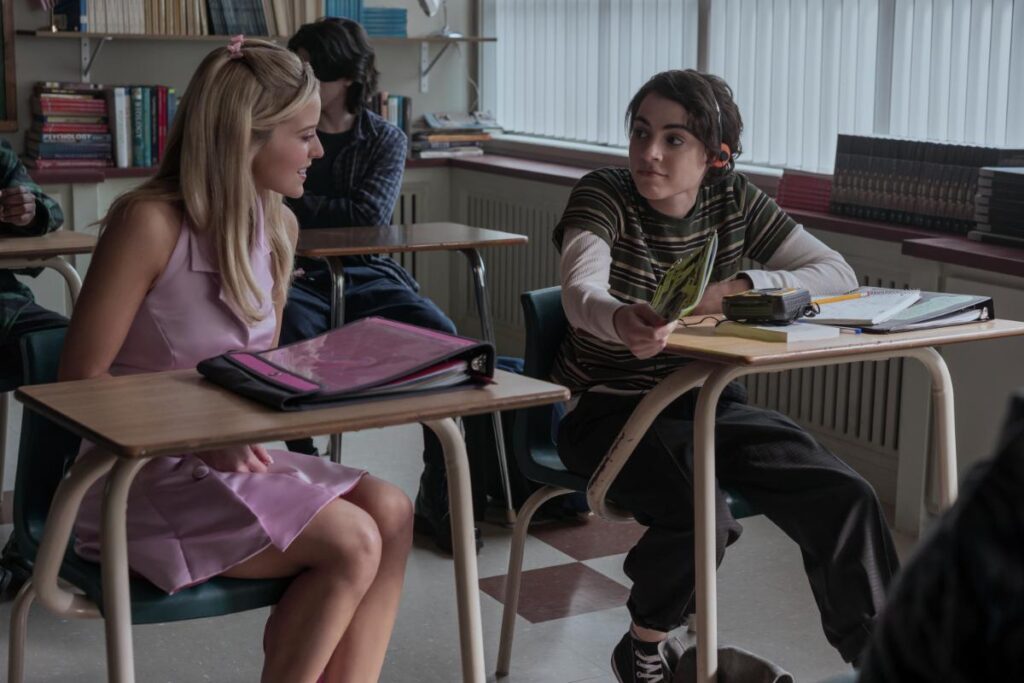
Sure, calling a show set in 1995 a period piece may give me an identity crisis, but queer pop culture representation has come a long way in just the past few years — from addressing the endless ‘bury your gays’ tropes to giving us well-rounded queer characters that don’t solely exist for the straight main character’s benefit. I figured Elle would maybe have a single gay character with a pinch fewer problematic clichés than Christian in Clueless (we still love you, boo).
I didn’t expect an accurate love letter to the ’90s lesbian scene, but I’m glad I was wrong.
Up until the ’90s, lesbian couples were still forced into butch and femme heteronormative boxes. Because you can’t have two girls without one of them playing daddy, right? The ’90s lesbians kicked off an art-centric activist movement that celebrated feminism and intersectionality. Whether it was the NYC-based The Lesbian Avengers creating zines and fighting for queer representation in schools or news coverage on Dyke TV, ‘90s lesbians got sh*t done in style.
Two years before Elle’s 1995 setting, lesbians were a core group that spearheaded the LGBTQ+ March on Washington, calling for changes like an end to the military’s Don’t Ask Don’t Tell policy and other discriminatory policies, funding for HIV/AIDS research, and civil rights protections. The march came amid growing outrage over the murder of Petty Officer Allen Schindler, who was fatally beaten in a hate crime by another member of the United States Navy. According to The New York Times, reports of the March on Washington’s crowd numbers ranged from 300,000 to 1,000,000.
People typically associate the ’70s with the queer rights movement, but the ’90s were pivotal in shaping it into the version that led to the legalization of same-sex marriage in 2015 — and it wouldn’t have happened without queer femme baddies fighting for intersectional feminism and queer rights.
Hollywood Finally Realized That Queer Representation Is Like … Not Hard
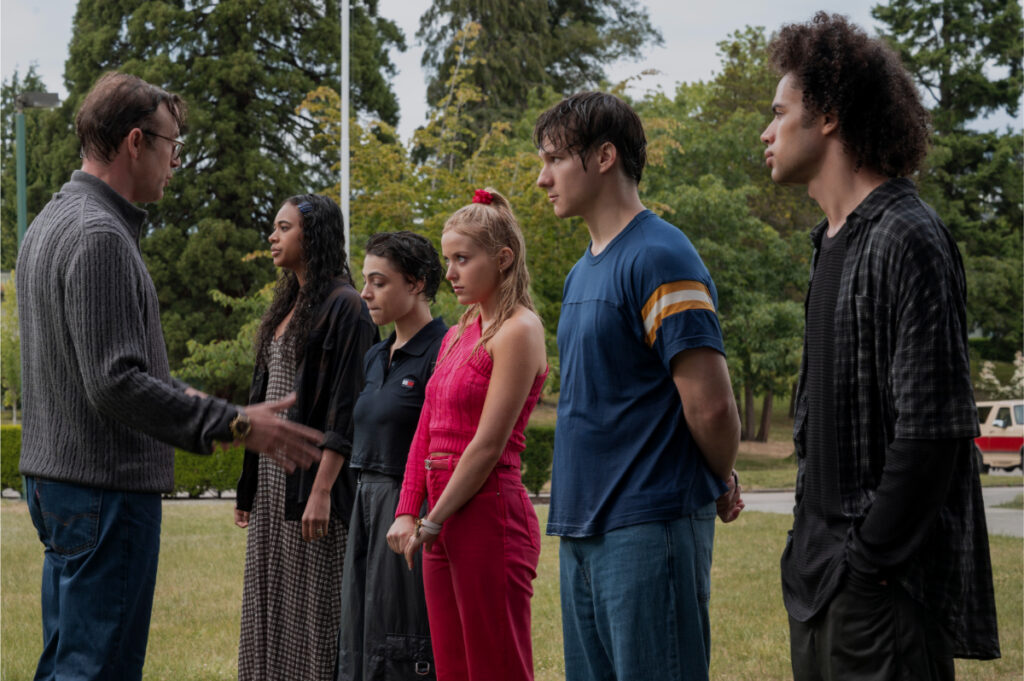
Liz may be a secondary character in Elle, but she realistically represents so many women who fought for our rights in the ’90s. Much of the other characters’ activism feels performative, but Liz gives us an authentic snapshot into ’90s queer femme culture.
Like our favorite lesbians, Liz is unapologetically herself. She expresses herself through her grunge aesthetic, art-punk-adjacent band, and a zine that even the burnouts seem to read. Her story feels like more than representation for representation’s sake. Elle finally gives us what most ’90s-based queer characters don’t: a trailblazer without the doom and gloom coming-out story we’ve come to expect.
What, like it’s hard?
Apparently. But I’m glad Hollywood finally got it right.