

The Future of Women’s Baseball Is Here
After decades of being told there was no place for them, women are finally getting their chance to build a professional baseball league of their own.
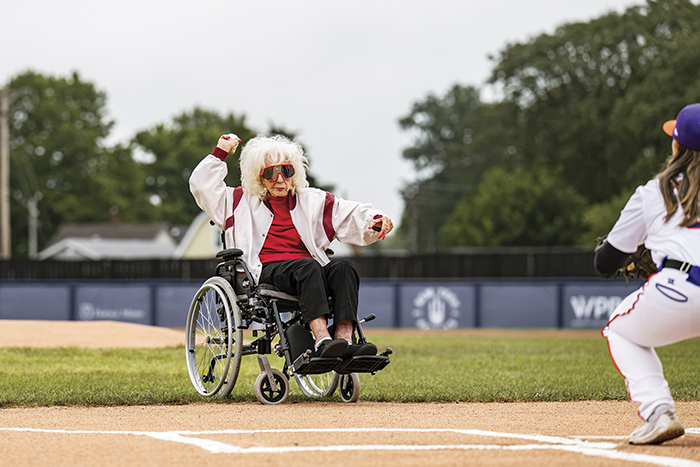
At 99 years old, Maybelle Blair stood at home plate with a baseball in her hand, preparing to throw out the first pitch of a new professional women’s baseball league—more than seven decades after she and the women of the All-American Girls Professional Baseball League were told their time in the sport had come and gone.
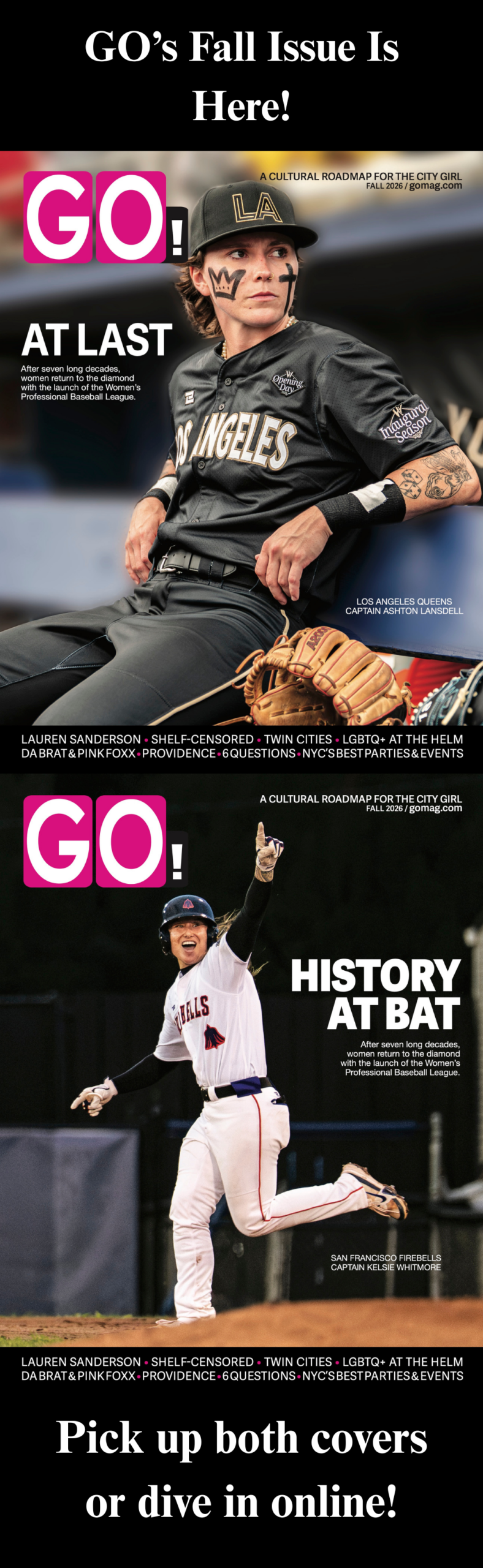
Waiting on the other side of the plate, arm raised and glove ready, was Kelsie Whitmore, one of the most recognizable faces in women’s baseball and the Women’s Professional Baseball League’s first overall draft pick.
As Blair’s pitch settled into Whitmore’s glove, the crowd erupted. In that toss was the passing of a torch. A handoff from one woman whose generation was forced to watch opportunity slip from their mitts to another who was finally being given a chance at bat.
For that brief moment before the inaugural game in the WPBL, the history of women’s baseball met its future. The hopes of generations of girls who had been forced to leave the game they loved stood face-to-face with a possibility few believed they would ever see: a new era of professional women’s baseball.
No one embodies that moment more than Whitmore.
For decades, players like her wondered where baseball could take them, many of them giving up the sport they loved in order to build careers elsewhere. Whitmore, who was drafted first overall by the WPBL’s San Francisco Firebells, made history as the first woman to play in the Atlantic League and the Pioneer League. She fell in love with the game at a young age, playing wiffle ball inside the house with her brother, using pillows as bases, hitting homers over the Green Monster (their big staircase), and, to avoid their mother’s wrath, flipping over all of the picture frames within range. From then on, Whitmore bounced around from team to team, fighting her way onto whatever rosters would let her play the game. Along the way, she became accustomed to being the only woman in a clubhouse full of men.
“Every experience has been isolating. Every experience has been lonely. Every experience makes you question yourself in so many areas,” Whitmore recalls. “I think that’s why I’m so excited to be here, to feel like I belong for once.”
Despite Whitmore’s resume, in 2024 she was cut from a team which she has previously said “wasn’t ready for women.” With nowhere left to play professionally, she stepped away from baseball and became a substitute teacher at her old elementary school.
Now, just a few years later, she stands shoulder to shoulder with women who have also, at one time or another, been pushed out of the game they love.
“We’ve all gone through a lot of the same struggles, so we feel for each other, and we understand each other, and we just want to give each other love. Because at the end of the day, when we didn’t have much love, we were the ones to give it to each other,” Whitmore says.
While Whitmore’s story is personal, it’s far from unique in the league. Nearly every player who arrived in Springfield, Ill., for the league’s inaugural season carried some version of the same experience. That shared journey, one also taken by generations of women before them, is what made opening weekend feel so significant.
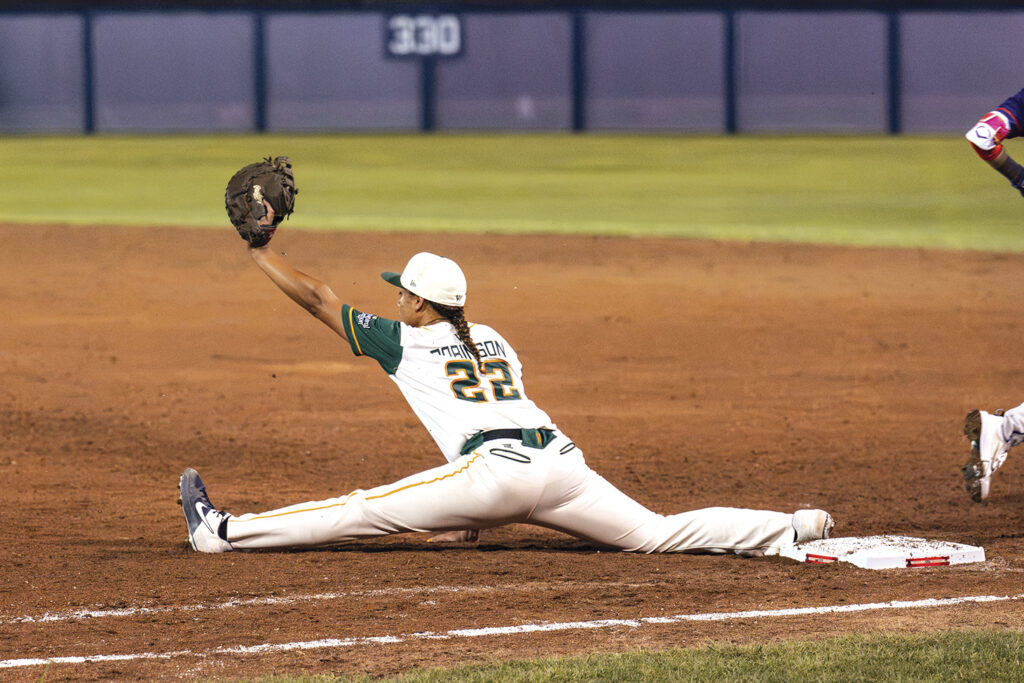
Over 4,000 fans packed into Robin Roberts Stadium in Springfield to witness the opening weekend of the long-awaited Women’s Professional Baseball League. The weight of history hung over every moment. Tears fell during the emotional, generation-spanning opening ceremony. Shania Twain’s twangy “Let’s go girls” rang through the speakers as the girls took the field. Throughout the game, the crowd instinctively fell silent with each pitch, as if unwilling to let even a conversation interrupt the significance of the moment. There was no need to imagine what a future for women in professional baseball could look like. It was finally here.
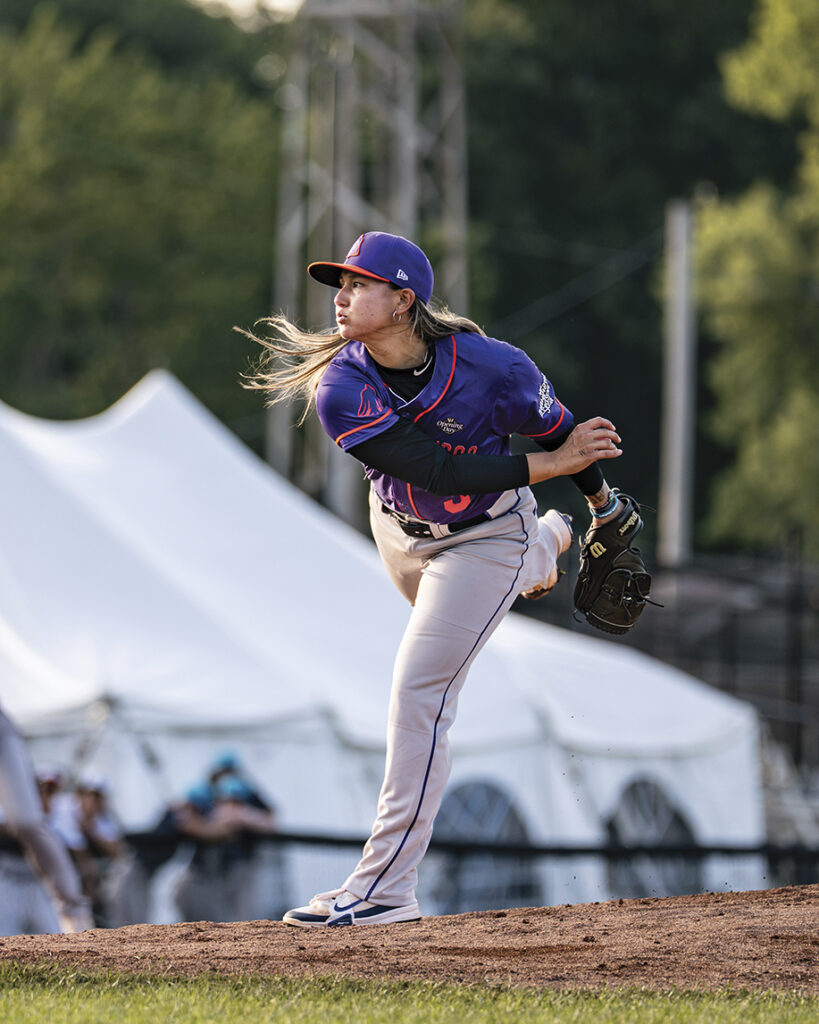
Founded in 2024 by former MLB coach Justine Siegel and the owner of the Canadian baseball team the Toronto Maple Leafs, Keith Stein, the WPBL finally offers women a professional league to aspire to. More than 600 players registered for the league’s tryouts, with 120 earning draft eligibility. Sixty players from 10 different countries were selected by four inaugural teams, each named for a trailblazing woman whose own life challenged expectations.
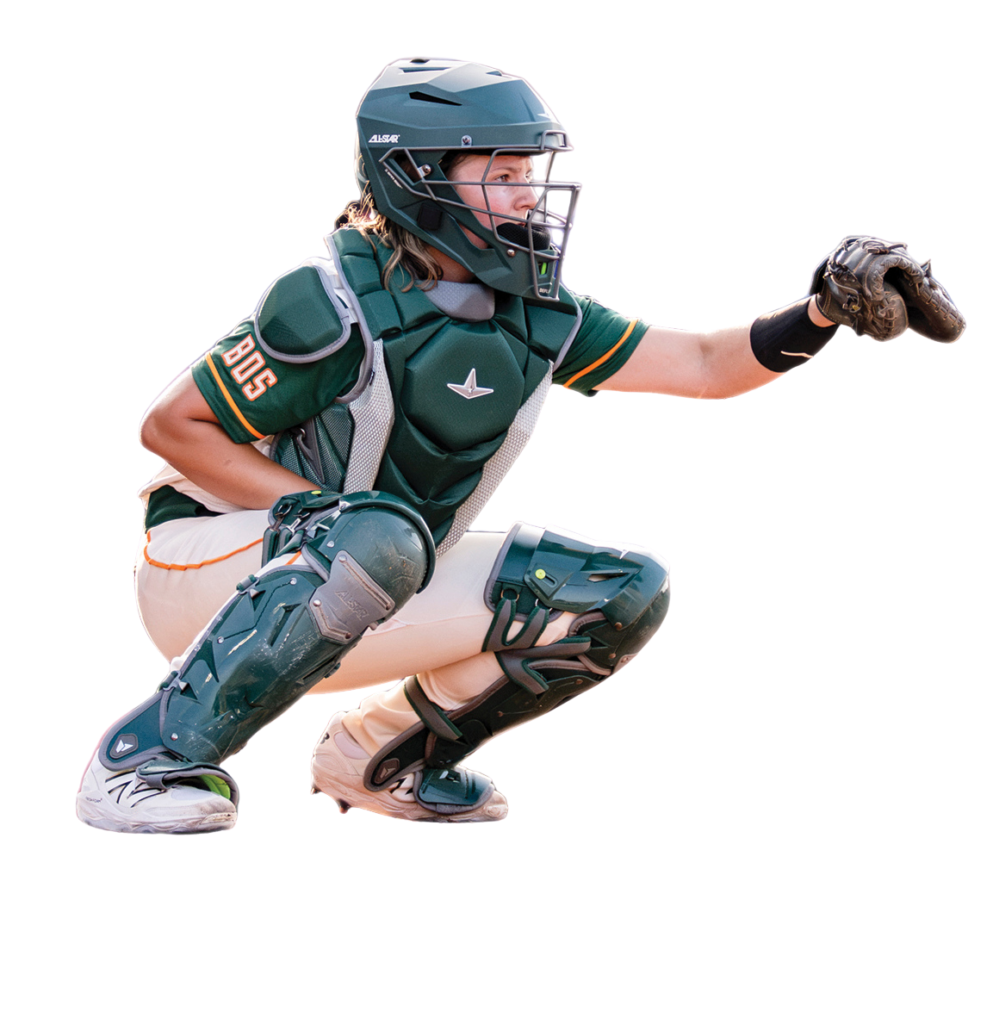
The Boston Hunters honor pioneering physician Harriot Hunt, the first woman to apply to Harvard Medical School. The New York Heights honor civil rights activist Dorothy Irene Height. The San Francisco Firebells are named for philanthropist Lillie Hitchcock “Firebelle” Coit, while the Los Angeles Queens pay homage to Lizzie Murphy, the first woman to compete against major league baseball players, who was coined “The Queen of the Diamond.”
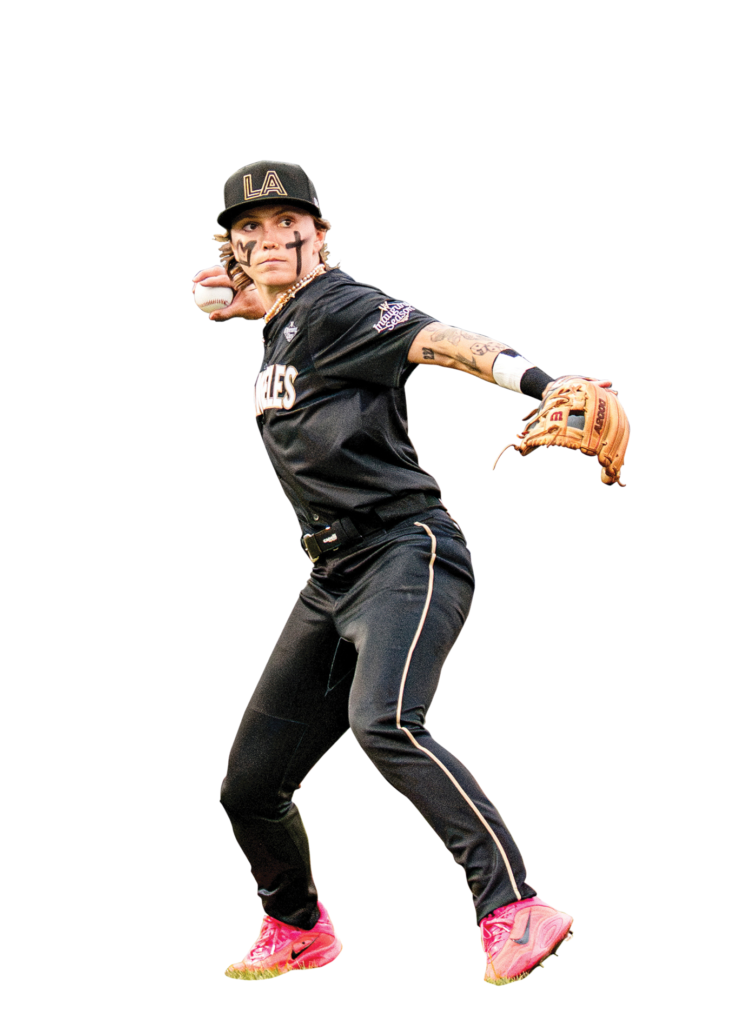
While the women on the field might be a new experience for some fans, the WPBL is still good, old-fashioned baseball. The game is played on standard 90-foot basepaths with a 60-foot, 6-inch pitching distance. The only difference from an MLB field is the outfield dimensions, which follow international women’s standards: 290 feet down the lines and 330 to 360 feet to center field. Games last seven innings instead of nine, but the experience is classic—hot dogs for sale, special bobblehead giveaways, summer fireworks, kids chasing down foul balls. The only thing that feels different is the crowd: a ballpark filled with mostly queer women, their families, and allies, creating a version of America’s game that has long existed but has rarely been this visible.
“For lesbians like me, for so long you just play in the shadows. You just play when the boys let you play. The school doesn’t facilitate your skill and talent, even though they know you have it,” 80-year-old Springfield resident Polly Poskin says. The former executive director of the Illinois Coalition Against Sexual Assault grew up in the late 1940s competing with the boys in her neighborhood but never got the chance to play on a real team. “Women just persevere. I really feel deep gratitude to all of the women who just played and played to keep it alive,” Poskin says.
Even when women were given the chance to play in the All-American Girls Professional Baseball League, they were still forced to hide parts of themselves for league profit. Made famous by the beloved movie A League of Their Own, the AAGPBL lasted from 1943 to 1954 to keep baseball alive while the major league players were drafted into World War II. While the league gave some women their chance to step up to the plate, it excluded others: the segregated league prohibited any non-white players from joining its rosters and drafted specifically “feminine” women, refusing to let anyone not marketable to a male audience join.
“If I was born in the ’30s or so, I wouldn’t be playing in that league in the ’50s,” Whitmore, who is one of the many women of color who have become stars in the sport, says. “It’s so awesome to play with diversity. I love my Korean teammate. I love my Canadian teammates. I love my Japanese teammates. I got [a] Dominican on my team. We’re feisty. We got some flavor,” Whitmore says. “It’s awesome to have different cultures, different backgrounds, ethnicities…I’d say different sexualities, but 97 percent of the league is gay.”
Queerness was certainly something the women of the AAGPBL were forced to hide. When Peoria Redwings pitcher Maybelle Blair was playing in the league, she finally found community with other closeted players. “I thought I was the only one in the world,” she told a Q&A audience while promoting the queer Prime Video adaptation of A League of Their Own. That night in 2023, at the age of 95, Blair finally came out. “I think it’s a great opportunity for these young girl ball players to realize that they’re not alone, and you don’t have to hide,” she says. “I hid for 75, 85 years, and this is actually basically the first time I’ve ever come out.”
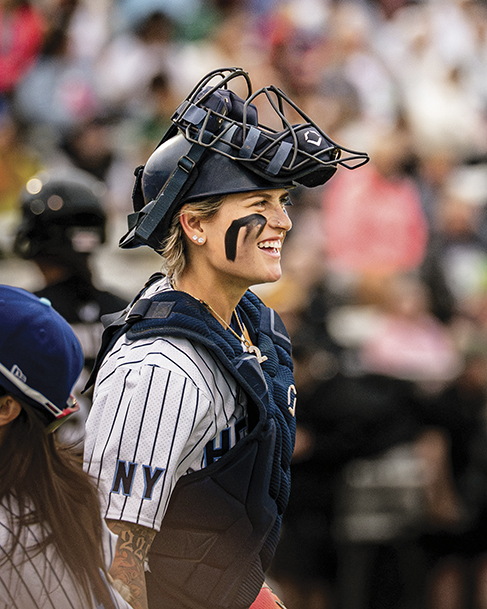

Now, throwing the ceremonial first pitch, Blair witnessed a whole different kind of league, one where many of its stars, Whitmore included, can be open about their sexuality and free to be whoever they wish. But even today, authenticity and finding yourself as a player is not easy, something Whitmore had to discover throughout her life. “I was five different versions of myself in my life at one point—versions that different groups of people in my life told me to be, and I brought that onto the field. I listened to who I had to be in order to be enough. I changed my whole game because of it,” Whitmore says. “When I started to seek the version of myself I was always meant to be…that’s when my game excelled.”
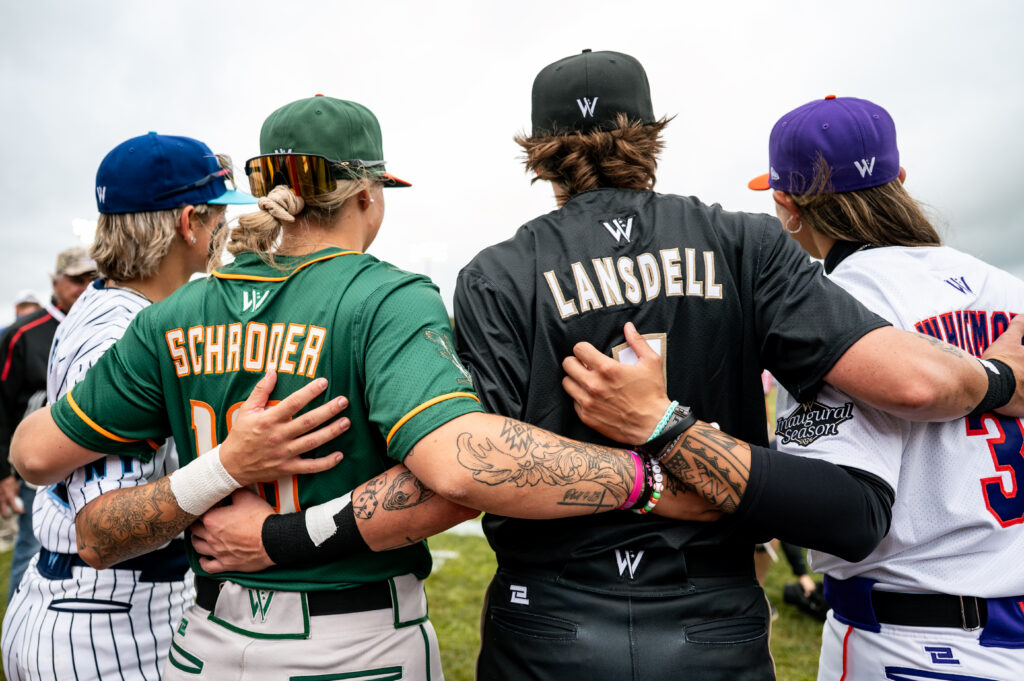
Gone are the days of short skirts and forced charm school. Now there’s a spectrum of expressions to take in. From mullets and long braids to tattoos, jewelry, and expressive eye black, these players bring exactly who they are onto the field.
“I couldn’t imagine having to put myself in a shell and be forced to wear a skirt on a baseball field. I don’t think I would have made it in that day and age. Honestly, some bad things would have happened to me because I would have rebelled,” says Los Angeles Queens captain Ashton Lansdell. The third baseman, known for her TikToks with her Banana Ball teammates and masc-lesbian charm, rocks “pearls for the girls” each time she steps on the field. “Getting to be myself and know exactly who I am, and getting to show that and play that way on this field is what allows for good baseball in this league.”
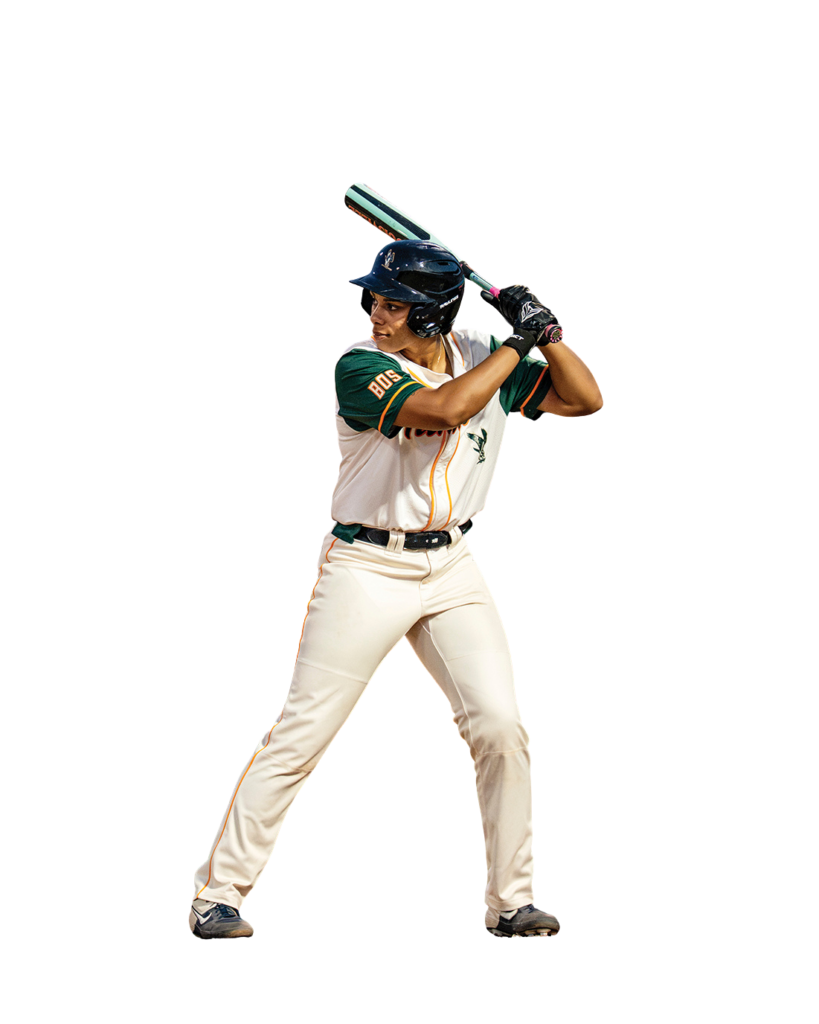
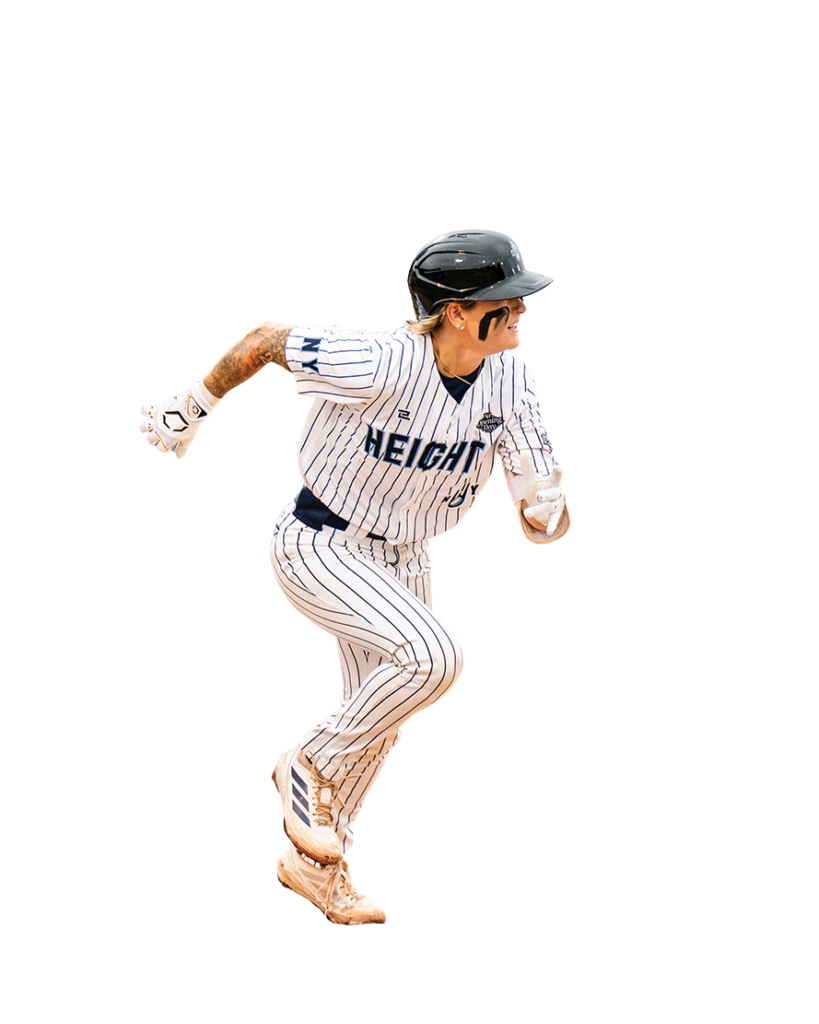
Good baseball is exactly what the fans got. In the opening game, the New York Heights took on the Los Angeles Queens in an epic, rain-soaked contest. Despite the storm, the energy was high, and ponchos were out. While Lansdell herself didn’t have the best game, the Queens made an epic comeback from being down 7-2 in the second inning to scoring four runs in the seventh to snatch the league’s first victory. The crowd erupted as the Queens players kept making their way across home plate, ending what already was a historic game in the most cinematic way possible.
While Lansdell was upset with her play, she never let it show, keeping her positivity up for her teammates. “The number one thing that I will tell anyone in any position [is] believe in yourself and believe that you can get the job done, no matter what the job is,” she remarks. “So, I was just spreading that belief to everyone, and I definitely think everyone had a little bit of that belief, and it showed in the box and on the field too.”
When New York Heights captain Denae Benites hit the league’s first-ever homer, Lansdell couldn’t help but celebrate her best friend, TikTok co-star, and Banana Ball leaguemate. “We were definitely competing in the game against one another, but when she hit the first home run of the league, I gave her a high five when she was trotting the bases because that’s just cool. I’m proud of her for doing that,” says Lansdell.
Lansdell and Benites have quickly become the StudBudz of the WPBL, going viral for their dances, Banana Ball appearances, and genuine friendship. While the social media attention has made them fan favorites, Benites’ league-first home run has secured her a different kind of legacy.
“I mean, nobody else can say they did that,” Benites says. “I think a cool part about making history is that a lot of girls out here are gonna have their names in the history books for different reasons. And fortunately, I got mine in there on opening day.”
Benites wasn’t sure that she would ever get to play in the big leagues, becoming an EMT and going through the fire academy while training for the U.S. Women’s National Baseball Team on the side. As a kid, Benites never doubted her place within the sport despite being pushed, like many other girls, to play softball instead. She credits her decision to stick with the game to her dad.
While he may have cut her Angels Little League jersey too short and made it into a crop top for her first year of baseball, his constant support has kept her going. “My dad has really been the main one to be there and support me through all of that, and always tell me, ‘you can do whatever you put your mind to. If you want to play baseball, you play baseball. If you want to play softball, you play softball. You make the decision,’” Benites explains.
Now, Benites wants to give that same choice to any young girl who might be watching “Now we’ve made it. We’re written in the history books now, and we’re just trying to continue to create those opportunities so that little girls that fall in love with the game of baseball don’t have to go through those hard times,” she says.
But a new league doesn’t come without hiccups. Although the league initially announced that the games would be free to watch on YouTube, a last-minute ESPN Select deal put them behind a paywall for fans and sports bar owners alike. Additionally, drafted players who went without a contract said the league’s communication has been less than ideal, leaving many in limbo. An early lawsuit alleging a lack of transparency among board members about finances also leaves the league’s future in question. Despite limited crowds in Springfield, a stadium with little parking, merchandise that repeatedly sells out, and low pay even for the league’s stars, the players and fans alike would still do anything to keep it alive. That devotion to the league is part of what makes it so special, and you can feel it in the air.
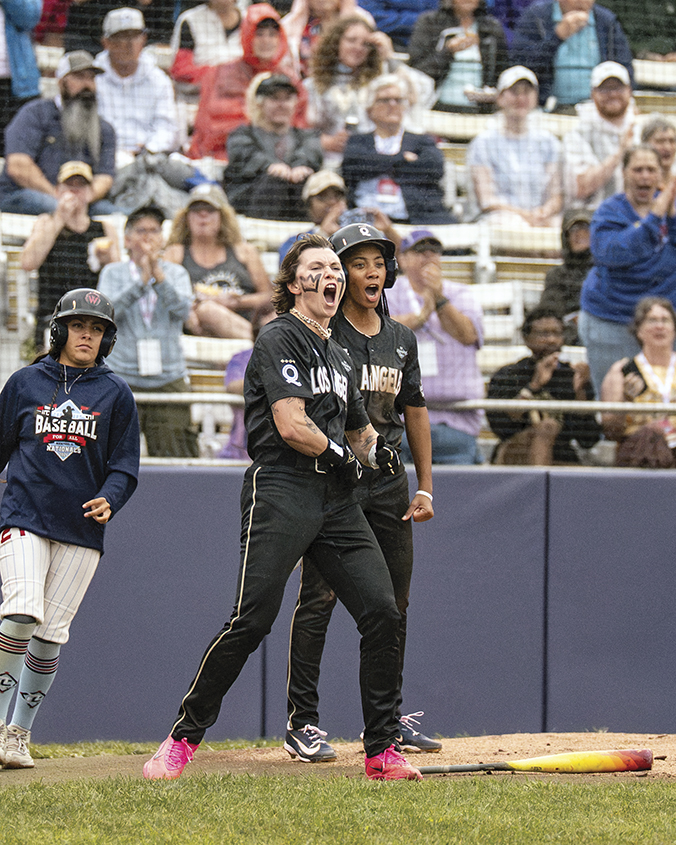
Rose, a 27-year-old from Cleveland, grew up watching baseball with her grandfather but had never been to a game quite like this one. She attributes the unique quality of the atmosphere to the shared experience of the majority-queer audience. “All the queer people who have shown up, we know what it’s like to be told, ‘Oh, you can’t do that’,” she says. “We understand that oppression and being together, it’s a very supportive atmosphere, and it’s a very safe place.”
For New York Heights fan Shatira, the game offered her more than just an excuse to watch her favorite sport; it gave her community. While she watched her team’s dramatic loss on Saturday, the girls in front of her performed an act of “peak girlhood.” The Bay Area natives offered her their extra ticket to Sunday night’s San Francisco Firebells and Boston Hunters match, with two conditions: that she wear a Firebells shirt and that she wave around a bra with them to cheer on the Bay Area’s team. She was in. “Now I’m supporting, and they’re kicking ass. And these wonderful girls from The Bay took me in, and I am supporting like I’ve never supported in my life, and I love it here,” she says.
That supportive, awe-struck feeling isn’t limited to the stands. Nineteen-year-old New York Heights player Alyssa Zettlemoyer also can’t quite believe that this is her real life. Over a decade ago, on the way home from her very first Little League practice, Zettlemoyer turned to her mom and said, “I’m gonna be the first female Yankee ever.” Now, representing New York, clad in the Yankees’ classic pinstripes, Zettlemoyer is living her childhood dream.
Having grown up as a queer kid in a not-so-supportive town, looking out into the crowd and spotting the many queer couples reassures Zettlemoyer that she’s exactly where she’s supposed to be. “I like that having a league like this makes them feel comfortable to come to games. Like they’re not gonna get called names out here because we’re all a big family,” Zettlemoyer says. “I love seeing queer couples in the stands. It makes me feel nice because now I know I’m not the only one.”
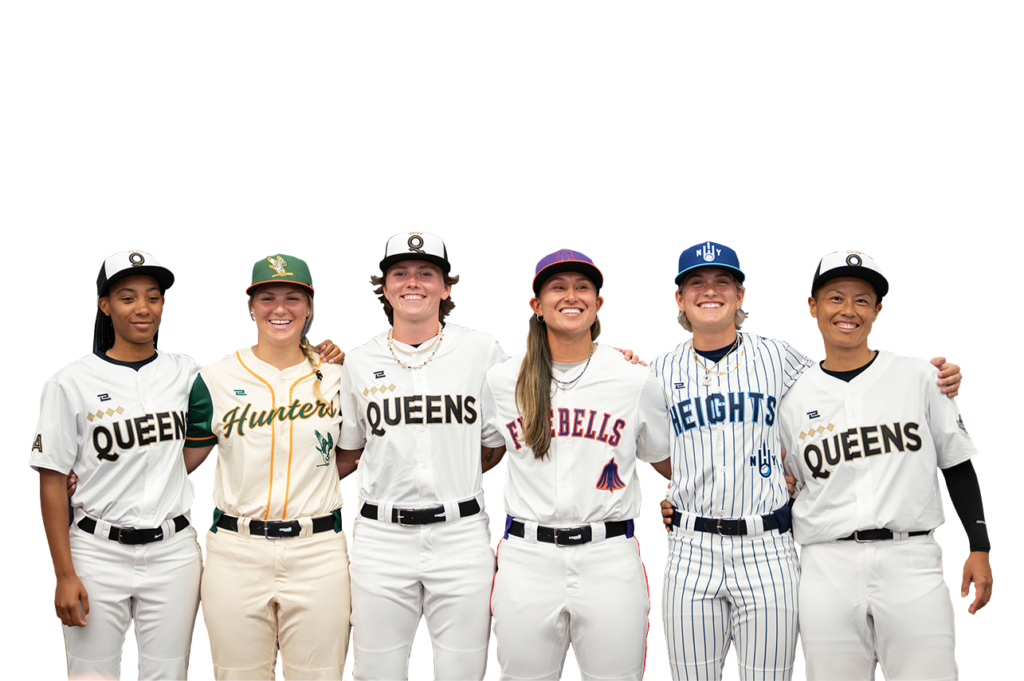
She certainly isn’t the only queer player in the league. While not every player plays for our team, “the percentage is way higher than everybody thinks,” according to the Boston Hunters’ openly queer Beth Greenwood—who both plays for and coaches the team. “There’s some sneaky ones too that you wouldn’t know, which is my favorite part,” she teases.
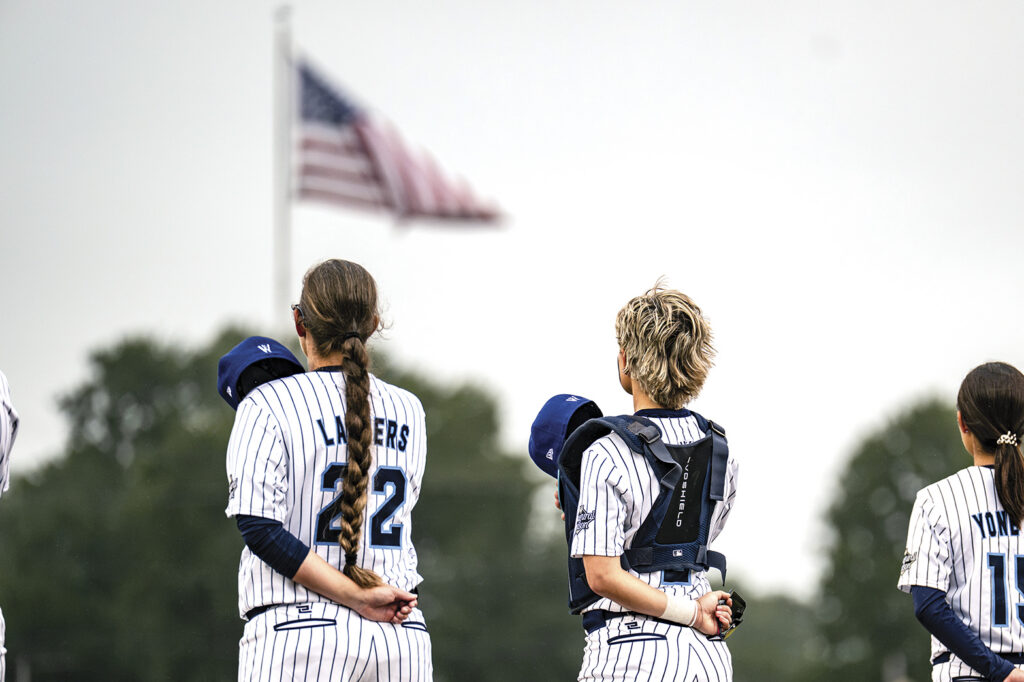
Greenwood knows firsthand what it takes to carve out a place in baseball. Throughout her career, she’s found ways to stay on the field, taking on whatever role the game demanded. When her childhood coach was resistant to letting the girls play, she volunteered to catch for the pitcher the boys had refused to because he threw too hard. “It’s kind of funny and ironic how I got put in that position to catch because someone thought that women shouldn’t be playing baseball,” she says. “And I just caught my first f*cking professional baseball game.” Later, after a research fellowship with the Philadelphia Phillies, she became the bridge between analysts and coaches, using her mechanical engineering degree and baseball knowledge to translate data into strategy. Now, she uses her Vassar coaching experience and versatility to aid the Hunters both behind the plate and in the dugout.
But Greenwood insists it wasn’t adaptability that got her this far. It was opportunity. “I was not special when I was 12. I just didn’t let some man tell me no,” Greenwood says.
Now, for the first time in more than seven decades, the chorus of “no” has been drowned out by a league that is unapologetically saying “yes.” Yes, there is a place for women to play professional baseball. Yes, little girls can dream beyond high school, beyond college, beyond having to quit.
And that invitation extends beyond the foul lines. Every fan filling the stands, every child chasing foul balls, every former player who never got this chance has been welcomed into something they were told might never exist.
Belonging has, for so long, been something women in baseball have had to fight for. Now it’s waiting for them at the ballpark.
GO’s Senior Associate Editor, Abbie Thompson, is a journalist based in NYC. Her work focuses on all things queer entertainment and human-focused LGBTQ+ stories.