

Review: ‘The Odyssey’ is an Epic Spectacle—But Is Christopher Nolan’s Mythic Blockbuster for the Lesbians?
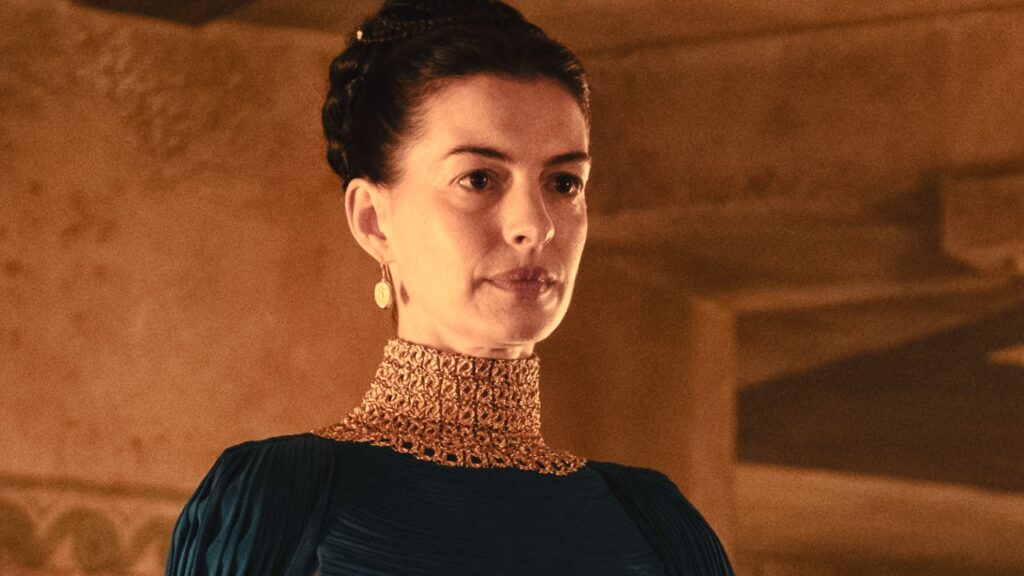
Matt Damon, Anne Hathaway, Charlize Theron, Zendaya, and Elliot Page headline one of the year’s biggest films, but does this mythic blockbuster have anything for sapphic audiences?
In the lead-up to the release of Christopher Nolan’s sword-and-sandal epic The Odyssey, much ado was made of the casting. Bad faith ran rampant as news of Elliot Page and Lupita Nyong’o’s casting stretched across some of the darkest, most hostile, and loudest corners of the internet. Was Page playing the warrior of legend Achilles? Could Nyong’o really play the woman whose face launched a thousand ships? (No, he isn’t, and my God, yes she can. You have eyes; you know it to be true.) The whole hubbub was a perfect encapsulation of some of the ugliest elements of our online discourse, fueled by fragile masculinity and barefaced racism.
As it turns out, that reaction is antithetical to everything that Nolan, through Odysseus, is trying to say in The Odyssey. The film, an adaptation of Homer’s legendary tale, follows a man changed by war as he witnesses the ripple effects of cruelty and violence and how they unravel civility. The answer, the film suggests, is compassion for those we do not know.
The online community could really benefit from adopting Zeus’ law. But more on that later.
For those unfamiliar with The Odyssey, the film follows two storylines across different timelines. In flashback, we see Odysseus (Matt Damon), king of Ithaca, leave his home to fight alongside Agamemnon (Benny Safdie) in the Trojan War. Following Troy’s defeat (a wooden horse is involved), Odysseus begins his long and strange journey home, facing mythic monsters, mutiny, and the will of the gods themselves.
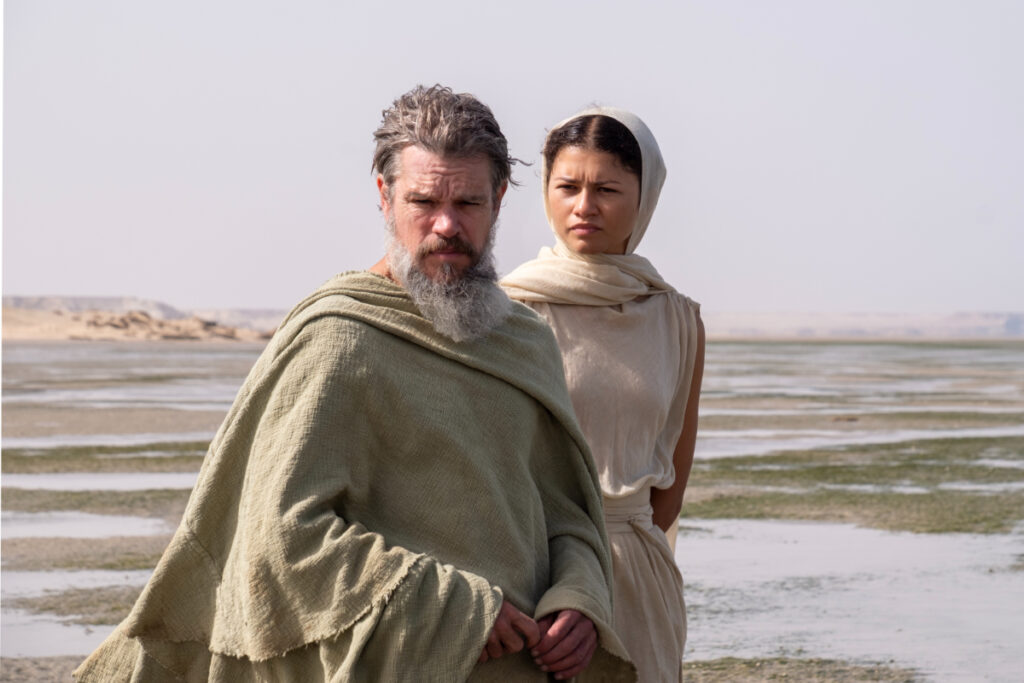
In the “present,” his son Telemachus (Tom Holland) and wife Penelope (Anne Hathaway) are each fighting their own battles: Telemachus is fending off threats from those who would see him removed, while Penelope is besieged by relentless suitors as they both wait more than a decade for Odysseus’ return—or news of his death.
This film is epic in every sense of the word. Nolan’s choice to film it entirely in IMAX gives a sense of scale and wonder to the proceedings. The colors are lush and vibrant, with azure-blue seas, red sails, stunning landscapes, and breathtaking architecture. The score is sparingly used but deployed for maximum impact, though the performances need little enhancement to make their emotional weight felt.
Hathaway, in particular, turns in a stunning performance as the grieving and righteous Penelope, who vacillates between devoted lover, terrified mother, and a powerful yet sidelined woman brimming with outrage over her highly gendered and regressive role in society. But there are meaty roles throughout. Damon is more than up to the task of playing the charismatic but deeply flawed Odysseus. Holland’s boyish bravado is perfect for his role as the soon-to-be heir to the throne. Robert Pattinson earns the biggest (and perhaps only) laugh in the film as the smirking and Machiavellian suitor Antinous.
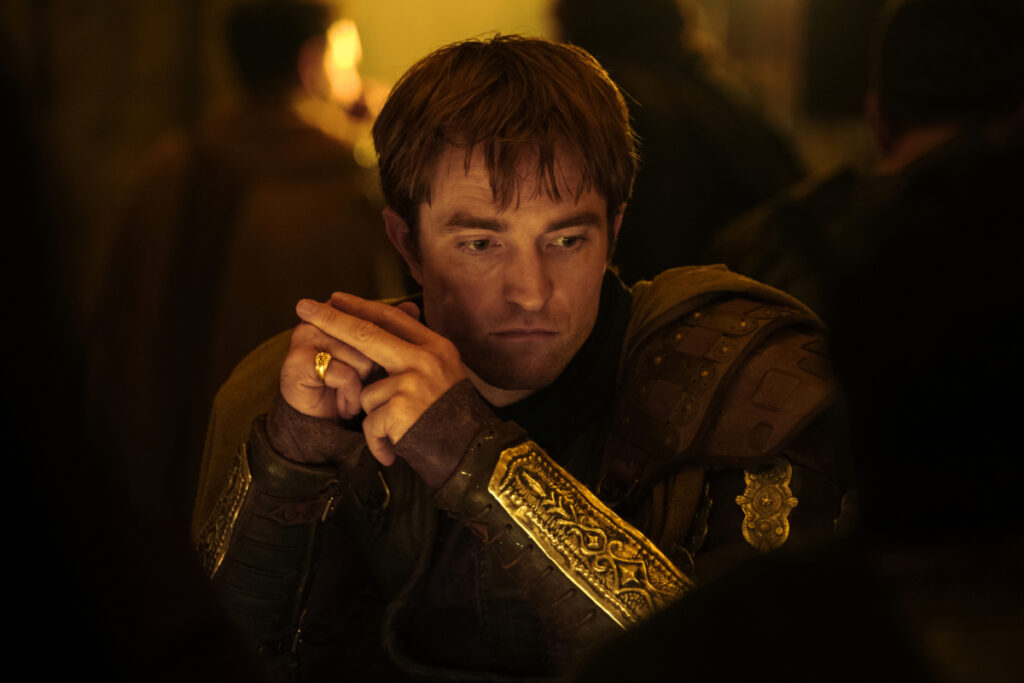
There is something so nostalgic and thrilling about seeing this level of spectacle and star power in a movie that harkens unapologetically back to the golden era of Hollywood filmmaking.
That it marries classic storytelling with themes that resonate because of their timeless nature also serves as a reminder of the power of filmmaking as an empathy machine. Time and again, the film returns to the idea of Zeus’ law: that we are to treat the stranger as family because you never know who may secretly be a god. Hospitality, kindness, and respect are the absolute foundations of civilization, and without them, hope itself for mankind is lost. It’s a tale and a moral as old as time, but its meaning feels especially poignant today. Odysseus may have been wrong about many things, but he was certainly right about this.

But is the film for the sapphics? For a film about ancient Greece, The Odyssey is shockingly straight. To its benefit, there is no shortage of incredible women in the film. The aforementioned Nyong’o and Hathaway are joined by Charlize Theron, Zendaya, Mia Goth, and a scene-stealing Samantha Morton. Elliot Page also swaggers, growls, and hisses his way through the role of Greek soldier Sinon, bringing plenty of swoon-worthy bravado and vulnerability, but his role, though pivotal, is quite small. Still, seeing that jawline in IMAX is certainly a boon to the film.
All of which is to say: beyond providing plenty of eye candy, there is nothing explicitly sapphic about the film. But for audiences—lesbians included—who love a tale of magic, swords, and sandals, set sail to your local IMAX theater, because The Odyssey is indeed epic.