

Review: ‘Girls Like Girls’ Is a Tender Love Letter to Queer First Love

Starring Maya da Costa and Myra Molloy, Girls Like Girls transforms Kiyoko’s iconic music video into a heartwarming story about grief, first love, and learning to stop hiding who you are.
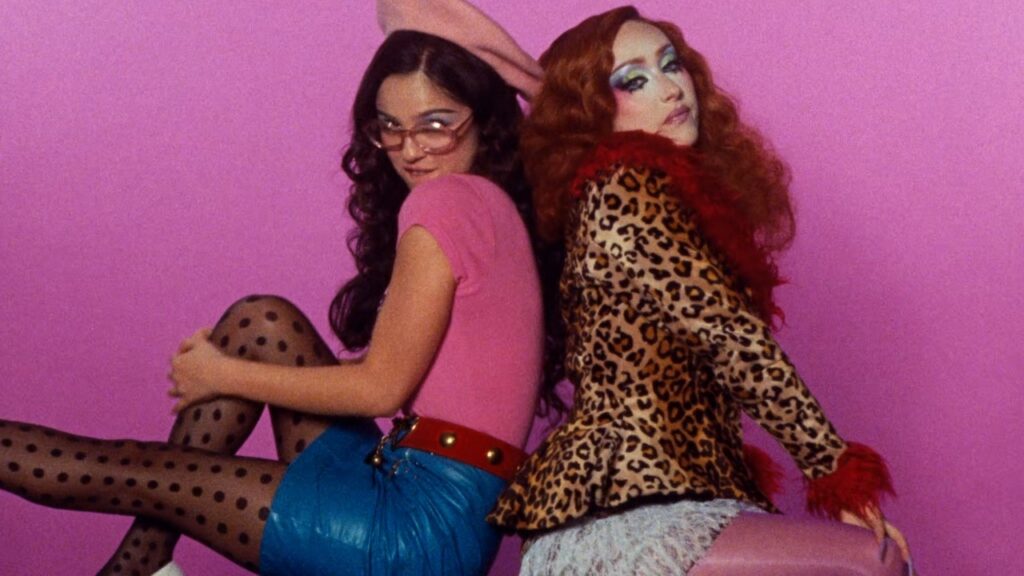
Featured Image: Photo by Dan Power / © 2026 FOCUS FEATURES LLC
I’ll be honest: I went into Girls Like Girls expecting something sweet but forgettable. Given its origins as an adaptation of Hayley Kiyoko’s iconic 2015 music video of the same name, I worried the film might lean too heavily into nostalgia or settle for the kind of surface-level sentimentality often found in made-for-TV romances. Instead, Kiyoko’s directorial debut surprised me at every turn.
More emotional, nuanced, and heartfelt than expected, Girls Like Girls is a coming-of-age story that understands the messy contradictions of first love—especially when you’re still figuring out who you are.
Written, directed, and produced by Kiyoko, the film follows 17-year-old Coley (Maya da Costa), a teenager from rural Oregon struggling to navigate life after the loss of her mother. When she forms a connection with Sonya (Myra Molloy), an outgoing girl who has never considered dating another girl before, both are forced to confront feelings neither fully knows how to name. Their connection deepens amid uncertainty, self-doubt, and the ever-present pressure of other people’s expectations.
Set in the late 2000s, the film is drenched in wistful details that immediately transport viewers back to adolescence. Flip phones, wired headsets, desktop computers, and instant messaging windows create a world that feels both specific and familiar. Combined with the film’s lush Pacific Northwest backdrop, these details help create an atmosphere that feels intimate and lived-in.
What struck me most was seeing two queer girls of color at the center of the story. Too often, queer coming-of-age films default to white protagonists, leaving many viewers searching for reflections of themselves elsewhere. Here, Coley and Sonya are allowed to be complicated, vulnerable, awkward, and…human. Their story isn’t defined solely by their identities, but their identities still matter.
Kiyoko captures the small moments of queer adolescence with remarkable tenderness. The lingering glances. The uncertainty. The way a simple compliment can feel earth-shattering. Anyone who has experienced a sapphic crush will likely recognize pieces of themselves in Coley and Sonya’s relationship.
Perhaps the film’s greatest strength is its emotional honesty. Girls Like Girls understands that growing up often means wanting desperately to stop caring what other people think while simultaneously caring far too much. It’s a contradiction that feels particularly familiar to queer teenagers learning how to exist authentically in a world that doesn’t always make space for them.
The performances from da Costa and Molloy anchor the film beautifully, bringing warmth and authenticity to every stage of Coley and Sonya’s evolving relationship. Their chemistry feels natural, making even the film’s quieter moments resonate.
By the time the film reaches its final moments, it lands on a moving message about choosing yourself, choosing love, and allowing yourself to be seen. When Sonya admits she’s tired of running, Coley offers a simple but powerful response: “You could stop.” What follows is a conclusion that feels earned, hopeful, and incredibly affecting.
With the tagline “Love begins when you let it in,” Girls Like Girls could have easily veered into cliche. Instead, Kiyoko delivers something much more meaningful: a sincere and emotionally rich portrait of first love that understands both its joy and its heartbreak, specifically in a queer way.
For queer women—precisely those who rarely saw themselves represented in coming-of-age stories growing up—Girls Like Girls feels like the kind of film many of us wish we’d had as teenagers.
Rating: 4.5/5 stars. Definitely watching it again.