


All Systems Go: Artemis II Will Launch First Woman And Black Man On Lunar Mission
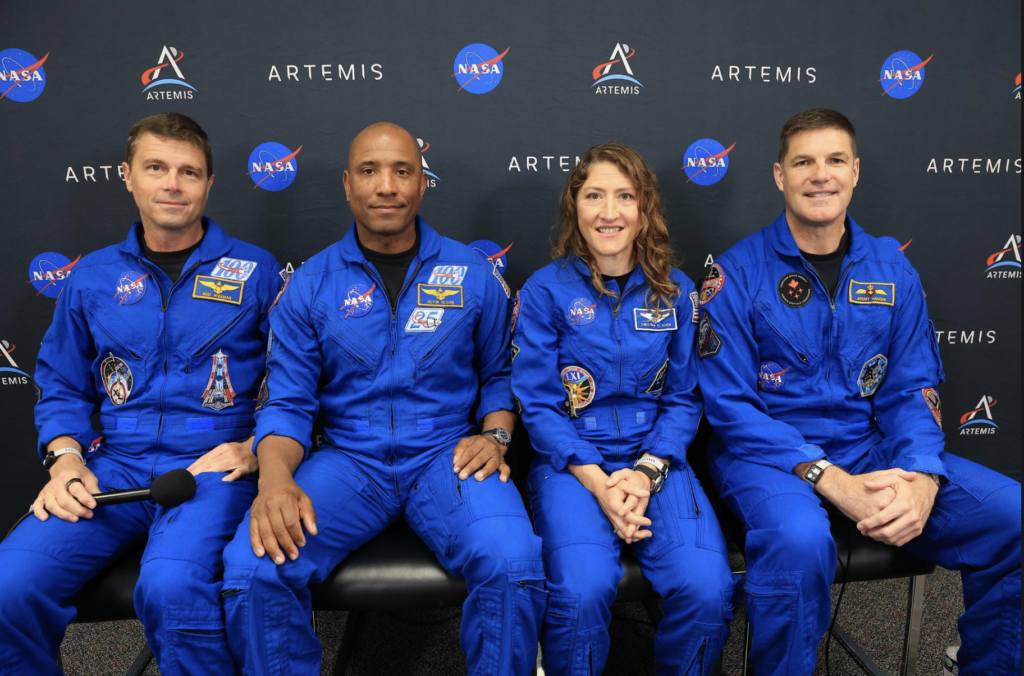
Despite government crackdowns on diversity, a landmark crew will embark on a 10-day lunar flyby—50 years since humans have traveled this far from earth.
Featured Image: Artemis II Crew Q and A and Zero Gravity Indicator (courtesy of NASA/Kim Shiflett)
Diversity may be under attack but barriers are about to be shattered in space exploration. Today, April 1, 2026, the Artemis II mission will blast off at 6:24 p.m. EDT in the first crewed lunar voyage in more than 50 years. The astronauts will undertake a 10-day journey that circles the Moon, in a spacecraft the size of a minibus—marking the first time a woman and Black astronaut have been assigned to a lunar mission.
NASA predicts an 80% chance of acceptable conditions. The biggest worry: puffy cumulus clouds that can grow big enough to cause a rocket to trigger lightning as it flies through them. But thanks to an expected breeze during the two-hour launch window, the threat should be blown away.
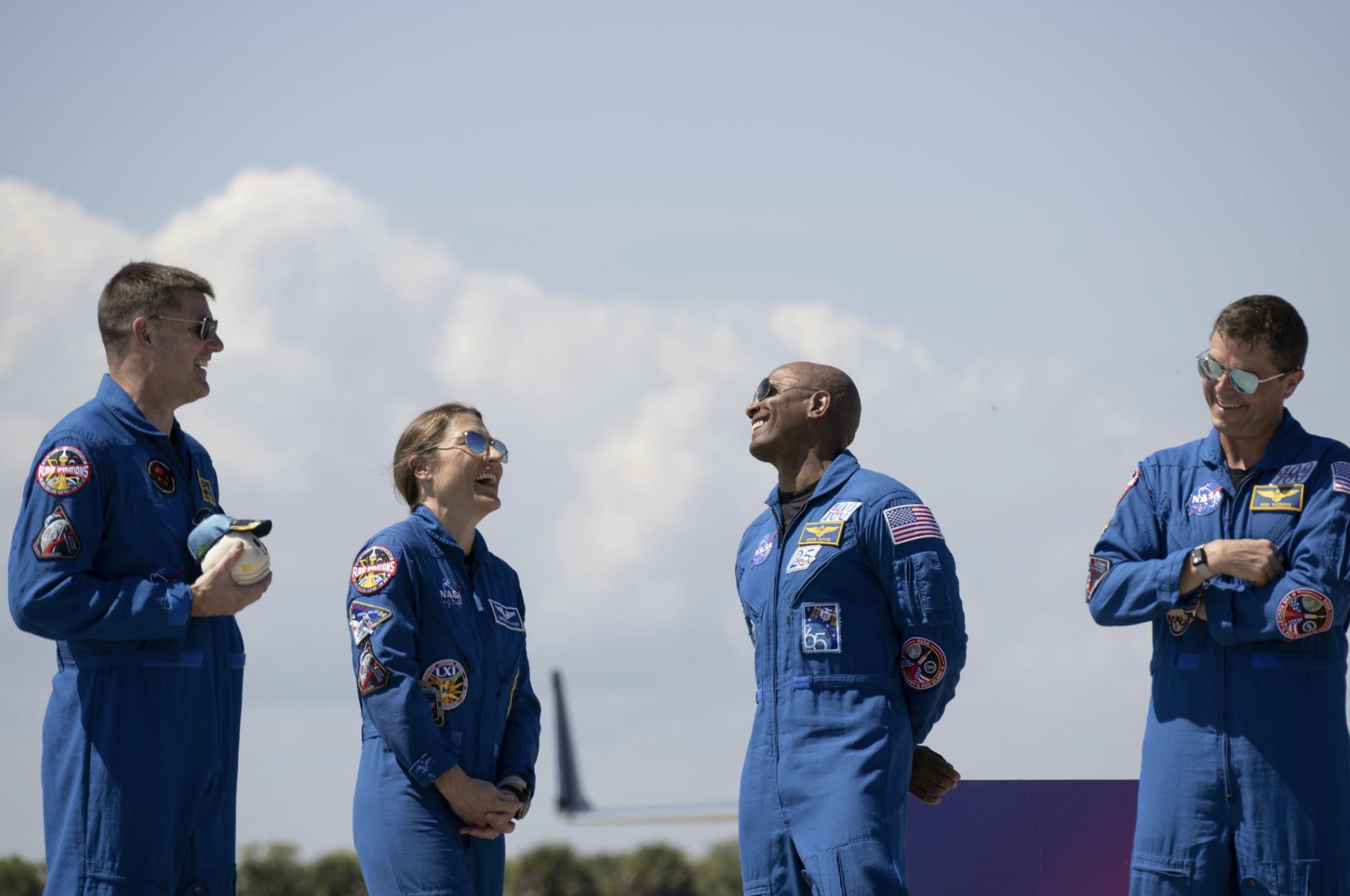
Image: The arrival of the Artemis II astronauts at the Launch and Landing Facility at NASA’s Kennedy Space Center in Florida on Friday, March 27, 2026 (left to right, Jeremy Hansen, Christina Koch, Victor Glover, Reid Wiseman). Courtesy of NASA/Jim Ross.
Christina Hammock Koch, an electrical engineering and physics whiz, will serve as a mission specialist. She most recently served as a flight engineer onboard the International Space Station. Her creds include setting a record for the longest single spaceflight by a woman with 328 days in space, and participating in the first all-female spacewalks. In a video produced by NASA, the astronaut shared, “When I first found out that I was assigned to Artemis II, my thoughts were disbelief, an immense sense of honor and responsibility, and readiness.”
Complementing Hammock Koch’s technical prowess are three male astronauts with deep military and flight experience. Victor J. Glover, a U.S. Navy Captain, will serve as pilot of Artemis II. He previously piloted NASA’s SpaceX Crew-1 spacecraft, named Resilience, to the International Space Station (ISS), where he also served as Flight Engineer on two expeditions. Glover also set a milestone as the first Black astronaut to live and work on the ISS. He is a Naval Aviator and was a test pilot in the F/A‐18 Hornet, Super Hornet and EA‐18G Growler.
Reid Wiseman is serving as Mission Commander, with Canadian Jeremy Hansen rounding out the team as Mission Specialist.
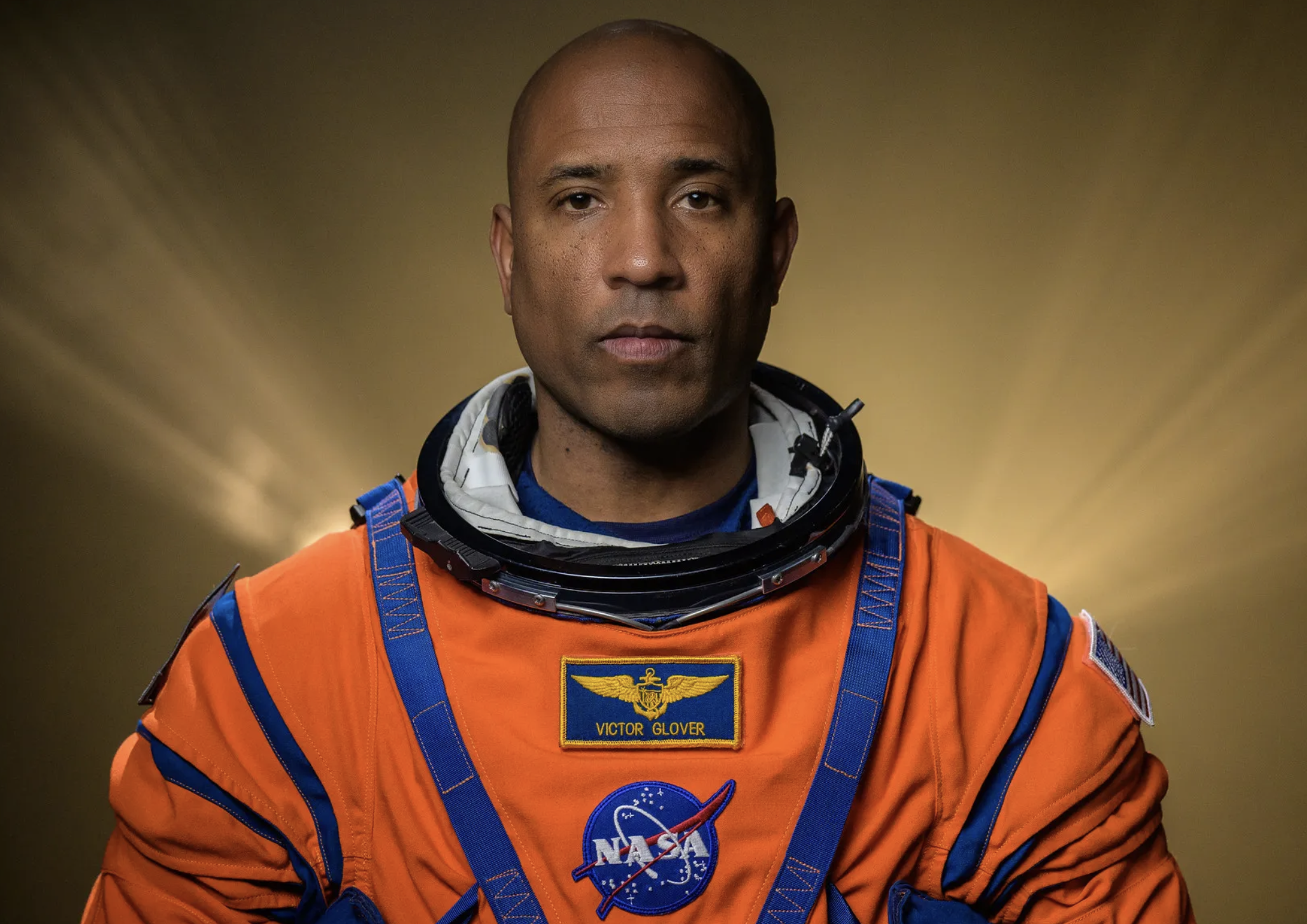
Photo: Victor J. Glover (March 2023)
The Artemis I mission of 2022 paved the way for Artemis II with the Orion capsule flying for the first time on a 25-day mission around the Moon. This time, actual humans will fly in the SLS (Space Launch System) rocket and Orion spacecraft. This endeavor is considered a test mission and next step for an eventual human journey to Mars.
While NASA had initially pledged to land the “first woman and first person of color” on the Moon, it removed that language last year from web pages “in accordance with an Executive Order signed by President Trump.” Despite the Trump administration’s efforts to dismantle all things DEI, this team forged in 2023 has remained intact. It’s diverse, badass, and will soon hit a travel speed of 24,500 mph with the fastest re-entry ever attempted by a crewed spacecraft.
The countdown clock starts ticking down at 4:44 p.m. EDT. Broadcast coverage begins with live views and audio commentary at 7:45 a.m. on April 1, on NASA’s YouTube channel, as teams load propellant into the SLS rocket. Full coverage on NASA+ begins at 12:50 p.m. (And yes, it’s April Fool’s Day, but we don’t expect any pranks from the Ground Systems folks… well, at least, none that are serious).