


Supreme Court Rejects Trump’s Attempt to Restrict Gender-Affirming Care in Prisons for Now
The ruling is one of the rare wins the current court has given LGBTQ+ rights advocates.
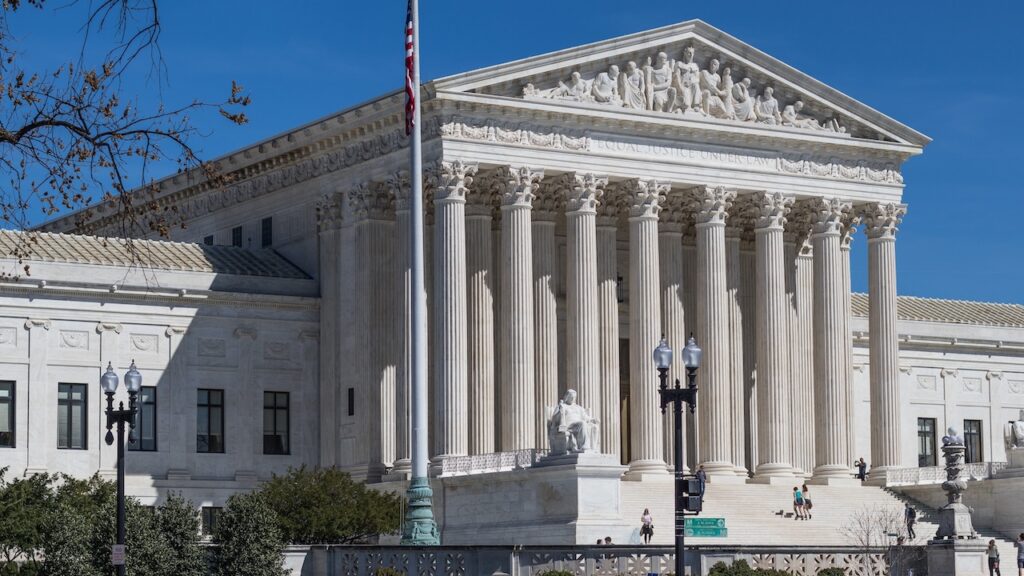
The United States Supreme Court rejected the Trump administration’s emergency attempt to immediately enforce its new policy restricting most gender-affirming care for trans incarcerated people.
The decision on Wednesday now leaves in place a lower court order that blocked the policy by the Bureau of Prisons (BOP), which was adopted after President Donald Trump signed an executive order recognizing only two sexes.
It’s just one of the ways he and his administration have targeted the rights of trans people.
Wednesdays rejection in the case, Kingdom v. Trump, didn’t provide an explanation, but read, “The application for stay presented to The Chief Justice and by him referred to the Court is denied,” according to NPR.
It also noted that conservative Justices Samuel Alito and Clarence Thomas would have allowed the policy to be enforced as the lawsuit played out in lower courts.
The Associated Press noted that the Supreme Court has previously allowed other policies against trans people to continue – such as the trans military ban.
The new agency reports that Trump’s order called on the BOP to change medical policies to ban federal funds for gender-affirming care. That would be a stop to gender-affirming surgeries, hormone therapy, and even social accommodations like wigs or makeup.
Mental health services would still be available for incarcerated trans people.
U.S. District Judge Royce Lamberth, who was nominated to the bench by Republican President Ronald Reagan, pointed that without gender-affirming care, trans people and those with gender dysphoria can experience
Trump administration lawyers said that gender-affirming care raised security concerns. It also said that providing the care would endanger those who received it, NPR reports.
About 600 inmates were receiving hormone therapy in 2025, according to the AP.
Lawyers for the inmates said the restrictions would affect their clients negatively and that the government did not provide evidence of any security problems.
BOP have supported gender-affirming care for those incarcerated since at least 1992, the ACLU, who is helping represent the plaintiffs in the case.
“Had BOP’s doctors found this treatment unhelpful or harmful to patients or had the agency found that the treatment compromised security, surely BOP would have mentioned it in the administrative record,” the ACLU said in court documents.