

This NYC Sapphic Volleyball Club Is Giving Queer Women a Place to Play, Compete, and Find Community
What started as one former volleyball player’s attempt to reclaim the sport has grown into a thriving community for NYC’s sapphic athletes.
For college athletes, having a safe space to keep enjoying their sport after graduation is crucial. For queer players in New York City, that need is even greater.
Tori Keghlian, 28, known as Tori Kegs, played Division I volleyball at Binghamton University before moving into a full-time healthcare job. Her relationship with the sport turned toxic despite a supportive environment, and she walked away from volleyball entirely. Running gave her back the competitive edge she’d been craving, but it also became the first step back toward the sport she’d left.
After joining a gay run club in the city, Kegs met DK, the founder of Footy With Friends, who encouraged her to get back into the sport. “Dude, do gay volleyball,” DK joked. “We don’t have it.” Kegs put the idea into action and launched Spykes Volleyball, a New York City-based sapphic and queer volleyball community.
“I feel like I can be competitive again in a safe environment,” Kegs said. “It gives me a purpose in that way.”
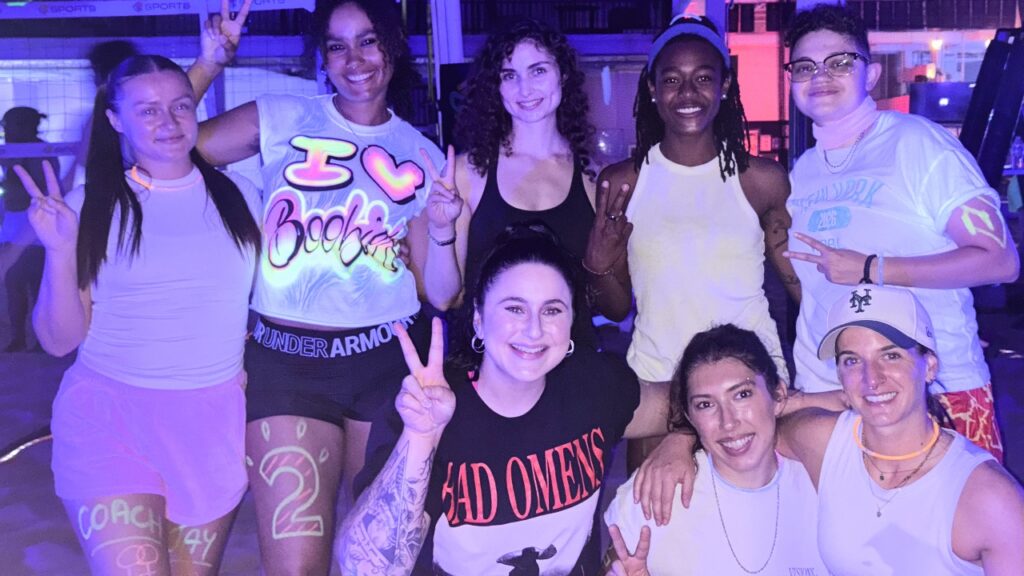
Friends of Kegs turned out for the first session on Feb. 15, 2026. Drop-in sessions now run every Sunday, with advanced and beginner clinics offering 50 spots each at $15 apiece plus tax across two courts. Kegs said it helps to know a little about the game, but “Spykes is open to everybody.” Every session starts with skill work split into setting, passing, and serving, and includes drills such as queen of the court, pepper and six-on-six.
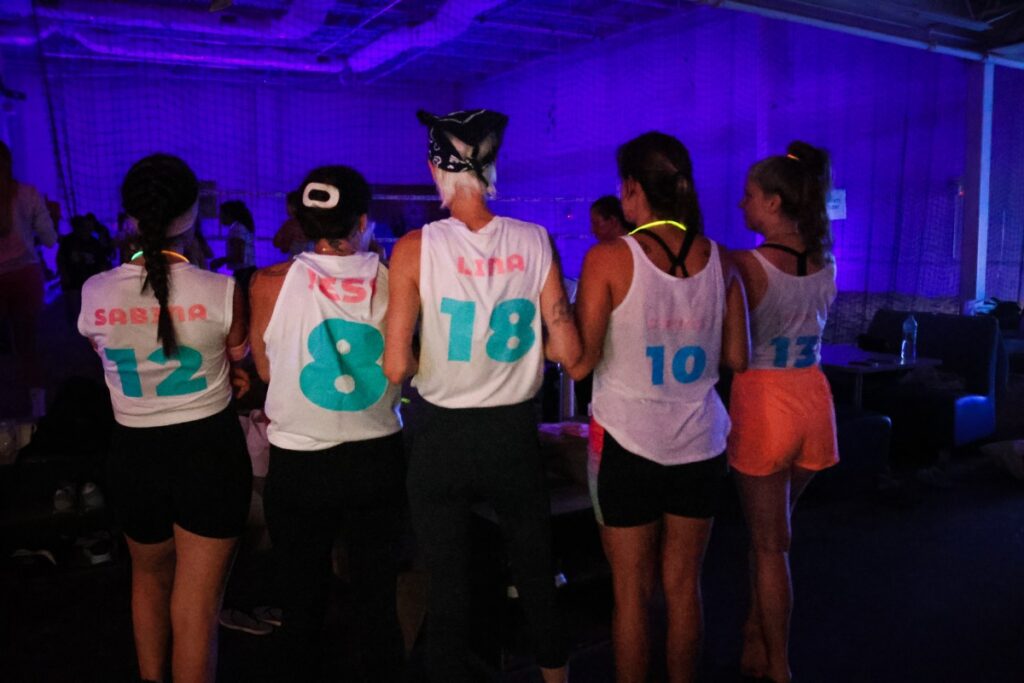
As part of her attempt to build Spykes into a stronger community, she hosted her first glow-in-the-dark beach volleyball tournament on Sept. 12 at QBK Sports, with five teams of nine players each. Beach volleyball is hard to find in New York City, Kegs said, and the blacklight added an extra layer of protection for beginners who were nervous to start.
Jay Oliveras, 33, one of the tournament’s team leaders, found Spykes through their LGBTQ+ dodgeball league and said it’s refreshing to find a space that accepts all levels of athleticism.
“I feel like we all connect in some way,” Oliveras said. “The friends that I’ve made here have been amazing, and I think something like this is definitely needed in the community. It’s a really healthy outlet.”
For those nervous about coming alone, Kegs said regulars who know the flow help beginners find their groove. A lot of the group is new to the city, and hearing that the club is players’ main friend group in New York makes her want to keep going.
Rachel Ross, 36, joined Spykes in April 2026 after searching for a safe space for queer people to play volleyball. Ross said the group gave her everything she had been looking for: a women-identified space that wasn’t centered on alcohol.
“I don’t even think she understands the impact of what it has done for us, specifically the sapphics,” Ross said of Kegs. “Spykes formed in a very pivotal point for a lot of us, where it was a very transitional, lonely space. I found my friends for life—they saved me.”
Because Spykes isn’t centered on drinking, people connect over shared interests and career fields, Kegs said.
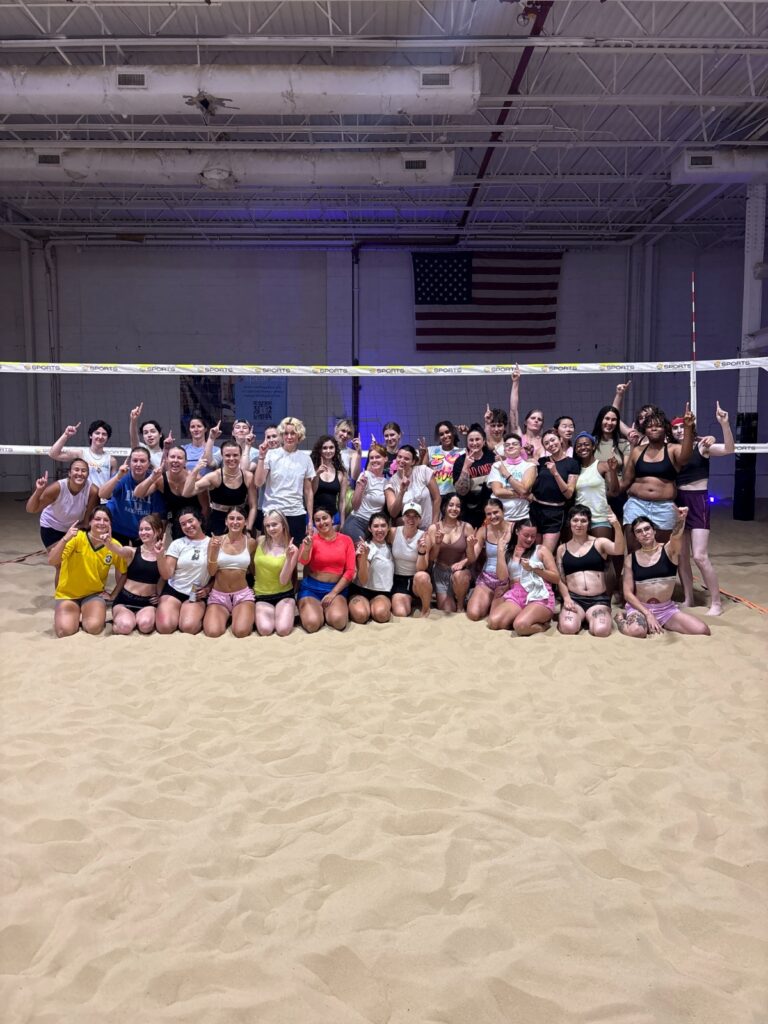
“It’s really cool because I feel like the queer community is expanding outside of just going out to gay bars,” Kegs said. “People are challenging themselves to new sports—nonbinary players, trans women, queer people, more masc-presenting people. It gives you a space to just be yourself without judgment.”
With queer representation rising in the WNBA, Kegs wants Spykes to be a space where players don’t have to worry about the limits of a “men’s or women’s league” or about conforming to a certain look.
Car Wisherup, 27, found Spykes on TikTok after a long-term relationship ended. Looking for a new hobby, she messaged Kegs on Instagram to get off the waitlist and has attended as many clinics as she can since. Being surrounded by people who understand you, she said, brings a sense of safety that lets her enjoy the sport more.
“What’s better than to play volleyball, a sport I already love, with a bunch of sapphics?” Wisherup said. “I love playing with the people that come to Spykes because they’re so fun, so joyful, and just easy to get along with.”
Given Spykes’ success, Kegs has noticed strong demand for more queer sports. Coach Abby Lownik, who helps host the volleyball clinics, is expanding the group to include basketball practices. In addition, Blazers Sports Bar hosts the group every Sunday, with a post-practice drink deal for anyone who wants to keep socializing.
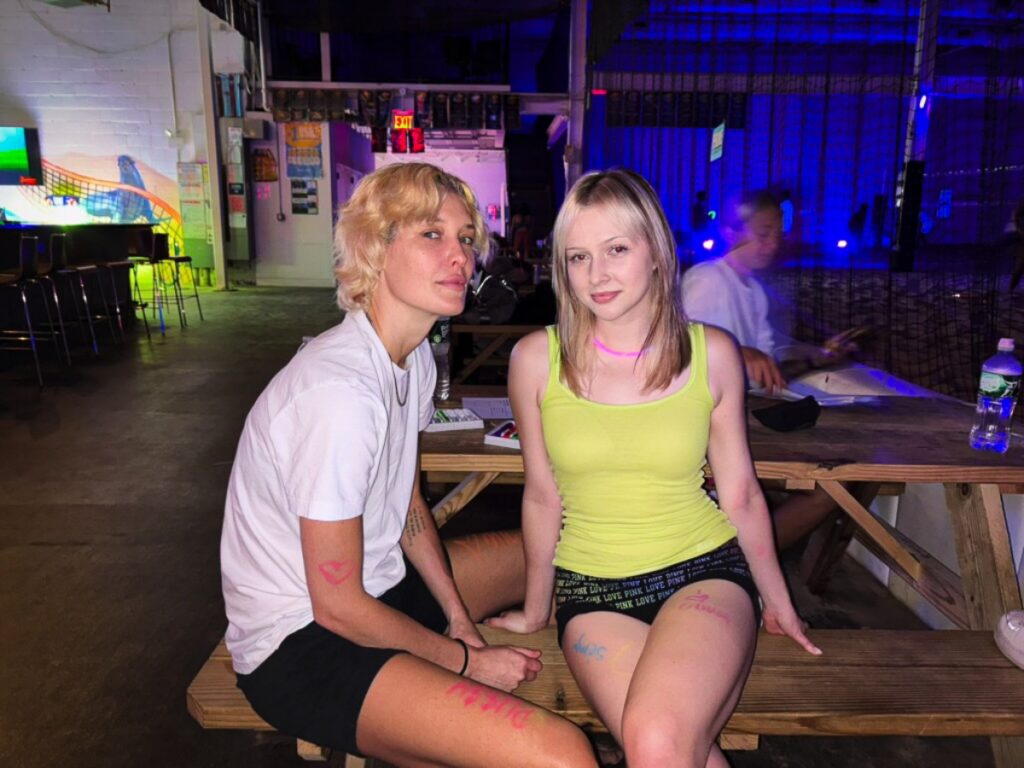
Spykes began as Kegs’s way of reclaiming a sport she holds close to her heart, and it has filled a gap in a growing community. For anyone who wants to learn more about volleyball or rediscover their love for it, Spykes welcomes people of all identities to come to a clinic, step out of their comfort zone and meet other sapphics looking for community.
“I want there to be a space safe for people to try sports, move their body, feel comfortable, just bring themselves, and try something new,” Kegs said. “I feel like I can fully express myself and play my sport, and I’m around people who feel the same way. We can all just be ourselves.”