

Vatican Says “No” To Women Deacons – Cites The “Masculinity Of Christ”
Historical evidence points to women with prominent roles in Early Christianity, but papal commission says further studies required.
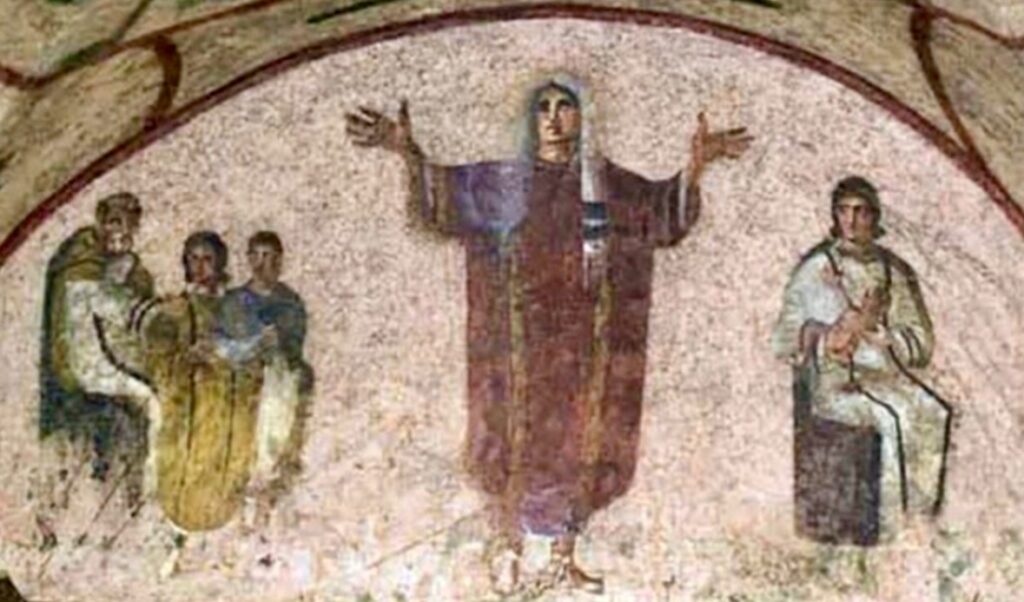
Featured image: Fresco at Catacombs of Priscilla in Rome, believed to depict a woman priest in early days of Christianity
Continuing the all-male tradition, on Thursday, Dec. 4, the Vatican’s papal commission voted against permitting women to serve as deacons in the Roman Catholic Church. Though not the highest in the clergy food chain, deacons are ordained ministers permitted to administer the sacraments of matrimony, baptism and engage in other roles; they do not celebrate Mass or hear confessions.
This news was widely viewed as not shocking to women who had aspired to join the diaconate ranks. Still, many were disappointed, given the tease of a question that has been under study for a decade, with secret meetings and formal deliberations undertaken by the late Pope Francis, one of the more progressive popes.
“This latest statement is consistent with how the Vatican has handled the question of women’s ordination for decades. Which is to say, delay and therefore deny women’s equality… ” says Kate McElwee, Executive Director of Women’s Ordination Conference (WOC), the largest and oldest organization working to ordain women as deacons, priests, & bishops.
“Yes, there were some signs of hope over the past few years,” she tells GO, “the repeated calls for women’s ordination from every continent during the Synod on Synodality, the public support from several cardinals, and Pope Francis’ own decision to establish two commissions to study the diaconate. Those developments suggested that the church might finally be ready to not just listen to women’s experiences but be a church on the move.”
The 12-person papal committee, led by Cardinal Giuseppe Petrocchi of Aquila, Italy, was comprised of five women and five men, including two deacons from the United States and three priests. According to the United Conference of Catholic Bishops, the seven-page report published Dec. 4 was a synthesis of the commission’s work, which concluded in February, addressed to Pope Leo XIV. The work looked at various statements, or “theses.” Among them:
“The masculinity of Christ, and therefore the masculinity of those who receive Holy Orders, is not accidental but is an integral part of sacramental identity, preserving the divine order of salvation in Christ,” one thesis concluded. “To alter this reality would not be a simple adjustment of ministry but a rupture of the nuptial meaning of salvation.”
The suggestion is “a deep, and theologically unsound, insult,” the WOC’s formal release states. “The Women’s Ordination Conference is appalled by the Vatican’s refusal to open its doors to women, even a crack.”
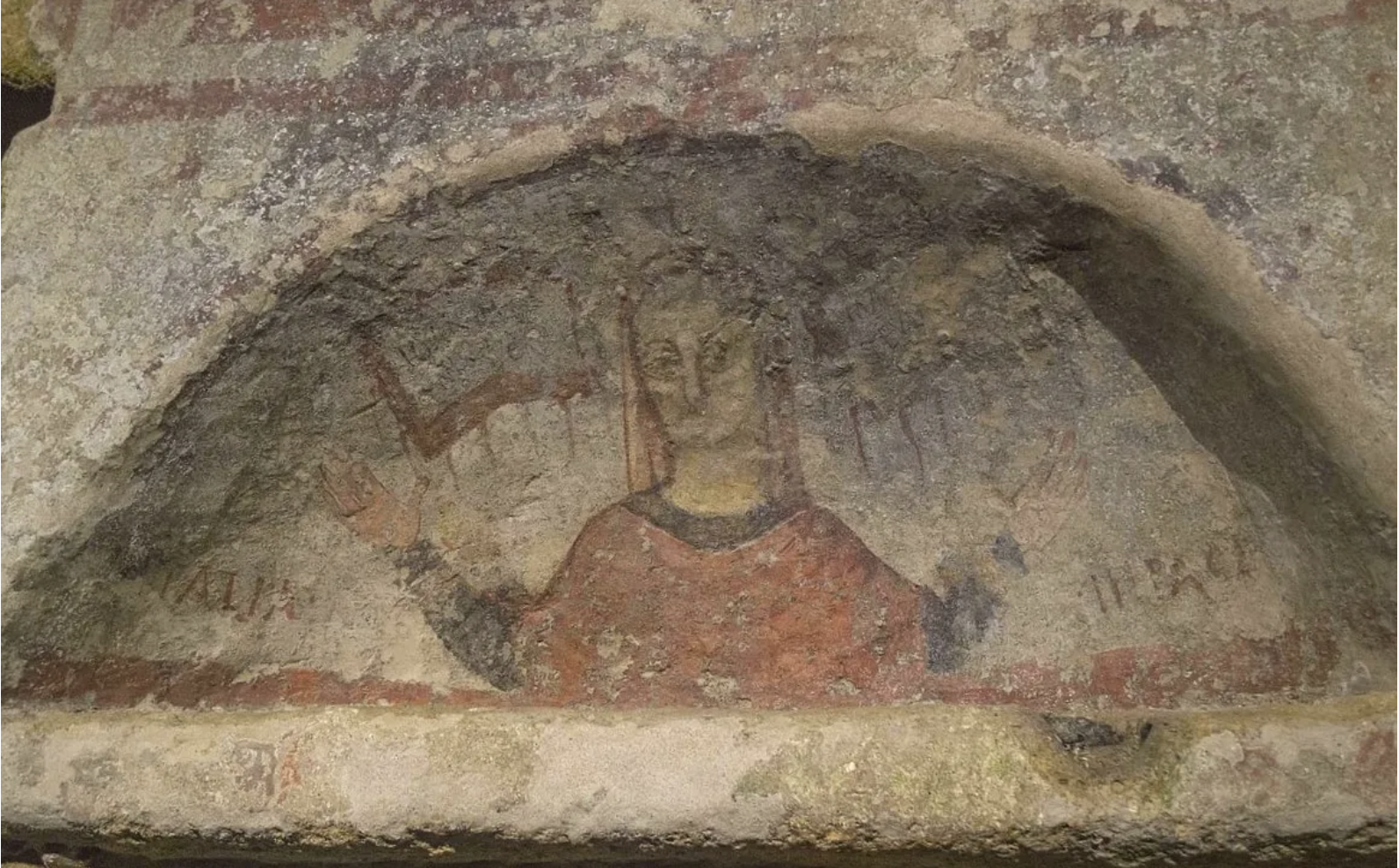
Image: Bitalia (a 5th/6th century woman) in the Catacombs of San Gennaro suggesting prominent role such as bishop or priest
Questions around theology and historical precedent are taken seriously by historians and women ordination advocates. Indeed, a body of research exists, along with archaeological evidence, pointing to the role of women as having been quite high-level in early Christianity. High level, as in actual “Bishop.” Frescos at the Catacombs of Priscilla, St. Peter’s Basilica, show a woman, dressed in a cassock-like robe, with hands up in the position often assumed by priests performing liturgical duty. In another room known as “The Greek Chapel,” a group of women sit around a table, arms outstretched like priests at Mass.
In the Bible, Paul named Phoebe deacon (diakonos): “I commend to you our sister Phoebe, a deacon of the church in Cenchreae… ” Romans 16:1-2 (NIV)
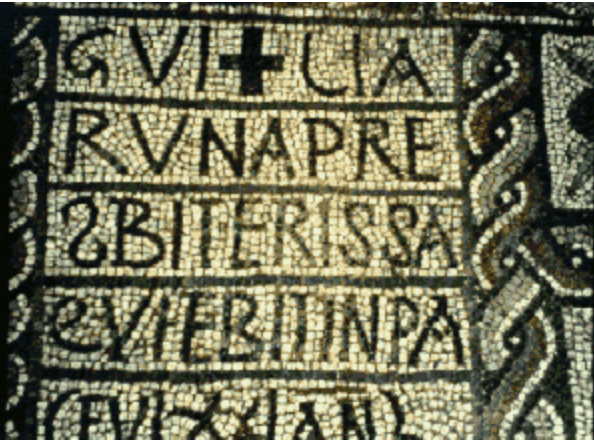
Image: A fourth-century tombstone records the burial of ‘Guilia Runa, woman priest’
These are just some of many depictions that have served as foundational for a very active movement of women seeking ordination.The Vatican has previously described such depictions as “fairy tales.”
Though according to Vatican News, during its first working session (2021) on deacons, the Commission determined that “the Church has, at different times, in different places, and in various forms, recognized the title of deacon/deaconess with reference to women, though attributing to it no univocal meaning.”
In other words, it seems there have been women deacons in the past, but that doesn’t really mean anything.
Related: Vatican Jubilee To Include LGBTQ Pilgrimage and Rainbow Crucifix
“[The report] neither reflects the breadth of global consultation nor the urgency of the moment,” McElwee tells GO. “So while the result itself was not unexpected, it reinforces why the Women’s Ordination Conference will continue to push for genuine reform.”
The bottom line for the year 2025: There will be no women deacons. There will be no women priests. As is often the case with uncomfortable truths that would require an an actionable stance (think climate change), the word from the Vatican on women deacons: “continued study” is required; in the meantime, women will remain relegated to other roles – such as serving at the altar, which this writer did as a child in 1975, the exact year the Women’s Ordination Conference was founded.
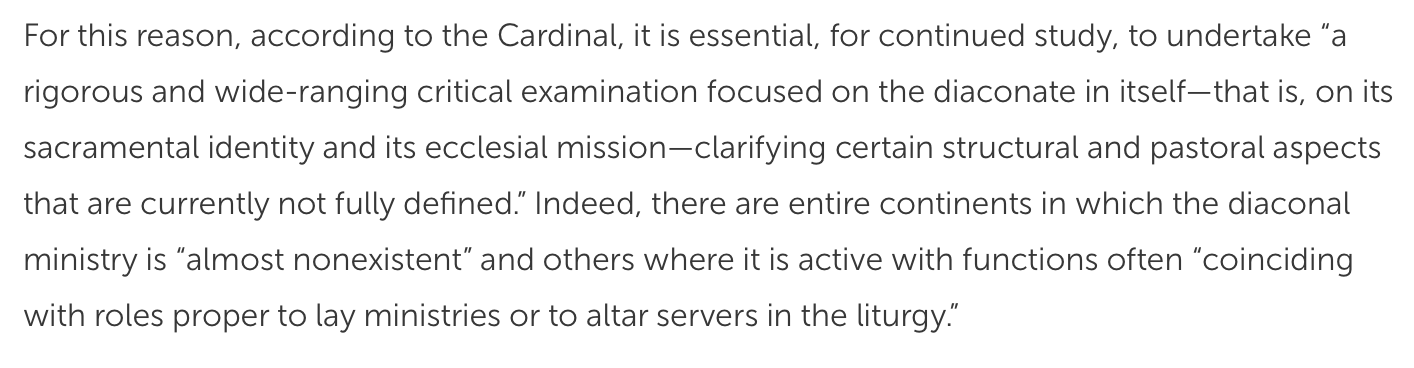
statement via Vatican News