

Spain Beats Out Malta To Be Ranked No. 1 For LGBTQ+ Rights In Europe
The annual list by ILGA-Europe takes into account the laws and policies that impact LGBTQ+ people.
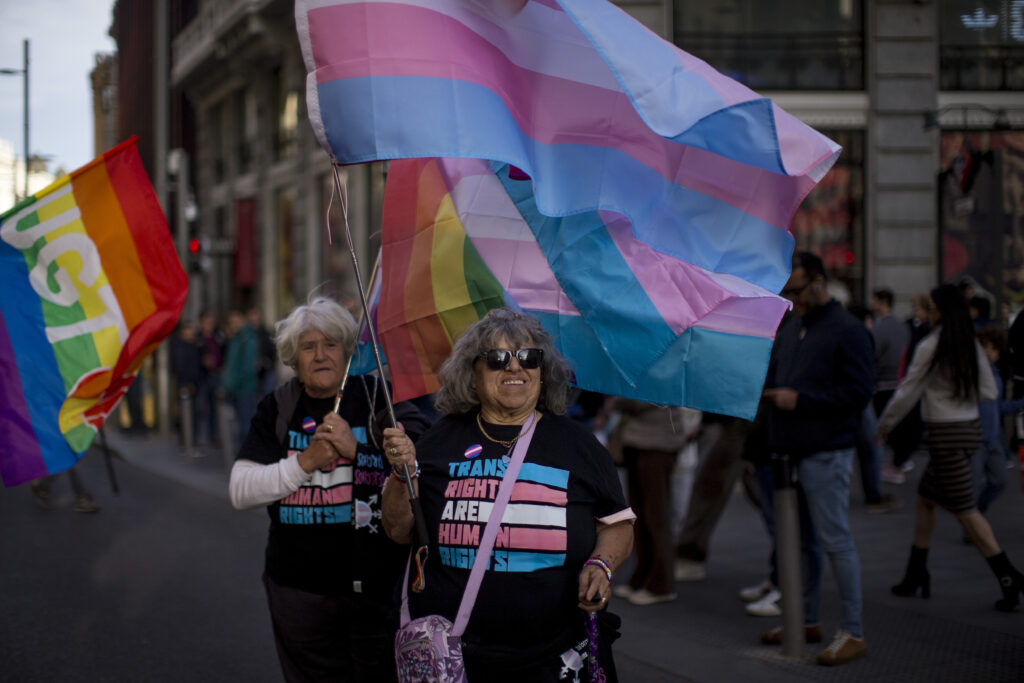
Featured image: Luis Soto/SOPA Images/LightRocket via Getty Images
Spain knocked Malta out of its No. 1 ranking on a European LGBTQ+ rights group’s annual list of countries and their law and policies that impact queer people, ending Malta’s 10-year reign in the top spot.
Each year, ILGA-Europe releases its Rainbow Map, which ranks European countries on their laws affecting LGBTQ+ people. In announcing Spain’s overtaking of Malta, the group noted Spain’s recent moves to support its queer citizens, which included depathologizing trans identities in healthcare, newly introduced legal protections, recently announced national strategies to support LGBTQ+ people, a new agency to battle discrimination, and an overall push against anti-trans political actors.
“Spain’s No. 1 ranking is more than a measure of policy progress. At a moment when authoritarian forces are pressing in on European democracy from east and west, and when LGBTI rights are being heavily weaponised as a political tool, Spain’s forward momentum is a good example of what democratic leadership can look like,” the group said in its release on May 12.
However, ILGA-Europe noted that while its ranking reflects the laws and policies Spain has in place, queer people in the country still face violence. The organization cited a report that shows violence against LGBTQ+ people is up 15% since 2024.
“Spain’s number one ranking is a strong example of what becomes possible when a government makes a deliberate choice to advance equality rather than retreat from it,” ILGA-Europe’s deputy director Katrin Hugendubel said. “We see this same spirit in leaders like Zohran Mamdani in New York, who are refusing to bow to the authoritarian pressure of this moment and choosing instead to stand with their communities. Of course, more needs to be done in Spain, but this is a reminder that political courage is a choice, and that governments who make it can effectively push back.”
After Spain and Malta, Iceland ranked third, followed by Belgium and Denmark as fourth and fifth.
Progress isn’t just happening in Spain. ILGA-Europe said that eight out of the 49 countries counted in this year’s ranking have moved to support trans rights. It noted Albania’s new legislation, including gender identity, gender expression, and sexual orientation, as being gender-based discrimination, even as some move to overturn it. Contraceptive sterilization is no longer mandatory for those wishing to change their gender on legal documentation in the Czech Republic and Latvia.
The ranking also notes which countries have backslidden on LGBTQ+ laws and policies. The group pointed to draft legislation in Portugal that could negatively impact legal protections for trans and intersex people and criminal lawsuits against LGBTQ+ rights activists in Turkey as some examples. The countries ranked last were Armenia, Belarus, Turkey, Azerbaijan, and Russia.
“This year’s Rainbow Map tells two stories at once. One of genuine courage, in Spain, in courtrooms, and in leaders who are choosing to stand with their communities rather than scapegoat them. And one of real and growing danger that cannot be underestimated,” Hugendubel said. “The question every government in Europe must now answer is which story they want to be part of.”