

The Not-So-Secret Lesbian Subtext That Made ‘Xena: Warrior Princess’ Legendary
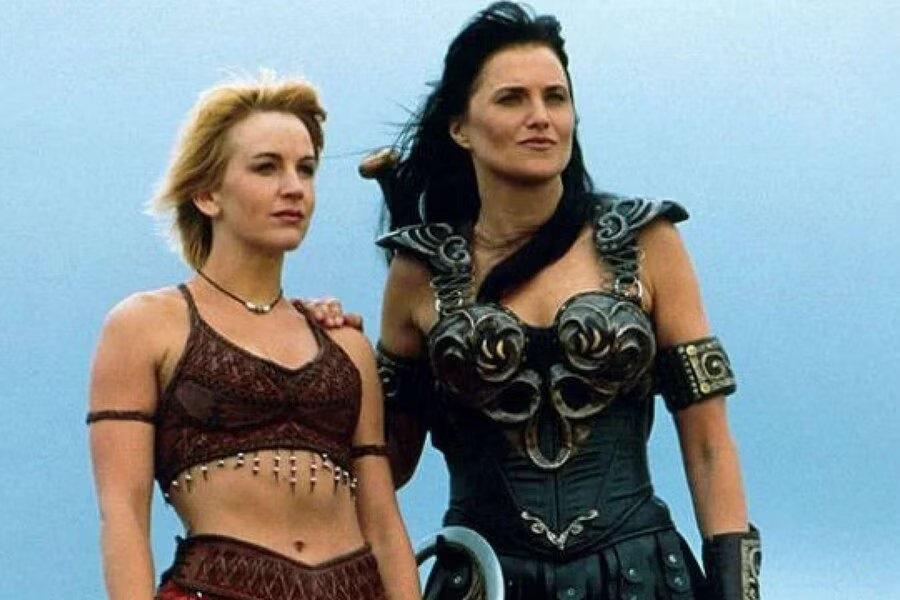
Lucy Lawless, Alexandra Tydings, and the Xena team open up about the show’s lesbian subtext ahead of its 30th anniversary.
Featured Image: Still from Xena via NBC Universal
When Xena: Warrior Princess hit the airwaves in September 1995, it was unlike anything else on television. A female-led action series with blockbuster-scale stunts, sharp fight choreography, and a lead who could command a scene with nothing more than a battle cry was not the norm in the mid-’90s. Spun off from Hercules: The Legendary Journeys, it didn’t just match its predecessor’s adventure. It brought a new emotional depth and a willingness to play with themes that went far beyond the standard action template.
The series followed Xena’s quest for redemption, aided by her signature chakram and a moral compass that leaned toward helping the vulnerable. On paper, it was a straightforward action story. It became a pop culture force, inspiring a generation of female action heroes and rewriting the rules for how intimacy between women could be portrayed on television.
Related: 10 Iconic Lesbian Moments That Only ’90s Babes Will Remember
Rob Tapert, the show’s co-creator, has no doubt about its influence. “I’m just gonna say it was an anomaly at that time to have a female-driven kick-ass show,” he told Entertainment Weekly. “With the success of [Xena], it opened the doors for everything that came after.”
For many queer viewers, one of the most resonant elements was the layered, often tender female relationships at the show’s center. Alexandra Tydings, who played the goddess of love Aphrodite, remembers the cultural context vividly. “It’s interesting to think back on the time that this show aired. It started before Queer as Folk or Will and Grace, there were no gay lead characters that I can think of. Ellen’s show was cancelled. So it was a very different time, and a show like Xena, which embraced its queer audience with playful ‘lesbian subtext’ was so unique. I loved it when I first heard out about this. I remember being young and coming out — we had very queer little media at all, let alone role models. If something like Xena had been on TV when I was in college, it would have been a weekly event for me and all my friends.”
Executive producer R.J. Stewart says the creative team knew exactly what they were doing. “We embraced the lesbian subtext with unbridled glee. Hearing that there were Xena nights in gay bars around the country cracked me up. That was perfect. Our general rule was ride the subtext whenever it makes sense. Everyone did that, so there was very little need to talk about it. Remember, we had a movie to make every week. Writers meetings were about breaking story and we did a hell of a job doing that, didn’t we? In the olden days, when people asked me if Xena and Gabrielle were gay, I used to say, ‘I’ll leave that up to the fans.’ But 30 years later, the fans have spoken. They’re definitely gay now.”
Related: Who Are ‘The Green Lesbians’ And Why Is Everyone Obsessed With Them?
Lawless says she and Renee O’Connor, who played Gabrielle, didn’t think about the romantic interpretation while filming, but they did focus on the emotional truth. “I think Renee and I didn’t [anticipate the fan response] because we didn’t have our heads in that head space, but certainly the writers knew exactly what they were doing from the start. We never thought about sexuality or anything, but we did think about love, and it’s only about finding the love in the scene. When you don’t know what else to do, look for the love in the scene. And that was, I guess, the magic ingredient. It was never about sex or trying to sell the nature of the relationship or any of that. Just look for the love in the scene because all scenes are about love or trying to get love, trying to run to love. I think people who didn’t wanna see it, didn’t see it. It was subtextual. Like, Renee would go to Texas and she’d say something about the lesbian subtext and they’d go, ‘What lesbian subtext?’ Like if it’s not relevant to you, you won’t see it. If it’s relevant to you, it’ll be there in spades. It’s very clever.”
Thirty years on, Xena: Warrior Princess still finds new fans and sparks old conversations. Its place in television history feels secure, even without anyone needing to agree on exactly why.
Find the full Xena oral history here.