

The Anti-Trans WNBA Discourse Online Has Been Mined For Clicks and Cash: Report
A new report suggests that a small amount of social media accounts have used the controversy for engagement to make it seem like more people are actually discussing it.
In recent months, the WNBA has been dogged by anti-trans attacks from right-wing influencers and pundits. However, a new report shows that the debate is being promoted online for money and that fewer people are actually engaging with the discourse than some platforms may lead users to believe.
The WNBA has no trans women players, but still, the conversation over trans women’s participation has lingered. Across the country, Republican-led state legislatures have targeted trans women and girl athletes, and President Donald Trump even signed an executive order last year barring trans women from women’s sports.
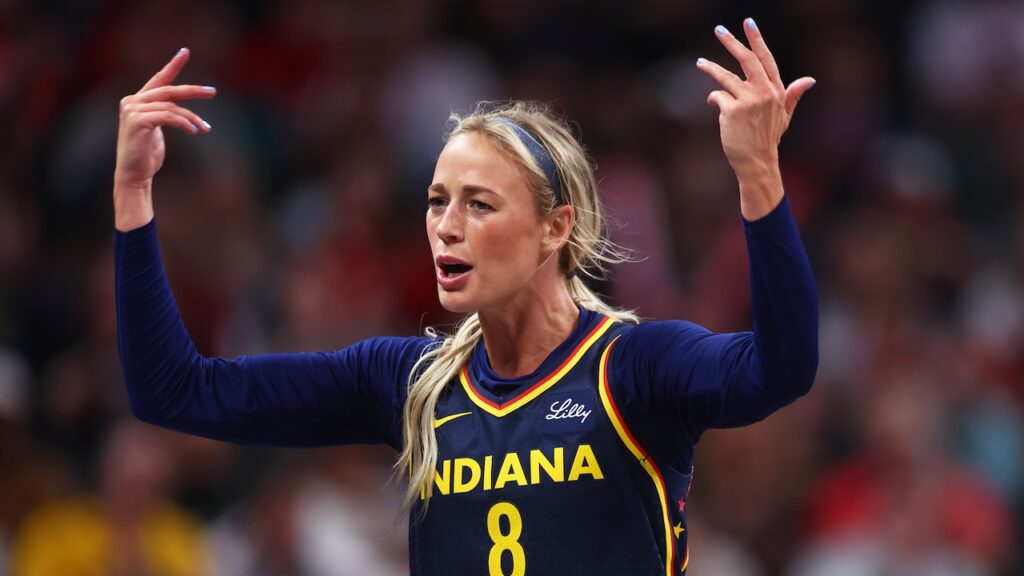
Over the summer, Indiana Fever’s Sophie Cunningham brought the debate closer to the WNBA when she told ESPN that trans women shouldn’t be in the WNBA.
“I got a lot of negative feedback about me hating trans. And I’m like, ‘I never once said that,'” she said. “I want to protect young girls in a locker room, or young girls in sport who shouldn’t have to go against biological men.”
Related: J.K. Rowling Jumps Into Ongoing WNBA Trans Inclusion Drama
Since then, the conversation around the WNBA and trans players has felt like it’s everywhere
Rolling Stone now reports that the constant barrage of the story is due to a handful of people trying to get views.
“If you take out the eight top posts, this [narrative] didn’t happen. Nobody would be talking about this,” Keith Presley, founder of analytics group GUDEA, told the magazine and shared its data. “When you look at what content was getting the highest inauthentic engagement, it’s more visceral, trying to get an emotional response. [This debate] was pushed for clicks.”
Of the 188,631 posts about the WNBA trans debate GUDEA analyzed over 24 days between July and August, 99% were on X, formerly Twitter.
“Of all of the users sampled, 3.57 percent were considered ‘non-typical,’ which means influencers, pundits, or aggregation accounts that post more than the typical user and have an outsized reach, either in following or views. But that small percentage produced 16.75 percent of all the identified tweets — above-average numbers for the typical Twitter debate,” Rolling Stone reports.
GUDEA’s data suggests that the trans debate is being used as fuel for what Rolling Stone says is “engagement bait.” The magazine notes this is why the conversation has devolved into anti-trans memes, threats, and the use of derogatory language.
Related: Enes Kanter Freedom Ejected From WNBA Game After Natasha Cloud Confrontation
“Sharing [a post] is one of the lowest-lift actions that you can take in a narrative. When we see that it’s just primarily people reposting an anchor post, it just shows that there’s just not true engagement on the topic. When people really get involved with something, they actually start generating their own content, and that’s when you see it spread into multiple networks,” Georgia Paul, GUDEA’s head of customer success, told the magazine. “This told us that it was a flash in the pan and then other accounts tried to take advantage of that flash to monetize.”
While reps at GUDEA say the debate comes from people having strong feelings about the topic, the conversation on X has been driven by attention and monetization.
“The primary motive for posting on the internet is no longer to have an opinion, a unique point of view, or add substance to the conversation. It is to make money,” Paul told Rolling Stone. “You’re going to make money in these divisive ways because you’re tugging at real-world conversations. Anger has turned into dollars for other people. The point is to sow division.”