

Supreme Court To Hear Challenge From Catholic Preschools That Lost Funding After Refusing to Admit LGBTQ Families
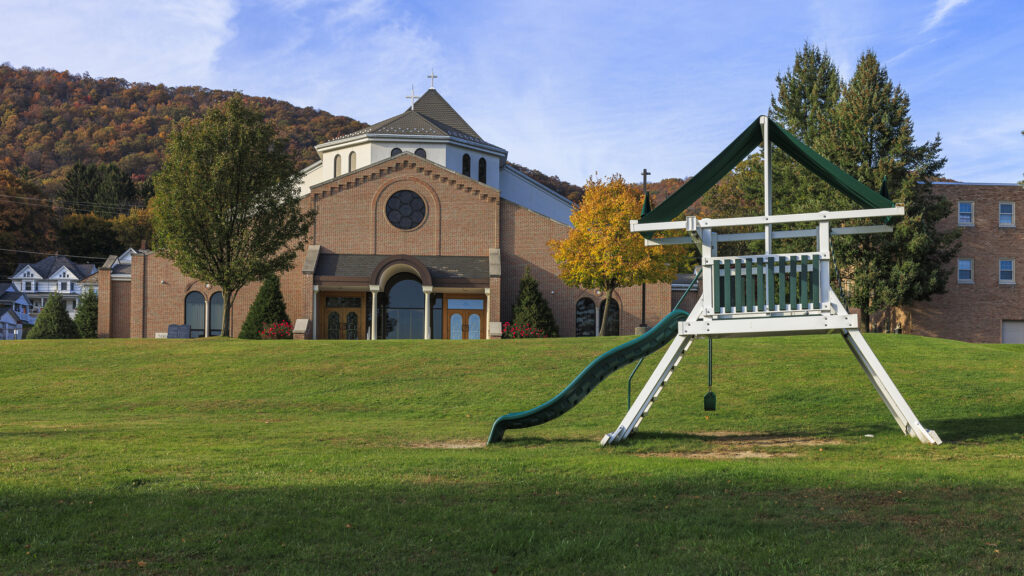
SCOTUS agreed to hear an appeal from St. Mary Catholic Parish in Colorado, which argues that faith-based admission restrictions violate their constitutional rights.
Featured Image: via Getty Images (photo Alex Potemkin)
On Monday, the U.S. Supreme Court agreed to hear a case brought by Catholic preschools in Colorado that claim their religious rights were violated after they were denied state funding for refusing to admit children of same-sex couples. The petitioners are St. Mary Catholic Parish in Littleton, St. Bernadette Catholic Parish in Lakewood, the Archdiocese of Denver which runs 34 preschools, and affiliated parents.
They are suing Lisa Roy, in her official capacity as Executive Director of the Colorado Department of Early Childhood, and Dawn Odean, as Director of Colorado’s Universal Preschool Program.
The plaintiffs claim that the Colorado program’s anti-discrimination provision violates their constitutional right to practice freedom of religion; it appears that their religion includes the right to exclude families on the basis of sexual and gender identity.
The Catholic schools are focusing on what they describe as “preferences granted to other preschools,” and framing the state’s policy as unequal. “Colorado doesn’t disagree it is interfering with the religious exercise of parents and schools,” the filing reads. “Instead, it says it is perfectly fine to exclude Catholic preschools while letting in preschools preferring those with disabilities, limited in-come, or LGBTQ identity.”
Colorado’s Universal Preschool Program, at the center of the case, uses taxpayer funds for parents to enroll children in the preschool of choice (public, private or faith-based). It is largely funded by money raised from Proposition EE. The ballot measure was approved by voters in 2020, and increased taxes on cigarettes, vaping and tobacco products to raise revenue for expanded preschool programs, K-12 education and other programs.
The schools claim they are being forced to abandon their religious beliefs, in order to receive funding. They are asking SCOTUS to revisit, or overrule, a previous case, Employment Division v. Smith – a 1990 case involving two Native American Church members who used peyote in a religious ceremony and were denied Oregon state benefits as a result of using “a controlled substance.” The church members argued this violated their religious freedom. SCOTUS ruled against them and said the state did not need to make a religious exemption.
Under Smith, a law can be enforced if its neutral (not specifically targeting religion) and if it applies to all, even if it happens to burden religious practice. The schools argue that overturning Smith would make it easier to challenge laws around their First Amendment right to freely exercise religion.
Related: Supreme Court Rules Against Colorado Ban On Conversion Therapy For Minors
This St. Mary Catholic Parish v. Roy case comes on the heels of another hugely important case originating from Colorado, that also makes arguments centered on First Amendment rights, specifically Free Exercise of Religion. Last month, SCOTUS ruled in favor of a conservative Christian licensed therapist, Kaley Chiles, who sought the freedom to speak to minors about conversion therapy. A 2019 ban in Colorado had prohibited “a mental health care provider from engaging in conversion therapy with a patient under 18 years of age.” On March 31, the Supreme Court sided with the counselor, holding that the law likely violated the First Amendment by restricting speech based on viewpoint.
The Archdiocese of Denver is being represented by the Becket Fund for Religious Liberty, which supported and litigated Mahmoud v. Taylor, a 2025 decision that allowed parents to opt-out of certain instruction and LGBTQ-related material when it burdens their religious exercise.
Oral arguments in St. Mary Catholic Parish v. Roy are expected to be heard in the fall, with a decision made in early-mid 2027.