

Saniya Rivers Is Unguarded
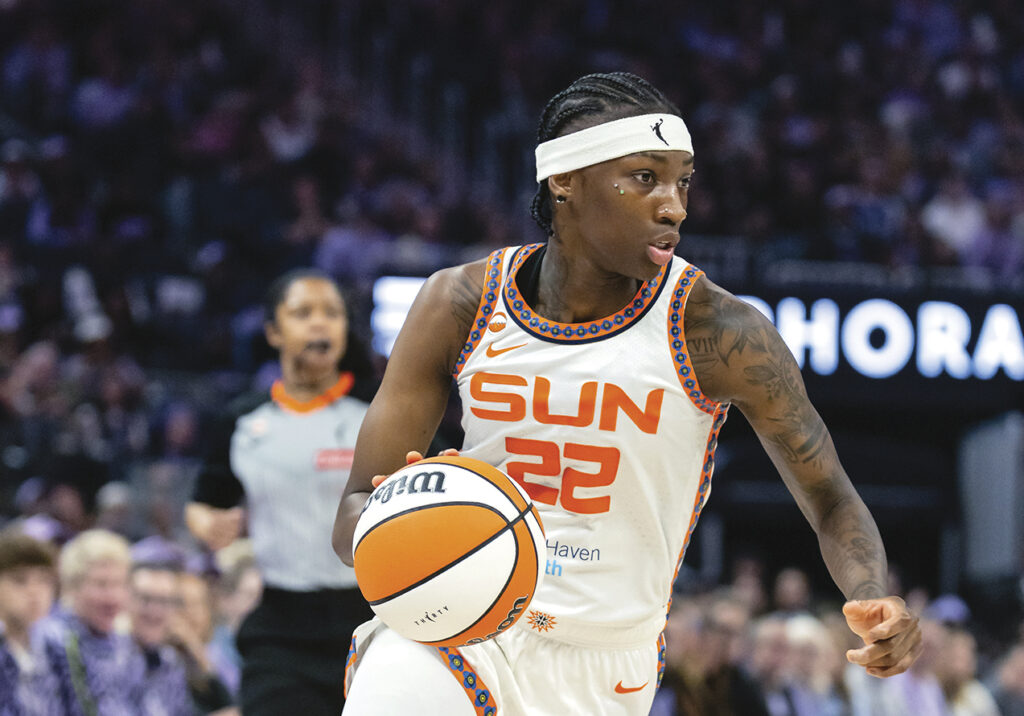
Pride, spirituality, grief, and *those* Marina Mabrey rumors. The breakout star of the Connecticut Sun opens up like never before.
Featured Image: Matthew Huang/Icon Sportswire
At home in Connecticut’s Mohegan Sun Arena, fans roar, chanting “Let’s go, Sun!” On the road, opposing crowds try to rattle her with boos. Regardless of the reception that awaits, Saniya Rivers’ pregame ritual remains the same. Before each opening tip-off, the Connecticut Sun guard opens her journal and begins to write.
“I write to my mom in my journal,” Rivers tells GO over the phone from Seattle, a day after the team’s first win of the season against the Seattle Storm. “I write to her and myself. I set goals for each game, and then I’ll send a picture of it to my sister because she’s my accountability partner.”
After journaling, she slips on her headphones and lets the music match whatever fits the day’s mood. Sometimes ’90s R&B, sometimes gospel, sometimes jazz with long, winding saxophone solos. Then, she reapplies the extra lip gloss she always keeps tucked in her many travel bags—she tends to overpack.
Whether you’re new to the WNBA fandom or are one of the 127,000 people following Rivers on TikTok, where her clips with fellow WNBA player Marina Mabrey had the sapphic internet shipping “Sarina,” you know the 23-year-old for how quickly she established herself as one of the league’s fastest-rising stars. Selected eighth overall in the 2025 WNBA Draft out of North Carolina State University, Rivers arrived in Connecticut after an exciting college career in which she scored more than 1,000 points.
Long before she was filling stat sheets and building a following online, Rivers was a kid growing up in Wilmington, N.C., where basketball was less of a hobby and more of a lifestyle. “Basketball has always been in my blood. My whole family played,” she says, including both her parents. “My sister also played at NC State, so it’s a full circle moment that I ended up there.” She realized basketball could be something bigger for her at 14, when she received an offer from Dawn Staley, one of the most respected figures in women’s basketball, to play at the University of South Carolina. She eventually played for the Gamecocks for one season before transferring to NC State.
Weeks after she was drafted onto the Sun, just as her professional basketball career began, her life took an unexpected turn—Rivers’ mother, Demetria, passed away. She says basketball became a way for her to process grief. “I feel my mom playing through me sometimes. I feel her on my shoulder just talking to me,” says Rivers. “For 22 years, I watched my mom in the crowd watching me, being able to hug me after each game, give me pep talks, wipe my tears if I needed her to. It was a shift, mentally, emotionally, physically, all in one.”
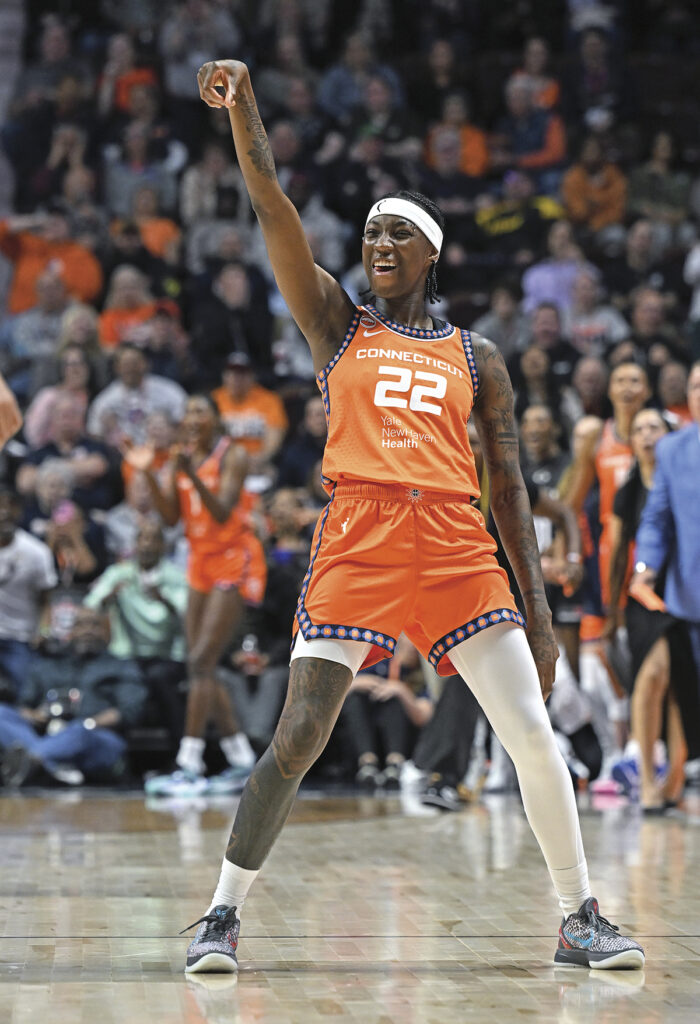
As her first season in the WNBA went on, she quickly realized how relentless the schedule could be, with little time to pause or rest.
“The adjustment for me was realizing that I’m really an adult. In college, you think you’re grown because you’re living in a dorm, but it’s super different when you’re in the WNBA,” she says. “I was away from my family for the first time, and there were a lot of things that had to shift for me as far as the mindset of, ‘Okay, you’re a grown adult now.’”
The experience pushed Rivers to become more intentional about her mental health and her spirituality. To keep grounded, she turns to simple mantras, repeating phrases like “control what you can control” and “energy is everywhere.”
Although the Sun’s 2025 season was its worst in franchise history, with 11 wins and 33 losses, Rivers’ performance signaled a promising future. She broke the team record for the most 3-pointers in a game and averaged 8.8 points, 2.8 rebounds, 2.7 assists, and 1.5 steals. What she built in that rookie season followed her into the off-season, where she joined Unrivaled, a three-on-three professional women’s basketball league for WNBA players, where she played for Hive BC before a mid-season trade sent her to Vinyl BC.
“You can take a lot away from Unrivaled,” she says. “That’s the time for you to try new things, new moves, shots that you maybe wouldn’t take in the WNBA.”
Now in her second WNBA season, Rivers is only getting sharper, more confident, and more dangerous with every game.
“We recently got our first win, and that’s something to celebrate because in this league it’s hard to even get one win,” she says. “You’re playing against grown, talented women every night. No one’s going to hand you a win, especially with us being such a young team…I’m excited to prove people wrong and prove ourselves right.”
Her words reflect a larger story unfolding for the Sun. This season, only five players returned from last year’s roster: Aaliyah Edwards, Aneesah Morrow, Leila Lacan, Olivia Nelson-Ododa, and Rivers. Alongside them, the Sun built a roster that blends veterans with rising talent, including players like Brittney Griner and Kennedy Burke, as well as recent draft picks and second-year athletes still developing their game. Rivers says the group started building team chemistry early in training camp.
“Whether that was getting together to grab some food, having a game night, watching some games together, doing TikTok live and TikTok dances together, it was a really big part of why we’re so cohesive right now,” she says. “Usually, people are just so focused on basketball, and we were focused on getting our chemistry built early.”
Rivers also credits Unrivaled with helping her build those relationships, giving her the chance to bond with players across the league in an off-season setting.
“A’ja Wilson, Kelsey Mitchell, Marina Mabrey, Brittney Sykes, Natasha Cloud, Paige Bueckers, Angel Reese, we all got so close,” she says. “Knowing that they’re in my corner is a blessing, whether it’s basketball or off the court.”
And she has plenty of reasons to lean on them, especially when navigating the attention, expectations, and criticism that come with playing in the WNBA—and the constant awareness of how she is being perceived.
“When it comes to marketing deals, NIL [name, image, likeness] deals, I wonder if people want me to be included because I’m Black, a little masculine presenting, because I am queer,” she says. “I’m proud of who I am, unapologetic about who I am. I live my true self every single day. I try to hone into more positivity about who I’m impacting: young people, older people, people who are scared to speak out.”
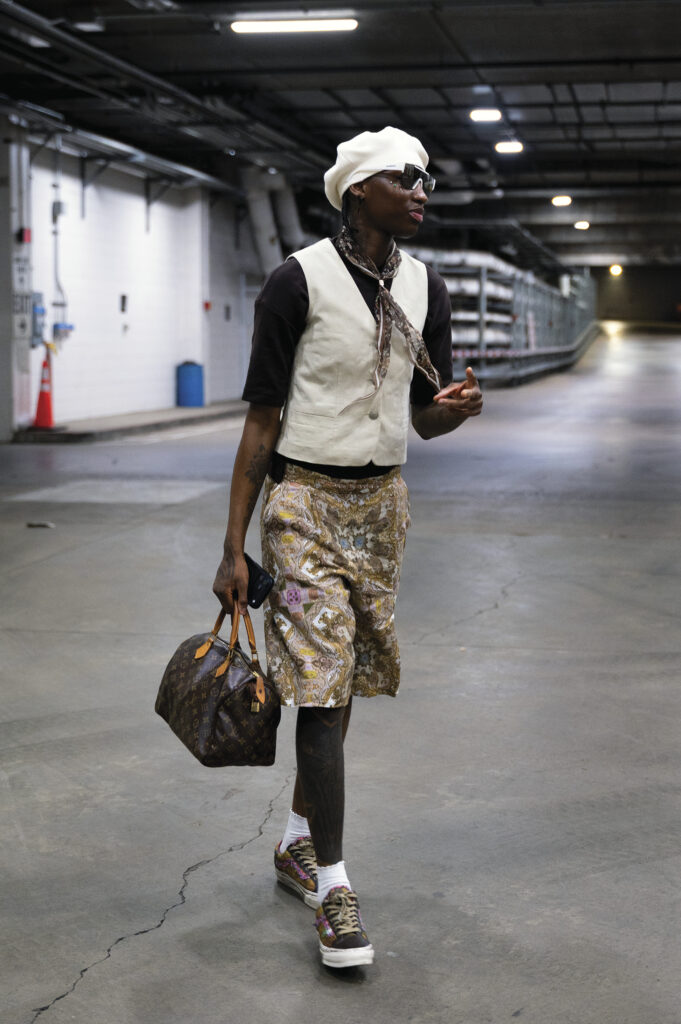
Rivers’ sense of self-awareness and pride carries into how she moves through the world, especially in her style, where she’s carried a purse that says “The WNBA been poppin,” or stepped out in alligator-print shorts, colorful berets, patterned pants, and statement Timberland boots. “I like to thrift pieces that people may turn their heads away from, and then when I put it on, they turn their heads to it.”
That same instinct carries over into her online presence. From fit checks and cooking videos to get–ready-with-me clips and “fruit for thought” relationship advice, her online presence shows the full range of her personality. The WNBA fandom has fully embraced all sides of her—including thirst traps with her close friend Mabrey, her teammate during the 2025 season. The two frequently appeared in videos together, including posting each other on Valentine’s Day, adding to the widespread speculation about whether or not they were dating.
This season, the pair has been separated, with Mabrey having signed a contract with the league’s newest team, the Toronto Tempo.
“We still watch each other’s games, [and] we still support each other. We want the best for each other,” Rivers says.
“When she was here, I was the one dressing her,” she adds with a laugh. “When she makes her own outfits, I’m like, ‘Maybe you should hire me to be your stylist.’ But yeah, we’re still great friends.”
That openness online, in relationships, or in the deliberate posting of thirst traps, points to a deeper ease with being fully seen. For Rivers, visibility isn’t just a personal choice; it’s intertwined with her identity as a Black queer woman in the WNBA and shapes the way she moves through every space she enters.
“The fact that I still show up in a room with a vest on, or with my skin out, with my shoulders high, my head high, letting people know that I’m unapologetically me. I’m wearing the tattoos, the piercings, the skin, the clothes I want,” she says. “I’m just being who I am in my skin, and I want to keep passing that down to as many people as I can. You can only live your own life, so why not just make yourself happy?”
As the WNBA season continues and Pride month rolls in, Rivers’ world keeps moving between three rhythms: the intensity of competition, mindfulness practices, and the playful space she’s carved out online. In her own words, being seen is not the point; it’s the starting point.
Kayley Cassidy is a journalist and writer based in NYC. Her work is influenced by her passion and advocacy for LGBTQ+ issues.