

Review: ‘Teenage Sex and Death at Camp Miasma’s Exploration of Trans Sex Makes it a Gory and Glorious Instant Classic
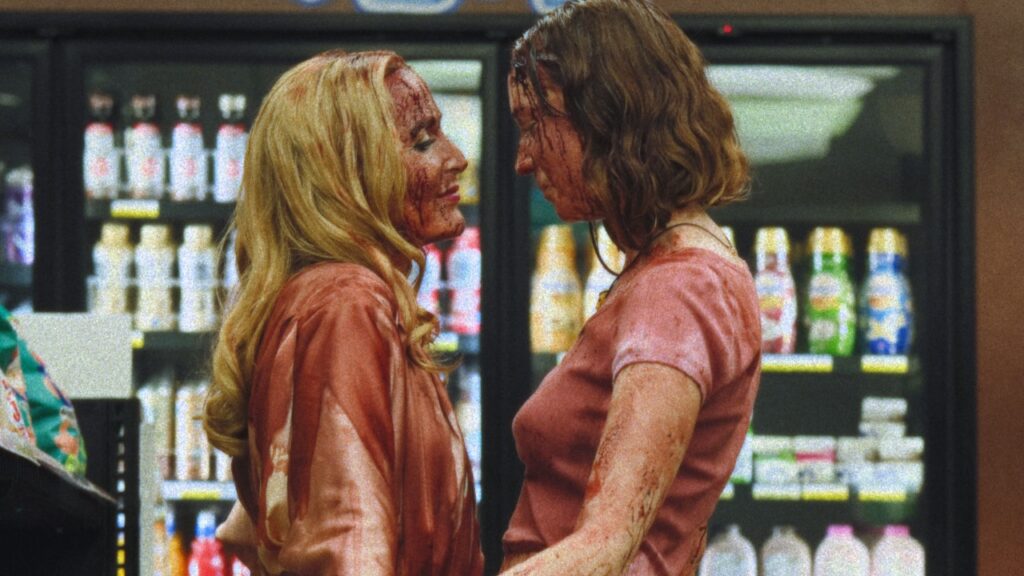
With fountains of artistic gore, Counting Crows music, KFC dipping sauces, and blood-soaked underwear, Jane Schoenbrun’s Teenage Sex and Death at Camp Miasma is the most insightful American horror movie […]
With fountains of artistic gore, Counting Crows music, KFC dipping sauces, and blood-soaked underwear, Jane Schoenbrun’s Teenage Sex and Death at Camp Miasma is the most insightful American horror movie since Jordan Peele’s Get Out and one of the most visually sumptuous and sexually captivating films of the 21st century.
In a similar way that Get Out explores racial politics in both America and the horror genre, Camp Miasma puts the femininity and gender transition that have always seeped into every crack of the slasher genre on beautiful, bloody display.
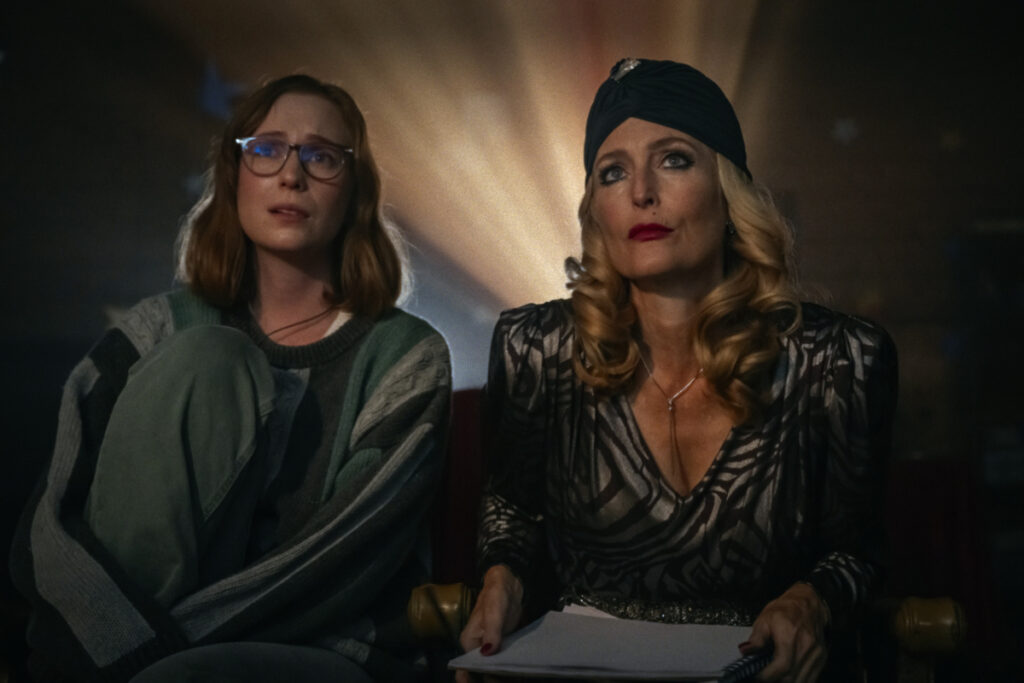
Camp Miasma (written and directed by Schoenbrun) stars Hannah Einbinder (Hacks) as Kris, a young, queer filmmaker who gets the chance to reboot her favorite slasher franchise, only to become transfixed by the idea of finding the reclusive star of the original — the mythologically sexy Billy played by Gillian Anderson.
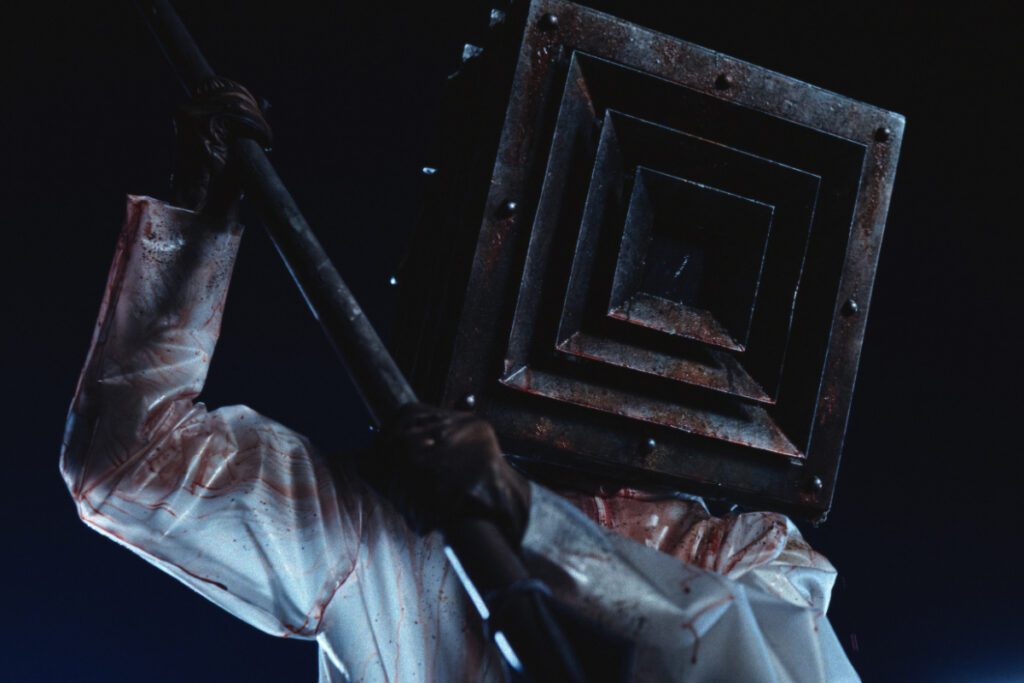
Once Kris does find Billy, holed up at the camp where the original movie was filmed, the two connect on emotional, physical, sexual, and psychological levels, and soon realize that the movie’s trans masked killer, the not-subtly-named Little Death (Jack Haven) which is a euphemism for orgasm, can be as real as they want him to be.
Camp Miasma’s brilliance rests on the shoulders of two main texts: sexologist Ray Blanchard’s transsexualism typology and Carol J. Clover’s Men, Women, and Chainsaws.
In our universe, Blanchard spent the ’80s and ’90s publishing a series of influential but since-debunked sexual psychology studies that declared there are two types of transsexuals: “homosexual transsexuals” (trans women exclusively attracted to men) and “autogynophiles” (males who are sexually aroused by the thought of being women).
Teenage Sex and Death at Camp Miasma presents a better world where he channelled his sexual confusion into a less harmful direction: a series of slasher movies with a problematic trans villain and psychosexual undertones.
It isn’t actually stated in the film that the Ray Blanchard who directed Camp Miasma is the same one who helped shape TERF arguments in our world, and essentially popularized the idea that trans women shouldn’t be attracted to women or themselves, but I like to believe that it is.
Schoenbrun responds to the much-too-widely-held belief that only a pervert would find the idea of being a woman sexy by finding synergy between autogynephilia and the well-known slasher trope of the “final girl.”
In her 1992 book Men, Women and Chainsaws, professor Carol J. Clover introduced the idea of the “final girl” to the horror lexicon. Clover coined the term to describe the final surviving female character in horror movies and suggests that viewers begin the movies identifying with the killer, only to have their perspective transition to the point of view of the final girl in the end. It’s a familiar journey for trans people.
Here, Schoenbrun lays it out plainly to see. Sometimes all it takes is a capable cougar to help you accept the fact that it’s okay to like being a hot woman.
Einbinder’s Kris is devastatingly relatable for queer people who took time to come into their sexuality. She’s a poly film nerd, disassociates during sex, loves the childish aftercare of eating gummy candy, and spends the film worrying that her desires are too “problematic” to be valid. She’s not just a stand-in for trans people like Schoenbrun, who has said the movie is about coming into their own sexuality, but for all women who are told they shouldn’t find their womanhood erotic.
If Kris represents newly out trans people and Billy represents trans people who have found a landing spot in their transition, Little Death represents transgender sexual fulfillment. He’s described in the original film as a camper who would be a boy one day and girl the next, playing directly into horror tropes about crazy crossdressers who go on killing sprees (see: Psycho, Texas Chainsaw Massacre, Sleepaway Camp, Silence of the Lambs).
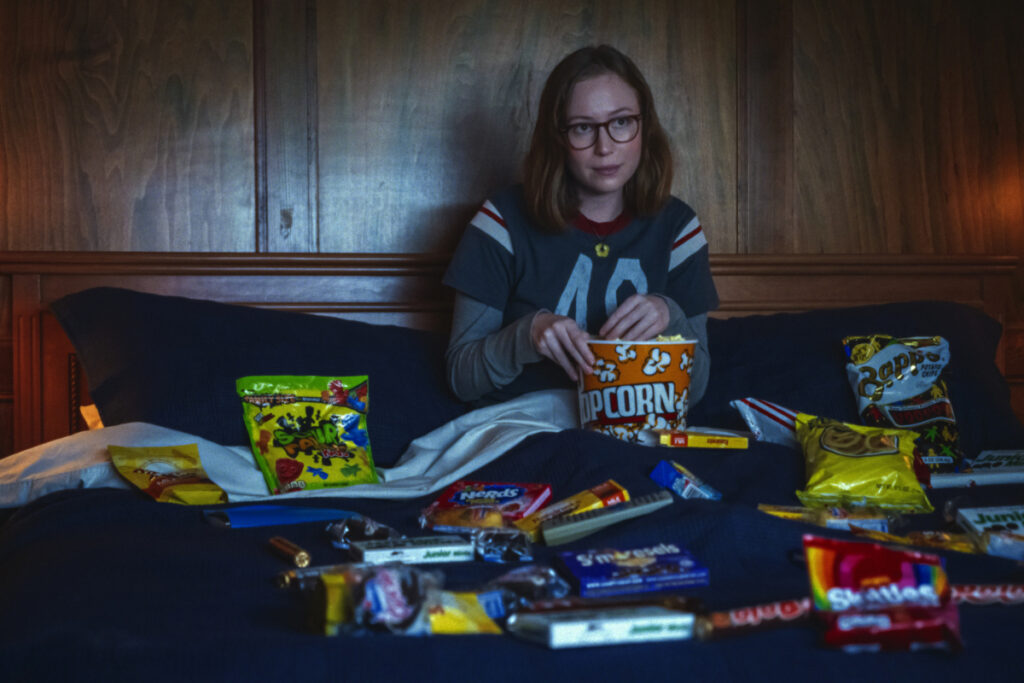
Just as slasher audiences see themselves as the killer before they become the final girl, a trans person might see themself as a predator or monster who scares everyone away and has to wear a mask before they transition.
However, even after becoming the final girl of your dreams, that part of you that felt monstrous never truly dies; it keeps coming back. If you can embrace that part of you and explore it in fantasy, you can keep it at peace. If the best way to soothe that part is to let it chase and murder you while you’re half naked, so be it.
Much like their previous films, We’re All Going to the World’s Fair and I Saw the TV Glow, Camp Miasma plays with the idea of using fantasy to explore reality. Kris keeps repeating, “If it gets too real, you can always turn it off.”
Yes, this movie is about the difference between fantasy and reality, and the safety in having your fantasies, but it’s also about crossing the boundary between the two. What if you live your real life as a movie?
If you want to live at an abandoned summer camp and eat buckets of fried chicken with dipping sauces, you’re allowed to. If you want to be a hot woman running through the woods, you can make that fantasy a reality.

Schoenbrun wants more people to embrace that power.
When Kris does finally get to strip down to her underwear, her nipples hard in the cold night air, she gets to experience pure joy, and is finally able to come during sex. This is gender euphoria.
Teenage Sex and Death at Camp Miasma is funnier, gorier, sexier, and way weirder than Schoenbrun’s previous films, and really shows that they’ve found their footing as a singular filmmaker. This movie is about to become a vital part of the queer canon, especially for trans sapphics, so make sure you see it in theaters.
Five out of five stars.
Teenage Sex and Death at Camp Miasma releases in theaters this Friday, August 7.