

Olympian Runner, Caster Semenya, Reportedly Ended Legal Challenge Against Sex Eligibility Rules But Now Says Not Giving Up The Fight

“It’s not about stopping, it’s never the end.” (Caster Semenya)
Featured Image: Via Getty, photo by Patrick Smith
Trigger warning: mention of gender harassment and invasive medical exam
Caster Semenya is not one to give up a fight. Maybe better to think of recent reports around potentially ending her legal battle as setting boundaries. Possibly even, regrouping. Days ago, Semenya’s lawyers announced she would end the 7-year legal challenge she’s waged against track and field sex eligibility rules. Semenya had taken her challenge to World Athletics’ rules to three courts since 2018: the CAS, the Swiss Federal Tribunal, and the European Court of Human Rights. At the latter, she scored a favorable ruling in July; then, days ago, her attorney told the AP, they wouldn’t be taking her appeal to the next step.
Now, she’s told German public international broadcaster, DW: “[The courts are] not necessarily over. I’m still yet to decide if we still go on with the courts. I’m still waiting for my legal team to finalize everything.”
The initial announcement surprised some, given her relentless drive and history of crushing her opponents.
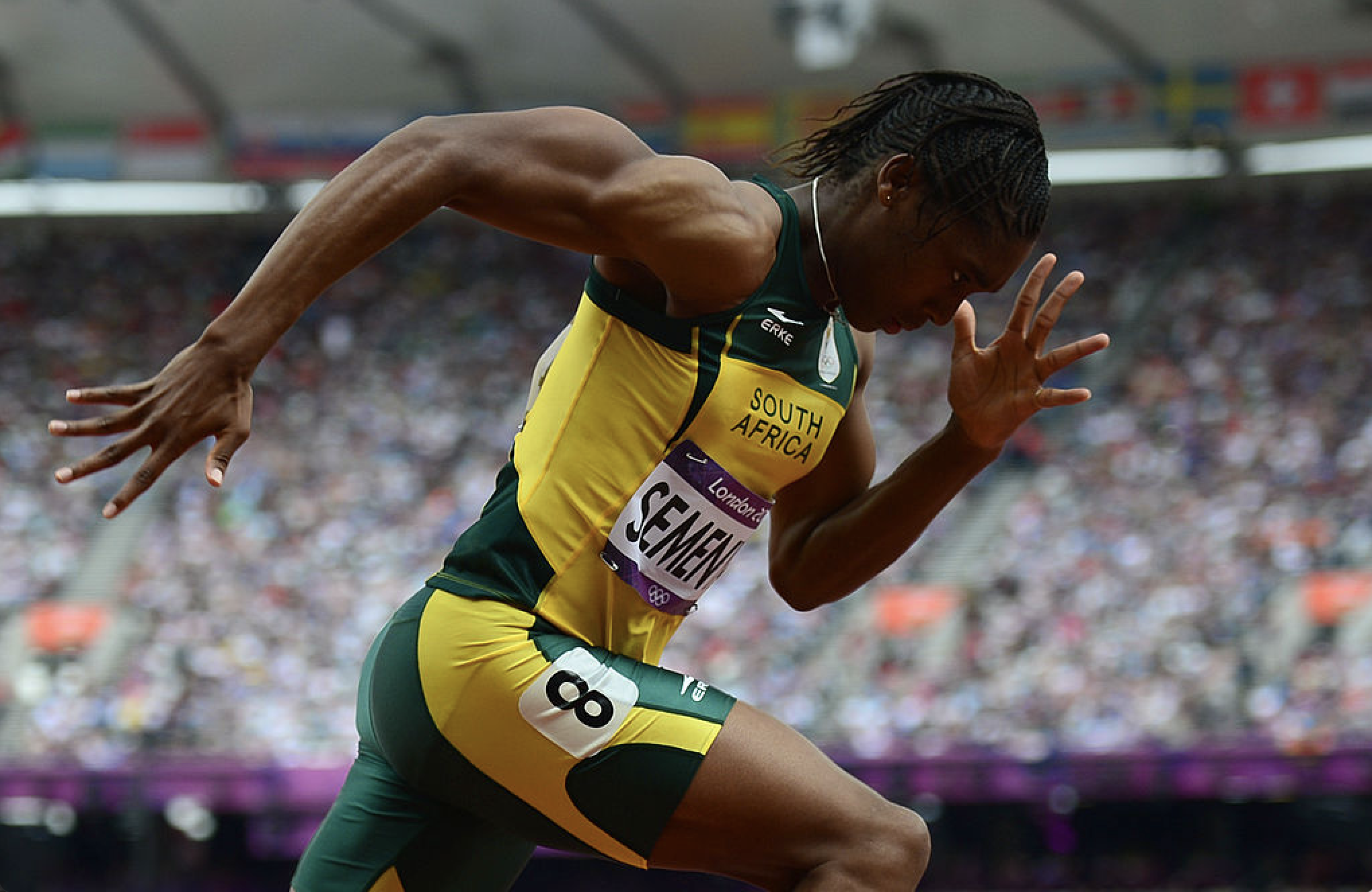
Image via Getty (Photo credit, Olivier Morin/AFP/GettyImages)
Anyone who is familiar with this world-class middle-distance runner knows that she’s not shy to wage a fierce fight. Her book, The Race to Be Myself: A Memoir, is a testament to raw resilience. Born in Ga-Masehlong, a village in South Africa, Semenya became a two-time women’s 800m Olympic champion and a three-time 800m world champion, only to be met with an onslaught of speculation and harassment about her gender. After a run of amazing performances, including winning the women’s 800-meter event at the World Championships in Berlin, Semenya was accused of being too masculine, called ‘a cheat‘ and ‘a man’ by some competitors, and asked by the governing body for athletics to take a sex verification test to confirm her female status.
Ultimately, she was subjected to extremely invasive exams, including painful and humiliating bodily orifice inspections. The athlete learned she had what’s sometimes termed differences in sex development (DSD), with a typical male XY chromosome pattern and high levels of naturally occurring testosterone, but also female physical attributes. She does not call herself “intersex,” but identifies purely as a woman and has been raised female since birth. The South African resident is also openly queer and a parent to two daughters with her wife, former middle-distance runner, Violet Raseboya.
Following the scrutiny, the world-dominant middle-distance runner was given an ultimatum in order to continue competing: to take hormone suppressants to artificially reduce testosterone levels. Unnatural to her body, the intervention left her feeling physically awful. “I’d describe [the medication’s effects] like this: you’re living every day with a sore body. Your stomach is burning, you’re having panic attacks, you’re sweating. It … it was crazy,” she told The Guardian. She eventually stopped taking the meds and, since 2019, has been banned from the Olympics, the World Championships, and select international meets.
Per outlet DW, she is now downplaying reports that she’s ending the legal bout and has suggested her lawyer was misquoted. “We are forever fighting,” she told DW at the Play the Game sports conference in Tampere, Finland, that started on Sunday.
“It’s not about stopping, it’s never the end,” she reportedly said. “They didn’t understand what my legal team was saying. It’s not the end, it’s just the beginning of making sure that we fight the right cause. World Athletics is constantly changing its policies. With the new policies, we are forever fighting. We want to make sure that athletes are protected.”