

Landmark Minnesota Supreme Court Decision Affirms Trans Inclusion In Sports

The Minnesota Supreme Court ruled in favor of trans athlete JayCee Cooper in her discrimination case against USA Powerlifting.
Featured Image: JayCee Coooper courtesy of Gender Justice
This morning, the Minnesota Supreme Court ruled in favor of trans powerlifter JayCee Cooper in Cooper v. USA Powerlifting—a landmark case challenging USA Powerlifting’s ban on transgender athletes. The decision affirmed that transgender athletes have the right to compete in sports without discrimination under the Minnesota Human Rights Act. The Court found USA Powerlifting liable for discrimination in public accommodations; therefore, transgender women cannot be barred from women’s sports teams in the state.
“This ruling sends a clear and powerful message: transgender people have a right to enjoy public spaces in Minnesota like sporting events, restaurants, and movie theaters, free from targeted discrimination,” said Jess Braverman, Legal Director at Gender Justice in an issued statement. “This decision is a historic victory for fairness, equity, and the fundamental rights of all Minnesotans.”
This ruling clarifies that all public accommodations in Minnesota, including sports organizations, must ensure their policies comply with the Minnesota Human Rights Act.
The legal battle first got underway in 2019, when Jess Braverman of Gender Justice, along with Co-Counsel David Schlesinger and Matthew A. Frank of Nichols Kaster, PLLP, filed a charge of discrimination with the Minnesota Department of Human Rights on behalf of JayCee Cooper, a transgender woman and member of USA Powerlifting (USAPL). JayCee had applied to participate in a bench press competition with USAPL and was denied.
Related: Trans Athlete Sues US Powerlifting
At the time of the application, USAPL did not have specific guidelines for trans athletes, though they are a member of the International Powerlifting Federation, which generally follows the lead of the International Olympic Committee (IOC). According to Gender Justice, JayCee met IOC requirements, but USAPL denied JayCee’s request to compete, and then created an exclusionary policy to prohibit transgender women from competing altogether.
The complaint was filed on January 12, 2021, on behalf of Cooper after mediation and negotiations with USAPL failed.
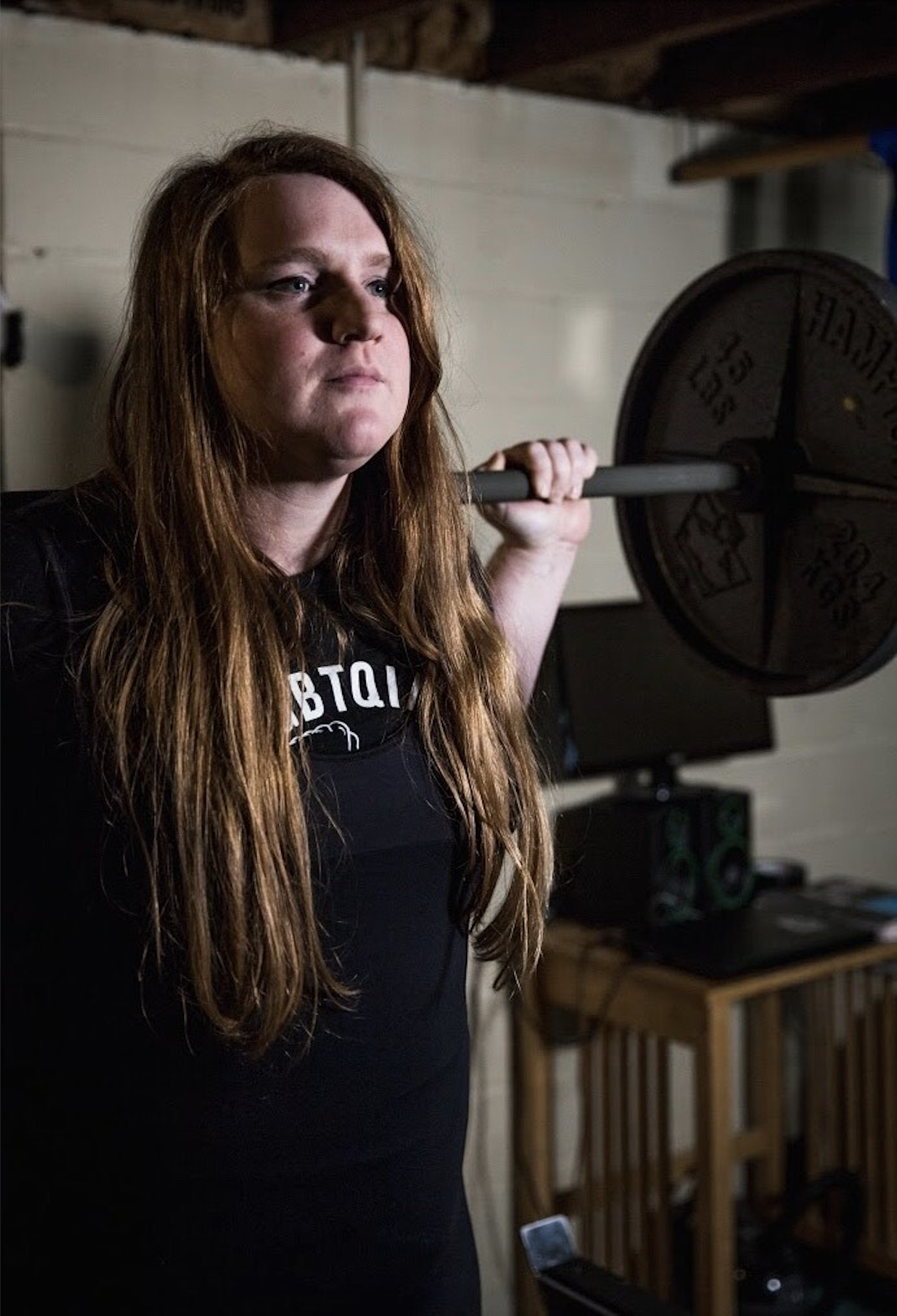
Image: JayCee Coooper courtesy of Gender Justice
“This case has always been about something fundamental to who we are as Minnesotans,” Braverman said at today’s press conference. “That we believe in the right to live free from discrimination to pursue our dreams – whether that’s excelling in athletics, advancing in our career, or simply living openly as our authentic selves. And frankly, it’s an integral part of being an American to participate in sports.”
While this was not a case that revolved around “educational” institutions, the logic of the ruling was deemed applicable to the education context. It is expected that eventually, the U.S. Supreme Court will look at whether TItle IX protects transgender athletes. For now, it does not appear that there is any case making its way to SCOTUS that would undo today’s outcome. The team’s position is that the federal government, in attempting to ban trans athletes from sports, is effectively trying to make Minnesota violate its own law – namely, the Minnesota Human Rights Act.
Related: Federal Investigation Into Girls’ Sports Concludes Minnesota Violated Title IX
Cooper’s legal team hopes that other states will look to today’s decision for guidance.
Chris Mosier, trans triathlete and activist, was thrilled for today’s news. “For so many of us, sport is our safe space – for so many members of the trans and non binary community – and that might be somewhat unbelievable to folks to hear, given the state of politics around the inclusion of trans athletes in sports. It’s a space where we can be with others and work towards a common goal, and feel a sense of belonging and purpose and community, which is so incredibly important to us now more than ever,” Mosier said at the press conference.
The Court did send one issue back to a lower court to determine if USA Powerlifting had a “legitimate business purpose” for excluding Cooper. The justices found that USAPL’s argument that allowing transgender athletes who were assigned male at birth into women’s competitions would create a disadvantage for other lifters could qualify as a legitimate business purpose defense and sent that claim to lower courts for further ruling. This part of the case would not affect the discrimination ruling reached by the Supreme Court today.