

Artistry of Mei Lanfang, Master of Female Roles in Peking Opera, On View At China Institute Gallery In New York
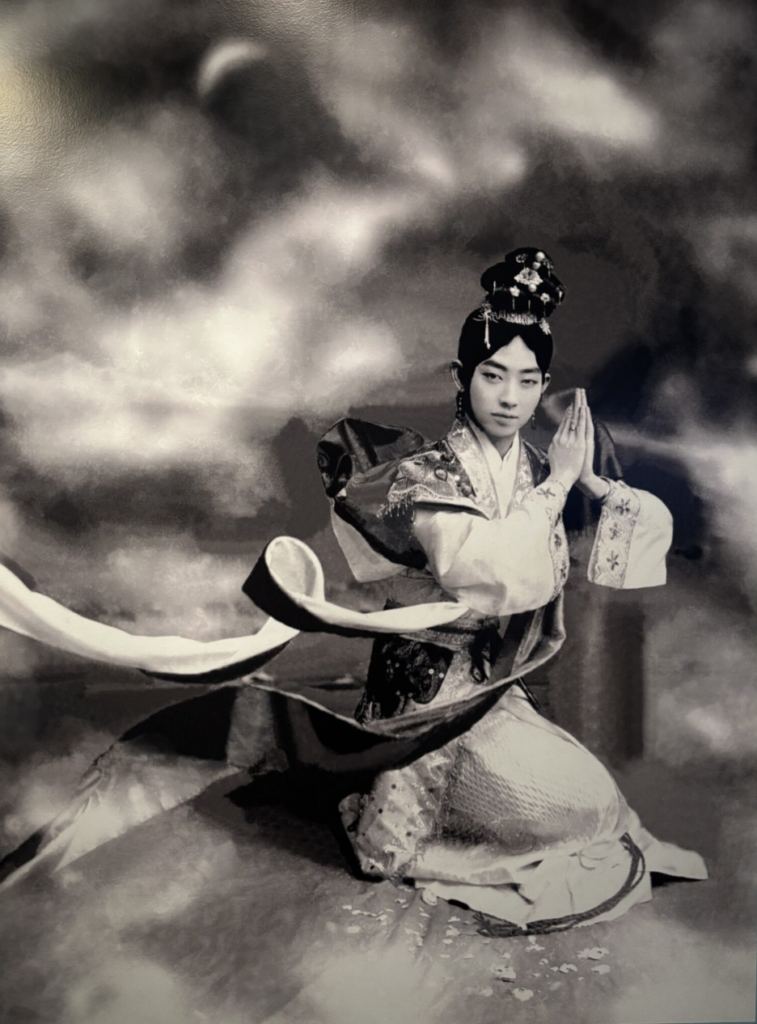
In an era when women were forbidden to perform on stage, Mei Lanfang revolutionized a centuries-old artform by fusing tradition with new elements of dance and costume.
Featured Images: Mei Lanfang on display at China Institute Gallery
For centuries, women were banned from performing in Peking opera – a tradition with 17th century Qing dynasty roots that carried into the early 1900s. The stage was not deemed respectable for women at the time. How then to cast female roles?
Men were trained in the dan techniques of voice, style and costume – often with training commencing in childhood. And no one reached a higher level of artistry and renown than Mei Lanfang (1894-1961), who put Peking opera on the global map, and brought his 1930 American tour to Broadway where he won the praise of critics like Robert Little, who wrote:
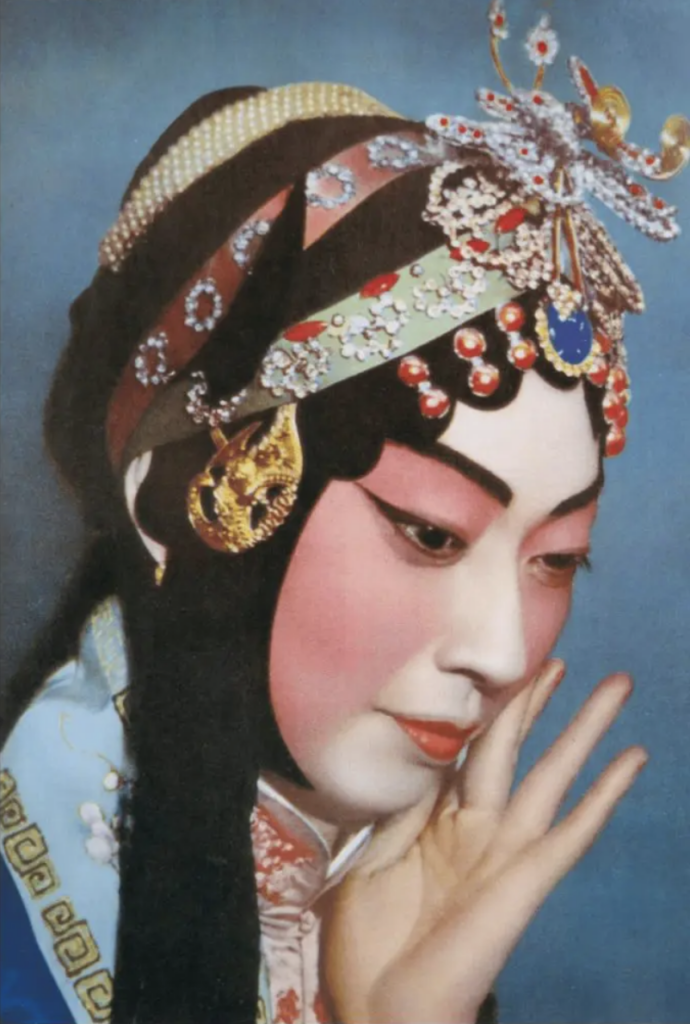
“You forget that he is a man playing women’s parts… You forget everything but the pictures he is making, as strong and delicate in every eloquent gesture as an old Chinese painting, very beautiful to look at for the costumes and poses alone, but also full of an immensely subtle dignity and repose… Nothing like this has ever been seen in New York.”
Now, a stunning collection of artifacts associated with the 20th century’s greatest performer of Peking opera is on view for a limited run to celebrate his legacy and the cross-cultural dialogue that his work inspired:
“The Dancing Goddess – Mei Lanfang in America” is on exhibit through July 12, 2026 at China Institute Gallery in New York City.
Curated by Dr. Catherine V. Yeh, Professor of Chinese & Comparative Literature at Boston University, the exhibit celebrates the groundbreaking artistry of Mei Lanfang in a spectacular display of exquisite costumes from the artist’s own collection, props and stage sets, rare photographs, videos and rarely seen archival materials. Among the highlights: the earliest surviving playbill from Mei’s first performances age 14, marking the keeping of family tradition (his grandfather was a well-regarded dan performer, and his father practiced the craft).
Visitors may also view rare footage of Mei in scenes from Farewell My Concubine – a performance that inspired the 1993 film by the same name, censored in China for references to gender fluidity, homosexuality, and a critical portrayal of the Cultural Revolution.
The rise of the dan and the “female impersonator”
Taking the “Dancing Goddess: Mei Lanfang in America” exhibit as a point of departure, the China Institute has been hosting related events, including the “Bridging Worlds” international symposium on April 11. The gathering brought scholars and Peking opera aficionados together to examine the defining elements of the performer’s practice. Among the deep dives: the artist’s 53 hand poses. Mei’s “orchid gesture” was a favorite with its precise execution, signature feminine elegance, and as per Dr. Yeh’s scholarship, representation of “high moral stature and cultural refinement.”
Of course Mei wasn’t the only man in Peking who delighted audiences with depictions of femininity rendered through song and movement in the early 1900s.
Mei was considered one of the “four great dan dancers,” Dr. Yeh told symposium attendees. “They were equally beautiful. They were equally achieving, in their own way of breakthroughs. But nonetheless, Mei Lanfang was definitely the leading light into the rise of the dan.”
Video of Mei Lanfang and artifacts featured on China Institute of America Instagram
Before his ascension, the lashoeng (older male roles) were dominant. But the aesthetic Mei brought to the dan – and his level of expressiveness, often compared to poetry – ushered in the female role’s prominence on the stage. Indeed, The Mei Lanfang art school which he founded disrupted the longstanding Peking opera style of having the aged male role as the main focus and created a new era by dividing the focus equally between the laosheng role and the dan role, which soon became standard in other opera spaces.
“The artistic articulation of a new type of female role is dominating the stage, and it was popular with the theatergoers,” Dr. Yeh said, pointing to a curious phenomenon: between 1911 and 1928, of the 97 new plays written, only three were for the “old man’s role.” The rest, for the “female impersonator.”
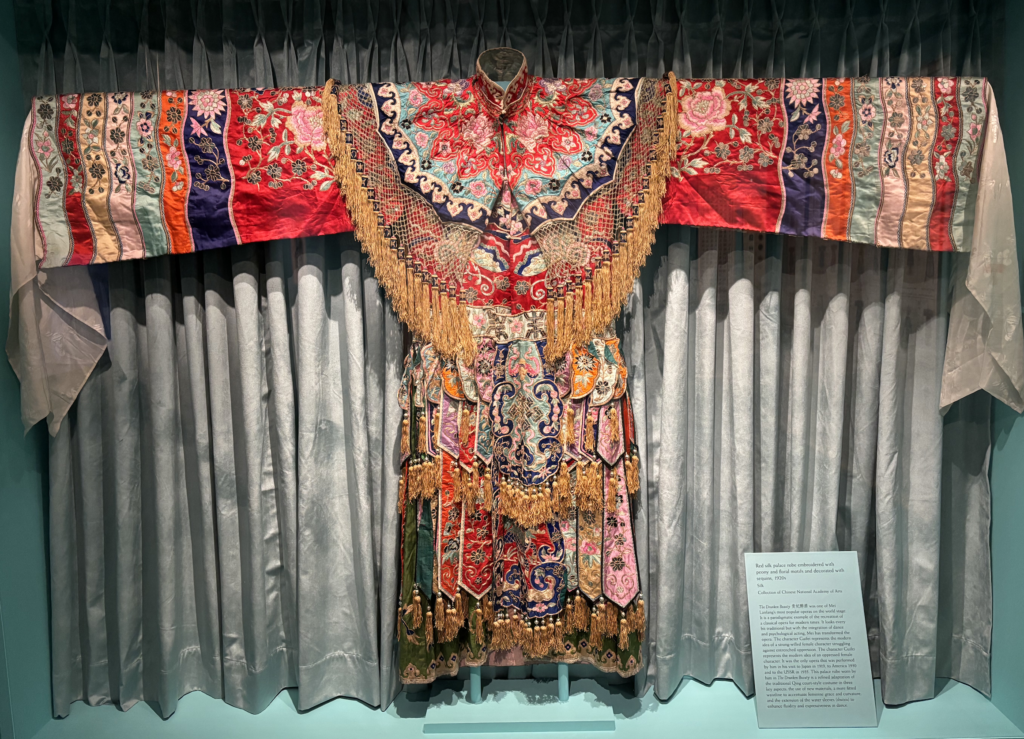
Image – Red silk palace robe embroidered with peony and floral motifs 1920s, from The Drunken Beauty – refined adaptation of traditional Qing court-style costume with extended water sleeves to enhance fluidity in dance (photo: Margaret Hetherman, courtesy of China Institute of America).
Mei Lanfang is sometimes described, using the Western vernacular of his day, as a “female impersonator.” While some modern admirers might interpret his stage persona as suggesting he was transgender, Yeh explains that he did not identify as such. “There was quite a fluid identity, especially at that time,” the scholar tells GO. And sexually, he enjoyed the best of both worlds.
Mei had three wives. Simultaneously. The first came from a family of opera background, but after their two children died and and Wang Minghua could have no more, with her blessing, Mei married a second wife to continue the lineage. He wed Fu Zhifang with whom he had nine children (four surviving to adulthood). Later, he secretly married Meng Xiaodong, an opera star who played the elderly male laosheng roles.
“That marriage broke down because the second wife would not allow this marriage to stand,” Dr. Yeh notes. Mei also enjoyed the intimate company of other men. Sexual fluidity “was never a big issue” traditionally in China, the scholar says, until the 20th century rolled in, and with it, Christianity and Western civilization.
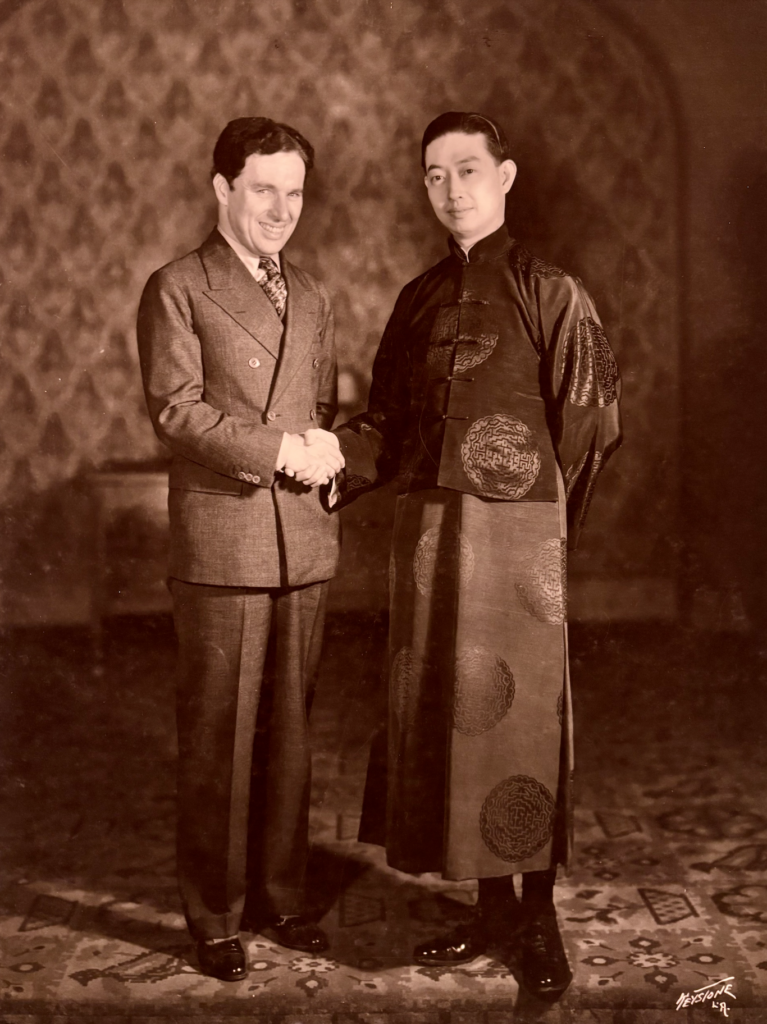
Photo: Actor Charlie Chaplin and Mei Lanfang, Los Angeles, 1930 (China Institute of America)
Mei is credited with reforming and modernizing Peking opera, preserving traditional techniques but incorporating the new. According to Dr. Wang Kui, President of the Chinese Opera Society, he accomplished this through new performances of old plays, new plays in modern costumes, and new plays in classic costumes. The characters he developed ranged from the coquettish, to the moral and the matriarch.
Mei elevated dance movement in Peking opera, with an emphasis on fluidity and expression. His ancient-style (guzhuang) costumes, with their water sleeves, were designed with his brand of motion in mind.
Mei also blended martial arts into his dance, creating “every single movement from poetry and sentiment,” says Dr. Yeh.
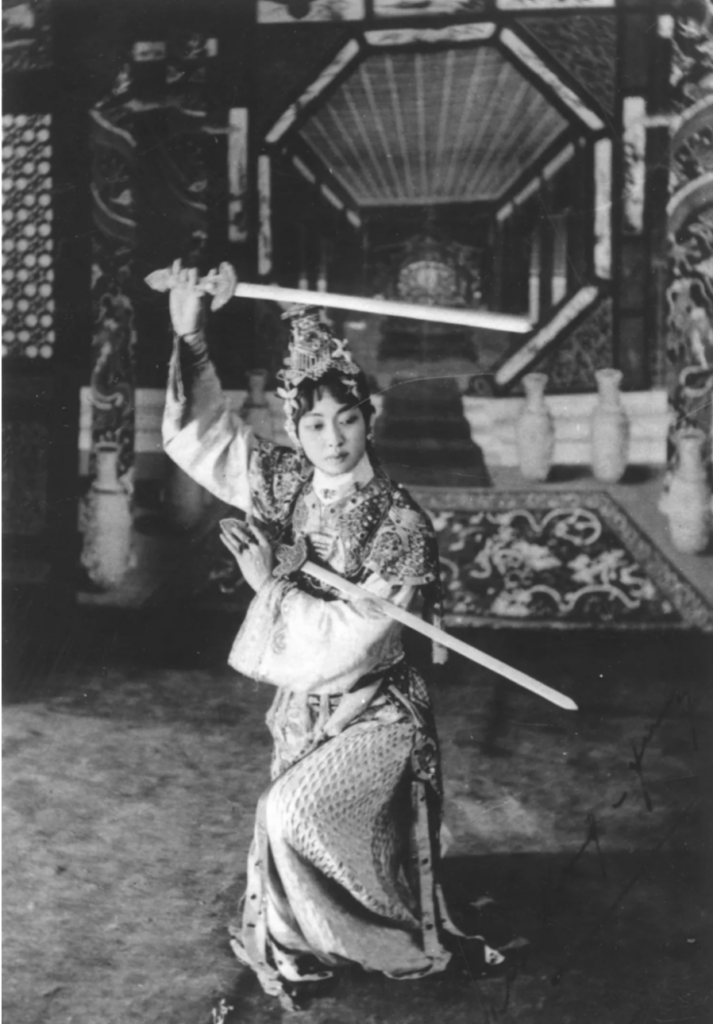
Photograph of Mei Lanfang Performing Farewell My Concubine, 1930, collection of Chinese National Academy of Arts.
“The Dancing Goddess – Mei Lanfang in America” exhibition runs March 12 through July 12, 2026 and marks the 100th anniversary of China and the 60th anniversary of China Institute Gallery. China Institute of America is located at 100 Washington Street, New York, NY.