

Black Lesbian Archivist Named NYC’s New Records Commissioner
New York City taps longtime archivist Shawn(ta) Smith-Cruz to lead its records department, marking a major moment for Black lesbian visibility.
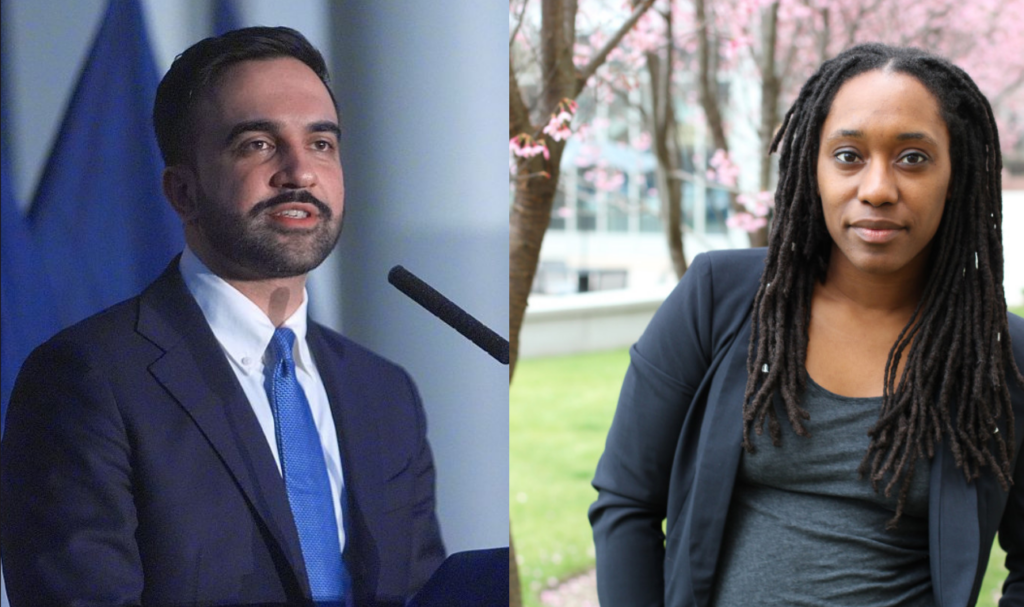
Featured Images: Mamdani, Photo by Selcuk Acar/Anadolu via Getty Images; Smith-Cruz, Photo by Erin Burns Courtesy of Smith-Cruz
Lesbian Visibility Week was filled with reminders that our love has always been worth seeing, protecting, and celebrating out loud. We are, simply, the blueprint. And even though the week has come to an end, let’s take a moment to sit with one of its standout highlights.
On April 22, New York City Mayor Zohran Mamdani named Shawn(ta) Smith-Cruz as commissioner of the New York City Department of Records and Information Services (DORIS), putting a Black lesbian archivist in charge of how New York City preserves its history.
And Smith-Cruz? She’s not new to this; she is very much true to this.
With almost 20 years of experience across academic, public, and community-based archives, Smith-Cruz has built a career rooted in access and equity. Most recently, she served as Dean of the Barnard Library, and her resume reads like a masterclass in lesbian excellence: leadership roles at New York University, the CUNY Graduate Center, and the Brooklyn Public Library. She has a history of deep-rooted community work through the Lesbian Herstory Archives, where she spent years preserving lesbian history from the ground up.
Smith-Cruz served as an editor of Sinister Wisdom, a lesbian literary and art journal founded in 1976, and a cofounder of queer BIPOC peer networking initiative, Fridays in May.
But this appointment isn’t just about an impressive resume—it’s about power. Particularly, who gets to decide what is remembered.
“We have such a rich New York City history when it comes to Stonewall in particular,” Smith-Cruz told The Advocate, adding that preserving it means ensuring that not only well-known groups but also “other groups and other people whose voices and names were not documented or heard” are included.
In her new role, she’ll oversee everything from municipal archives to public records requests—work that might sound technical but is, in reality, deeply political, especially at a time when access to information and the preservation of marginalized histories are under increasing scrutiny.
“Providing access to government records, documents, and data is our municipal responsibility,” Smith-Cruz said, adding that the city’s historical record must reflect “our many communities.”
Because visibility isn’t just about being seen, it’s about being documented, preserved, and protected long after the moment passes. And if last week proved anything, it’s that while Lesbian Visibility Week may end, the work and the impact very much do not.