

AI Is Failing LGBTQ+ People by Recommending Conversion Therapy and Storing Private Questions: Report
GLAAD’s new report documents just how AI systems are putting queer communities in harm’s way and what companies need to do to fix it.
The LGBTQ+ advocacy group GLAAD released a new report Wednesday, finding that artificial intelligence is harming LGBTQ+ people.
“Build for Everyone: A Framework for LGBTQ Representation and Safety in AI,” is the group’s first comprehensive examination of how AI systems impact LGBTQ+ people across technology, ranging from how AI models are trained to how AI systems moderate content and handle sensitive personal data.
As AI becomes more and more entangled in everyday use, GLAAD found that AI systems often perpetuate harmful stereotypes, echo discriminatory misrepresentation, and more.
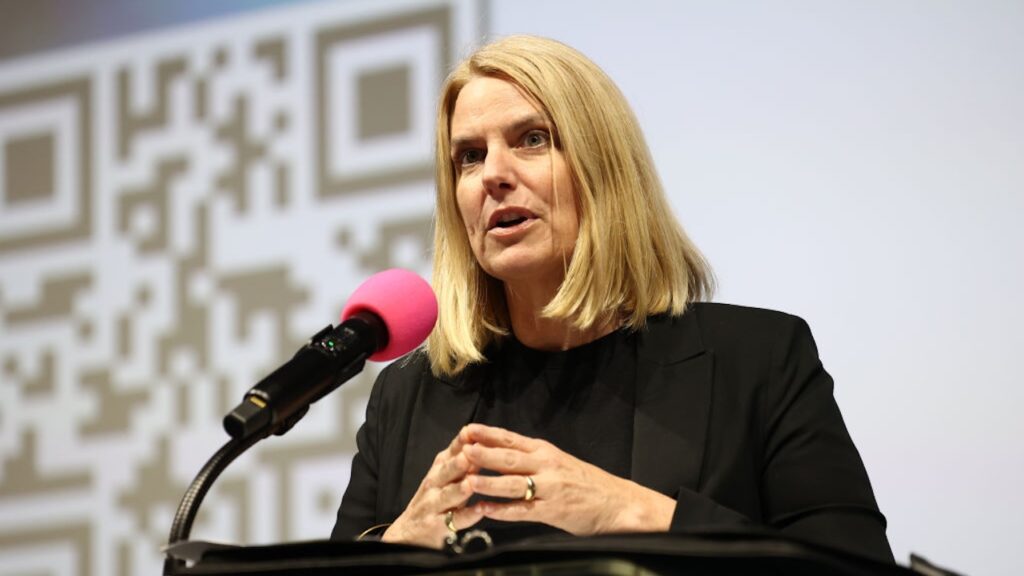
“Neutrality is no longer an option,” GLAAD president and CEO Sarah Kate Ellis said in the report. “AI systems trained on data that wrongfully positions LGBTQ lives as ‘fringe’ or treats our equal rights as ‘controversial,’ or that fail to catch sophisticated disinformation about LGBTQ people, threaten our health, safety, and civil rights.”
Those who worked on the report say the interconnectedness of the harms was somewhat surprising.
“We went in expecting to document distinct problems (like biased training data and content moderation failures) but what we found is a cascading effect. A small number of foundation models power thousands of downstream applications, so a single bias embedded at the training stage can ripple across the entire online ecosystem,” Leanna Garfield, senior manager of GLAAD’s social media safety program, told GO.
Garfield added that another surprising finding was the scale of data privacy risk.
“People are sharing incredibly intimate details with AI chatbots — questions about their sexuality, their gender identity, coming out, health concerns like HIV — and most don’t realize that many major AI companies are storing those conversations indefinitely, often by default.”
She added: “It’s important that LGBTQ folks who use AI have awareness about this so they can make informed choices.”
AI Promotes Conversion Therapy
Among the report’s most alarming findings is that Facebook and Instagram’s parent company Meta has an AI model called Llama 4 that previously recommended the discredited and harmful practice of so-called conversion therapy.
GLAAD notes that this is even with Meta’s own community guidelines forbidding content that offers products or services aimed at changing a person’s sexual orientation or gender identity.
Concerns Over AI and Privacy
The report also flags data privacy as a particular danger for LGBTQ+ users since people may share very intimate questions about their sexuality or gender identity with an AI chatbot. AI companies likely store these conversations indefinitely, according to a Stanford University study cited by GLAAD.
Around the world, 60 countries criminalize same-sex relationships, so LGBTQ+ people are then in danger of being found if these governments obtain the information held by these companies. The group warns that in the U.S., such information could be used to continue to persecute trans people.
Suppression of LGBTQ+ Topics and a Moderation Problem
Social media platforms such as Facebook, Instagram, YouTube, and TikTok have reportedly shadowbanned and demonitized accounts and content due to AI moderators. That happens while anti-LGBTQ+ content continues to grow. GLAAD states that while AI could be used to moderate hateful content, its lack of human oversight is an issue.
What GLAAD Recommends to AI Companies
GLAAD’s recommendations are specific. The organization calls on AI developers to ensure accurate LGBTQ+ representation in training data, audit agentic AI systems (which are the tools that autonomously make decisions about loans, job applications, and personal data) to prevent automated discrimination, maintain human oversight in content moderation, adopt strict data minimization practices to protect privacy, and build formal partnerships with civil society organizations and LGBTQ+ subject experts.
“While the conversation can make the AI-powered future seem inevitable, there is still time to direct the technology,” GLAAD vice president of research Brandon Grabowski said in a release. “How safe it is, how accurate its answers are, how appropriate its actions are, and whether the technology is a net-positive or a net-harm to society.”
The report, GLAAD hopes, will shine a light on the steps companies need to take to protect some of their most marginalized users.
“The impacts we document are addressable. What’s been missing is a clear, comprehensive framework that connects the problems to actionable solutions. That’s what Build for Everyone helps provide,” Garfield said.