

LGBTQ History Month: 31 Queer Icons You Should Know

Activists, artists, and icons who refused to play by the rules—and in doing so, transformed music, politics, and society forever.
Featured Image: Frida Kahlo. Credit Bettmann via Getty.
In 1994, Rodney Wilson made history as Missouri’s first openly gay public school teacher—and as the founder of LGBTQ History Month. His vision was simple yet powerful: a month of reflection and recognition that would grow organically, much like Women’s History and Black History month, with communities remembering and acting on its principles without the need for top-down leadership. Today, LGBTQ History Month is a chance to honor the trailblazers, visionaries, and everyday heroes who’ve shaped culture, politics, and art. In that spirit, we’ve highlighted 31 icons whose impact continues to resonate—not just this month but year-round.
Billy Jones-Hennin
A bisexual LGBT activist who cofounded the first national organization for Black lesbians and gays. He continued his advocacy for LGBT rights for four decades.
Peter Anastos
Choreographer and cofounder of Les Ballet Trockadero de Monte Carlo, Anastos helped launch the all-male troupe in 1974 that hilariously parodied ballet classics. Emerging in the wake of Stonewall, the company used humor, drag, and dance to challenge gender norms on stage.
Becca Ballint
In 2023, Becca Ballint became both the first woman and out lesbian elected to represent Vermont in Congress. A Democrat in the House of Representatives, she’s already serving a second term and making history with every vote.
Colman Domingo
An acclaimed actor, playwright, and director, Colman Domingo has earned Emmy, Tony, and Oscar recognition for his powerful performances, such as portraying civil rights icon Bayard Rustin. The Afro-Latino star continues to stand as a proud gay icon of stage and screen.
Cecilia Gentili
Cecilia Gentili was a fierce advocate for trans people and sex workers, as well as a sharp policy leader and unforgettable performer. From Apicha Community Health Center to GMHC, her work changed the landscape of HIV/AIDS prevention and trans healthcare.
Sir Lady Java
Sir Lady Java was a groundbreaking Black trans entertainer of the 1960s and ‘70s. As the first out transgender person defended by the ACLU, she fought legal battles while dazzling Los Angeles with her comedy, dance, and music.
Ella Jenkins
Called the “First Lady of Children’s Music,” Ella Jenkins transformed childhood learning with her folk-inspired, interactive songs. Her influence shaped generations of children’s performers, while her joyful tunes reached millions through Sesame Street, Mister Rogers’ Neighborhood, and many more.
Chavela Vargas
A ranchera singer who defied tradition, Chavela Vargas sang unapologetically about women, refusing to change pronouns despite being ordered to. With her raspy voice, ponchos, tequila in one hand and a cigarette in the other, she became a queer cultural icon. She officially confirmed her lesbian identity at age 81 and revealed her alleged love affair with Frida Kahlo in her 2002 autobiography.
Frida Kahlo
Speaking of Frida Kahlo, the feminist and Mexican painter is known for her many works inspired by the nature and artifacts of Mexico. She challenged societal norms at the time by being an openly bisexual woman with a fearless, gender-nonconforming presentation.
Alice Walker
The Pulitzer Prize-winning author of The Color Purple, Alice Walker, is a bisexual writer and activist whose work has redefined American literature. She proceeds to challenge norms around race, gender, and sexuality through her art and activism.
Angie Xtravaganza
As mother of the legendary House of Xtravaganza, Angie became a ballroom icon and the first Latina to hold such a position. She uplifted trans women, queer Latin communities, and ballroom culture, leaving behind a legacy of fierce leadership and love.
Alan Turing
A mathematical genius, Alan Turing cracked Nazi Germany’s Enigma code during World War II, changing the course of history. Persecuted for being gay, he’s now remembered as both a father of modern computing and a martyr of LGBTQ+ injustice.
Oliver Sipple
Vietnam War veteran Oliver Sipple saved President Gerald Ford’s life by stopping the assassination attempt in 1975. Outed by the press afterward, his story highlights both the courage and the unfair treatment of gay men in public life.
Ma Rainey
“Mother of the Blues” Ma Rainey sang boldly about her loves and desires as a bisexual Black woman in the early 1900s. Her raw lyrics and unapologetic presence paved the way for generations of queer musicians.
Christine Jorgensen
Christine Jorgensen became the first widely known trans woman in America after undergoing gender-affirming surgery in the early 1950s. She used her fame to advocate for trans rights while building a career as an actress, singer, and performer.
June Chan
June Chan co-founded Asian Lesbians of the East Coast (ALOEC) in 1983, creating vital safe havens for queer Asian women in response to the overly white, male-led, LGBTQ+ organizations at the time. Her work offered representation and community at a time when few others did.
Briana Simone Jones
Black lesbian feminist scholar Briana Simone Jones is known for editing Mouths of Rain: An Anthology of Black Lesbian Thought. As both an academic and cultural voice, she amplifies the words and wisdom of Black queer women—past and present.
James Baldwin
American writer and civil rights activist James Baldwin was one of the first Black writers to openly include queer themes and experiences in his fiction, such as in Giovanni’s Room, which was highly controversial but advanced the discourse on sexuality.
Oscar Wilde
An Irish author, poet, and playwright, best known for his novel The Picture of Dorian Gray. He was imprisoned for being gay in a very public trial. This transformed him into a powerful symbol and martyr for the gay and civil liberties movements, inspiring activism and advocacy for decades.
Stormé DeLarverie
A butch lesbian and drag king whose scuffle with police is widely believed to be the spark that ignited the Stonewall uprising. DeLarverie was known to “patrol the streets of Greenwich Village,” according to the National Park Service, protecting members of the LGBTQ+ community.
Sarah McBride
In 2020, McBride became the first openly transgender person elected as a State Senator in the United States. She represented Delaware in the State Senate until 2025, when she took office as Delaware’s sole, at-large representative in Congress.
Marsha P. Johnson
Johnson was a gay liberation activist and self-identified drag queen. An outspoken advocate for gay rights, she is known as one of the prominent figures in the 1969 Stonewall uprising and was a co-founder of STAR (Street Transvestite Action Revolutionaries) alongside Sylvia Rivera.
Leslie Feinberg
Feinberg was a butch lesbian and transgender activist whose work influenced much of the terminology and awareness around gender studies. Feinberg’s 1993 novel, Stone Butch Blues, was a groundbreaking work on gender, winning Feinberg an American Library Association Stonewall Book Award and a Lambda Literary Award.
Allan Horsfall
Horsfall was a British gay rights campaigner and founder of the Campaign for Homosexual Equality. The CHE was a membership organization in the United Kingdom with a stated aim from 1969 to promote legal and social equality for lesbians, gay men, and bisexuals in England and Wales.
Edith Windsor
Following the death of her wife, Windsor filed a lawsuit against the federal government, seeking a refund after having to pay federal estate taxes on her inheritance of her wife’s estate because DOMA singled out legally married same-sex couples. She won, and her case, which overturned Section 3 of the Defense of Marriage Act, was considered a landmark legal victory for the same-sex marriage movement in the United States.
Sappho
Sappho was a poet from the Greek island Lesbos, well known as a symbol of love and desire between women. The words ‘sapphic’ and ‘lesbian’ derive from her name and that of her home island, respectively.
Harper Steele
Steele, a writer and former Saturday Night Live head writer, came out as transgender in 2022 at the age of 61. After coming out to long-time friend Will Ferrell about her gender transition, Ferrell decided he should learn more about the trans community. The two decided to undertake and document a cross-country road trip in the 2024 award-winning documentary Will & Harper.
Diana Taurasi
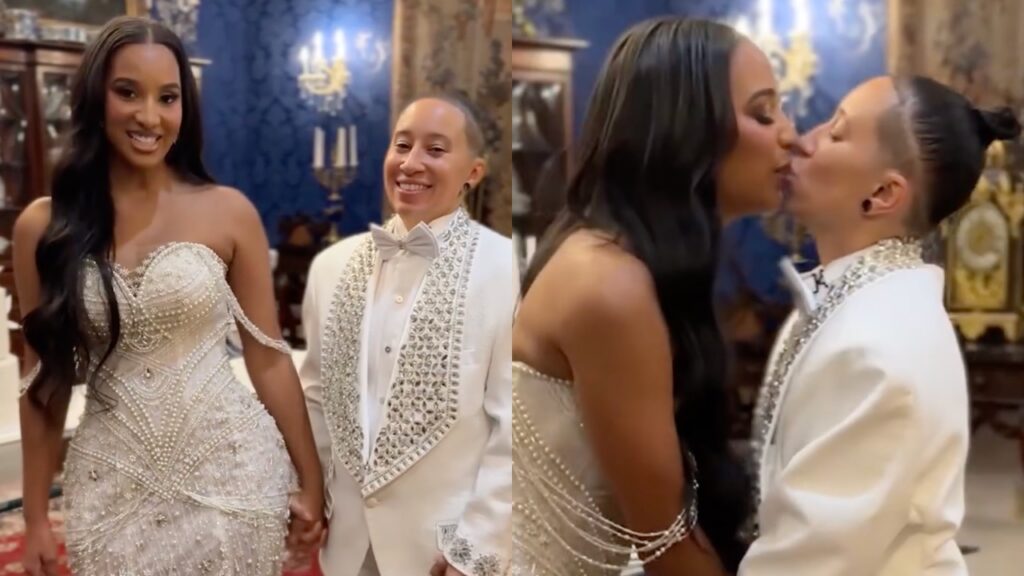
Widely recognized as one of the greatest women’s basketball players ever, Taurasi played for the WNBA for 20 seasons, spending her entire career with the Phoenix Mercury. She is a winner of 6 Olympic gold medals and is currently married to her former teammate, Penny Taylor.
Amelio Robles Ávila
As a colonel during the Mexican Revolution, Robles was assigned female at birth but lived openly as a man from the age of 24 until his death at age 95. Robles joined the army in 1911 or 1912 and gained the respect of peers and superiors as a capable military leader, and was eventually given his own command in 1918.
Chris Smith
In 1984, Smith became the first openly gay male British Member of Parliament, and in 2005, the first Member of Parliament to acknowledge that he is HIV positive. During a rally in Rugby, Warwickshire, against a possible ban on gay employees by the town council, Smith began his speech: “Good afternoon, I’m Chris Smith, I’m the Labour MP for Islington South and Finsbury, and I’m gay.” He immediately received a standing ovation from most of the audience.
Nobuko Yoshiya
Yoshiya was a Japanese novelist active in the Taishō and Shōwa periods in Japan. She was one of modern Japan’s most commercially successful and prolific writers, specializing in serialized romance novels and fiction for adolescent girls, as well as being a pioneer in Japanese lesbian literature.