

Quinn Shephard’s ‘The Body’ Feels Like a Sapphic Coming-of-Age Revelation
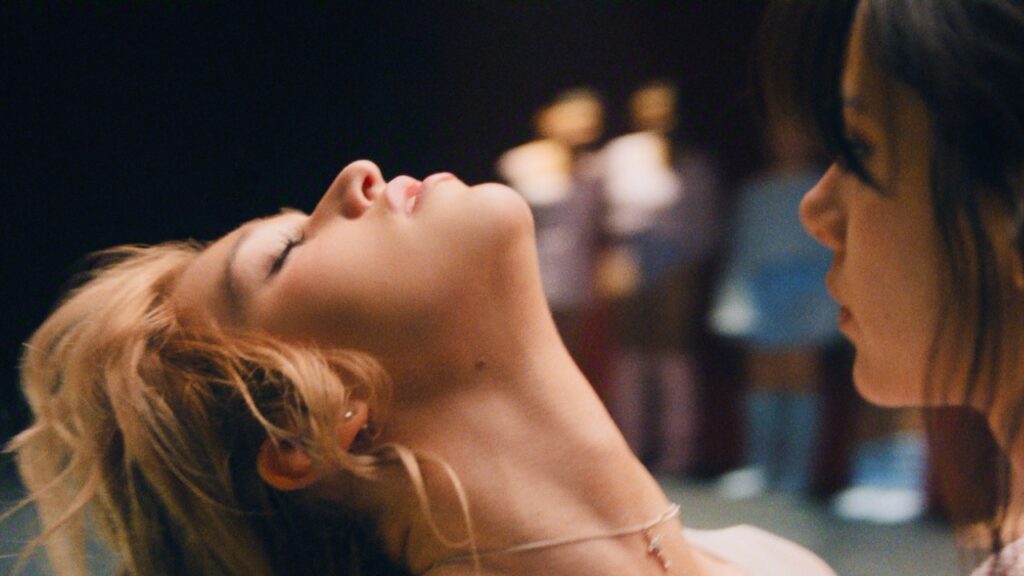
The creator and executive producer of Netflix’s new thriller open up about queer desire, Catholic guilt, and the fandom already falling hard for the series.
Quinn Shephard, the out actor, writer, director, and producer behind The Body, once likened girlhood and queer coming of age to a religious experience. It’s an apt comparison: the dizzying rush of first desire, the feeling of being simultaneously more in your body than ever and somehow outside of it, the realization that something bigger and life-altering is unfolding. It’s also the foundation for one hell of a sapphic coming-of-age thriller, The Body. It arrives on Netflix this week in all its glory and blasphemy.
“It wasn’t like I had that in my head and then I decided to write the show. It’s more like I wrote the show getting at a feeling in my gut, and then as I developed it, I kind of realized that that’s what that feeling was,” Shephard tells GO.
While that realization might have been a discovery for Shephard along the way, the theme comes through strongly from the very start of the series. The Body is set in 2004 at a Catholic school where the student body is ruled by the Lions, a dance troupe headed by the “it girl” Anya (Kristina Bogic) and her best friend, Elise (Sara Boustany), whose friendship is already crackling with not-so-repressed sapphic desire and yearning.
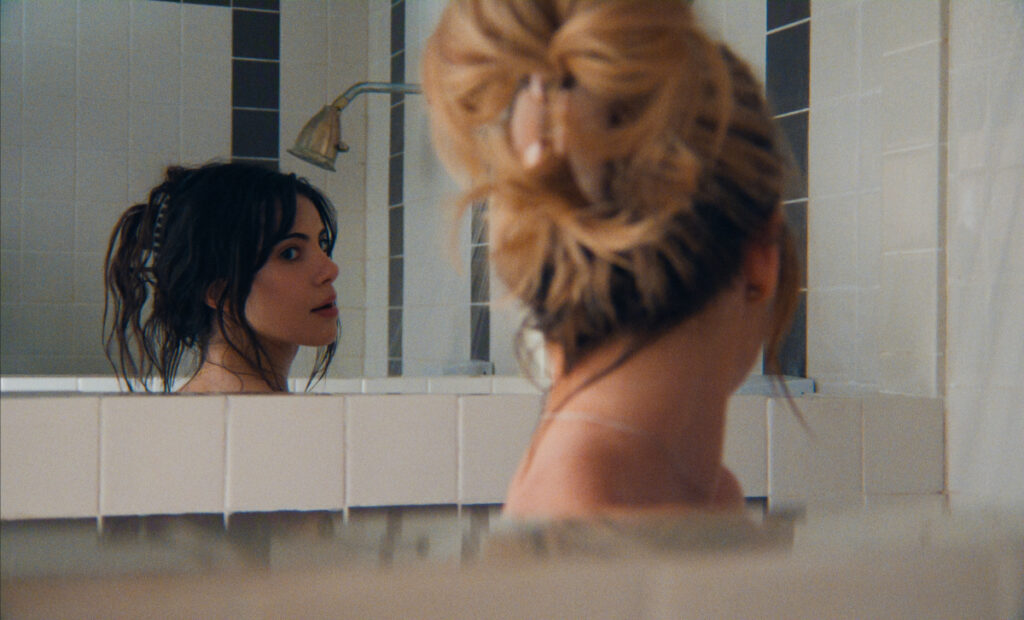
As the series opens, the Lions are nearing their regional championship, but one of their members has been disqualified due to an injury, leaving the troupe auditioning new dancers. The devout Grace (Sofia Wylie) seems like the obvious choice, but a new girl, Lisbeth (Geena Meszaros), a previously homeschooled student, also attempts to join the troupe and insinuate herself into Anya’s life. When a team initiation goes wrong, Lisbeth gets her chance to become invaluable to Anya as her co-conspirator, setting in motion a crucible of social contagion.
The Body explores faith as much as the emotional intensity of self-discovery, placing the complicated experience of teenage girlhood at the intersection of religion, ritual, and hysteria. But as Shephard explains, its exploration of faith goes beyond organized religion.
Shephard grew up with considerable exposure to religion. Half of her family, she says, was “incredibly religious,” and witnessing those rites and traditions struck a chord with her at a young age. “I didn’t understand it, but I was fascinated by it,” she recalls. “The experience that I remember witnessing when I was a kid in church, of people crying, singing, dancing, the things that would happen when you’re in a church. That ecstatic expression was also something that I felt. That core feeling in my gut was something that I experienced at other times in my life that had nothing to do with God in the sense of organized religion, but as I made certain discoveries about myself.”
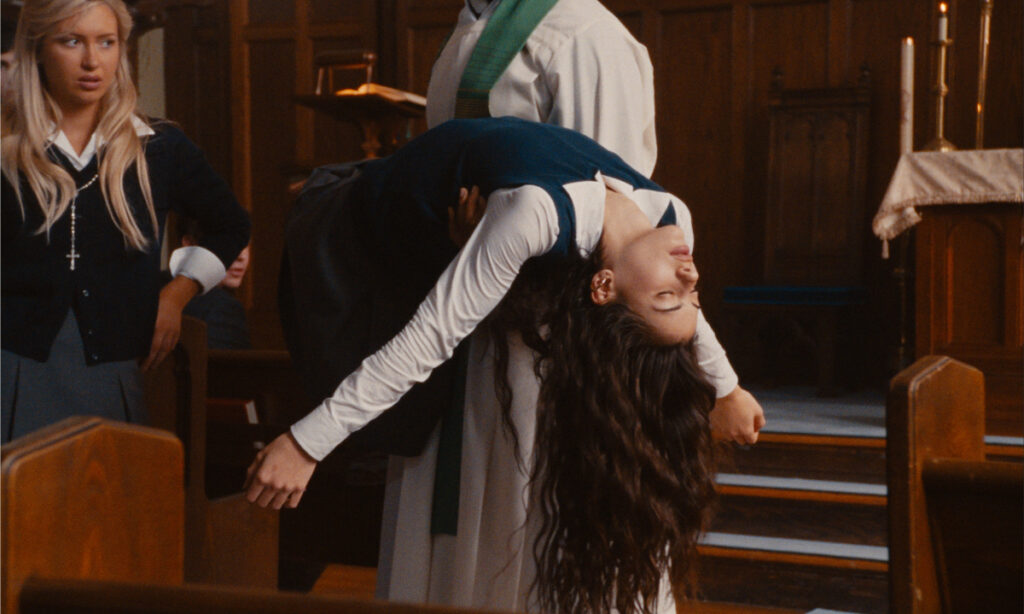
It was that connection — the shared human experience she witnessed in church and its similarity to the “confusion and shame and desire and hierarchy” she also encountered simply by being a teenage girl — that became the kernel of an idea that would eventually develop into The Body, years later.
Unsurprisingly, Shephard has called the series her most personal project to date, and that emotional authenticity extends to its exploration of queer sexuality. “Anya and Elise are like an amalgamation of not just my own experiences, but experiences of a lot of people who worked on the show [and] of my friends who shared details from their lives. I was like, ‘Is that cool if I put this in my show?’” Shephard jokes.
In addition to its sexually repressive setting, the series takes place in 2004, before it was as easy to find queer communities and people whose experiences mirrored your own as it is today. This is the world of AOL Instant Messenger and Sidekick flip phones, a liminal space between an analog world and today’s intensely interconnected one.
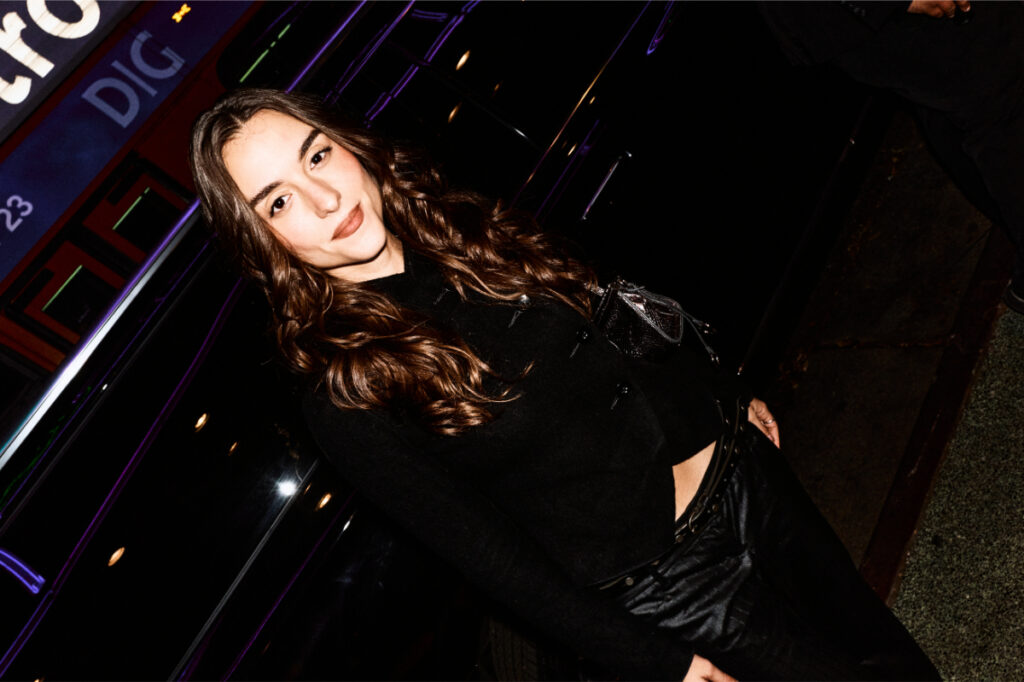
Setting the show in the early 2000s reflects the world Shephard was navigating when she first began writing the story. “I wrote the first version of this show the first year that I was coming out, even realizing I was queer in a definable way,” she recalls. “It was quite a different world 10 years ago than it is now.”
“There was obviously a lot more explicitness with regards to othering,” The Body’s executive producer, Gina Gammell, tells GO. “It was more isolating because I feel there were quite literally not as many touch points. You can find whole communities online now. Whereas then, you’re kind of alone and maybe on your blog or something.”
Today, there’s a thriving community of queer women connecting, and to say they’ve had their eye on The Body from the moment it was announced is an understatement. Before a single episode dropped, the show had already garnered a passionate fan base that began forensically dissecting the trailers, developing theories, and, of course, making steamy fan edits. They haven’t gone unnoticed. “They’re hot fire, and people should keep going. Yeah, keep making them. We love them,” says Gammell.
“It speaks to something that we are, quite frankly, really tickled by,” she continues. “Our cast is so f*cking amazing, and … I think that the fact that we had so much fun making it, there’s something in the DNA of the show that is a purity to like the love of the craft and like the joy … and the feeling we had making it is somehow coming through the screen.”
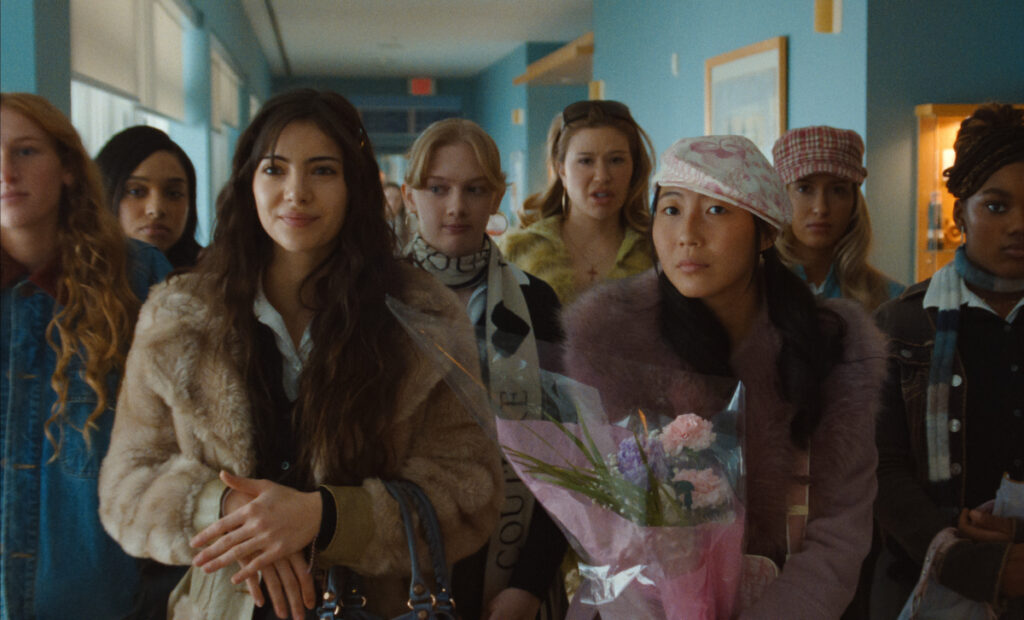
“It’s crazy how much people seem to understand [about] the cast dynamics and the character dynamics,” says Shephard. “I literally have been sent stuff where people are imitating what a group chat between the girls would be like, and they’ve got some of the personalities down of our supporting cast that are based on a line in a trailer and like one interview, and I’ve never experienced anything like that with anything I’ve made.”
This passionate response, Shephard points out, flies in the face of mainstream Hollywood executive thinking. “Listen, we’re at a time where a lot of people will tell you it’s incredibly hard to get something original made. Not only that, something original [with an] ensemble of young women, mostly actors who are not, by industry standards, famous, and also you’d be like, ‘Oh, who knows if we can get this made.’ So the fact that we have so much support is just … awesome.”
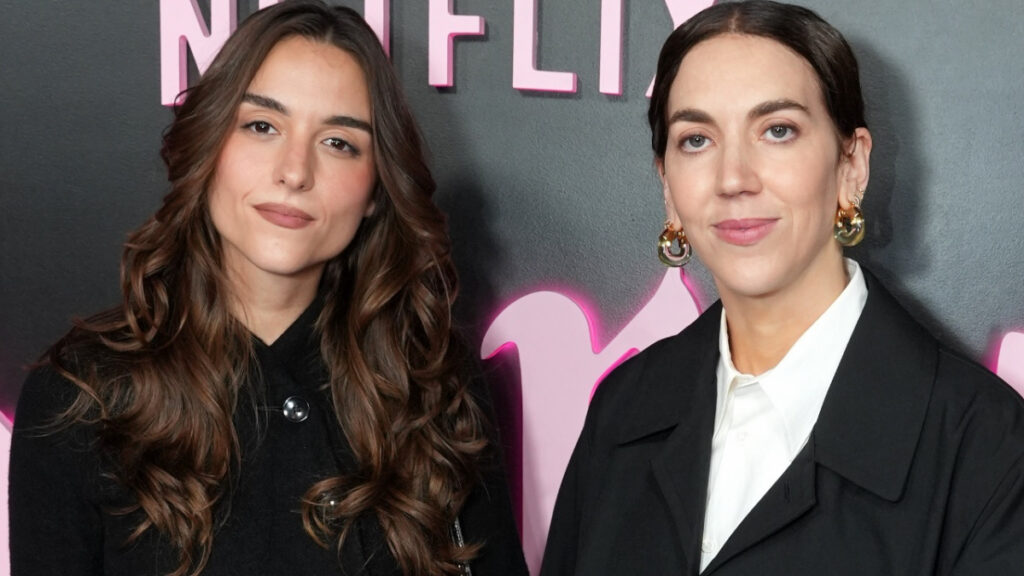
There’s also the power of seeing your feelings, emotions, and experiences reflected on screen. In creating that experience for herself, Shephard is now paying it forward. “I think there’s some universal experiences of young queer confused girls, that you actually discover a lot of us have very similar experiences,” she says.
It also doesn’t hurt that the show is an enormous amount of fun. It’s dramatic and strange, occasionally quite creepy, delightfully over-the-top, and oh-so sapphic. The Body has all the makings of a modern sapphic classic, and we hope with all our might that this is just the opening chapter in a much longer story of self-discovery and intrigue.
All eight episodes of The Body season one (of hopefully many) are now streaming on Netflix.