

Meet Chef Haley: Your New Favorite Queer Chef
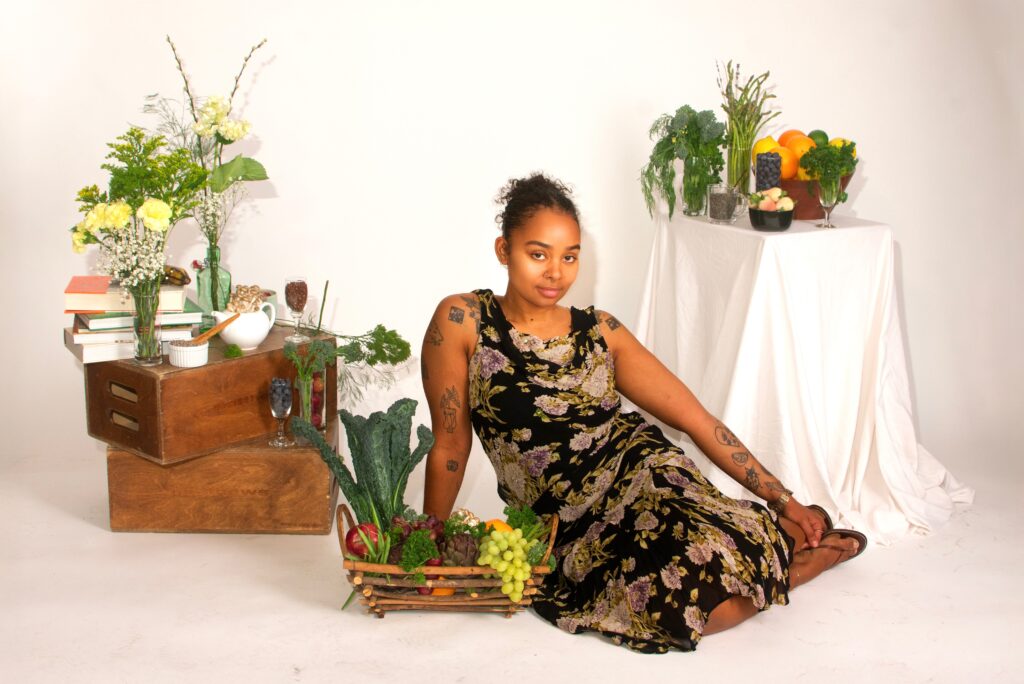
At Long Count, a dimly lit wine bar in Alphabet City, Chef Haley is building a kitchen rooted in care, not cruelty—one perfectly balanced plate at a time.
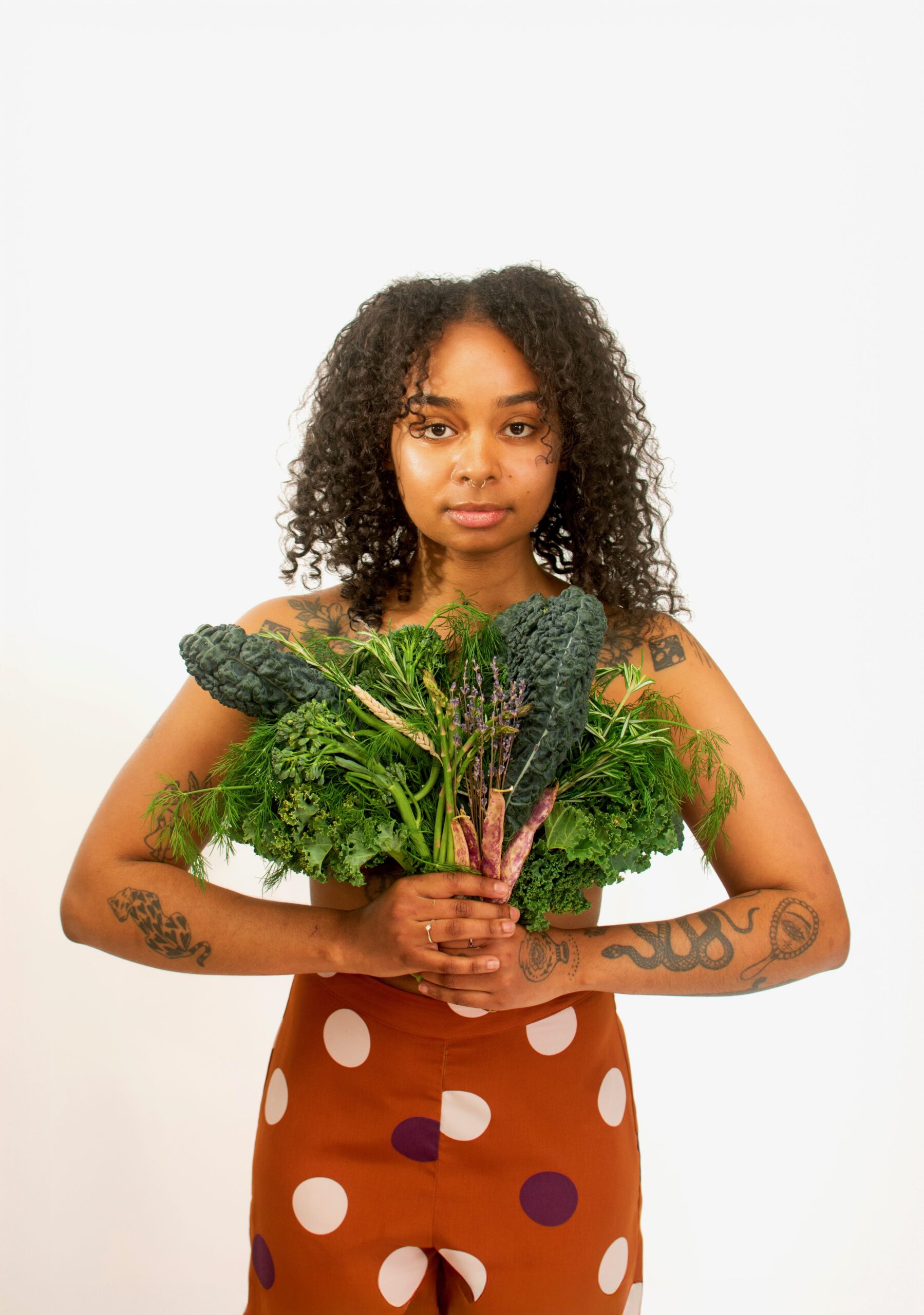
Featured Image: Photo: Christine Ashley, Food Stylist: Janani Venkataramanan, Stylist: Mighty Thrift
The first thing placed in front of me is a chilled glass of Hungarian red—mineral, electric, a little floral—the kind of wine that makes you sit up straighter. It’s bright without being loud, crisp but not sharp, like it knows exactly who it is. The words trust me linger as it lands on the candlelit table.
I do.
One sip in and the room’s soft glow gets warmer.
In Alphabet City, where the streetlights hit just soft enough to make everyone look like the main character of their own indie film, Long Count glows like a secret. The wine bar is dimly lit, all flickering lanterns and warm amber bulbs. Dark wood lines the bar, while patterned tile floors stretch through the narrow room. Along one wall, deep purple panels streaked with gold veins glow under the low light, giving the space a slightly surreal warmth. Bottles of wine climb the shelves behind the bar, and a long marble counter runs nearly the length of the room. It’s intimate without feeling cramped—the kind of place where first dates stretch into second bottles and strangers lean in a little closer than they meant to.
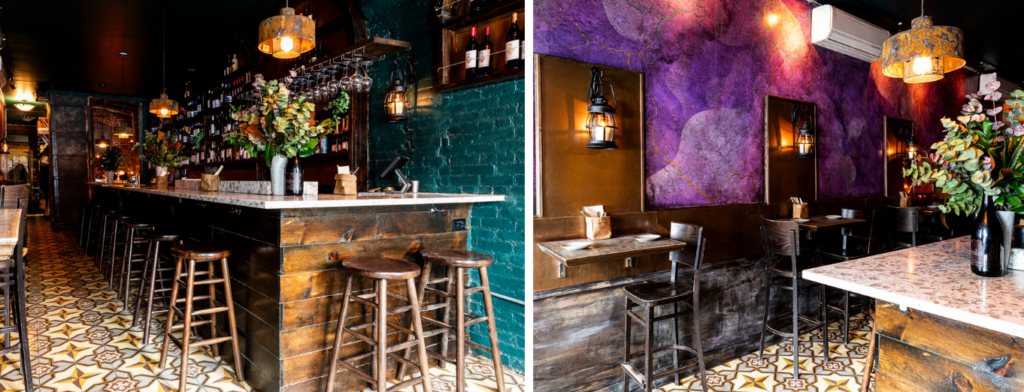
Long Count is a relatively new addition to the East Village dining scene, opened by restaurateur Ravi DeRossi’s Overthrow Hospitality group in the space that once housed the beloved vegan wine bar Soda Club. But instead of pastas and late-night crowds, the new concept leans into something more patient: age. Every wine poured by the glass here is at least ten years old.
Partner and wine director Drew Brady built the list by tracking down overlooked back vintages from importer cellars and distributor warehouses—bottles that matured into something more complex over time. The idea is to make vintage wine feel less intimidating and more accessible.
The kitchen follows a similar philosophy.
Nearly everything on the menu leans into fermentation, preservation, or aging. Kimchi, vinegars, miso, infused oils, and preserved ingredients appear throughout the dishes.
Even the fries are lacto-fermented. The entire menu is vegan, though the flavors are bedded enough that the absence of meat and dairy feels irrelevant.
At the center of the kitchen is Executive Chef Haley Duren, 28, who has been with the Overthrow Hospitality group for two years and helped open Long Count when the restaurant debuted earlier this year. Originally from Albuquerque, New Mexico, she earned her associate degree in Advanced Baking and Pastry from Central New Mexico College before moving to New York City nearly a decade ago.
The first plate arrives: caraflex cabbage with fresh house-made kimchi and sesame seeds. The cabbage is tender but still structured, sweet enough to soften the sharp brightness of the kimchi. The fermentation adds a subtle funk that lingers just long enough before the sesame cuts through it.
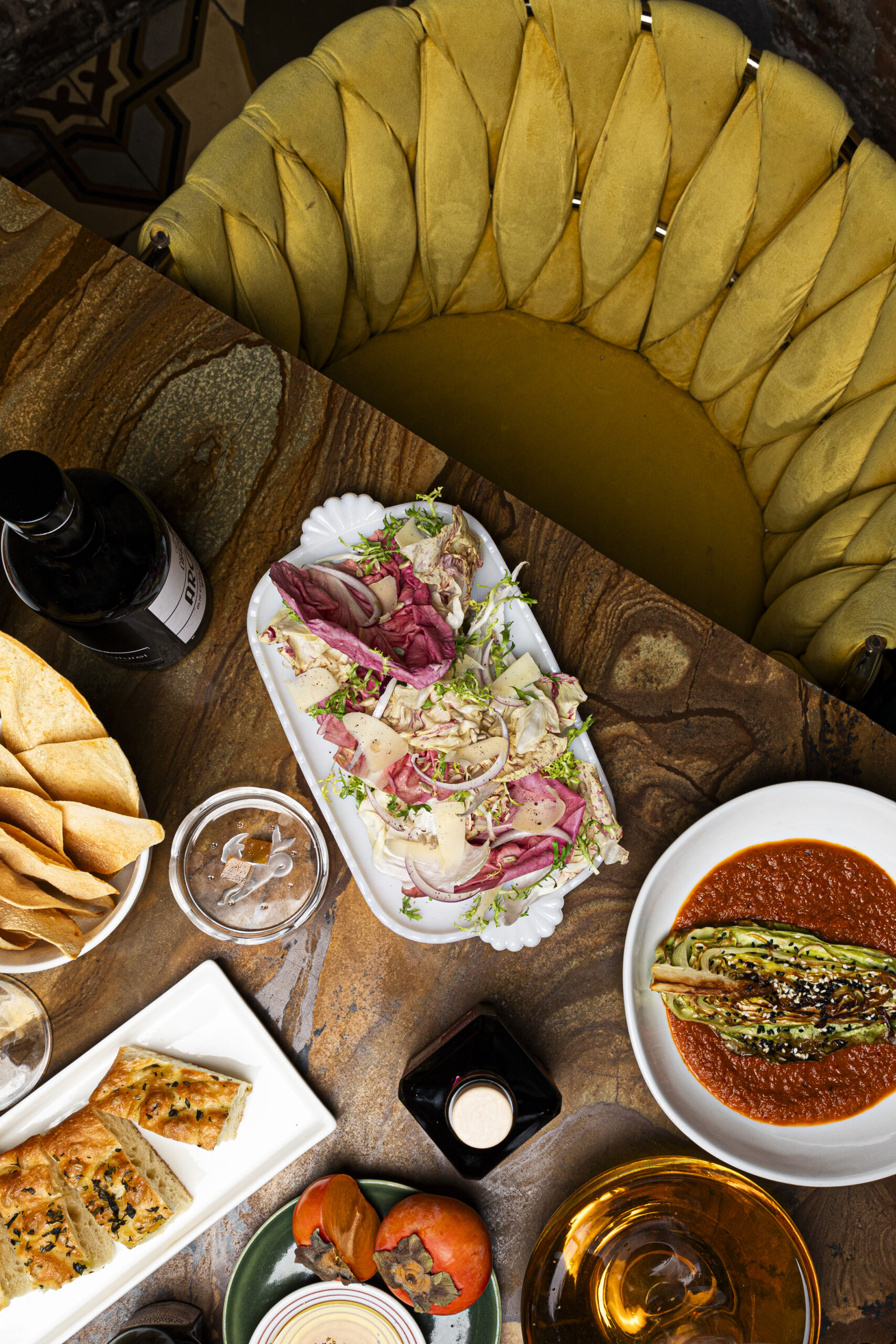
“This menu right now is super seasonal to winter,” Duren tells me. “Radicchio is one of the only lettuces that grow during the colder months. You really only see it around January and February, especially during harsh winters.”
Soon, the menu will shift entirely.
“Coming in the spring, I’m switching the menu,” she says. “Spring vegetables start coming in, and lettuces like romaine or baby gem are some of the first things to sprout.”
Much of the produce comes from local farms and the Union Square Greenmarket, which helps shape what appears on the menu.
“I get inspiration from seasonal produce, what produce I’m in love with at the moment, and cool techniques I want to try,” she says.
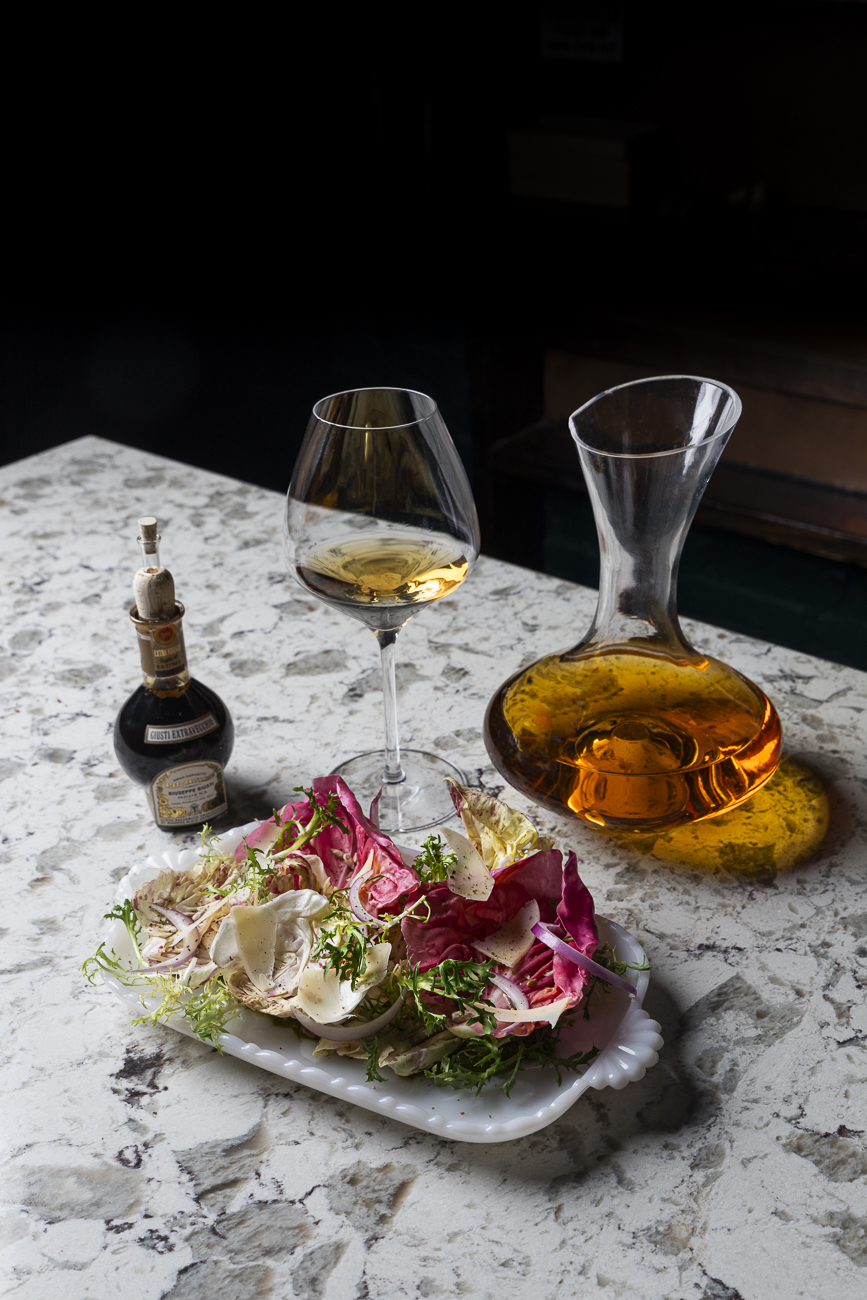
The next plate is her favorite on the current menu: radicchio salad. The burgundy leaves are glossed with tarragon vinaigrette and paired with a bright herb purée. The bitterness hits first, then softens under citrus and herbs.
“It actually made me like radicchio,” she laughed.
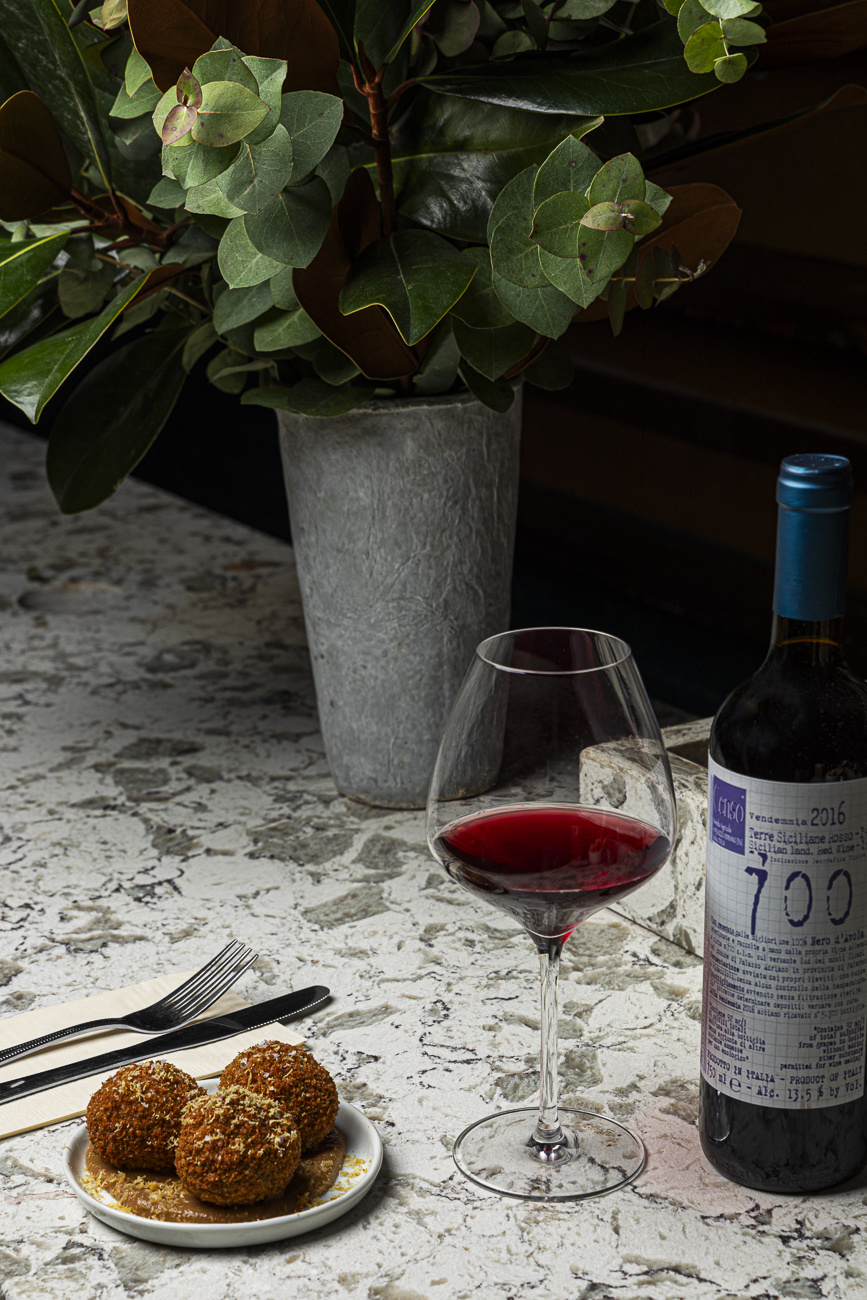
Other dishes move between snack and centerpiece. Golden arancini arrives filled with preserved truffle and paired with miso aioli and tempeh parmesan. Shiitake mushrooms come glazed in shoyu and porcini with fresh wasabi and chive blossoms. Even the simplest plates lean into acidity and depth—focaccia served with extra-virgin olive oil and persimmon vinegar, papadam dusted with salt and apple cider vinegar.
For Duren, cooking wasn’t always the plan.
At 20 years old, she was two semesters away from graduating with a bachelor’s degree in sports medicine at the University of New Mexico. “Everyone’s figuring out grad school plans,” she recalls. “And I was like, [I] don’t want to do this.” The decision felt seismic. “It felt like it was a little too late,” she says. “I was feeling a little lost.”
Cooking had always been there. “I was always the kid cooking from a very young age. I always knew I loved to cook.” Before enrolling in culinary school, she printed out copies of her resume and walked into restaurants across Albuquerque asking for work.
“I’d go in and say, ‘Hi, my name is Haley. I’m gonna go to culinary school. I want to work here. I’ve never worked in the kitchen, but let me in the back.’”
Finally, one restaurant said yes: Standard Diner, a now-closed Albuquerque spot where she began as a prep cook.
“And I started working there and I was like—oh my gosh. I actually really like this.”
While studying pastry and baking at community college, she continued working in kitchens, slowly climbing through nearly every position available: prep cook, line cook, pastry cook, eventually management.
Two weeks after graduating culinary school, she moved to New York. “My last semester I already had a ticket,” she says. “I was like—okay…I’m moving to New York City.”
She landed first in Flatbush, later moving to Bed-Stuy, where she still lives today. “I’ve only lived in two apartments since moving here,” she says. “Which feels like a miracle in New York.”
Over the next few years, she worked her way through kitchens across the city, building experience in both front-of-house and back-of-house roles. About four years ago she landed her first sous chef position.
“I actually thought I was a junior sous chef for a minute,” she says, laughing. “Then I looked at my workload and realized—oh. I’m just a regular sous chef.”
In November 2024, she was asked to take over the kitchen at the East Village restaurant Cadence as executive chef—her first time holding the title.
“When I completely took over, I wiped the whole [menu] and started out fresh,” she says.
Cadence later closed after being priced out of its building—“very New York City,” she says—but the experience solidified her confidence running a kitchen.
Now at Long Count, the kitchen is intentionally small. The entire team consists of just three people: Duren, Carmen, and Sean. “When you work on a really small team, it’s like—we all have to share the load,” she says.
Before every service, she cooks something many restaurants have abandoned: family meal.
“I make us food every day before we open,” she says. “Imagine going to a really busy shift on your feet for the next eight hours and you have nothing in your stomach.”
That sense of care reflects the kind of kitchen she wants to build—one that doesn’t replicate the environments she endured earlier in her career.
“The industry is really toxic,” she says plainly. “You think of a chef, you think of an older dude, and I’ve worked under a lot of older grown men.”
She’s seen harassment ignored and protected by the very people responsible for stopping it. Now that she’s the one in charge, she refuses to repeat that pattern.
She recalls firing a longtime colleague—someone brought into the restaurant from another location—after he made unwanted advances and hid inappropriate comments behind jokes directed at a coworker.
“She’s telling me she’s uncomfortable,” Duren says. “…obviously I’m going to listen to her.”
When confronted, he brushed it off.
“So I asked him, ‘What do you think I’m going to do right now?’”
“I think you’re going to fire me,” he said.
“Cool,” she replied. “Grab your stuff. Let’s go.”
“I don’t tolerate any of that,” she says. “That’s how you keep feeding the system.”
She’s also wary of the disciplinary systems many restaurants rely on. “I’ve seen [writeups] abused in a way to make [someone] quit,” she says. “Just giving [someone] a piece of paper and telling [them] they suck isn’t going to make [them] better.”
Instead, she focuses on teaching. “People learn differently. Sometimes you have to walk someone through something. Sometimes you record a technique so they can watch it later.”
Race, she notes, still shapes the structure of the industry. “This industry is built on the backs of immigrants and Black people,” she says. “But you still don’t see those people in positions of power.” Meanwhile, graduates from elite culinary schools often move up faster. “If some white kid comes from CIA (Culinary Institute of America), they’re [automatically] put on a path [towards becoming] a sous chef.”
As a Black woman in the kitchen, she says, respect rarely arrives automatically. “I have to fight for every ounce of it.”
Her queerness adds another layer—but not one she always chooses to foreground in professional spaces. Being a Black woman already places visible barriers in front of her, she explains, and sometimes she simply wants to come to work, cook, and leave.
After long services, she decompresses by blasting Megan Thee Stallion or Cardi B in her headphones. When she’s not cooking, she DJs at clubs across Brooklyn. And if she’s home, she’s likely with her dog, Kirby.
And when she’s in love? She cooks even harder.
“I’ve definitely used my cooking to woo people,” she says, laughing.
For one summer crush, she asked for their three favorite fruits and made a different dessert each week using them.
“So gay, I know.”
By the end of the meal, the Hungarian wine tastes different—rounder, softer—as if the food has unlocked something in it. Or maybe the room has simply grown warmer.
At the end of our conversation, I ask what she would tell queer Women of Color navigating hostile workplaces.
She pauses.
“I always tell myself: don’t let them dull your sparkle,” she says. “Why am I letting them make me cry? I’m full of life. I’m normally happy and bright.”
Then she leans forward slightly. “So don’t let anyone remove your spark. They shouldn’t be allowed to.”