

Lollygag, the Clown Prince of ‘King of Drag,’ Is Having the Last Laugh
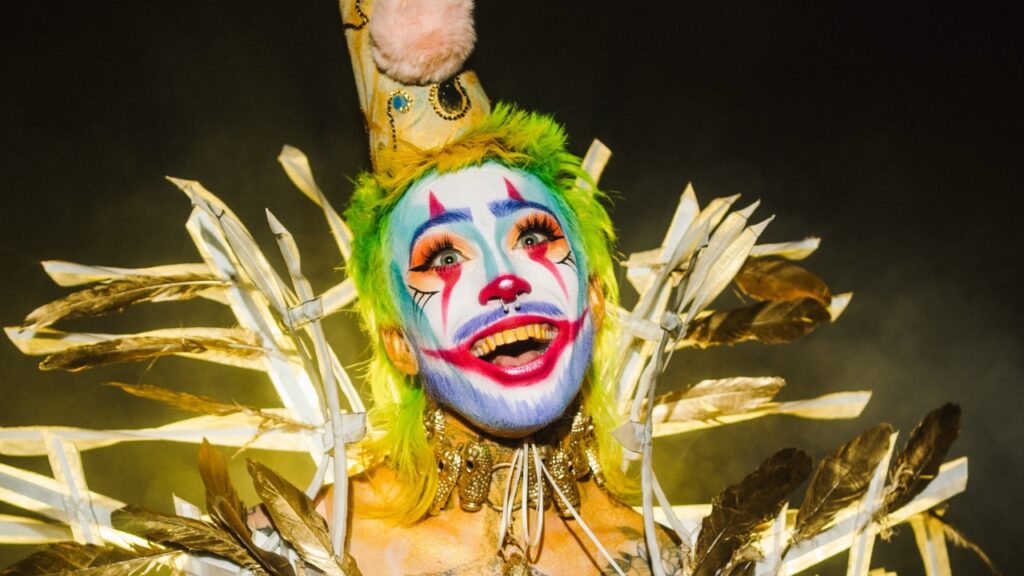
With movement, mischief, and an army of rubber chickens, Lollygag is redefining what it means to be a drag king.
The King of Drag kingdom has entered a new reign, and this year’s monarch is the crown prince of drag, Lollygag. The Brooklyn-based performer won over the judges and fandom with a distinctive mix of movement, absurdity, and gender fuckery — and a veritable army of rubber chickens. It’s exactly the kind of queerdo clown joy that could only be properly appreciated in the world of drag kinging.
“The clown allows for this idea of, like, all possibilities. It allows me to play in this way of, like, what is masculinity? … I think that the clown leads to, literally, all possibilities. … It opens the box. It turns the box into a circle,” Lollygag tells GO. “What even is masculinity? What are men’s clothes? I don’t know. It’s just fabric.”
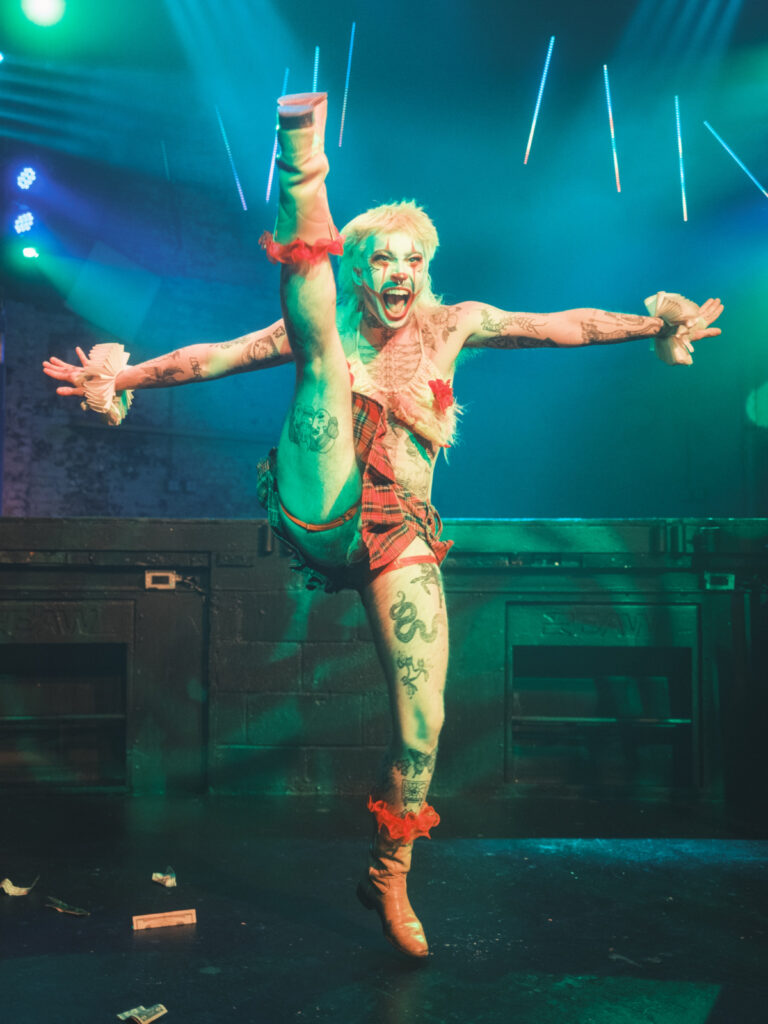
Lollygag’s journey to drag is just as unconventional as the art he creates onstage. Today, he’s a drag king, a tattoo artist, an illustrator, the creator of Lollyland, a solo clown show, and a member of Brooklyn’s Fagnet drag community. But before that, he was a competitive dancer, an art form that he came to realize would never let him fully express himself. “As a dancer, you are expected to be a body that is able to be molded into whatever it is that the choreographer wants from you,” he explains. “Drag gives me the permission to be whatever I want, and also tell whatever story I want… I actually have so much more self-expression in me. Why am I holding that back for another person’s vision? Like I have so much of my own.”
That shift also came with a realization that many of the other people he had once dreamed of working with were “not very kind people,” which ultimately killed his desire to collaborate with them artistically. “I was like, there’s, there’s not a real sense of community here, which I deeply needed.” Drag, however, offered exactly the kind of community he’d been missing.
Clowning also gave him a kind of freedom he never could have imagined as a dancer. “There’s an understanding, pretty universally, that the clown can’t really f*ck up. You can’t really make a mistake as a clown,” he says. “Clowning is very much the opposite of [dance]. … There are no mistakes. It’s just like, where am I going next?”
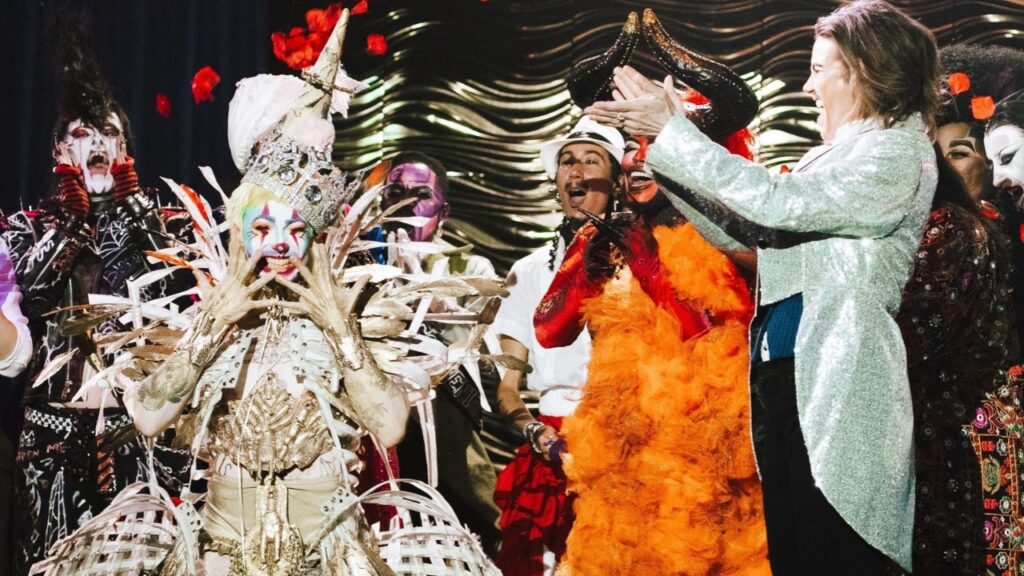
The answer, it seems, was the crown on King of Drag, where Lollygag became the hit competition series’ second-ever winner. It was the realization of a dream he hadn’t even realized he had.
He entered the competition, but winning was actually the last thing on his mind. “I was really interested in kind of approaching it like an artist residency. I’ve had a lot of ideas of what I want to do with my drag that have lived in my brain, but I’ve found it very hard to make them reality,” he recalls. It wasn’t until he began filming that it occurred to him that he really had a shot at the crown.
“I got off the plane … and I looked at myself in the mirror and I was like, ‘You could, you could win this. I think you could genuinely win this.’” And he was right. But even now, he says, the biggest reward is knowing he brought his vision to life and found his artistic voice.
And that artistic voice is about expanding the vision of what kinging can mean. His gender play is not about impersonating masculinity or even deconstructing it; rather, it’s about exploring a spectrum that is deeply personal. “I want people to understand that drag is beyond a binary art form, and the gender aspect is not the end all be all. There’s so much more fluidity there,” he says. “I can be a man in a mini skirt with a clown lip. Why not? Why not? That’s valid. That is just as valid.”
Also valid is Lollygag’s passion for all things rubber chicken. But they’re not just a silly prop; there is a method to his performance madness when it comes to all things plastic poultry.
“I love cock. I love a big cock. I love. I got them in all sizes. I’ve got really big ones,” he jokes, explaining that it all started with a gift from his partner that turned into an obsession. Today, he has over 150 of them, and the number just keeps growing.
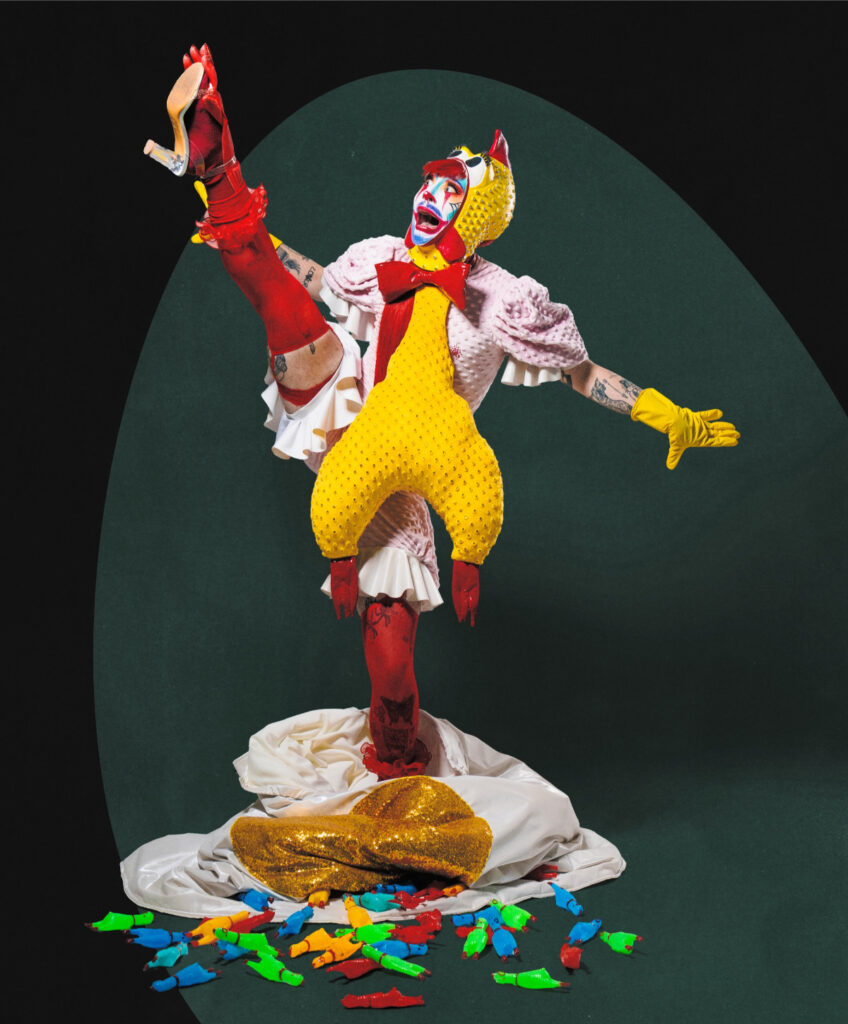
“What’s been really fun with the rubber chickens is like obviously it’s a cock so there’s something very literally like masculine about that. I love the literalness … and it’s like one of those things … that is like it’s bright and colorful and whimsical and innocent, but then can also be turned super suggestive and like erotic almost. And then there’s another like there can be like a horror aspect to the chicken and a very sideshow … It’s really just a prop and a concept that like the more time I spend with it, it just keeps expanding.”
But the chickens are just one part of Lollygag’s particular brand of absurdity. His performances can leave audiences somewhere between delighted, disturbed, and maybe a little turned on. “Usually I get the reaction that it’s like, ‘I felt like I was just on a drug trip,’ or I get the reaction of like, ‘I understood it, like not really, but like I get it, I get it,’ and I’m like, ‘Yeah, me too.’” Lollygag laughs, adding, “Someone was like, ‘You made me feel like I could be attracted to men for the first time,’ and I was like, ‘Oh, love that for you.’” For a proudly trans performer playing with masculinity, it was an unexpected kind of affirmation.
One of the unexpected gifts of King of Drag has been the deeper connections Lollygag has forged within Brooklyn’s drag community. Lollygag is still relatively new to the scene there, but when he received the news that he’d been cast on the show, he reached out to the community for support in preparing. That experience led him to develop much closer friendships with the artists in the scene. “I became a lot closer to the people in my community. Like, I got to work with designers and photographers who, like, I had known of and, like, known of me, but we didn’t have a personal relationship, and now we do.”
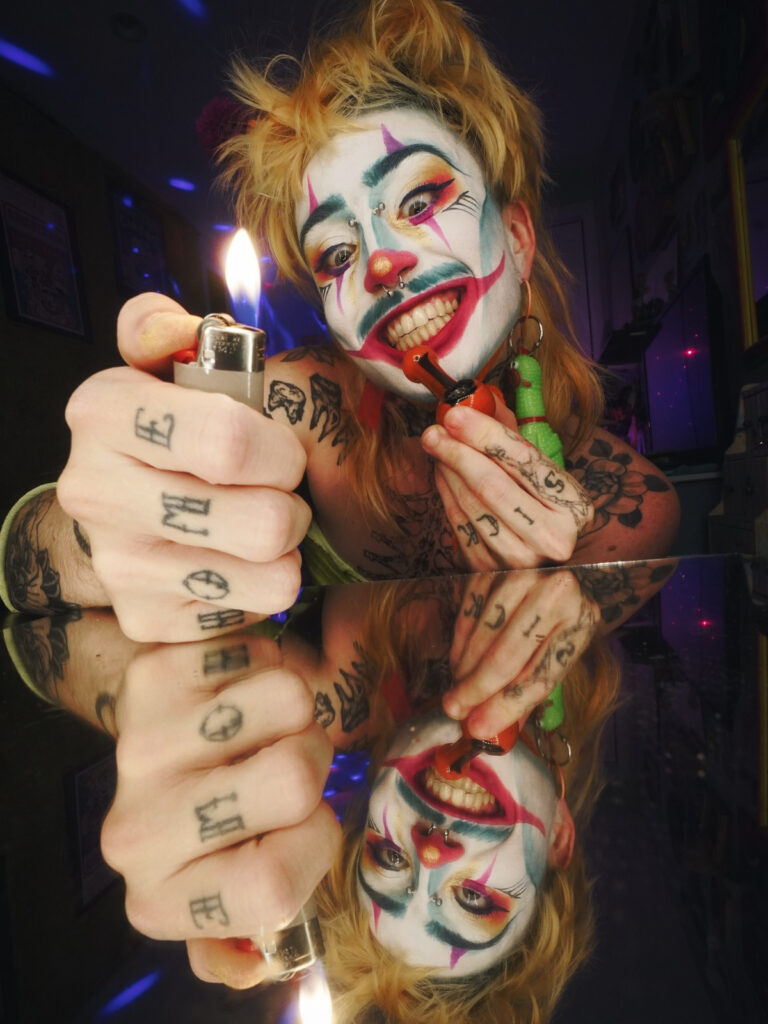
For all the delightful absurdity of Lollygag’s work, there’s a deeply meaningful sense of connection at its heart. He credits his drag dad, God Complex, with helping shape the ideas in his head into performances that audiences can connect with. “It is possible for other people to understand my brain, and this person in particular really sees my brain,” he says. That support helped inspire Lollyland, his first solo clown show, which he created between filming and the series premiere.
Along with literally snatching the crown, Lolly also racked up a bevy of personal wins, whether that meant getting closer with his brothers in the Man Cave, building relationships with artists in his local scene, or simply gaining the confidence to truly trust his artistic vision. “I feel a lot more confident in my ideas, and I feel really confident in the relationships and the friendships I have now. That, like, these people not only, like, genuinely want to support me, but, like, absolutely have the skill sets and talent to support me as well.”
And he has one very simple message he hopes the fans who cheered him on along the way take to heart: “You can be your weird self.”