

‘King of Drag’s Papi Culo Is Bringing Texas-Sized Defiance To Drag Kinging (Exclusive)
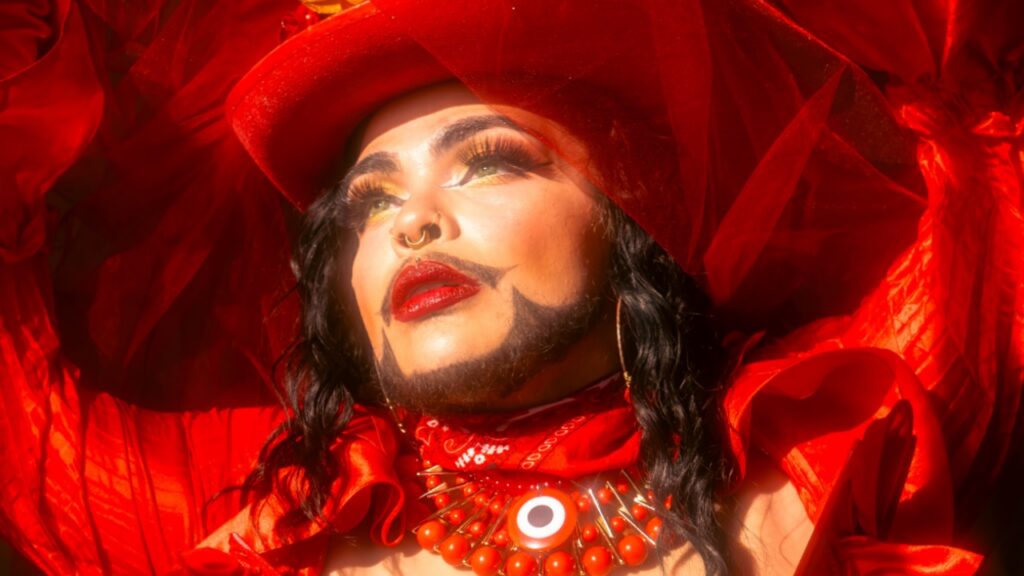
The San Antonio-based king talks about their ‘King of Drag’ journey, growing as an artist, and finding community and hope amid political upheaval in the Lone Star State.
As the adage goes, everything is bigger in Texas, and for San Antonio-based drag king Papi Culo, even their call to join the cast of King of Drag season two was a big deal. It wasn’t just a casting director or PA hopping on Zoom to welcome them into Revry’s fold — although that would have been exciting regardless — but Papi received the news from two of Texas’ drag king pioneers who themselves are members of the King of Drag family.
“It was a full surprise,” Papi tells GO about that final casting call. “As soon as I got on, Alexander the Great and Buck Wylde, who were the OG Texas Kings from season one, were on the call… and I screamed immediately.”
Papi has long admired both performers. “[I] look up to Buck and Alexander, these Texas kings who are literally paving the way, not only from a mainstream standpoint but also from a Texas drag king standpoint.”
But it wasn’t just an announcement; it was a passing of the torch from the season one kings to the new class, one that Papi was ready to become a part of. They had applied for the first season of the show but were grateful, in retrospect, to have been chosen this time around, which allowed them time to mature in their artistry. “Over the past year, there has been a lot of growth for me, not only in how I display my drag, but also the confidence in my identity and how I speak on it.”
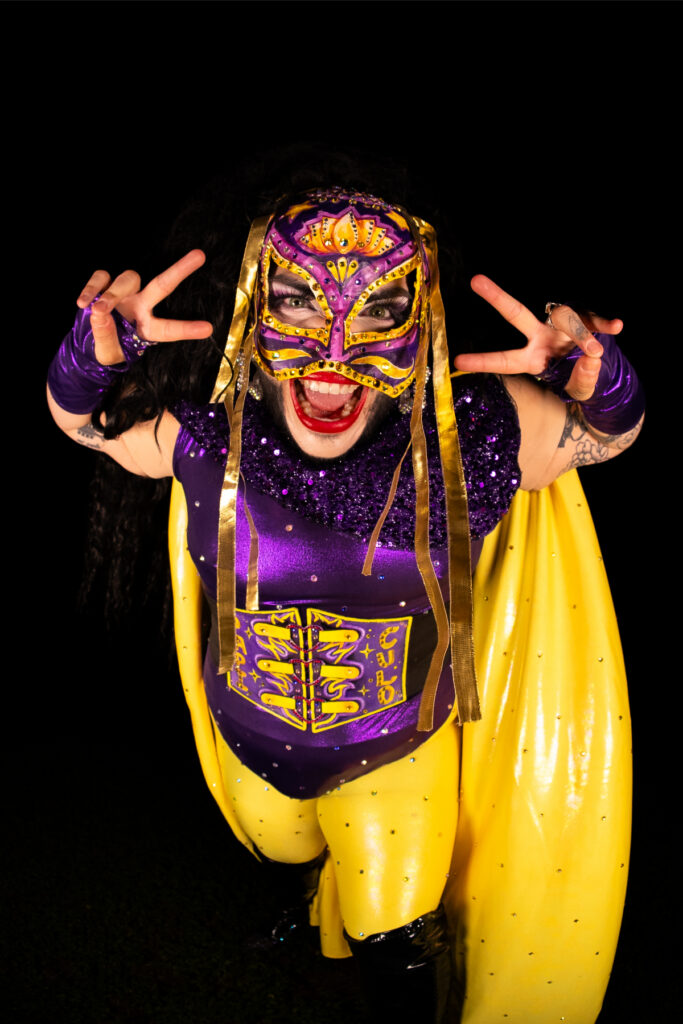
The time had come, and they were ready to take the stage. “I had like a platform now, and so like I was like, ‘We’re gonna do this.’”
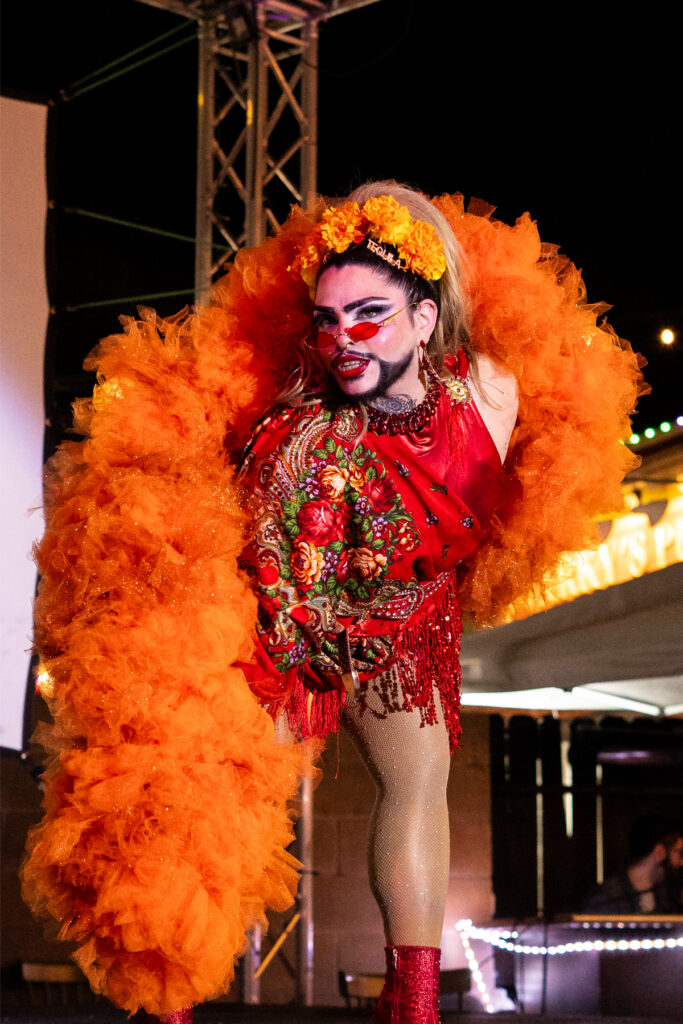
While King of Drag’s audience might have been just discovering what Papi was capable of bringing, the performer was already well known in the San Antonio drag scene, where they were known both as People’s Papi and Demon Daddy of San Antonio. That might sound like two very different kinds of performers, but Papi would argue that duality is the point.
“There’s more complexity to Papi than what meets the eye, right?” they say, explaining how these two aspects of their persona reflect their passions, first and foremost being community. “Community is very important. My drag would not be what it is without my community and without the day-one supporters. My family was actively involved in helping me put together my package, and there were definitely a lot of community collaborators as well in that process,” they share.
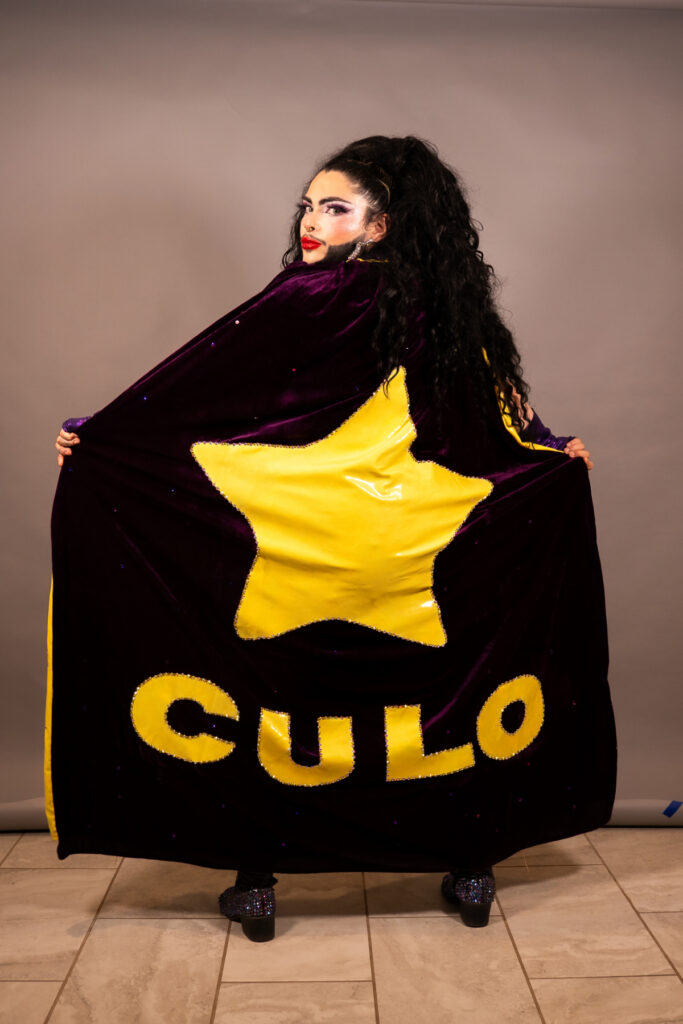
“I have a lot of heart. I put my whole culo into everything. I got a big heart. I got a big culo. We make it work,” they laugh.
As for the Demon Daddy, this side of Papi’s persona was born out of their exploration of their shadow self. “There’s a dramatic flair that can skew into horror, but I also have really beautiful storytelling,” they explain. This was the side Papi shared in the second episode of the season, which featured a horror challenge that saw them revealing the pain and terror of the judgment they face for simply being a visible and proud nonbinary person. It was this side of them that allowed Papi to “really share a lot of real experiences, real trans experiences that can be scary — but there’s also resilience in those stories as well,” as they showed.
That Papi would be so raw and vulnerable in their drag art comes as no surprise, considering where they came from and what it took to find their way to the stage. The artist was raised in Houston and now resides in San Antonio, but between those two chapters of their life, they moved to New York, where, outwardly, they found the kind of success that people would assume would lead to happiness. They had fostered a successful career, they were engaged, they had built a whole life. But none of it made them happy.
“I had everything, you know, check [the] boxes, da da da, but I wasn’t happy. Real talk,” Papi says, pausing before going on. “I didn’t want to be here when I was living in New York.” It forced them to really reflect and ask themselves the big questions about why they weren’t happy and what they actually needed to be fulfilled. “I got a job. I made six figures. I got a house, but I’m missing something… this is not what I really, really want.”
And when that life came tumbling down, Papi was determined to make a change. “It took me getting laid off. It took me losing my engagement at that time in New York. It took me moving back to Houston and living with my parents for a short amount of time to start from zero and really understand [myself],” they share.
Soon after, Papi Culo was born. It started with the name, which Papi initially spoke of as a distant dream before claiming it. “At the time, I was like, ‘Oh man, if I could do drag, my drag name would be Papi Culo,’ and that was literally the very first name that I thought about,” they recall. But the name had its naysayers. “I remember getting kind of sh*t on about it, just like people are like, ‘Oh, Papi Culo, that means ‘Daddy’s butthole’ in like Spanish, like exact translation.’ I’m like, ‘Okay, congratulations! You’re doing your Duolingo! But, you know, for me, it means more than that, right?’”
The life Papi built after starting over looks very different from what came before. “I wake up now and be like, ‘I can’t believe this is my life. I’m a full-time artist. I’m married to somebody who fully supports me and is also an artist. And we just have an abundance of love,” Papi gushes.
While it’s clear Papi is happier with the life they’ve built, they are just as excited about what the future holds in terms of growth in their career.
“[I’m] not exactly where I want it to be yet. You know, I’m still working actively. It’s just like I’m really enjoying the journey of it, even if I’m not, like, again, making buku money,” they explain.
But their definition of wealth has changed. “I say wealth in a way that’s not necessarily what we see in consumerism and capitalism. There’s an abundance of this community aspect that I didn’t know that I needed, and it’s because of drag,” Papi says.
While Papi is confident they are now building the life they want, that doesn’t mean there isn’t still healing to do. What perhaps surprised them most about joining the cast of King of Drag was how healing the experience turned out to be, particularly in episode two, when they donned a bodysuit that literally put their deepest pain on their sleeve — and, well, everywhere else.
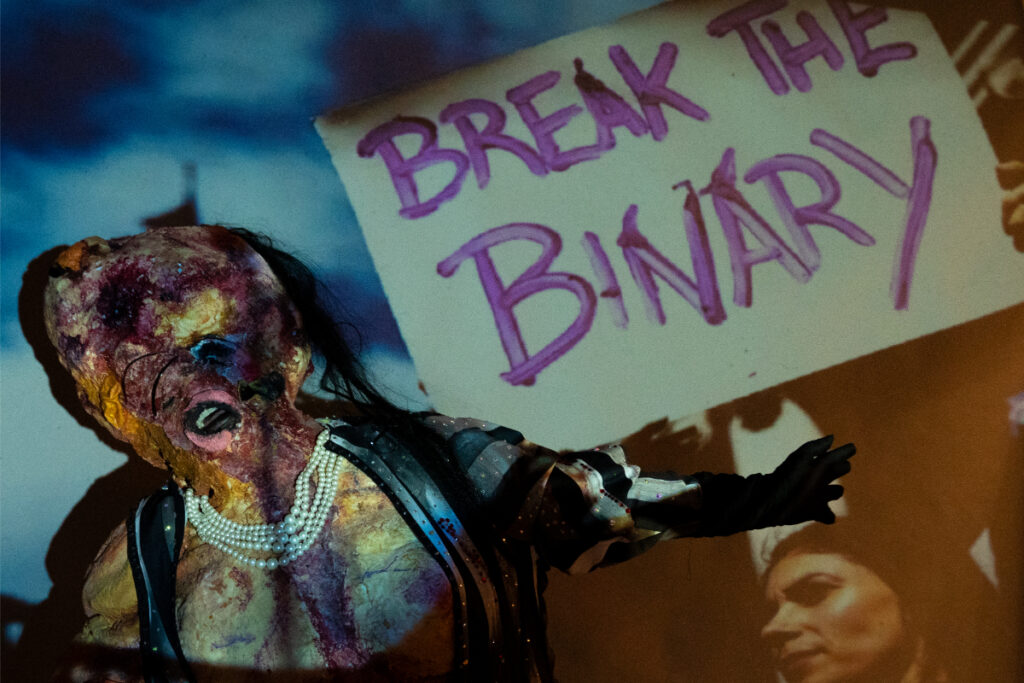
“This concept is incredibly nuanced,” recalls Papi. “My first concern was, would people understand what I experience on a daily basis of being visibly trans? This does not come off, y’all. My beard does not come off… What I didn’t realize in the production aspect was that this was going to be a process of healing for me.”
Papi recalls how powerful it was to not only put on the suit but to have to wear it for hours for the purposes of filming. The extended time in the suit brought forward unexpected feelings that came pouring out of the king when they finally hit the stage. Those screams, they say, were very real, as were the tears that were pouring down their face inside the suit.
“Backstage, my brothers were holding me even though they couldn’t see me or what I was doing. They knew that I had given everything on that stage,” they recall.
The cast’s sense of brotherhood gave Papi the freedom and sense of security that allowed for that kind of emotional release and revealed another dimension of the masculinity they were exploring through the competition. “Throughout the entire competition, I didn’t see … my competitors as competitors,” they say. “These were castmates. These were brothers that I got to form these relationships with and these experiences around, and that is one that I will never forget.”
While this moment might not have made it on camera, that spirit of tenderness and support permeates what we do see, offering a vision of masculinity that isn’t rooted in toxicity. For Papi, exploring what masculinity can look like is also deeply personal.
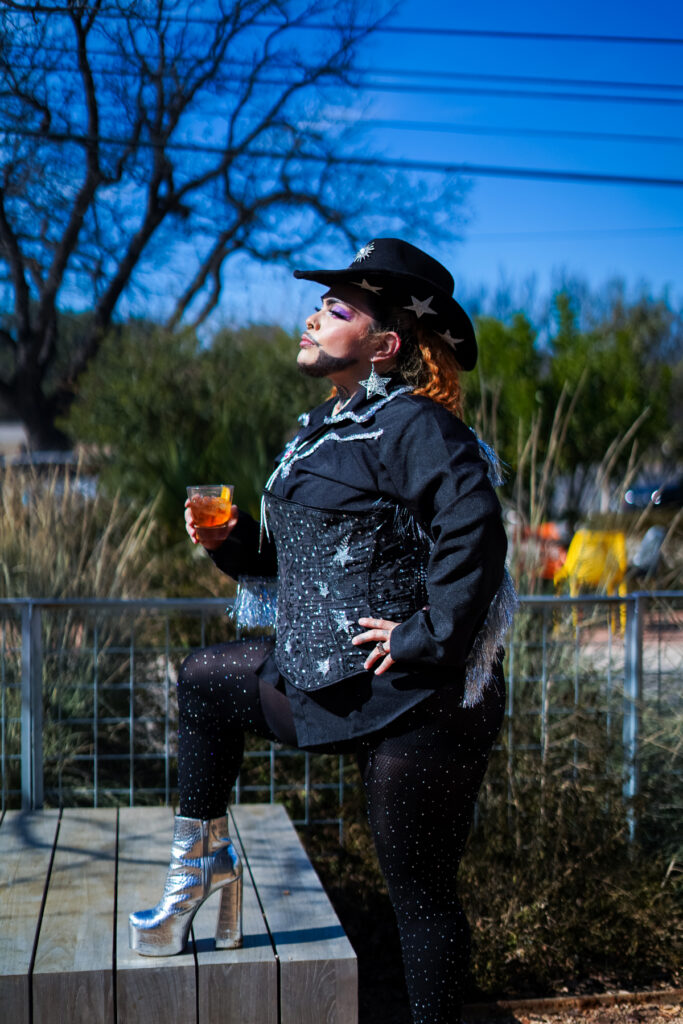
“Being Latinidad, I feel like there is a lot to challenge within that, especially being AFAB, and there already being those binary stereotypes,” says Papi. Their nonbinary identity means they aren’t bound by those binary ideas, giving them the freedom to explore their own masculinity on their own terms.
“Yeah, I would say it just shows up in my care, and the beard aspects, that for me is very gender euphoric because it does challenge, what we see with … binary stereotypes of femininity. And so, that was a way to break out of that, and then also, I am actively raising money for my top surgery,” they share.
The fundraising campaign is ongoing, and Papi hopes those who connected with their story on King of Drag might feel inclined to support their fund.
In the meantime, Papi continues to celebrate and be celebrated in San Antonio, a scene they describe with obvious pride in their voice as vibrant, political, and deeply communal, making it an ideal place for drag kings to flourish.
“San Antonio gets labeled as a boring city in Texas, which is not true. It’s not true at all… We are a city that’s puro la raza, puro cultura, puro comunidad.”
That sense of community takes on an even greater significance in Texas, where drag performers and queer people feel particularly targeted and unsafe. But Papi sees connection as a source of strength, and it’s why they will never stop showing up.
“There’s so much happening in Texas, especially politically, where our rights are being infringed upon. But when we look at it locally, and we look at community, we’re not letting that stop us. We’re not letting that erase us, and we’re going to continue to win, and we’re going to do that together.”