

Inside DapperQ’s 11th Annual NYFW Show: This Is What Queer Fashion Legacy Looks Like
GO went backstage at dapperQ’s 11th annual NYFW show to hear queer designers reflect on fashion, community, and the legacy they’re building.
Last month, dapperQ hosted its spectacular 11th annual NYFW show, and we haven’t been able to stop thinking about it. It’s rare for something to live up to its name, but “Legacy” did just that. At the queerest show in New York Fashion Week, GO snuck in a moment with designers backstage to get a better understanding of what “legacy” means in their work, the fashion industry, and to the queer community at large. Here’s what some of dapperQ’s contributors had to say.
ATASHI
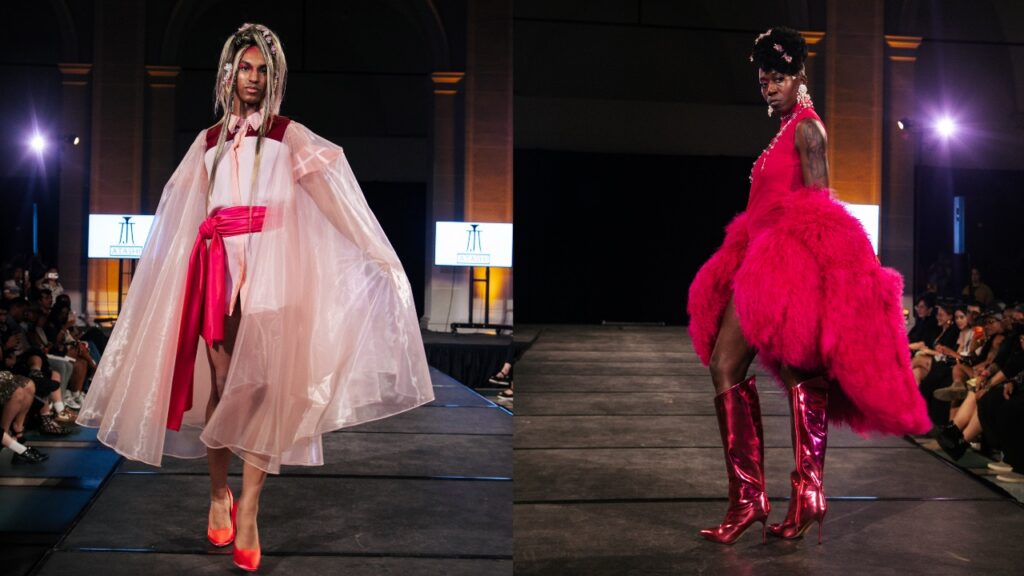
Walter Dixon, CEO and founder of ATASHI, spoke to us about legacy, gender expression, and whimsymaxxing. Walter’s Bleeding Heart Collection is inspired by the bleeding heart flower growing in his home in Illinois, as well as his desire to weave parts of himself and his heritage into his garments. ATASHI is a gender-fluid brand that embraces all body types and gender expressions, finding footing in everything graceful and whimsical. Walter confirms that they’ll be whimsymaxxing until further notice.
For the ATASHI team, legacy means something enduring and powerful while always building toward something bigger. Presenting the Bleeding Heart collection at dapperQ marked a moment in the brand’s own legacy and story.
“It’s very important that we’re here at dapperQ and supporting our LGBTQIA community, because we’re under attack right now. We have to show resilience, and resilience in itself is lasting through hard times, gracefully and whimsically,” Walter tells GO.
On the runway, that ethos came to life through vibrant pinks, metallic embellishments, and blue ruffled details. The collection pushed beyond conventional fashion boundaries while celebrating fluid identity. Each look was a reminder that fashion can be both archival and imaginary of something new.
LLESSUR
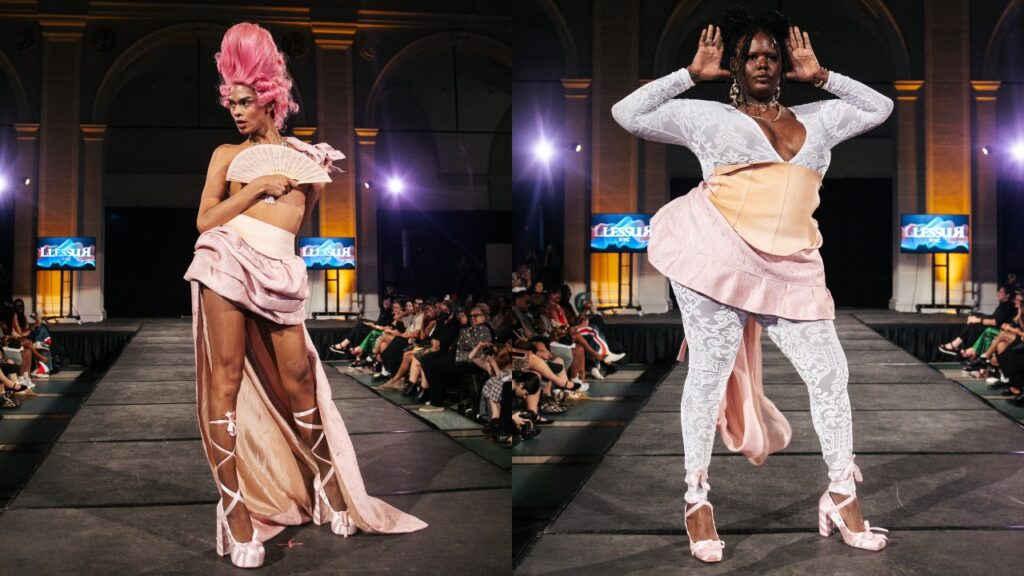
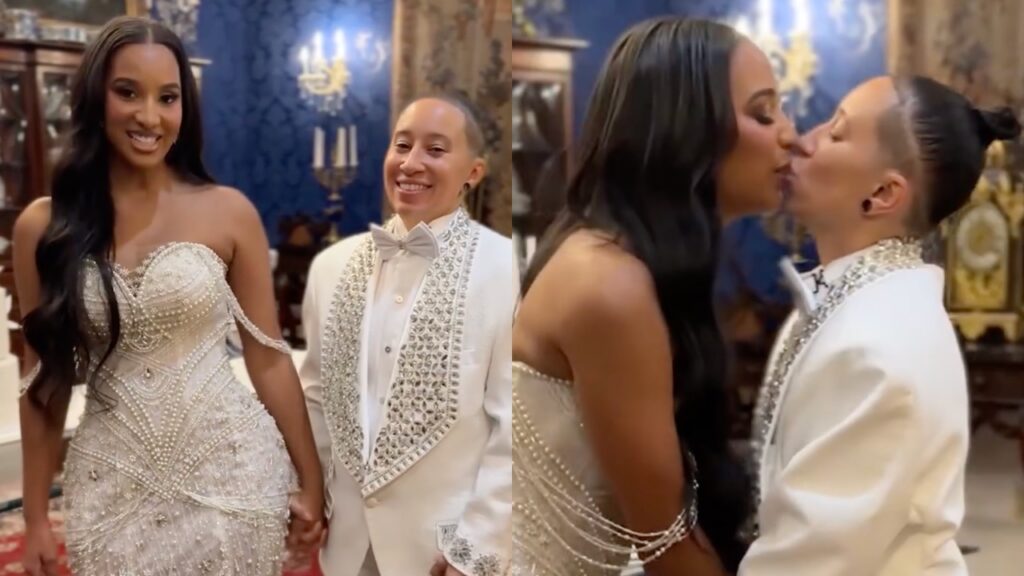
Russell Peguero, designer and founder of LLESSUR, brought “A Ball in Versailles” to the runway and all jaws were on the floor. The collection embraced the brand’s broader mission to redefine the spectrum of fashion through multifunctional, nonbinary designs that invite interpretation through the way each piece is styled and worn.
To the artists at LLESSUR, creation is an act of challenging traditional industry practices and inviting a cultural shift. Moments before the iconic looks took the stage, Russell told GO, “Legacy for me means to continue to represent ourselves as valid and entitled to our own richness, and to continue to remember that we are present in this world.” He also revealed that, ironically, the collection was actually inspired by the French Revolution.
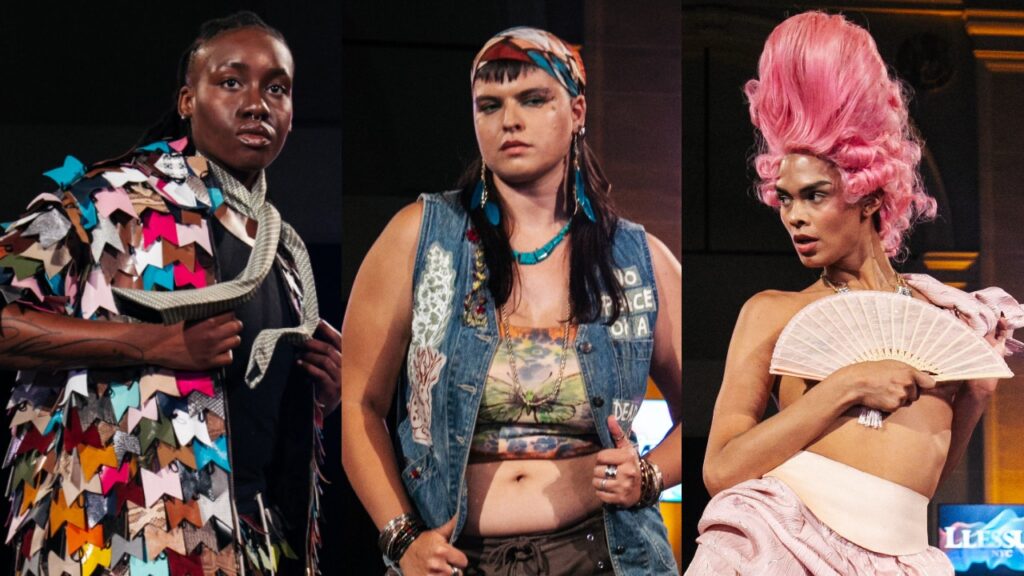
The revolutionary spirit was all there. Pink wigs, fans, and expertly layered corsets brought the extravagance of Versailles to the runway. There was a subversive and slightly raunchy side to the collection that had the audience sat. A ball was definitely had.
ROSE NOIR
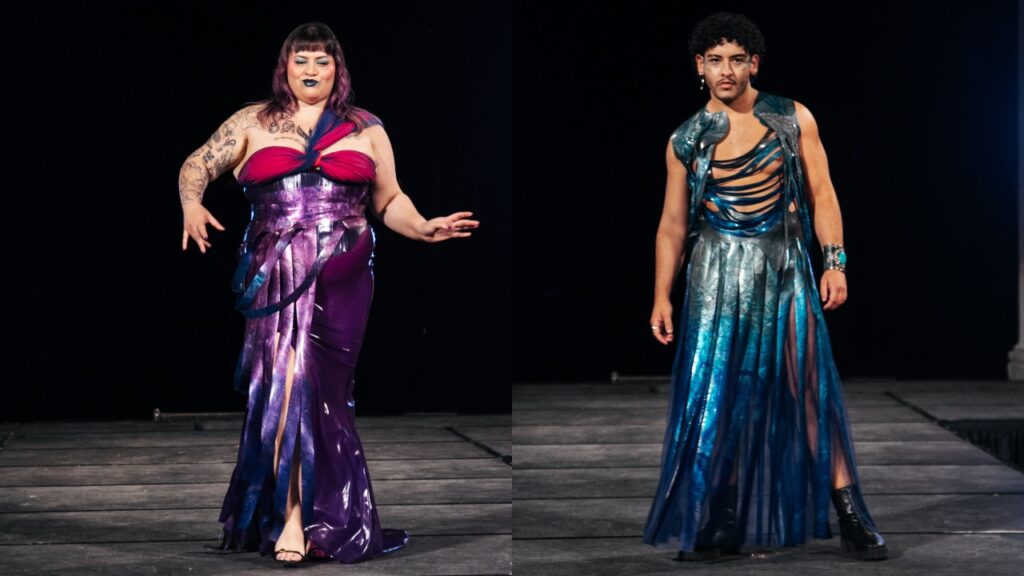
Rose Noir, owner of Rose Noir Designs, is reimagining what latex can look like, and where it belongs. Their collection of latex dresses and statement pieces captivated the audience, challenging preconceived notions of a material we often overlook. For Rose and their team, that reinvention begins with sustainability.
Environmental responsibility is central to Rose Noir Designs. Every piece is one-of-a-kind, made to measure, and custom-sized, reflecting a dedication to thoughtful production rather than disposable fashion.
“Whatever you’re imagining when I say latex clothing, it’s not that,” Rose told GO. “I do really colorful stuff, and I try to walk the line of fun fashion. I’m trying to show that latex can be styled to be part of an exciting wardrobe, rather than what you can wear to the club.”
On the runway, Rose showed us just how expansive that vision could be. Through color, unique silhouettes, and inventive material choices, the collection challenges the assumptions we bring to fashion and the materials used to make it. Many latex-induced gasps were heard throughout the audience.
JASMINE KNITS
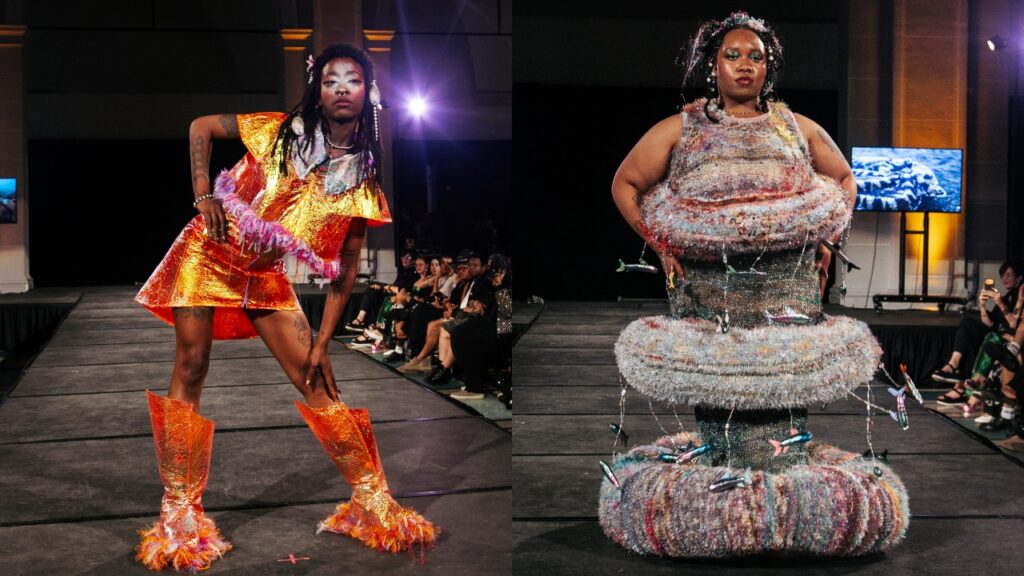
Jasmine Schulte, owner of Jasmine Knits, brought the Aquatic Collection to the runway, immersing the audience in an underwater world of texture, color, and intricate craftsmanship. Jasmine Knits is a sustainability-based brand that uses 100% of its scrap materials. The looks in the collection were one-of-one pieces that felt otherworldly and telling of Jasmine’s imaginative vision.
Jasmine tells GO that his line was heavily inspired by the ocean being a fascinating part of the natural world around us with so much life in it. Undoubtedly, Jasmine gave us one of the best takes of the night. “My collection is all about queer joy and how the ocean is trans. And, there’s nothing illegal about the ocean being trans! They can’t stop it, and they can’t stop us.”
For Jasmine and his team, legacy plays an important part in imagining future designers and promoting sustainable practices. “I think it’s really important to inspire future people and motivate a new generation of designers and people to share your creations with.”
The aquatically ethereal looks successfully hooked those of us in the audience. The carefully chosen colors and meticulous details had everyone wishing to watch the runway in slow motion. Through giggles, Jasmine shouted out dapperQ for “giving me a platform to make some really cute little fishies.”
HARLEY DE OLIVEIRA
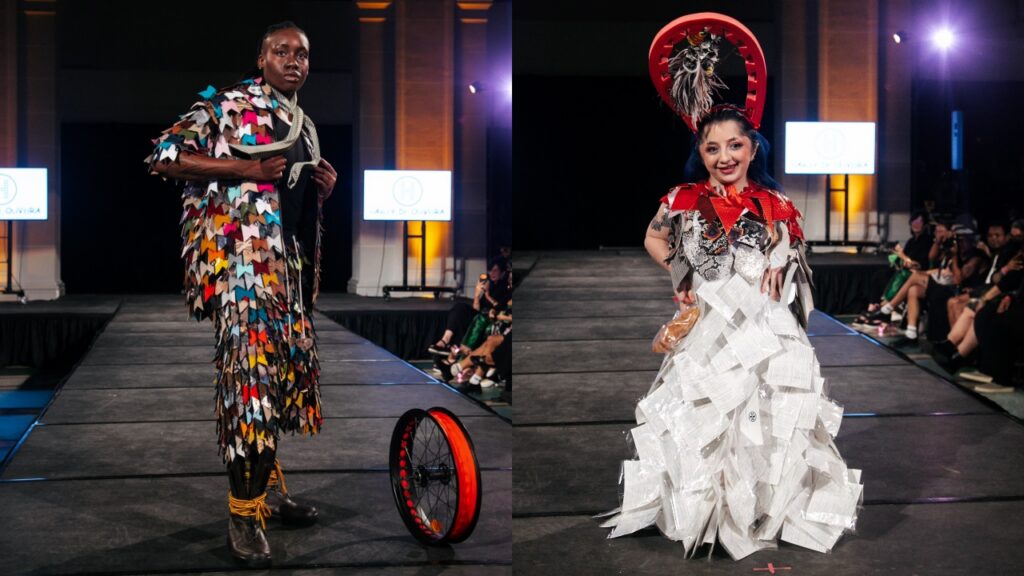
Harley De Oliveira, owner of Harley De Oliveira, believes creativity begins with what we already have. His work transforms discarded materials into unexpected fashion statements, often challenging the idea that newness requires something new. In a society defined by overconsumption, he has a different idea of what fashion can be.
“I think we live in times where we really need to reuse what we already have. I think that, to me, that’s the point of my brand. You just have too much, especially in the land we live in,” Harley tells GO.
As he spoke to GO, we got a special look at pieces that are truly reinventing the wheel. One look was a jacket made up of 1,000 tea bags. And just before we could say just how tea that look really was, he pointed out his dress made from 8,000 straws.
Harley spoke about the challenges the queer community faces in fashion and in broader society. “I think we as people are actually being targeted right now, and we already go through so much to be ourselves in the world. It’s the fact that dapperQ runs this legacy show and is taking underrepresented designers under their arms.”
The audience was full of excitement as each look made its way down the runway, with many astonished by the creativity and upcycling that defined the collection.
DYKEMINT
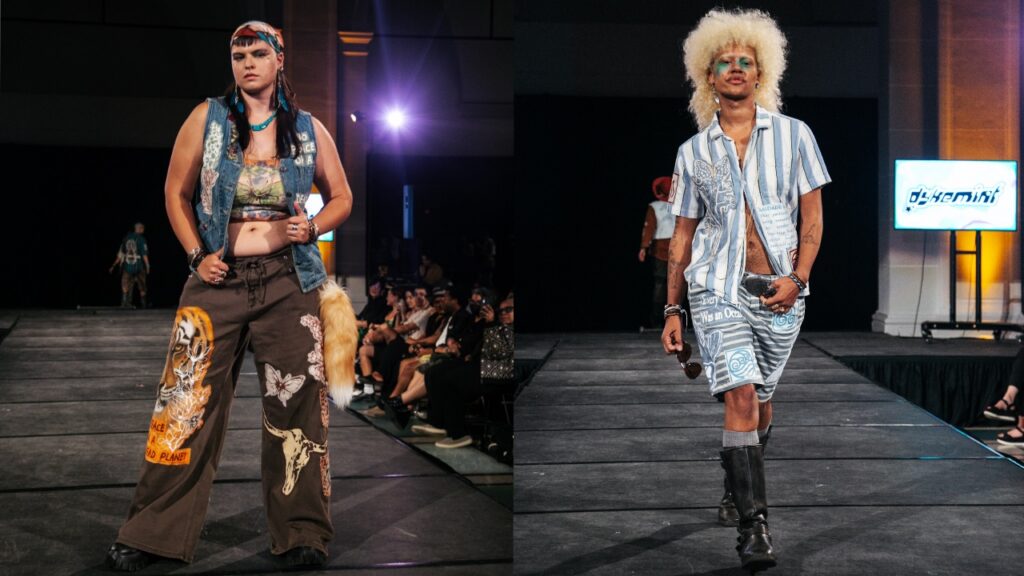
For Fi Black and Lita, the wives and co-designers behind DYKEMINT, legacy is already happening. Their practice of gleaning, or reclaiming discarded materials and giving them a new life, was at the heart of their collection. Across the runway, garments had calls to action like “no peace on a dead planet” sprawled across them. The makeup, colors, and cowboy-inspired accessories made for some of our favorite looks of the night.
“We’re gleaning,” Fi tells GO. “We take the stuff left behind and make pieces and patchwork. You know, their legacies are being changed and made new.”
Patched to perfection, DYKEMINT’s collection “GLEANING” went all out on the details. Each piece carried traces of what it was before, with its history preserved rather than discarded. A central practice of DYKEMINT is to embrace the pasts of materials and allow them to become something new. “It’s lived a whole life,” Fi says. “These pieces have history, and they’re now being contextualized.”
For DYKEMINT’s founders, legacy is not something reserved for the future or something left behind. It is a practice being shaped by the present and our community. “I think legacy is active. It’s not something that will outlast me when I’m gone. Legacy is so now; we are trying to build something for people, not just ourselves.”
ANITA
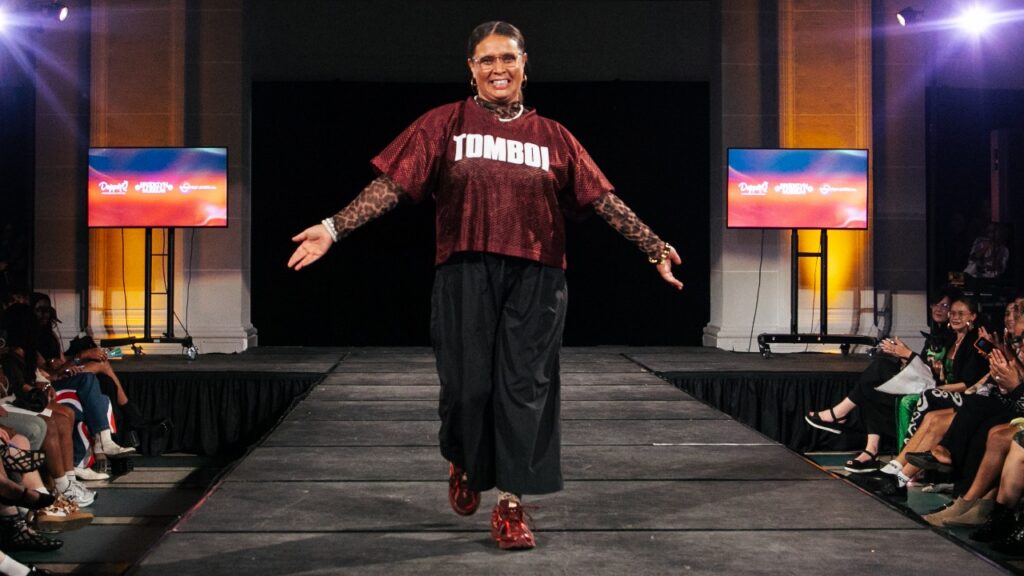
Backstage, just before the Brooklyn Museum transformed into full NYFW mode, GO caught up with Anita, the visionary behind dapperQ, to reflect on the show’s evolution and the meaning behind this year’s theme.
“This is our 11th year at Brooklyn Museum, and it’s so exciting,” she said. “Celebrating our 10th annual show last year felt like a defining moment. ‘Legacy’ is now about leaving our mark after a decade.”
Last year’s runway show, “TEN,” was a display of subversion, fashionable resistance, and gender-bending looks. This year, “Legacy” built on that foundation, turning towards the people, ideas, and practices that continue to shape queer fashion.
“Our show has changed so much since the beginning. Like, our very first show was highly focused on masculine styles.” Laughing, Anita added, “I mean, we had six suit companies and one streetwear company.”
Since stepping into the role of executive producer, Anita has made it a priority to represent the full spectrum of queer style. “I think here is where you’re seeing that all come to fruition, and we’re really leaving our mark here at Brooklyn Museum.”
GO also heard from Brady Pappas, dapperQ’s social media manager, who felt that “legacy” was the perfect word for the 11th year. “The impact of seeing queer people take up so much space is something I will hold on to forever.”
Reflecting on our backstage conversations, one thing becomes clear: dapperQ is so much more than a spectacular display of queer fashion. It is a movement of people grounded in the belief that personal expression is ever-evolving and non-negotiable. Representation will always matter, and dapperQ will always dare to imagine differently.