

Idaho Targets Trans People Using Private Business Bathrooms – New Law, Prison Possible
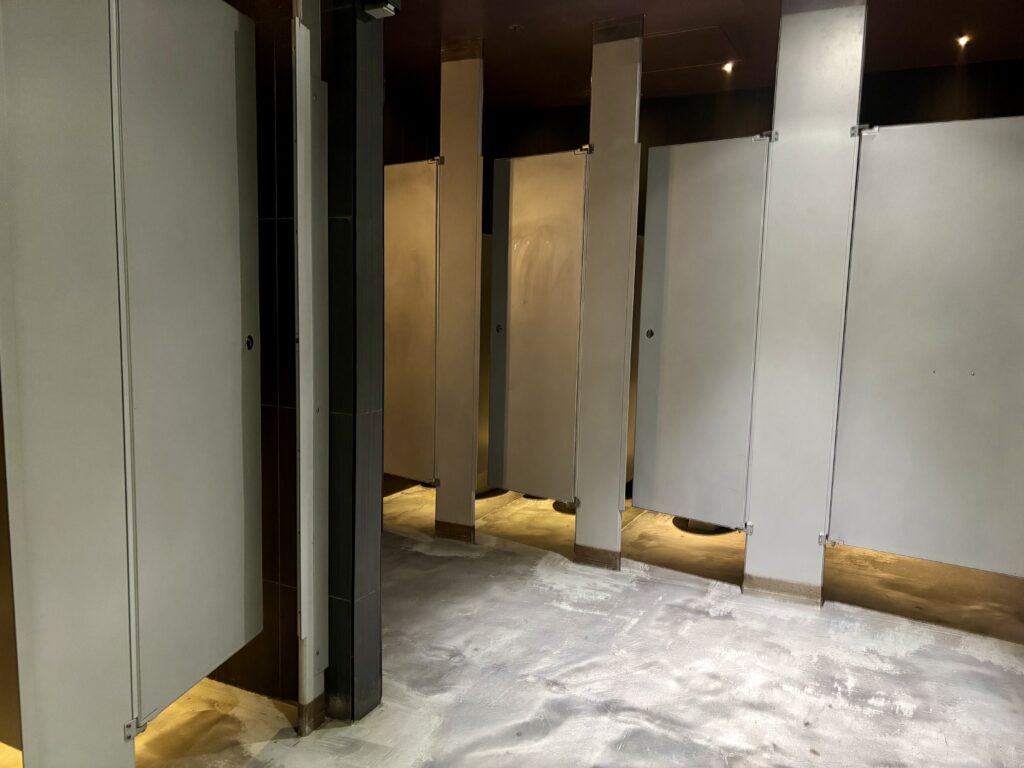
The law doesn’t address actual voyeurism or sexual assault, and puts law enforcement in the difficult position of determining an individual’s biological sex.
Featured Image: photo by Margaret Hetherman
It is now considered quite possibly the most restrictive bathroom law in the United States: on Friday, March 25, Idaho passed a bill (HB 752) that criminalizes the use of bathrooms, locker rooms and changing rooms that do not conform to the user’s gender assigned at birth. While conservative lawmakers have been long-fixated on bathroom usage by trans people, these particular restrictions – approved by the Idaho House (54-15) and Senators (28-7) last week – are unique in that they criminalize usage in private businesses, in addition to “public accommodations.”
The legislation would render offenders guilty of a misdemeanor punishable by up to one year in prison. A second offense within five years would be a felony, punishable by up to five years behind bars.
This development is just one of a far-reaching wave of legal moves to strip trans individuals of their right to function authentically in our country. In February, Kansas enacted SB 244, a law that invalidated the driver’s licenses of about 1,700 trans people and requires updates to gender markers on state-issued birth certificates – to reflect the sex assigned at birth. That law also prohibits trans people from using bathrooms in government buildings that align with their gender identity.
Related: “The Persecution Is The Point”: Kansas Voids Trans Residents’ IDs
The sponsor of the Idaho bill, State Representative Cornel Rasor, told lawmakers last week: “It prevents discomfort and voyeurism escalation and assaults, while preserving single-user options and narrow exceptions so no one is denied access for emergency aid.”
And all this begs the question: how are enforcers and curious others to determine what’s under the skirts?
The Idaho Fraternal Order of Police testified to lawmakers that the bill presents significant practical enforcement challenges for law enforcement. “Officers responding to a complaint would be placed in the difficult position of determining an individual’s biological sex in order to enforce the statute,” Idaho Fraternal Order of Police President Bryan Lovell wrote in written testimony. “In many circumstances, there is no clear or reasonable way for officers to make that determination without engaging in questioning or investigative actions that could be viewed as invasive and inappropriate.”
Related: Texas Launches Complaint Form To Report Trans Women Using Bathrooms
The origin of all this hysteria? Late last year, a female lifeguard from a YMCA in Sandpoint, Idaho called 911 after seeing someone she assumed to be trans using the women’s bathroom. According to local reporting, community outcry quickly reached Sandpoint Mayor Jeremy Grimm. From there, it seems fear worked its way up the food chain to the desk of State Representative Cornel Rasor, a self-described arbitrator of “Idaho values.”
Conservative lawmakers have been busy-bees in Idaho this month. Last week, House Bill 561 was passed, adding a fine component to previously passed legislation, penalizing the capital of Boise $2,000 a day, per flag, for flying non-official flags in front of city hall – effectively targeting the LGBTQ+ Pride flag. In what is reportedly considered an effort to combat the flag ban, Boise’s City Council voted to declare the pride flag and organ donor flag as “official.”
As for the criminalizing of trans people entering bathrooms that align with their gender identities, the ACLU of Idaho astutely points out: “The bill does nothing to address real criminal acts, such as sexual assault or voyeurism.”
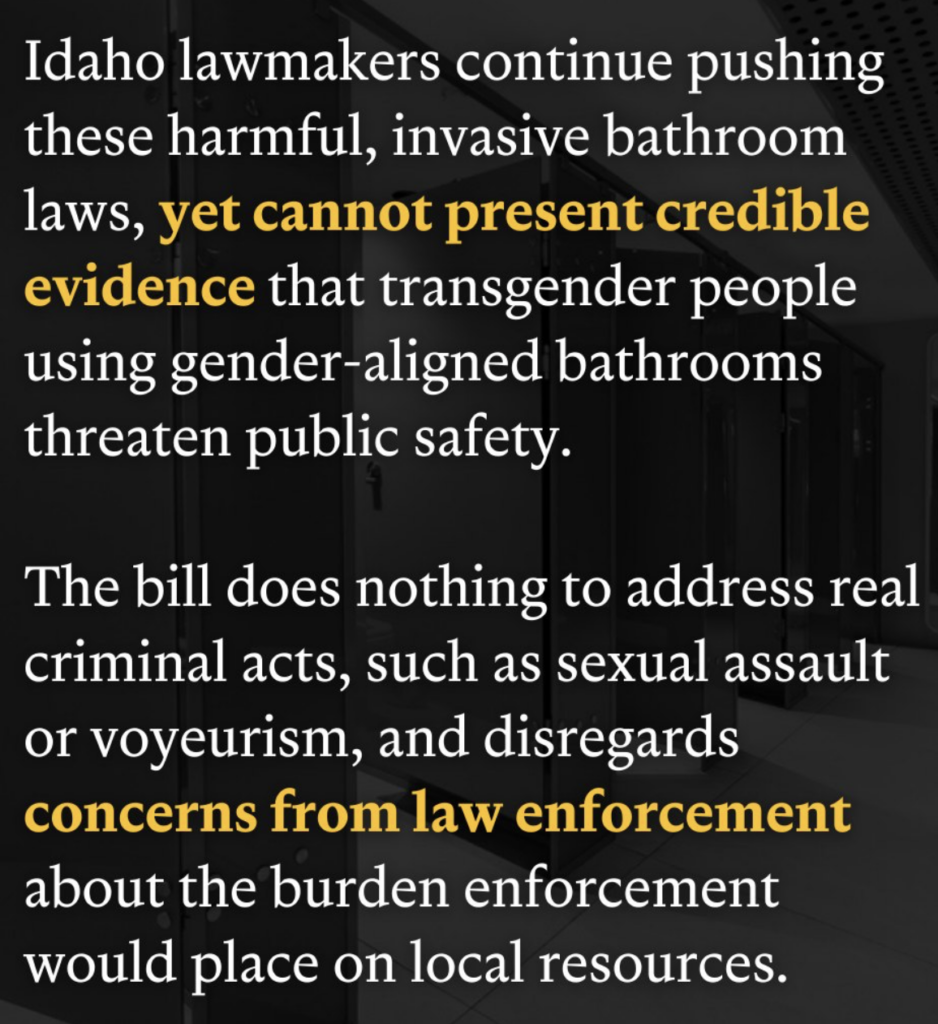
Image: ACLU of Idaho via Instagram