

How ‘BARBARA FOREVER’ Captures The Unconventional World Of Barbara Hammer
GO sat down with director Brydie O’Connor to talk about how ‘BARBARA FOREVER’ pulls from decades of archival footage to tell the story of a lesbian filmmaker who refused to be erased—and changed queer cinema in the process.
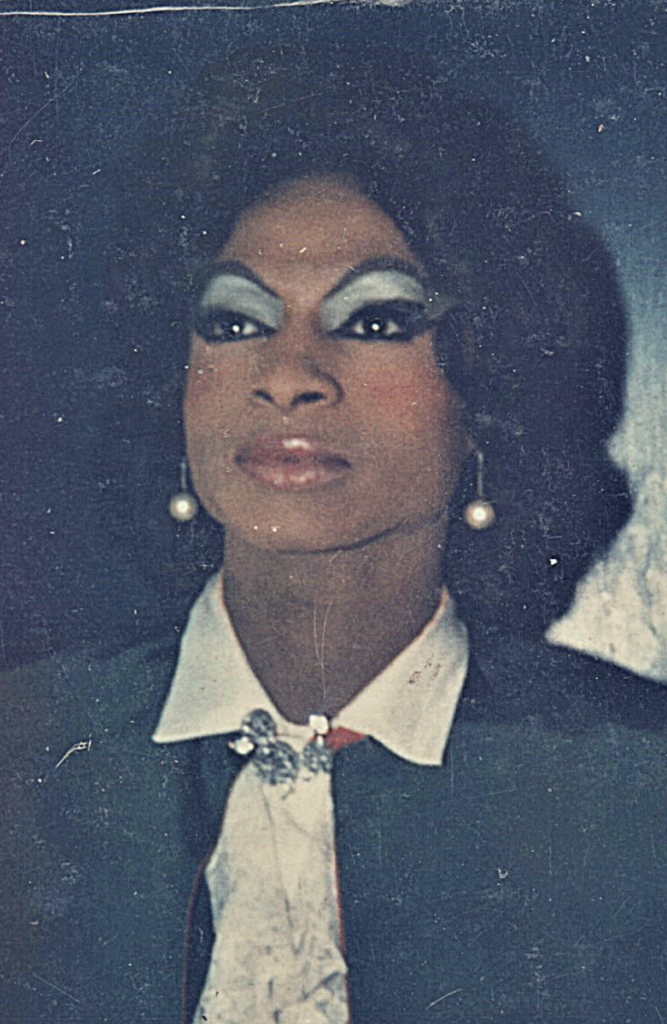
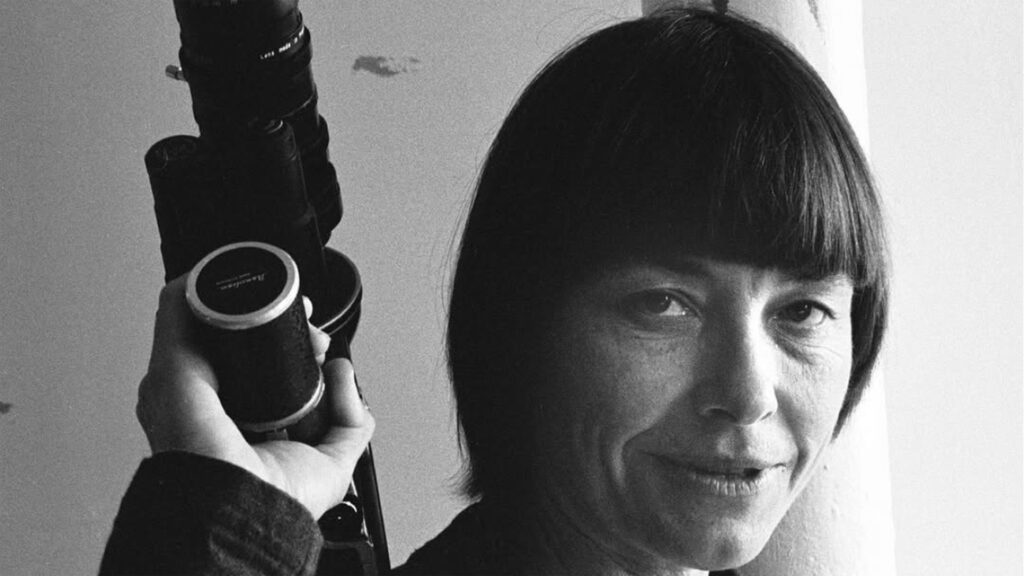
Featured Image: Barbara Hammer in ‘BARBARA FOREVER’; Courtesy of Brydie O’Connor
Lesbians love an archive. Not in a boring, dusty way, but in a “digging through old footage of an ex, past art, embarrassing eras, and finding yourself in it” kind of way. There’s something gratifying about proof that we’ve always been here—living, loving, filming it all, even when no one was supposed to be watching.
Which is exactly why Barbara Hammer isn’t just some niche film figure—she’s the blueprint. The kind of artist people call a legend. Over a nearly 50-year career, Hammer didn’t just contribute to queer experimental film—she practically invented the lane. At a time when lesbian life was either erased or flattened into clichè, she picked up a camera and got radically specific: bodies, pleasure, menstruation, illness, memory. Nothing was off-limits, and nothing was sanitized.
That’s exactly the energy of BARBARA FOREVER, a documentary revisiting her work. With the creation of more than 80 films, Hammer’s practice stretched across photography, collage, installation—but always circled back to moving images that felt alive, tactile, and unapologetically intimate. Long before “representation” became a buzzword, she was out here filming Dyketactics (1974), widely considered the first film made by an out lesbian, and doing it on her own terms.
Directed by Brydie O’Connor, the documentary pulls from decades of archival footage, audio recordings, and deeply personal materials to create something that feels less like a biography and more like a conversation across time. It’s intimate, experimental, a little messy in the best way—and very much in the spirit of Hammer herself.
Now screening at the Sebastopol Documentary Film Festival in Sebastopol, BARBARA FOREVER invites a new generation of queer women to sit with Hammer’s work, her life, and the kind of artistic freedom she made possible.
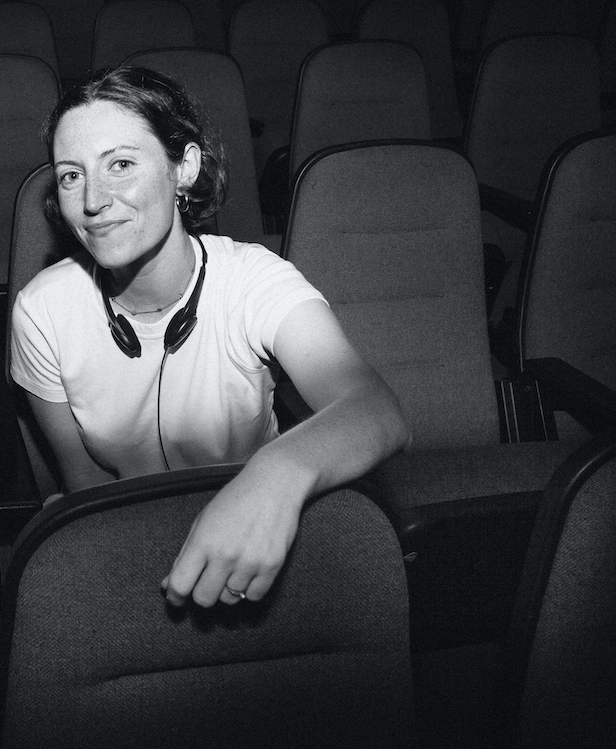
GO sat down with O’Connor, a Kansas-born, NYC-based lesbian filmmaker whose archive-driven, queer storytelling has earned recognition from Sundance to MoMA.
This interview has been edited for clarity and length.
GO Magazine: You’re originally from Kansas and have a background imagining queer narratives in places like 1950s Kansas. How has that shaped the stories you’re drawn to tell now?
Brydie O’Connor: Growing up in Kansas, especially in a very religious household, I was aware—even without having the language for it—of the absence of queerness. Queer people weren’t visible in public life, and there weren’t many cultural references that reflected what I was trying to understand about myself.
That absence really shaped my instinct to look more closely at what’s missing from cultural memory, and to imagine a presence that existed outside of what has been documented or recognized.
That perspective still guides me. I’m really drawn to overlooked histories, and to the idea that the personal can become historical—that everyday experiences, relationships, and ways of seeing the world hold real cultural value, even if they haven’t traditionally been treated that way. My work usually starts there.
GO: In your Sundance introduction, you spoke about your long-standing connection to Barbara Hammer’s work—how did that relationship first begin, and what made this the right moment to tell her story now?
BO: I first encountered Barbara’s work in college while researching queer cinema history, and it honestly felt like a revelation. She was documenting her life, her body, her lovers—everything—without formal training or permission.
At that time, I thought I’d become a writer or film critic, but Barbara’s approach made me realize I could actually make films myself.
We connected during my senior year when I was writing my thesis on her 1970s filmography. She sent me DVDs and a note, which I actually scanned and included in BARBARA FOREVER—no one has caught it yet. We stayed in touch, and later met in person after I moved to New York.
After she passed, I connected with her partner, Florrie Burke, and we made a short film together, LOVE, BARBARA. During that process, I started digitizing materials from Barbara’s archive—outtakes, home videos, confessional tapes, hours of audio interviews. That’s really where BARBARA FOREVER began. I realized there was a way for Barbara to narrate her own story through these recordings
GO: As a lesbian filmmaker, how did Barbara influence your creative identity?
BO: Barbara’s work has had a profound impact on my creative identity in many ways, but most significantly in how it has inspired me to continue taking creative risks. Her films—individually and at large—suggest modes of making through which I can synthesize my own questions about desire, relationships, feelings, the body, identity—anything.
Barbara also took her work and career very seriously, but was really fun and adventurous in her personal life. She embraced pleasure, curiosity, and connection as essential parts of living, in addition to creating. At times, living and working can be a difficult balance for me, and Barbara reminds me how I want to experience life: fully, with joy and openness, alongside making my work.
GO: You’ve described the film as challenging traditional biographical structures—what does that look like in practice?
BO: We moved away from a linear, birth-to-death structure and instead created something more fluid and associative. The film moves across Barbara’s life in a way that mirrors her own ways of thinking, feeling, and creating—layered, recursive, and often collapsing past, present, and future into one another.
That approach felt inherently queer to us. Barbara herself described her work as “a way of being that isn’t following the rules,” and we wanted the form of the film to embody that idea.
Queering chronology became a way to open up space for contradiction, for discovery, and for newness to exist without needing to resolve into a singular, fixed narrative.
More broadly, it reflects the reality that queer lives have often existed outside of dominant societal timelines and expectations. By resisting a traditional structure, we were able to create a film that feels more aligned with Barbara’s ethos—one that invites audiences to experience her life and work as something expansive, ongoing, and still unfolding.
GO: How did you approach translating Barbara’s experimental style into a documentary format?
BO: It was important for us to not only engage with her work formally, but also create access points into it. Experimental queer cinema is often framed as niche or inaccessible, and we wanted to open that up.
We structured the film in archival-driven chapters that ground her work in her lived experience—her relationships, her body, her curiosity. That way, audiences can connect to her style on a human and emotional level.
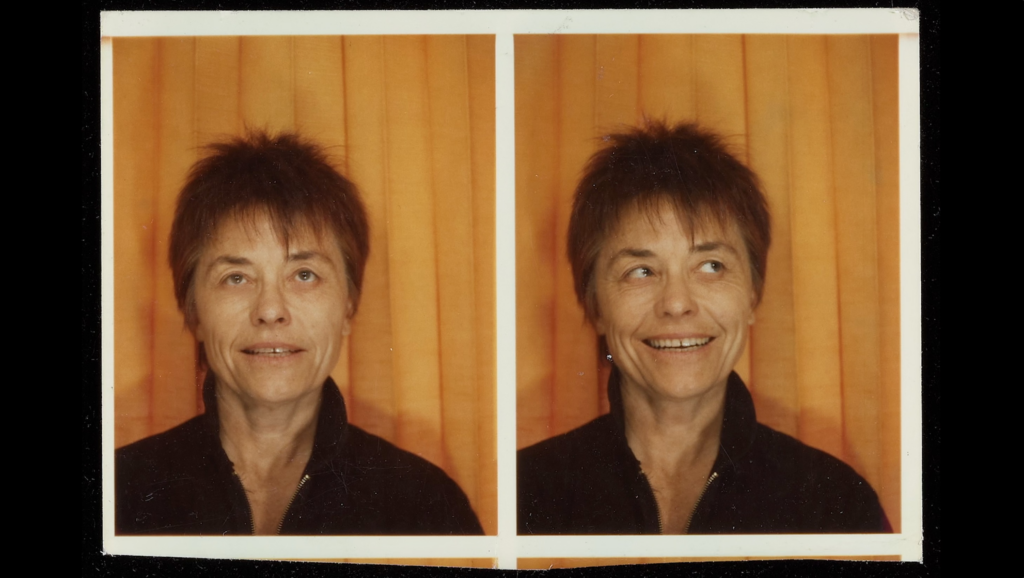
GO: Barbara was one of the first filmmakers to put a full lesbian life on screen—how did you honor that legacy while making something distinctly your own?
BO: Barbara’s impulse to document her own body and life, and share it in her own artistic language as a method of alternative history-making was central to how we honored her legacy.
At the same time, we were interested in extending that gesture—pointing toward a mode of making that could move beyond Barbara’s physical body and body of work, and resonate as an invitation for others to create expansive work that preserves histories that might be lost due to time and dominant culture.
I think of the film as Barbara and I shaking hands, with the film now carrying her baton forward.
GO: How did you decide which elements of Barbara’s life and work were essential to include, and how did you approach presenting the more taboo themes in her work to contemporary audiences?
BO: It was clear early on that we couldn’t, nor did we want to take a completionist approach to sharing Barbara’s life and work in BARBARA FOREVER. Interrogating why Barbara turned the camera on herself over the course of her entire lesbian life—filming her lovers, her community, her wishes, and her vision for her place in the world—became the guiding principle of our edit.
It shaped how we traced a narrative arc of what it means to exist in a lesbian body from birth to death, and what material spoke to this sentiment most effectively and emotionally. We were very intentional about the thematic threads we pulled throughout, continually returning to the idea of the personal not only being political, but the personal becoming historical.
The consideration of gaze was also central to this process. Barbara was constantly aiming to intervene in the male gaze and offer an alternative by turning her lens on herself and her community to create images of queer intimacy, agency, and self-authorship. In presenting Barbara’s images of nude, queer, and women’s bodies—at times experiencing pleasure—we wanted to emphasize and reassert that queer sexuality is natural, normal, and beautiful.
GO: What challenges did you face in making your feature-length directorial debut with such an iconic subject?
BO: It was accessing enough funding to sustain the production of the film and the time each of our team members invested into this project. We received some support that allowed us to make and finish the film, which I am grateful for. However, both producer Elijah Stevens and I, as independent artists, had to take other simultaneous work in order to maintain an income while driving the project forward.
It was a balance that I was constantly navigating, and still am, as we release the film into the world. It’s hard out there to be an independent filmmaker in today’s market!
Despite that, this film genuinely would not have been possible without the persistence and belief in the project from each member of our team.
GO: What do you hope younger queer filmmakers take away from Barbara Hammer’s legacy through this documentary?
BO: One of our producers, Claire Edelman, just recently wrote the following, and it resonates so much: “Barbara was tenacious as hell, and valued quantity as highly as quality in approaching her work. It’s easy to become precious when you feel like your work has to stand for so much and encompass so many things, which is a burden I think a lot of younger queer creatives take on, but Barbara’s legacy reminds us that there is immense power in just going out and making something and learning from the process. Nothing has to be perfect to be beautiful and valuable if it’s coming from a place of honesty and desire.”
On a personal note, I hope that anyone who watches BARBARA FOREVER will leave the theater inspired to go do the thing that makes them excited about life. Lesbians, artists, everyone!
GO: BARBARA FOREVER has already received major recognition, including the Jonathan Oppenheim Editing Award at Sundance and the Teddy Award at Berlinale—what does it mean to have a formally experimental, queer archival film resonate at that level?
BO: It is just so meaningful and exciting! There’s always a question about how it will be received and whether something so specific in form and perspective will resonate on a broader level. To see BARBARA FOREVER connect in that way, at festivals like Sundance and Berlinale, has been so affirming.
Winning the Teddy Award at Berlinale in particular was such a “pinch me” moment. I am so honored to be recognized in this way, in lineage with some of the filmmakers whose work has fundamentally shaped my understanding of queer cinema—among them Cheryl Dunye, Céline Sciamma, Jenni Olson, Ira Sachs, Todd Haynes, and Christine Vachon.
More than anything, the recognition the film has received so far highlights the fact that audiences are not only open to this kind of storytelling, but that there is a real appetite and desire for films that take risks, and that center queer—and lesbian—lives. It makes me hopeful about what feels collectively possible in cinema, moving forward.
The film screens at the Sebastopol Documentary Film Festival from April 9–12. Learn more at sebastopolfilm.org.