

This Country Just Passed a Bill Criminalizing LGBTQ+ Identities and Allyship
Activists warn that the bill threatens the rights of everyone.
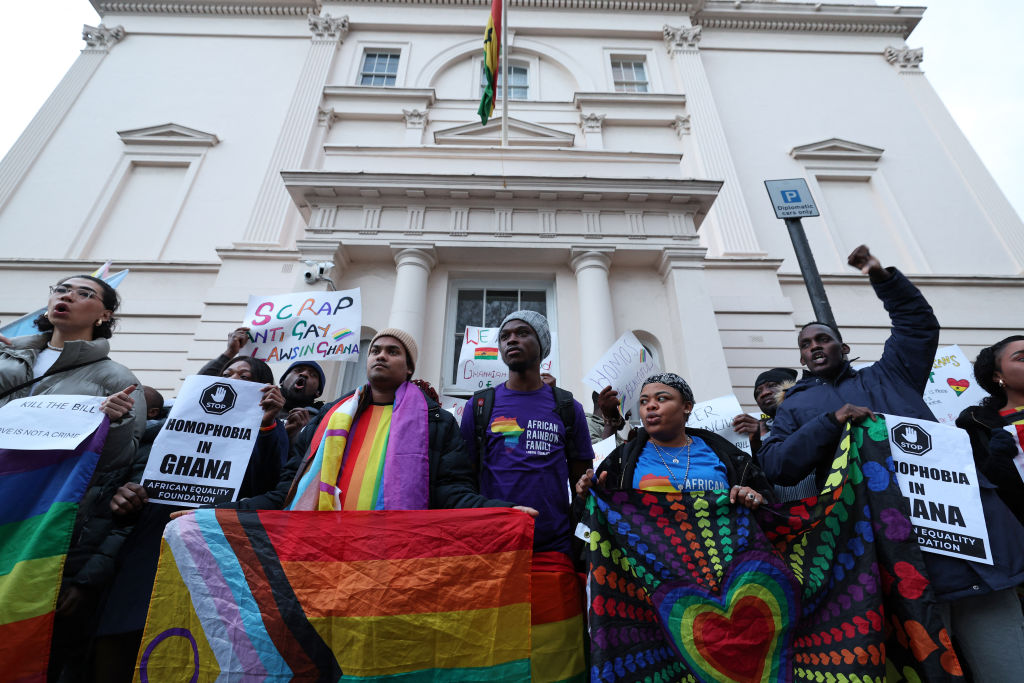
Feature image: People gathered outside the Ghana High Commission in London on March 6, 2024, to protest against Ghana’s anti-LGBTQ+ bill; Photo by ADRIAN DENNIS/AFP via Getty Images
Ghana’s parliament passed a bill on Friday that criminalizes queer identities and targets LGBTQ+ activities in the country. It now goes to the president to be signed into law.
Same-sex relationships are already banned in Ghana as a holdover from British colonial law. The new bill expands it, proposing that identifying as LGBTQ+ be punished by up to three years in jail, according to the BBC. Anyone who identifies as an ally would also face prison.
The country passed a similar bill two years ago, but former President Nana Akufo-Addo didn’t sign it into law as legal challenges were brought against it.
Current President John Mahama has voiced support for the bill.
On Monday, Mahama, while visiting the U.K., said the bill would be reviewed by his legal council and attorney general. “We will look at it and make sure that everything is in order,” Mahama said, according to the BBC. He said that there had been some procedural lapses in passing the new bill.
“[The bill] criminalizes identity, suppresses expression, dismantles civil society, mandates denunciation, denies health care, and exposes vulnerable members of Ghanaian society to state-sanctioned persecution. Such measures lead to adverse physical and mental health outcomes to LGBT people,” HRW said in a letter to Ghanaian members of parliament earlier this year.
Community groups fear that LGBTQ+ people could be evicted from their homes or lose their jobs if the new bill is made into law. The director of an organization supporting lesbian and queer women, One Love Sisters Ghana, said people will be scared about whom they can trust.
“We have advised people to prioritise their safety online and offline. If they have content on their social media pages that could put them at risk, we are encouraging them to remove it. People need to be cautious about what they post because they don’t know how this law could be used against them,” Leila Lariba told The Guardian.
Activists say the bill will also prevent people from getting tested for HIV.
“We believe the president will sign it,” said Lariba. “People out there are going to use this as a stepping stone to maltreat people and harass people. It’s already happening, but with this bill being passed, it’s going to be higher than it was before.”
Ebenezer Peegah, who runs the LGBTQ+ rights group Rightify Ghana, said essential human rights were at risk in the country.
“This bill is very far-reaching: it criminalises identity; it criminalises services, including the operations of civil society groups and doctors giving care to the LGBTQ community and those that promote same-sex [relations], like journalists [and] sellers of sex toys. It also criminalises even not reporting people,” he told The Guardian. “Just this year alone, we have had 80 cases from our members that include those who have been exposed, abused or evicted. Our colleagues are asking how to get out of Ghana, but we also do not know how to help them because the international community no longer cares, especially the Trump government.”
Rightify Ghana has joined with several other organizations to challenge the new bill in court.
Ghana is the second African country to target LGBTQ+ people legislatively in recent months.
In March, Senegal’s parliament passed similar legislation criminalizing the so-called “promotion” of homosexuality. Same-sex sexual relationships are also criminalized. Those found guilty could face a maximum prison sentence of 10 years.