

Budapest Mayor To Be Questioned By Hungarian Police Over June’s Wildly Successful Pride Parade

Gergely Karácsony is under criminal investigation for his role in organizing the biggest-ever Pride event in Hungary.
Featured Image: Photo by Krisztian Elek/SOPA Images/LightRocket via Getty Images
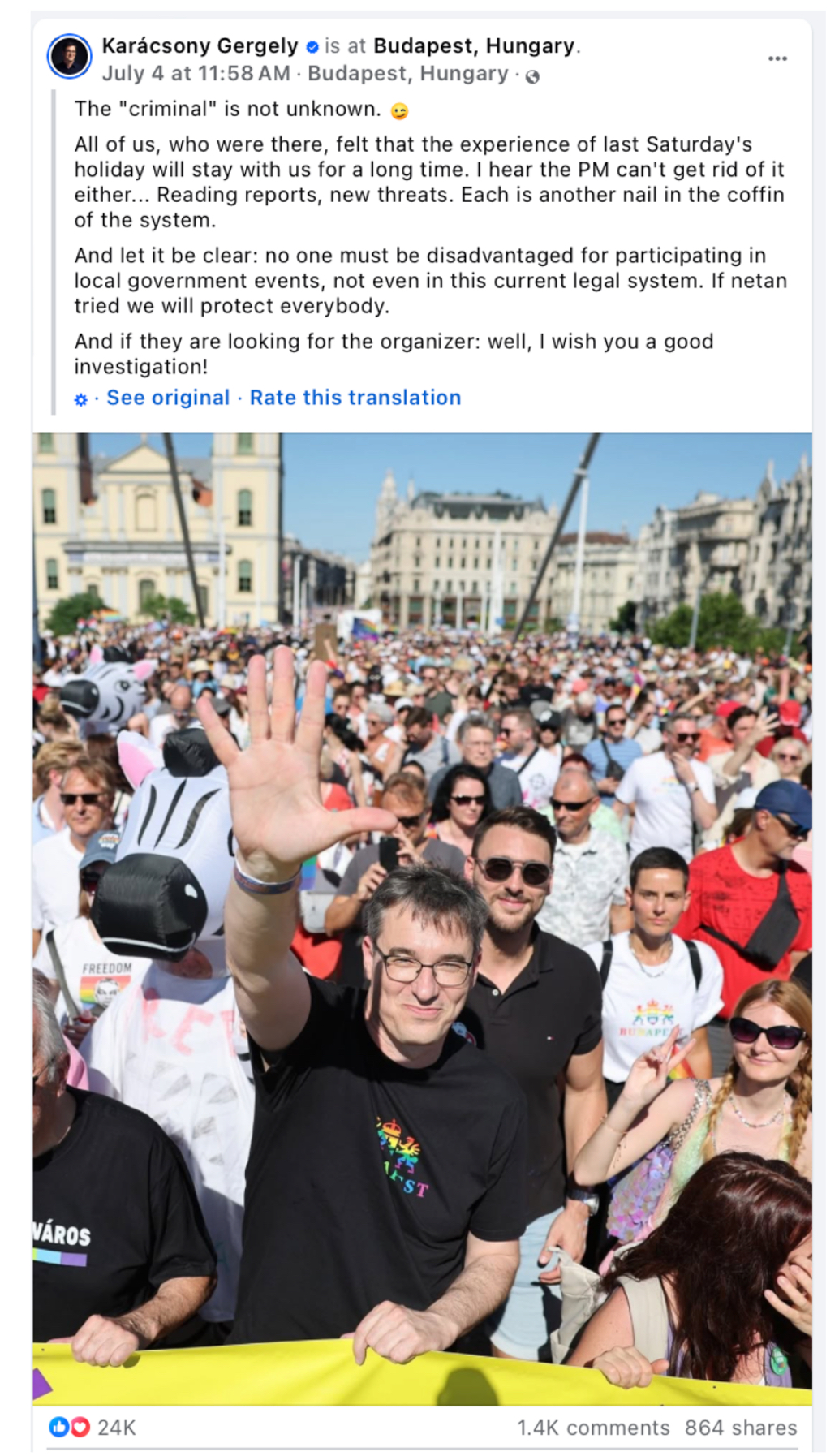
Budapest Mayor Gergely Karácsony is expected to appear this week at National Police Headquarters in connection with the June 28th Pride rally. “I became a suspect, and if that is the price we have to pay in this country for standing up for our own freedom and that of others, then I am proud of it,” Karácsony wrote last week on Facebook.
The 30th Budapest Pride March had proved historic, marked by dignity and resistance. Despite a ban by Prime Minister Viktor Orbán, who used the “Child Protection Act” to threaten parade hopefuls with “clear legal consequences”, the turnout stunned the world with its magnitude and magnificence. Rainbow smoke, face paint, crowds traversing the Erzsébet Bridge over the Danube River – by some estimates, 200,000 people braved the scorching sun to be counted among what would ultimately be one of the largest anti-government demonstrations against Viktor Orbán.
But it was not without risk. Prior to the rally, much thought had gone into threats and consequences, with volunteers working long hours and stressful discussions going late into the nights. Not only were organizers in danger of a year in prison and a hefty fine, politicians were determined to intimidate. Authorities were permitted to use facial recognition, with cameras installed on lamp posts along the parade route. Politicians sought to dehumanize the event; “Viktória Radványi, President of Budapest Pride, told local media that the Hungarian Ministry of Justice wanted to send Pride to the horse racing track.
On the surface, such inflammatory political mischief might seem ridiculous – as was the ban itself, in a city in which 78% of residents disagreed with Orbán’s prohibition. But Mayor Gergely Karácsony knows that such instruments “… feel very serious to members of LGBTQIA+ minorities. Fear-mongering in specific social groups is a policy that we must strongly reject, and while it is fortunately ineffective, we must still act against it.”

Viktor Orbán, who returned to power in 2010, has been notoriously emboldened by Trump’s anti-DEI push in his quest to roll back LGBTQ+ rights. And the Mayor has been vocal in his understanding that city leaders have a vital role to play in defending values of inclusion. His legal team found a loophole and turned Pride into a “municipal event,” which fell outside assembly law, and did not require police authorization or a permit.
While Hungary was the first EU nation to formally ban a Pride march, the move was blessedly met by opposition: EU Chief Ursula von der Leyen called for a reversal of the ban; and 33 nations issued statements of support. While we can’t know the outcome of the probe that is targeting Budapest Pride organizers, we do know that the world is watching.
“We know it well from our history, there is always power that tries to ban, eliminate those who think differently, believe differently, feel differently, love differently,” Karácsony wrote on FaceBook after the rally. “But history has proven that such powers have one common characteristic: one day they will end. Our job is to show with the power of love that there is life outside this system, there is a life that is nicer, freer and happier…”