

EU Highest Court Says Hungary’s Anti-LGBTQ Laws Breach Democratic Values
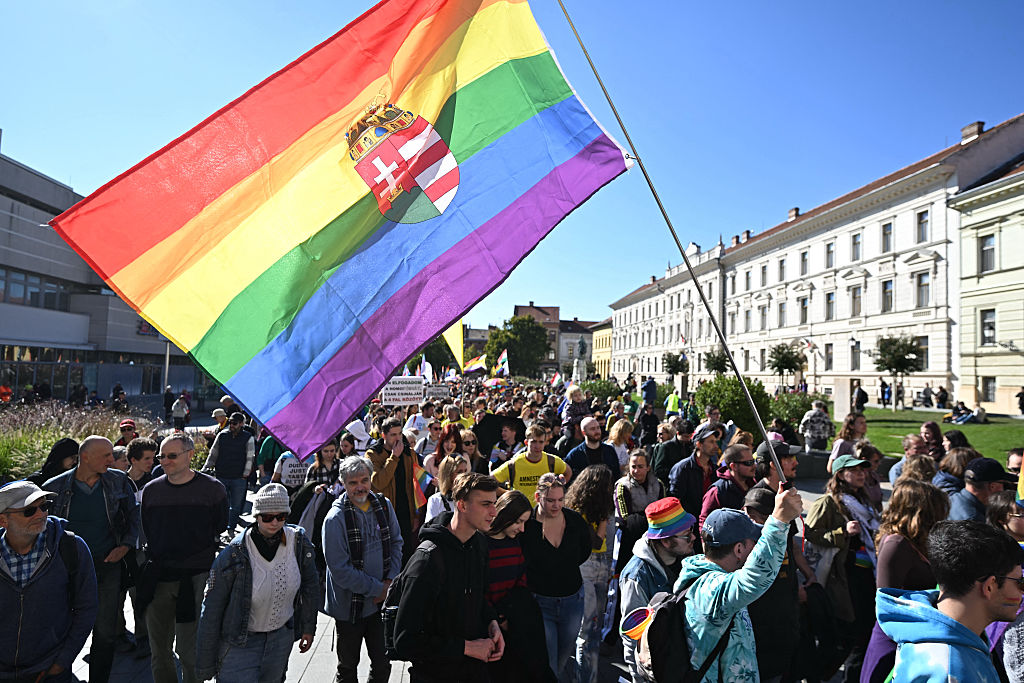
The European Court of Justice ruled that Hungary cannot rely on its national identity to justify discriminatory laws.
Featured image: (Photo by Attila KISBENEDEK / AFP) (Photo by ATTILA KISBENEDEK/AFP via Getty Images)
In an unprecedented ruling, the EU’s highest court has found Hungary’s anti-LGBTQ+ laws to be discriminatory, stigmatizing and contrary to basic democratic values. The Court of Justice of the European Union said that the law restricting LGBTQ content from schools and on media is at odds with “a society in which pluralism prevails” and that Hungary could not “validly rely on its national identity” as justification for discrimination and breaching of freedom of expression.
The Hungarian legislation in question – the so-called “Child Protection Act” – was introduced by the conservative ruling party of Hungarian Prime Minister Viktor Orbán, and adopted by Parliament in 2021. In mid-April, Orbán was defeated by Péter Magyar in a landslide election sparking widespread celebration, from the streets to the River Danube.
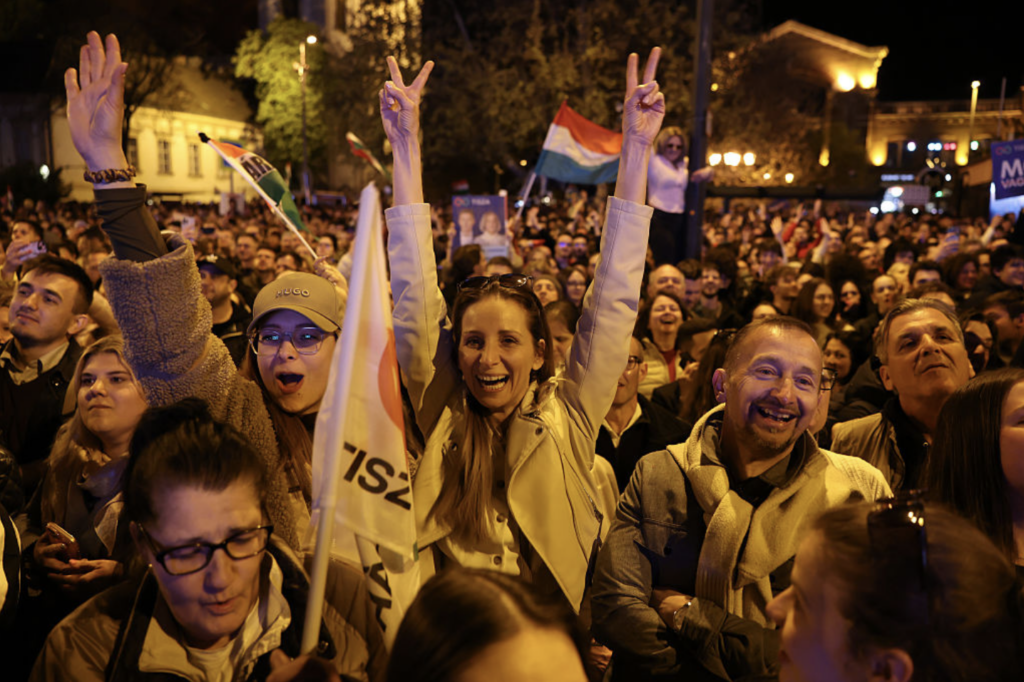
Image: Revellers celebrate Hungarian parliamentary elections on April 12, 2026 in Budapest; Prime Minister Viktor Orban of the Fidesz party has conceded his party’s election loss, paving the way for Peter Magyar. Photo by Sean Gallup/Getty Images
According to The Guardian: “The ruling marks the first time the ECJ has found a member state guilty of breaking EU law based exclusively on breaching the bloc’s fundamental values described in article 2 of its treaty. These include respect for human dignity, democracy, equality, the rule of law and respect for fundamental rights, including those of minorities.”
Hungary’s 2021-enacted law reads: “It is forbidden to make accessible to persons who have not attained the age of eighteen years content that is pornographic or that depicts sexuality in a gratuitous manner or that propagates or portrays divergence from self-identity corresponding to sex at birth, sex change or homosexuality.” The phrasing was embedded in a broader law that originally focused on pedophilia.
The EU court reasoned that such a law “stigmatises and marginalises non-cisgender persons” by associating them with people convicted of pedophilia – an association that encourages “hateful conduct.”
Katrin Hugendubel, deputy director of ILGA Europe, an LGBTI rights umbrella organization, told the press: “Hungary cannot enter a post-Orbán era without repealing this legislation, including the Pride ban. If Péter Magyar truly aims to be pro-EU, he must place this at the top of his agenda for his first 100 days in office, as an essential part of his EU-facing reforms.”
Reportedly, Hungary is likely to comply quickly and to pay expenses incurred by the European Commission which brought the case forward.