

Miami Beach’s Pride Crosswalk Torn Up As Florida Expands Crackdown On Street Art
State crews paved over the Ocean Drive landmark just days after Miami Beach lost its appeal to keep the LGBTQ+ symbol in place.
Featured image by Joe Raedle/Getty Images
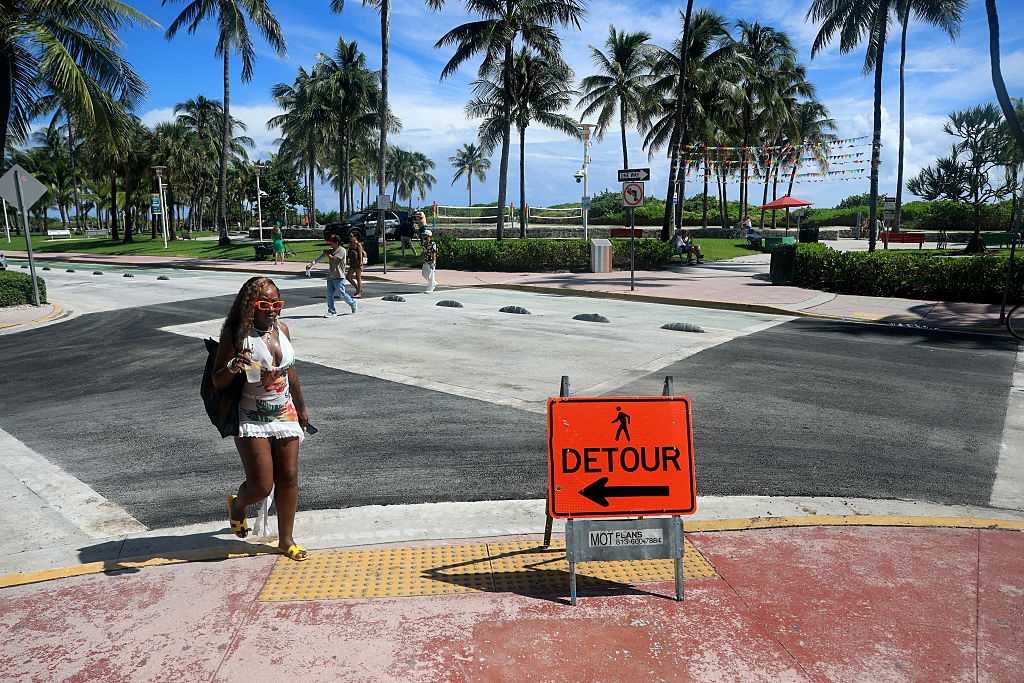
The rainbow-colored crosswalk that once greeted visitors at the corner of Ocean Drive and 12th Street in Miami Beach is gone. Over the first weekend of October, state transportation crews ripped up the city’s LGBTQ+ landmark, paving it over in asphalt less than forty-eight hours after Miami Beach officials lost their final appeal to keep it in place.
The removal, ordered by the Florida Department of Transportation under Governor Ron DeSantis, comes as part of a statewide directive to eliminate all forms of street art deemed “political.” It also arrives during LGBTQ History Month, deepening outrage among residents and advocates who see the move as a symbolic erasure of queer visibility in one of the country’s most inclusive cities.
“This represented decades of people who endured housing discrimination, expulsion from the military, workplace discrimination, the stigma of HIV and AIDS, the fight for marriage equality, all the hard-won battles that took the LGBTQ community from being marginalized to now being a visible, celebrated part of the community,” Miami Beach Commissioner Alex Fernandez told AP.
The crosswalk, designed in 2018 by Savino & Miller Design Studio, featured an Art Deco pattern, a nod to Miami Beach’s architectural heritage. Fernandez has emphasized that the intersection was one of the safest on Ocean Drive, with half as many crashes as nearby crossings since its installation. Still, none of that mattered to state officials.
Related: Orlando Artists Fill Parking Lot With Color In Protest Of Rainbow Crosswalk Ban
The removal was part of a sweeping order from the Florida Department of Transportation, which warned that cities refusing to comply could lose transportation funding.
“I think the street art got out of hand. I think it’s much better that we use crosswalks and streets for their intended purpose,” DeSantis said earlier this year.
His administration claims the street art distracted drivers, though no evidence has been presented. Critics say the order is part of a broader pattern by state leaders to suppress LGBTQ+ expression and visibility in public spaces.
Fernandez, the city’s only openly gay elected official, called the decision “a total waste of taxpayer dollars to destroy a crosswalk that has proven to be among the safest on Ocean Drive.”
Miami Beach Commissioner Kristen Rosen Gonzalez told The Independent the removal “shocked our community.” She added, “To the residents of Miami Beach and our LGBTQ+ tourists from around the world, please know that the removal of this crosswalk was not our decision, it was the State of Florida’s, and we will continue to welcome with open arms and inclusion everyone who visits Miami Beach.”
A local drag performer told WSVN the crosswalk “represents blood, sweat and tears.” They added, “I literally worked so hard on this sidewalk for many years and struggled to come out here and perform and share art, share my craft, so it tears my heart to see it go away, but we’re going to fight, we’re not going anywhere.”
Related: Tampa Pride Cancels 2026 Celebration Over Political And Economic Challenges
Rainbow crosswalks in Orlando, Delray Beach, Key West, Tampa, and St. Petersburg have already been removed. Among the first was the Pulse Nightclub memorial in Orlando, which honored the 49 victims of the 2016 shooting. Orlando Mayor Buddy Dyer condemned its removal as “a cruel political act.”
As Miami Beach’s rainbow bricks were hauled away, city workers collected each one for safekeeping. Officials say they will be repurposed, though no plans have been finalized.
“This crosswalk, it represented so much to so many people,” Fernandez said. “To see our own government, our own state government that should be here to protect us, to lift all of its people, to waste the taxpayers’ money in coming in and ripping out brick by brick our symbols of inclusion, our symbols of progress, our symbols of safety—it was heartbreaking at best, grotesque at worst.”
The city now plans to install rainbow benches across Miami Beach as a new symbol of inclusion.