

How A Queer Wine Festival In Oregon Is Uncorking A New Kind Of Wine Culture
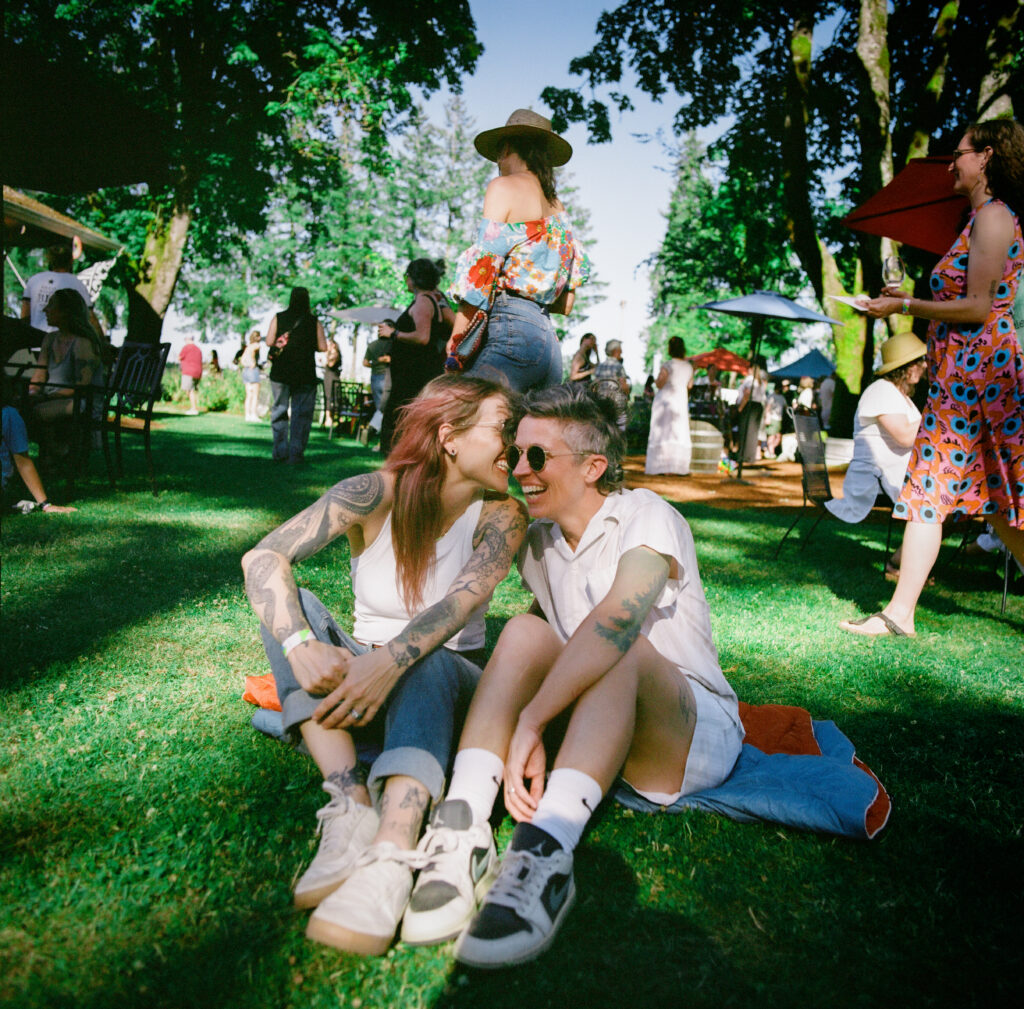
This year’s 3rd annual Queer Wine Fest hosted 20 winemakers and nearly 300 guests, volunteers, and vendors.
When most people think of Oregon, they think of the state’s most populous city: Portland. An LGBTQ+ haven, Portland is known for its robust food and beverage industry, its rather on-the-nose portrayal in Portlandia (sorry), its progressive politics, and for all of the Pride flags and “Black Lives Matter” and “Ceasefire Now!” posters in business windows. But most of the towns and cities that surround Portland have a vastly different political demographic, one that often leaves LGBTQ+ Oregonians on the outskirts. As a small-town queer Oregonian herself, Remy Drabkin knew that reality all too well and sought to change it for LGBTQ+ folks in her hometown. Part of that plan? Creating Queer Wine Fest.
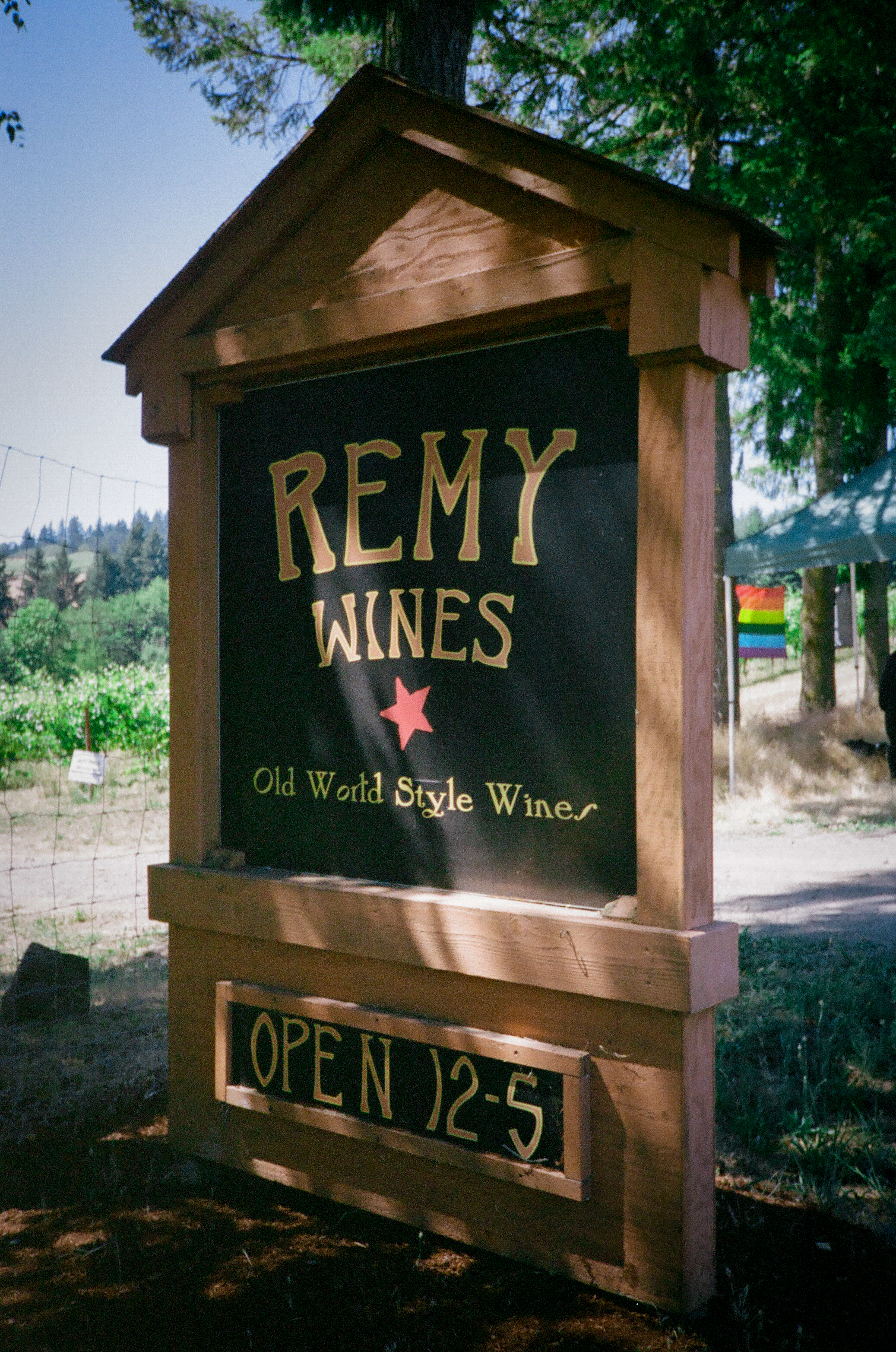
Hosted at Remy’s winery, Remy Wines, this year’s 3rd annual Queer Wine Fest welcomed 20 winemakers and nearly 300 guests, volunteers, and vendors. Strolling through the fest, guests sipped various wines, like Circadian Cellar’s cheekily named white blend, “Everything But The Kitchen Sink,” pinot noir from Adega Northwest, or “No Clos Radio” Gewürztraminer from Maloof Wines, all while listening to live music from Camp Crush. Ro, a barber, and Lizz Quinn, a tattoo artist, set up shop and donated part of their proceeds to Queer Wine Fest’s efforts, all while an aerialist, Tora Holmes, delicately spun in the background. It’s nothing short of a queer haven, something that, up until a few years ago, was lacking in McMinnville, a small town in Willamette Valley, Oregon’s Wine Country, about an hour’s drive from Portland.
“My approach has always been about looking for what’s limiting people from flourishing and then working to remove those barriers,” Remy said. “Community isn’t just about gathering. It’s about actively creating environments where people can thrive, feel seen, and support each other.” And she’d know what her hometown needs. She was once its mayor.
Related: Bourbon, Beignets, And Babes: A Queer Girl’s Guide To New Orleans
Becoming McMinnville’s first openly queer mayor in 2022, Remy worked on a number of efforts, both in and out of office. They got the “deviant sex,” aka Sodomy laws, out of the McMinnville municipal code, worked with local and tribal authorities to secure funding for affordable housing, and implemented the city’s first stormwater utility. There are still Pride flags in some of the businesses’ front windows, an effort that Remy helped put forward during her time in office when she walked into every business offering free Black Lives Matter and Pride flags. Before becoming mayor, Remy co-founded Wine Country Pride in 2020, a non-profit organization aimed at making Pride a year-round celebration. With events ranging from queer meet-ups and family-friendly gatherings to 21+ shows, Wine Country Pride emphasizes diverse and inclusive spaces for the LGBTQ+ community in rural Oregon. It’s nearly impossible to walk down Third Street in McMinnville with Remy without being stopped every few hundred feet so that someone can shake her hand. She was once Mayor Drabkin, after all, but Remy’s notoriety is intrinsically tied to their focus on making McMinnville better for and more representative of all of its residents. Their nose is often to the ground, figuring out what’s next for their hometown.
Queer Wine Fest was born from that inquisitive nature. People started asking Remy what they were going to do next. “It started as a simple idea, three years ago,” Remy shared. “What if we created a festival that celebrates both wine and queer identity?” Queer Wine Fest became a celebration aimed at harvesting community and highlighting LGBTQ+ winemakers and consumers.
“The festival represents more than just wine. It’s about creating visibility, building community, and providing spaces for queer people, especially in rural areas where finding connection can be challenging,” Remy said. “By bringing together wine professionals, enthusiasts, and community members, Queer Wine Fest has really become a powerful platform for celebration and connection.”

That celebration and connection held significant meaning for a lot of people, including Michelle Wasner Seufert from Seufert Winery.
Michelle, a bisexual woman in a polyamorous marriage, co-runs Seufert Winery with her life partner, Jim. The pair has queer friends in Dayton, Oregon, where their winery is located, but they’ve also experienced personal discrimination, mostly from people they once considered friends. Anti-LGBTQ+ viewpoints have impacted their business, which caused Michelle to shy away from many forward-facing queer events. “People have chosen not to shop with us or visit us based on whether or not they think we’re good parents or have a good household, which, as you can imagine, has been really hard for me,” Michelle shared. “But it’s also why I’m such a huge fan of the Queer Wine Fest. It felt so incredibly inclusive. It felt so comforting. Like, there wasn’t going to be anyone who’d come up to the booth and make some weird comment, you know? No one was going to point out that our family structure is different or start talking about what their church believes or doesn’t believe. And so for me, it was just so fun and joyful and just really uplifting.”
As of 2021, 82% of all U.S. winemakers are men, and while a portion of that 82% likely includes gay men, the truth is that when we hear about wine, we’re often told about it from the white, cis-het male perspective. LGBTQ+ winemakers and the predominantly Latine agricultural workforce that makes wine-making and consumption possible are largely left out of the mix. Thus, representation is crucial; without it, we’re not telling the wine industry’s full story, or our own.
Given the wine industry’s agricultural necessity, vineyards are often located in rural parts of the country, outside of major progressive cities. Thus, winemakers—LGBTQ+ and BIPOC teams especially—find themselves butting up against the conservatism that often surrounds them.
Portland is known for its frequent protests and rallies that are often attended—in full violent force—by counterprotesters like the Proud Boys and other white nationalist hate groups, who often travel in from surrounding rural areas. The Proud Boys have made themselves known in the Willamette Valley several times in recent years.
Related: Portugal Feels Like Home: A Safe Haven For Queer Families And Travelers
While the progressive liberals and radical leftists far outnumber the white nationalists, most of Oregon’s blue state status is upheld by major cities like Portland and Eugene, while the towns and areas outside of them tend to lean red. But not all LGBTQ+ Oregonians live in progressive cities; nationally, around 3 million LGBTQ+ people live in rural communities, and given the fact that those areas tend to lean more conservatively, many rural queer and trans folks lack community, representation, and safety.
For Bee Maloof, queer representation was lacking in her upbringing. Growing up in the military, Bee’s encounters with queer representation were far and few between, but most often included butch lesbians. A femme woman, she didn’t recognize her own queerness until she was 30, back in Oregon, and married to a cis-het man—her business partner, Ross. Now, Bee is engaged to a woman named Michelle, who works alongside her at Maloof Wines. Meeting other queer people like her in Oregon changed Bee’s life. “Representation is so important,” she said. “The more you see that you can be successful and be out and loud and proud, the more pathways open up for other people.”
Bee also notes a clear connection between LGBTQ+ identities and winemaking.
“Queers have had to reinvent ourselves. We’ve had to break the mold. In wine, especially if you look at Europe, it’s historically been men doing the same thing for generations. Here in Oregon, queer people are excited to break outside the box. Like Michelle, [my fiancé], putting Muscat and Gamay together. People said, ‘I don’t know about that blend,’ and she was like, ‘I don’t f*cking care.’ That’s the queer community’s energy. We make more interesting stuff because of it.” (Turns out, Michelle was right. People really liked her Muscat and Gamay blend. She’s in the process of launching Beesh Wines with blends like “Spring Fling” and “Fall F*ck,” so keep an eye out for those).
Related: Cruise Of A Lifetime: Our Olivia Travels Experience
Queer Wine Fest is about celebrating the interesting, unconventional, and boundary-breaking experience of being queer in an industry that often leaves LGBTQ+ people out of the conversation. It not only helps bring LGBTQ+ winemakers into the fold by showing them what’s possible, it elevates and celebrates the unsung participants of one of the most lucrative industries in the world. It’s an afternoon of celebration created to fill a void that Remy identified. And at its base, it’s one hell of a party.
“For me, it’s always been about recognizing that when I create spaces that support my needs, I’m simultaneously supporting others who have similar experiences,” Remy said. “Queer Wine Fest is about breaking down barriers, creating connections, and showing that we exist and we belong—not just in wine, but everywhere.”
You can learn more about Queer Wine Fest and keep an eye out for next year’s event at their website or on their Instagram.
Liana DeMasi is a queer, Brooklyn-based, New York-bred journalist, author, and copywriter. Their reporting focuses on the climate, queer topics, health, politics, and culture, and can be found in Atmos, Rewire News Group, i-D, The Boston Globe, Autostraddle, Poynter, and others. They have an MFA in Fiction from City College of New York, where they also teach Creative Writing and Composition.