

This South African Bar Is A Rare Queer Diasporic Sanctuary, And You’re Invited
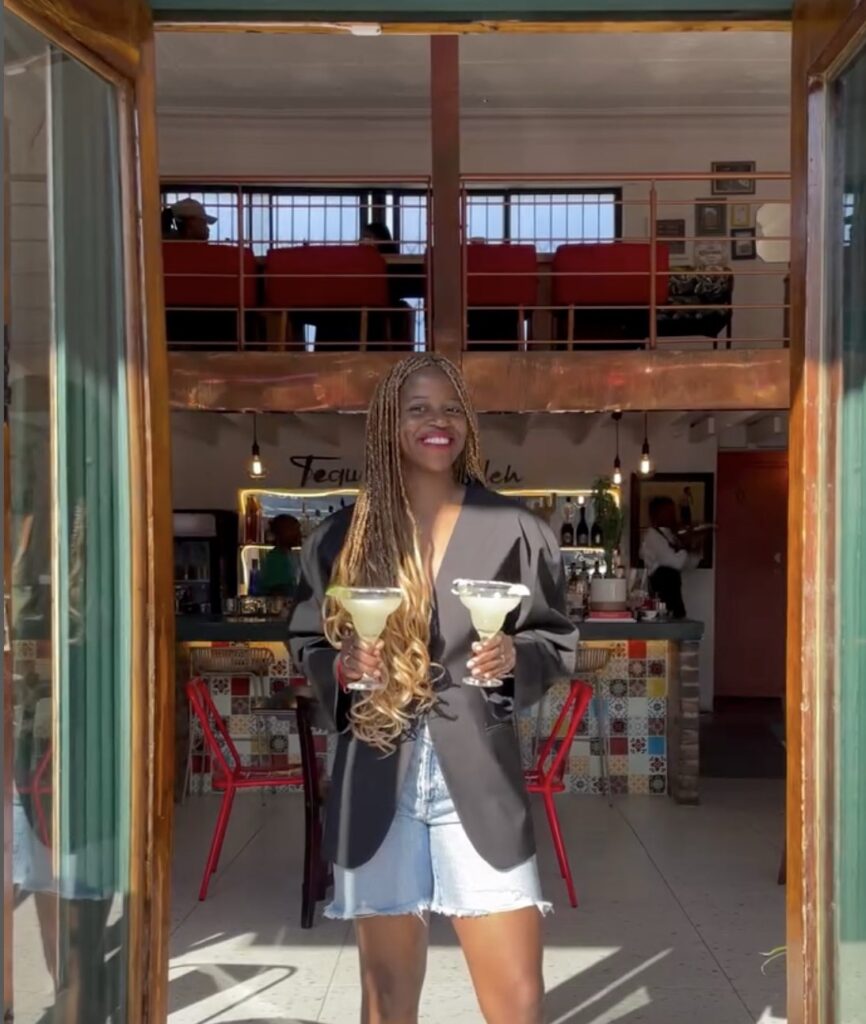
Artüro, based in Johannesburg, not only welcomes queer patrons, but celebrates them.
Featured Image: Owner Tania Muu in front of Artüro. Photo via Instagram.
Artüro might be the only place in Johannesburg, South Africa where there’s a Queer Ultimatum watch party, warm empanadas, and a cute dyke sliding you a shot of rum with a wink.
Based in Melville, a queer neighborhood in Johannesburg, Artüro stands out from the rest of the neighborhood. From the moment you walk in, the Caribbean vibes radiate—the smell of coconut rice and fried fish fills the air, Bad Bunny plays through the speakers, and African-Latin art is in full view through the full-length windows.

The menu is out of the ordinary for Joburg, with churro pancakes and al pastor tacos that transport your taste buds to a white sandy beach. The cocktails elevate this theme with Brazilian caipirinhas, pina coladas, cuba liberes, and a mocktail menu to match with virgin passion fruit martinis and nonalcoholic mimosas. The Caribbean and Latin atmosphere is one of a kind here.
Dreamed into creation by Congolese-born entrepreneur Tania Muu, Artüro is far more than just a bar and restaurant—it’s a sanctuary of a rare diasporic hub in Johannesburg where Afro-Latin culture thrives and queer souls of every kind are not just welcomed, but celebrated. “I want people to feel free here. Free to share how they like their margarita. Free to move. Free to be,” Tania tells GO, describing the reason she founded Artüro.
More than just a restaurant owner, Tania is an MBA graduate, a logistics and management professional, and a self-taught cook whose culinary journey was shaped by everything from family dinners in Kinshasa to street food in Ecuador and fish plantains on the beaches of Colombia. “A remote girl from Congo could see herself in a plate of food made thousands of miles away in Colombia that could’ve been cooked by my grandmother,” she recalls.
This attitude was in part inspired by her extensive travel through Latin America, including trips to Colombia, Brazil, Ecuador, and Mexico, where she saw herself reflected in each culture.
Tania has always valued the importance of travel, experiencing new cultures, and learning new perspectives, especially as a Congolese woman whose access to travel has not come easily. “My passport is limited. I can’t just get up and leave. But I’ve made it a mission to see the world, one stamp at a time. Wherever my passport will take me, I go. And I go deep—not just for the view, but for the people, for the food, for the story,” says Tania.
But Tania’s motivation to create a space like Artüro goes far beyond Latin America or flavor. As an African woman raised in a Catholic household in the Democratic Republic of Congo, her first visit to South Africa at 13 was eye-opening—not just for its politics or pace, but for the visibility of queer people. “I saw my first openly gay person in South Africa, and it changed me,” she says. “I was raised Catholic, but my parents never taught us to condemn. I stayed curious. I stayed open.”
It was this attitude that inspired the mission of Artüro. It is no secret that South Africa has been a safe haven for queer people across the continent as the only African country to legalize same-sex marriage, and Melville is a reflection of that. With pride flags hanging from its bright pink walls, a mural of a proud woman dedicated to Tania’s Congolese roots, and affirmations of joy decorating the bar, Artüro fits in Melville perfectly.
“I love Artüro! There’s really nothing like it,” describes Nakai, a frequent customer of Artüro. “Whenever I walk past, I can see a cute masc sitting at the window or cute they/thems on a date. How often can you find that? This really is a place for us.”

Inspired by the accepting and inclusive culture of Melville, Tania knew those who came to Artüro would be safe in and outside the bar. “Melville had to be the place. It’s quirky, accepting, and somewhere you can really be yourself…Respect is at the core of everything we do. From my team to our guests—everyone should be seen and heard,” says Tania.
Artüro mirrors Melville’s spirit: vibrant, groovy, and social with a very authentic and grassroots way of gathering a diverse queer community. “Melville isn’t about the all-out trap vibe,” Leroy Mrulekana, long-time Artüro team member, explains. “It’s more playful, more intimate—and I think a team like ours just makes it even more fun.”
The staff at Artüro is part of Tania’s mission to create a safe space for the community. She aims to have a team that accepts all people, values joy, and adds to the unique culture of Artüro. Leroy describes it, “We try to say: come as you are. Because we’re also weird—we’re just a weird team. So we say, come as weird as you are, come as who you are.”
Because of this mission to create an environment that is safe for all, the space is intentionally fluid. On any given night, Arturo might be hosting a sapphic salsa social, an art exhibition, or queer speed dating.
Every last Sunday of the month, Artüro hosts Afro-Latin Social. The space becomes a diasporic reunion—where Kompa from Haiti meets Kizomba from Angola, in a fusion that warms any queer soul of the African diaspora. “Tania spoke to me when she launched Artüro, and I knew immediately—it was a perfect fit. Afro-Latin Social needed a home like that. It’s the only Afro-Latin restaurant in Joburg,” says Paciano Sinakwa.
Afro-Latin Social, organized by Paciano, is a reflection of how much the Melville community appreciates the space that Tania has fostered through Artüro. “Tania’s traveled, she’s danced, she’s eaten with people—she’s done the work. That gives what she’s doing authenticity, and that matters. I’ll partner with anyone who respects the culture like that,” notes Paciano.
Connecting the Afro-Latin diaspora to its African roots is an interest Paciano also shares. “I’m very Pan-African. I can say with confidence that most of this music has African roots. But it’s fascinating how once it leaves Africa. It shifts—depending on the community that keeps it alive. Culture moves. It travels. And when it settles in new places, it changes form—but keeps its soul.”
At Paciano’s event, it doesn’t matter who dances with whom. The usual gender roles no longer apply, and the diasporic beats flow through people freely.
At Afro-Latin Social, Salsa turns to Kizomba, and you could tell because the music is no longer in Spanish. “I started hosting dance events around 2015. I wanted to recreate the kind of connection I felt at house parties, when people would stop whatever they were doing to dance—to flirt, to feel something. You may not understand the language, but the music does something to you. It opens curiosity. It makes you want to know where it comes from, who made it, and why it moves you.”
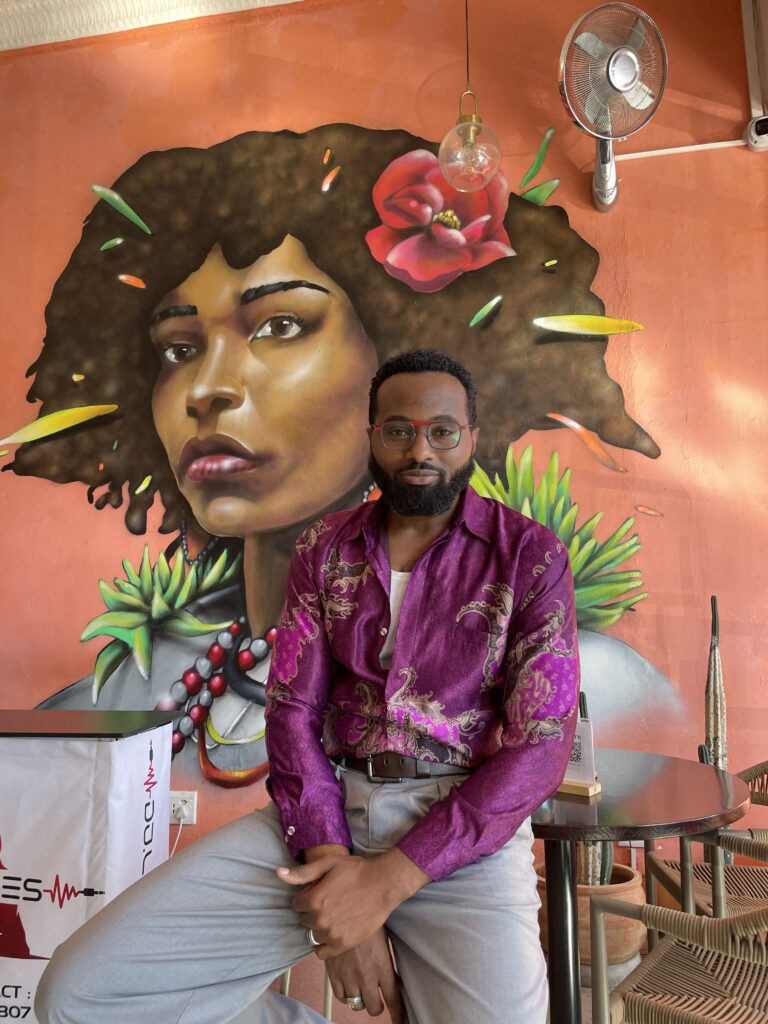
Photo by Krys Cerisier.
Events like Afro-Latin Social bring that diasporic throughline—Africa to the Caribbean, Haiti to Harlem, Kinshasa to Cali—which runs through Artüro’s every corner. Tania’s inspiration for creating this queer home for the diaspora stems from her experience across the ocean in the streets of Cartagena, the markets of Quito, and the beaches of Bahia.
But it was in Colombia that something clicked. Watching women move to the beat of kompa and salsa in Palenque, she didn’t feel like an outsider. “I could’ve been in Deep Soweto or a Congolese village. The hand-painted shops, the music, the energy—it was us.”
The African influences in Latin America are often overlooked, ignored, or entirely erased, and queer Afro-Latin Culture even more so. Outside of Latin America, people often don’t realize that much of the music, dance, and food is rooted in African culture, with a majority of the African diaspora existing in Colombia and Brazil. For Tania, that revelation was bittersweet.
“I’d grown up watching telenovelas,” Tania says. “But where were the Afro-Latinos? There was always just one Black character—maybe a maid. Never the lead.” It wasn’t until she went to Latin America that she understood how underrepresented the Afro-Latin community really was.
“Then I found out that Afro-Brazilians make up almost half the population. They weren’t invisible—they were just erased.”
That sense of erasure is what moved Tania to build a space that made the invisible seen, where diasporic Blackness was not only acknowledged—but celebrated through flavor, movement, and joy.
“I tasted some things that my mom or my aunts could’ve made,” she remembers. “I didn’t expect that. But I was like—this is ours…So much was carried with them—in those tears, in those ships. The flavor, the music, the soul—it was never ripped out of us. That’s power. That’s survival.” It wasn’t just food for Tania—it was a memory of Africa existing an ocean away.
For Tania, that magic—Black cultural survival across continents—is what she channels into Artüro. From the playlist to the tequila selection, every detail is intentional. Every dish is a declaration.

She notes that while food is her canvas, the larger vision is one of community-building, cultural reclamation, and freedom—especially for queer women, but for people of all genders and sexualities, who are being increasingly policed because of their identity. “My canvas is this small—it’s only food. But if I can use it to make people more curious, more connected, more joyful? Then I’ve done my work.”
At Artüro, Tania is rewriting what queer nightlife can look like on the continent—rooted in memory, rhythm, and built entirely for us. In a city where truly sapphic spaces are still rare, Artüro stands out as both refuge and celebration. It’s a place where flavor meets freedom, where communities reunite, and where, as Tania promises, “You will leave with a smile. That’s always my ultimate goal.”
Krys Cerisier is a Caribbean writer and world traveler who has explored over 50 countries from Bolivia to Fiji in search of queer joy, sapphic community, and stories that can connect queers from around the world. She writes not just about the most popular gay bar in town, but about local queer organizers looking to create a grassroots space for studs, dykes, fems, masc, and everything in between. Krys’ perspective is at the intersections of diaspora, identity, and resistance—always with a passport in one hand and a notebook in the other.