

The Olympics Healed My Forgotten Ice Skating Past
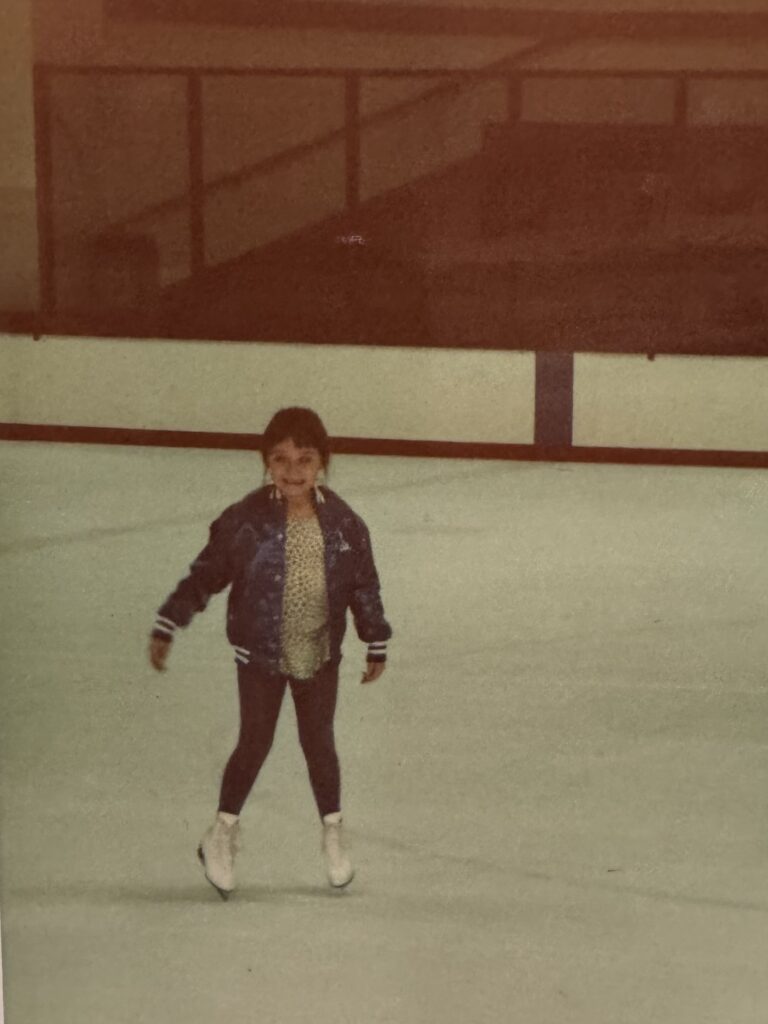
Growing up skating in the ‘90s, I could never have imagined seeing happy successful queer people, let alone ice skaters.
Featured Image Courtesy of Sassafras Patterdale
I was five years old when I took my first shaky steps onto the ice. It was 1989 at a mall rink in suburban Oregon. Soon, I started skating regularly and went from shaky, wall-gripping steps to loving the way skating felt like flying. My history as an ice skater is not something that I talk about a lot. It felt like one of those weird parts of my already strange childhood that didn’t have a lot of connection to my adult life.
Then, a year and a half ago, my mom who I hadn’t seen or talked to in 24 years died in her hoarded house a few miles away from the mall where I once skated. While cleaning the house, I was able to rescue childhood photos, which, much to my surprise, included pictures from the mall rink. The term “ice princess” is thrown around a lot when we talk about girls’ and women’s figure skating. For decades, it has been the image of what it means to be a figure skater, or at least a successful one. That is, until the 2026 Olympics. To see Amber Glenn, an out and proud strong queer woman, competing in the sport and talking openly about being queer is something, as a closeted kid lugging my purple skate bag through the mall behind my hungover mother, I never imagined I would see. And then, of course, there is Alysa Liu’s unapologetic presence and incredible gold medal performance, which has fully shattered the idea that, to be successful in skating, you have to look and act a certain way.
Related: GO-lympics Recap: Women Athletes Dominated The 2026 Winter Games
As I watched the games, I thought a lot about my younger self in those childhood pictures and how hard the world feels right now, but also how much progress has been made. Growing up skating in the ‘90s, I could never have imagined seeing happy successful queer people, let alone ice skaters.
Not an Ice Princess
I remember what it felt like to land a jump. I felt like I could do anything. Then, of course, the criticism started, mostly about my body: too round, too big, and too strong. Repeatedly, I was told I was a good jumper, but I was not graceful. “Grace” is not a word usually associated with me, and anyone who knows me now as a queer adult would not be surprised by this assessment. But in early elementary school, I didn’t know what to do with this information. I was just me. I liked to skate, and honestly, I didn’t really care who thought I was or wasn’t good at it.
Seeing Glenn leading the 2026 Women’s Olympic Ice Skating team, being unapologetically queer, and political was a powerful statement that flies in the face of decades of ice skating expectations. She was not just a pretty face, a beautiful skater; she was out, proud, and using her platform to speak out about injustice, queer rights, and the realities of being a woman athlete.
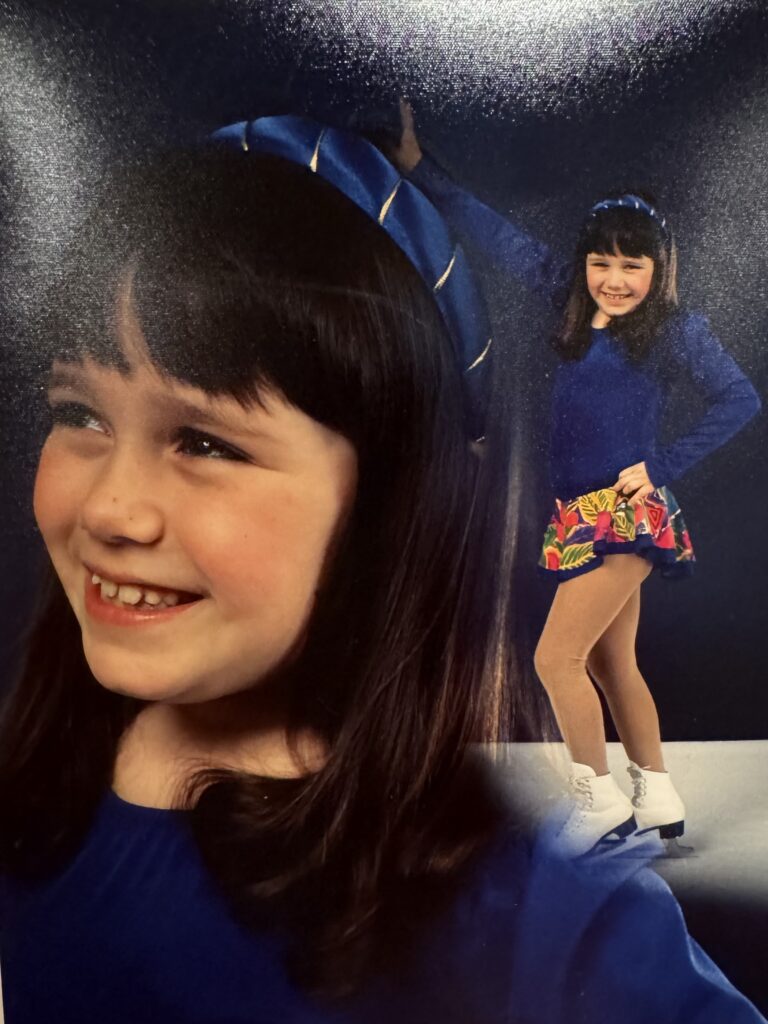
In the Shadow of Tonya Harding
I grew up outside of Portland and skated at the local mall rink where Tonya Harding was skating and training for the Olympics. Taped to my bedroom mirror were pictures of Tonya Harding and Nancy Kerrigan. This was the early 1990s, and in the lead-up to the 1994 Olympics, it felt like everything about skating was tied up in their rivalry.
Then, Tonya Harding was involved in the assault of Nancy Kerrigan. Overnight, our hometown skater, whose name was on banners above the rink, went from a hero to a white-trash disappointment. To succeed in skating, you were supposed to be cutthroat and competitive, but only on the ice.
That was just what skating was: girls in fierce, ugly competition. And that competitiveness caused a palpable, everpresent tension at the rink. I wasn’t friends with any of the other girls at the rink. I don’t remember us even talking to each other. This might have been a “me” thing, because I was so painfully shy, anxious, and introverted, but also nothing about ice skating in the 1990s fostered connection. It was only competition, and I didn’t want any part of that. I just wanted to fly, to fly away from the kids who bullied me at school, that mall rink, and my abusive family. To see the 2026 Women’s Ice Skating team (Amber Glenn, Alysa Liu, and Isabeau Levito) known as the “Blade Angels” skate as a team, and very clearly as what appeared to be close friends is something that, as a kid, I never could have imagined.
I escaped a lot of the tension at the rink because I continually refused to compete, something that, shockingly, my mother went along with. I suspect she knew, as well as I did, that the criticism I heard from coaches: too fat, too strong, not graceful enough, would dampen my scores.
Not long after the Tonya Harding scandal, I remember my mom getting a phone call from the rink. I was sitting among my mother’s hoarded trash in my play area, moving dolls from one room of my dollhouse to the next, trying to eavesdrop on her call. When she came into the room, she told me that my coach had been beaten up for being a homosexual and wouldn’t be returning to the rink.
I don’t know how much of this story was true, but it was one of the first times I had heard my mother talk about gay people. I already knew my queerness was a secret I needed to keep, and this was one more reason why. I kept skating for a little while, but the continued pressure about whether I was going to compete kept weighing on me, and the prospect of starting with a new coach was a challenge. Eventually, my mom let me stop going to the rink, and the purple skate bag and ice skates went into a closet, never to come back out.
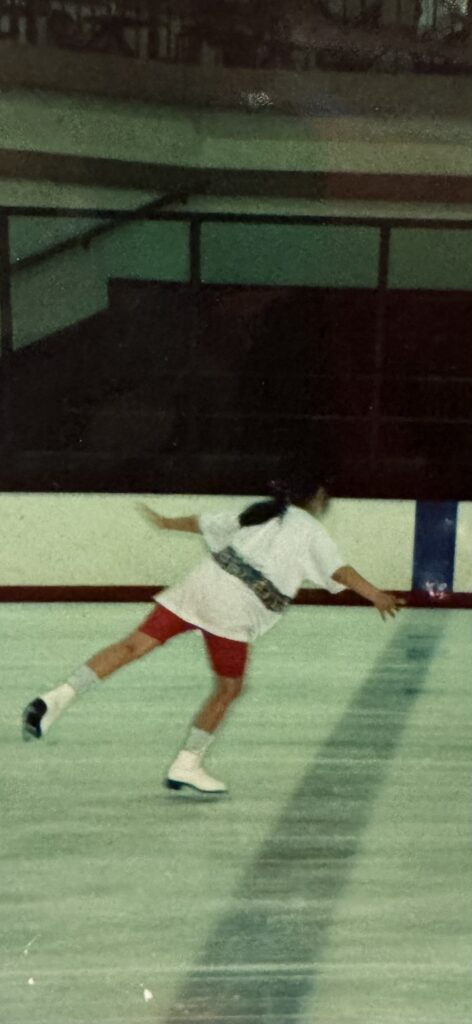
The Olympics Healed Something For Me
I was glued to this year’s women’s Olympic performances, which surprised me. For me, skating was never a big passion. Once I quit, I didn’t find myself missing it. I went on to find creative outlets and activities that I love and am deeply passionate about.
It was funny, last year, to excavate my mother’s hoard and find pictures of me on the ice.\ It was also one of the earliest moments where my difference, what I now know to be queerness, problematically stood out and yet, on the ice, I felt free. Watching the 2026 Olympics unexpectedly healed something in me that I didn’t even know was still tender and bruised. To watch the U.S. women’s team appear to actually have fun together, cheer each other on, and cross international lines at the rink to hug and congratulate each other was a far cry from the brutal skating rivalries of the 1990s.
Related : Amber Glenn Wins 3rd Figure Skating Championship In A Row Ahead Of Olympic Debut
Like millions of other people, I was especially captivated by Alysa Liu’s skate performance. What struck me wasn’t the gold medals, but the journey. To retire from skating after the last Olympics at sixteen and take life into her own hands; to explore and live, and not live someone else’s dream; only to return completely on her own terms with her look, her body, her music, that is one of the most iconic feminist acts of resistance and self-determination that I can imagine. It carries profound lessons that I think all of us can benefit from. I know I can.
What I loved about watching that gold-medal-winning performance was how joyful it was. Finding and centering big and small queer moments of joy as part of survival and resistance is core to how I live my life. I love seeing other people centering joy and hope. I love that Alysa Liu is living a reality that so many people have to grapple with at such a young age and on such an international platform.
I don’t miss skating, and now, in my 40s, I have no interest in strapping skates on again. But watching the Winter Olympics made me see the sport in a different way. It helped me remember that behind the critiques and the not fitting in, I was just a little kid who laced up skates and felt like they could fly. And as someone who doesn’t have a lot of positive memories from my childhood, unexpectedly, the Olympics gave me one back that I didn’t remember existed.