


Supreme Court: California Teachers Not Restricted From Outing Trans And Gender Nonconforming Students To Parents (For Now)
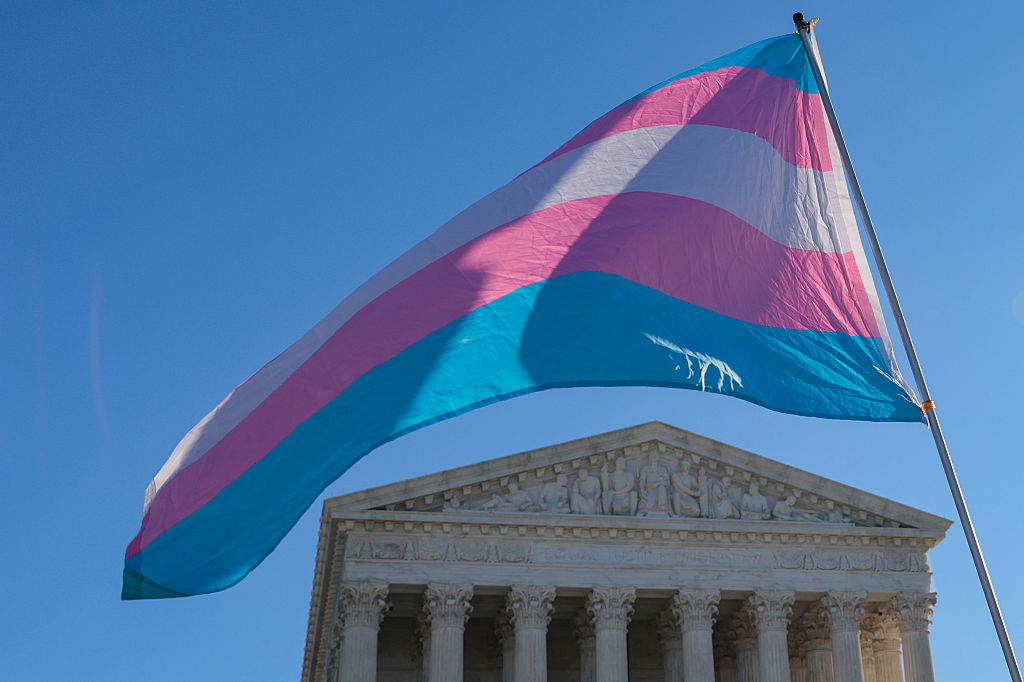
The decision blocks a state law that had sought to protect transgender and gender nonconforming students who might be vulnerable to abuse.
Featured Image: Photo by Heather Diehl/Getty Images
In January, a federal judge in California ruled that teachers could ‘out’ kids to their parents, a decision that was initially blocked by an appeals court, keeping student privacy (temporarily) protected. On Monday, March 2, the Supreme Court removed that block, allowing the lower court federal ruling to stand – heightening concerns for the safety of trans youth who might face abuse at home in some situations.
Yesterday’s decision by SCOTUS is widely viewed as undermining efforts made by the Attorney General of California to defend privacy by keeping legislation in place that enforced “longstanding state laws that protect vulnerable transgender and gender nonconforming students.”
“Under long-established precedent, parents − not the State − have primary authority with respect to ‘the upbringing and education of children,'” the majority of Supreme Court justices said in an unsigned opinion. “The right protected by these precedents includes the right not to be shut out of participation in decisions regarding their children’s mental health.”
The trail of these legal proceedings is complicated, and the final outcome remains to be seen as the case is still playing out. But what this means now is that school teachers and staff do not have to follow the law established by Assembly Bill 1955/the SAFETY Act, which bars schools from requiring staff to inform parents if a student identifies as LGBTQ. When the SAFETY Act was enacted in 2024, California became the first state to ban school districts from being required to inform parents of a student’s gender identity or sexual orientation.
Five conservative justices agreed with the outcome of the case. Three liberal justices dissented. Justice Elena Kagan and Justice Ketanji Brown Jackson jointly wrote that the court’s handling of the matter showed how the emergency docket can malfunction. “The court is impatient: It already knows what it thinks, and insists on getting everything over quickly.”
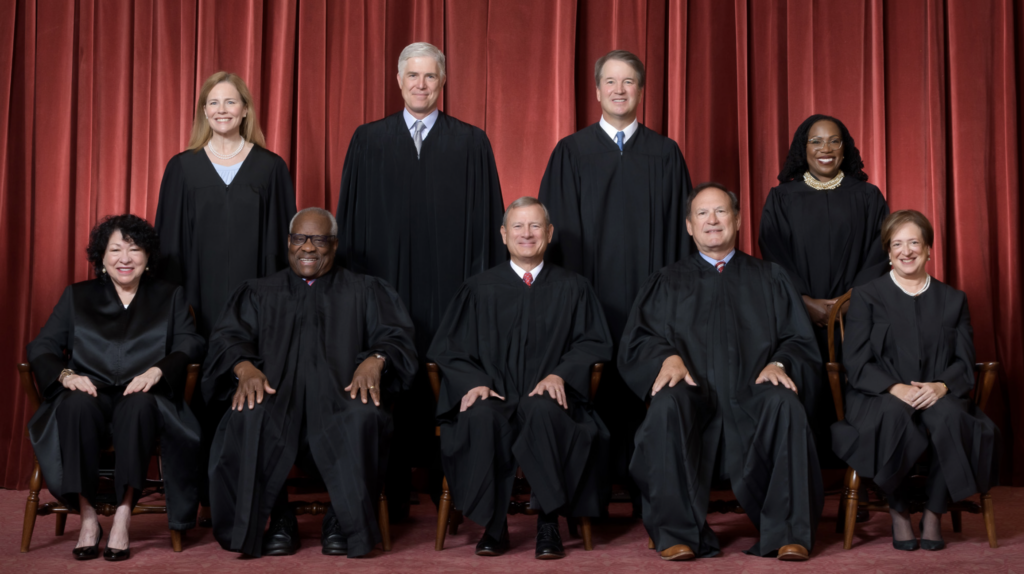
Image: The Supreme Court — Current Justices, via Supreme Court Historial Society
The Thomas More Society represented religious parents and teachers who claimed that the law forced schools to mislead and to facilitate secrecy around students’ transitions. Reportedly, one set of parents claimed that their junior-high daughter was being treated as a male at school. Other parents said they were misled about how their children were being referred to at school. The group told the Supreme Court: “California is requiring public schools to hide children’s expressed transgender status at school from their own parents. California parents (including religious parents) are suffering grievously under the state’s regime.”
“According to testimony in the record, exposing that information threatens ‘significant psychological, emotional, and sometimes even physical harm’ to students,” the state of California told the Supreme Court. As it stands now, teachers are permitted to share information with parents about their children’s gender identity without violating school district policy.