


‘Silence of the Lambs’ Star Ted Levine Regrets Role That “Villified” Trans Community
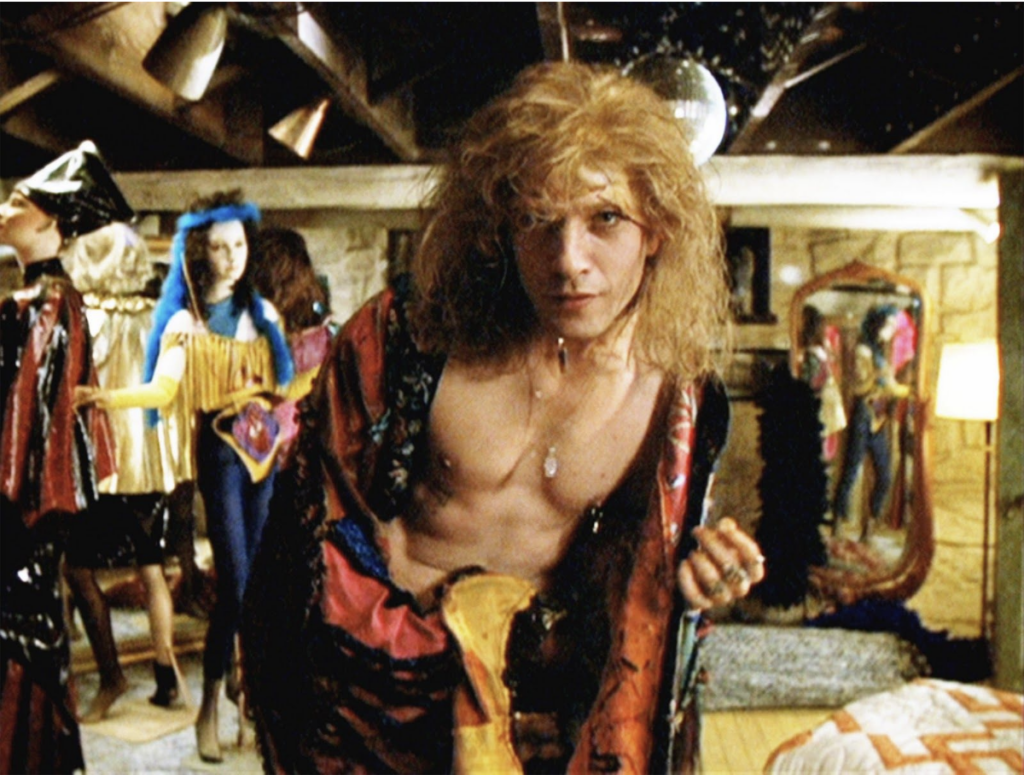
Reckoning with transphobia, Levine said that over time, he gained more understanding “about the culture and the reality of the meaning of gender.”
Featured Image: via Facebook (ScreenGeek)
Trigger warning: content contains graphic descriptions of violence
It was 35 years ago on Valentine’s Day that Jonathan Demme‘s 1991 horror/thriller film, Silence of the Lambs, hit the movie screens. Now, actor Ted Levine has opened up to The Hollywood Reporter, expressing regret regarding his role as serial killer Buffalo Bill, and its troubling representation of gender. “It’s unfortunate that the film vilified that, and it’s f***ing wrong,” he said.
As a plot recap: a rookie FBI agent Clarice Starling (Jodie Foster) hunts a serial killer known as Buffalo Bill (a.k.a. Jame Gumb), who murders and skins women so he can make a “flesh” suit to wear. The FBI agent consults with the brilliant, incarcerated cannibal, Dr. Hannibal Lecter (Anthony Hopkins), to gain insight into the serial killer’s mind.

Silence of the Lambs movie poster, via Orion Pictures
While Buffalo Bill was not explicitly stated to be trans, by today’s standards, the character might well be viewed as identifying as trans, gender nonconforming or some combination. Over the years, the portrayal has drawn scrutiny and criticism from the trans community, and those who see yet another representation that feeds on, and fuels, transmisogyny.
“There are certain aspects of the movie that don’t hold up too well,” Levine told The Hollywood Reporter. “We all know more, and I’m a lot wiser about transgender issues. There are some lines in that script and movie that are unfortunate.” Reportedly, he did not have concerns while making the movie. Levine said that over time, and having worked with trans folks, he gained more understanding “about the culture and the reality of the meaning of gender.”
Levine added that he didn’t play Buffalo Bill as being gay or trans. “I think he was just a f**ked-up heterosexual man. That’s what I was doing.”
Related: Review Of ‘Bulletproof: A Lesbian’s Guide To Surviving The Plot’
Silence of the Lambs went on to win five Oscars: best picture, director, actor, actress and screenplay. While it is true that trans issues were not as widely discussed in the 1990s as today, they were not altogether ignored. Protests ensued at the 1992 Academy Awards, when activist groups Queer Nation, ACT UP and others clashed with police in their outrage at yet another example of Hollywood’s portrayal of queers as being twisted, perverse and generally deranged.
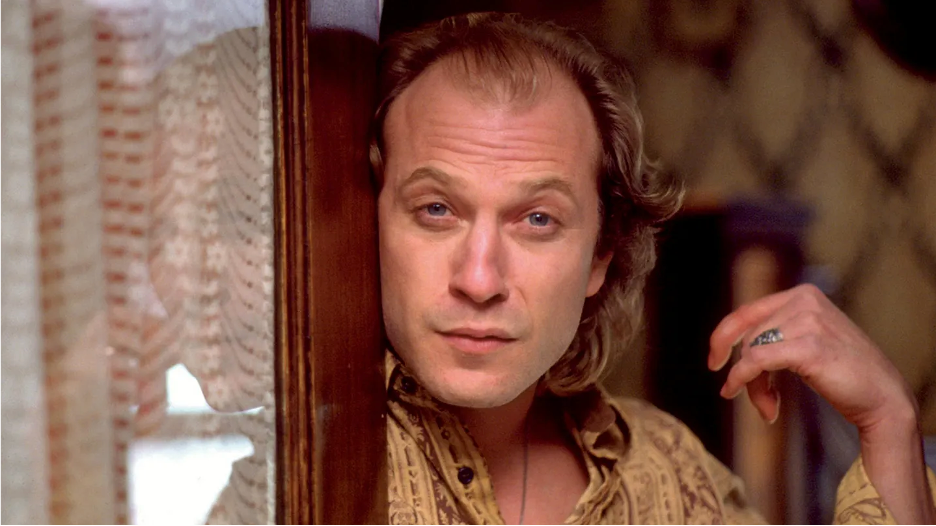
Image: Ted Levine as Buffalo Bill (courtesy Everett Collection)
Edward Saxon, Demme’s producing partner, also spoke with The Hollywood Reporter about the film, which was an adaptation of Thomas Harris’ 1988 novel.
“We were really loyal to the book,” he said. “As we made the film, there was just no question in our minds that Buffalo Bill was a completely aberrant personality — that he wasn’t gay or trans. He was sick. To that extent, we missed it. From my point of view, we weren’t sensitive enough to the legacy of a lot of stereotypes and their ability to harm.”
“There’s regret,” he added, “but it didn’t come from any place of malice. It actually came from a place of seeing this guy. We all had dear friends and family who were gay. We thought it would just be very clear that Buffalo Bill adapts different things from society, from a place of an incredibly sick pathology.”
In the original novel, Buffalo Bill is portrayed as believing that he wants to become a woman. He does not qualify for gender-reassignment surgery, and turns to murdering women so he can use their skin to create a “woman suit.” (He was also institutionalized in a psychiatric ward where he learned to be a tailor). He is portrayed in the story as hating his identity, and the women he kills are viewed as objects – he calls them “it.” He wears lipstick and make-up and women’s clothing, most notably in a scene where he dances to “Goodbye Horses,” in his basement. The little penis tuck maneuver improvised by Ted Levine was not in the script, but in the original novel.
Related: 37th Annual GLAAD Media Awards Nominees Announced – Gains Seen In Mainstream Visibility
It would be a stretch to say that the film does not link trans identity to creepiness, pathology and violence. Now 35 years later, while the cast and makers of Silence of the Lambs might be having a reckoning about representation, the question remains: How far have we moved in the right direction since then?
As per GLAAD’s 2025 release of its Studio Responsibility Index (SRI), the LGBTQ+ media watchdog group found that in the year prior, “only two films (less than 1% of all films tracked) featured transgender characters, and both included either harmful stereotypes or inauthentic casting.”