

San Francisco To Develop 15-Story Affordable Housing Campus For LGBTQ+ Seniors

The eco-friendly development will feature three residential buildings, open spaces to facilitate connection, and services to support an aging queer community.
Featured Image: rendering courtesy of Mercy Housing
In a heartening development, San Francisco has green-lit a new housing project that will provide nearly 200 apartment units, primarily to LGBTQ seniors plus some veterans. In a city where affordability and lack of housing conspire to add difficulty to the challenges of aging, this is great news for the segment of people aged 60 and over, who are expected to comprise one-third of the city’s population by 2030.
The 15-story residential building will feature studios and one-bedroom apartments. Envisioned by architect Paulett Taggart, when completed, it will be part of a mini campus consisting of three residential buildings and several locations to help support the community. The design includes open spaces and common areas to foster engagement between seniors, plus a corridor to help residents access various programming spaces across all the buildings.
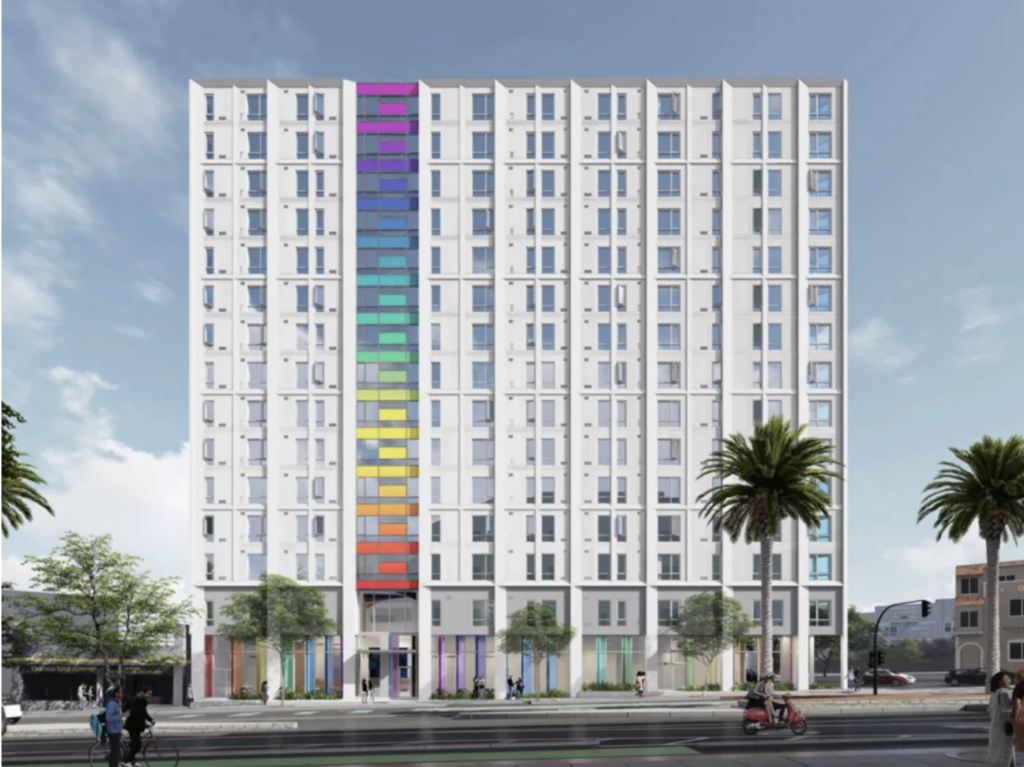
Image: rendering of SF affordable senior housing complex (courtesy of Openhouse)
“Seniors have an increased sense of isolation especially if they are no longer working, they have family and friends who are starting to pass away and so intentionally designing spaces can help them make connections with their neighbors,” Roselie Enriquez Ledda told ABC7 Bay Area.
The campus is the result of a years-long collab between nonprofits Mercy Housing, which will develop the property, and Openhouse, which currently runs LGBTQ facilities and is slated to offer services at the new 1939 Market Street address. The vision is on path to fruition thanks to city and state funding. Specifically, funders include the San Francisco Affordable Housing and Sustainable Communities Program, which integrates affordable housing with transit and focuses on low-income families, seniors, and job access through mixed-income housing and community amenities. Earlier this month, the California Strategic Growth Council awarded nearly $47.6 million toward the project. The city initially gave $4 million for predevelopment costs, and two years ago, awarded $52 million in gap funding. Total cost is expected to be about around $117 million.
“For seniors age 62 plus, the income will be restricted for very low income to extremely low income, so that means that folks can be making approximately $16,000 up to $92,000 a year,” Sean Wils, Senior Project Manager of Mercy Housing has said. Tenants will be selected by lottery.
The Castro neighborhood project is expected to take two years to complete, and to open in early 2029 – transformed from an empty lot on Market Street to a modern structure featuring rainbow colors on both sides of the building. According to developers, it’s what the community wanted, and a way to say to the rest of the city: “We are here.”
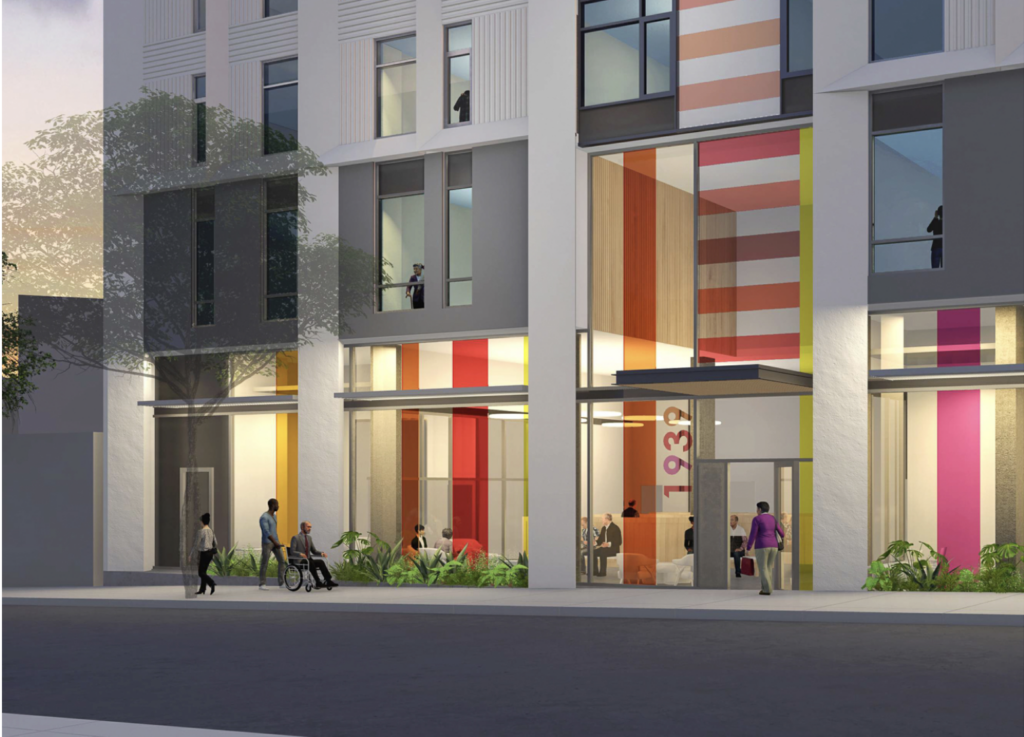
Image: rendering of 1939 Market Street residential entry, design by Paulett Taggart Architects and YA Studio