

Orlando Artists Fill Parking Lot With Color In Protest Of Rainbow Crosswalk Ban
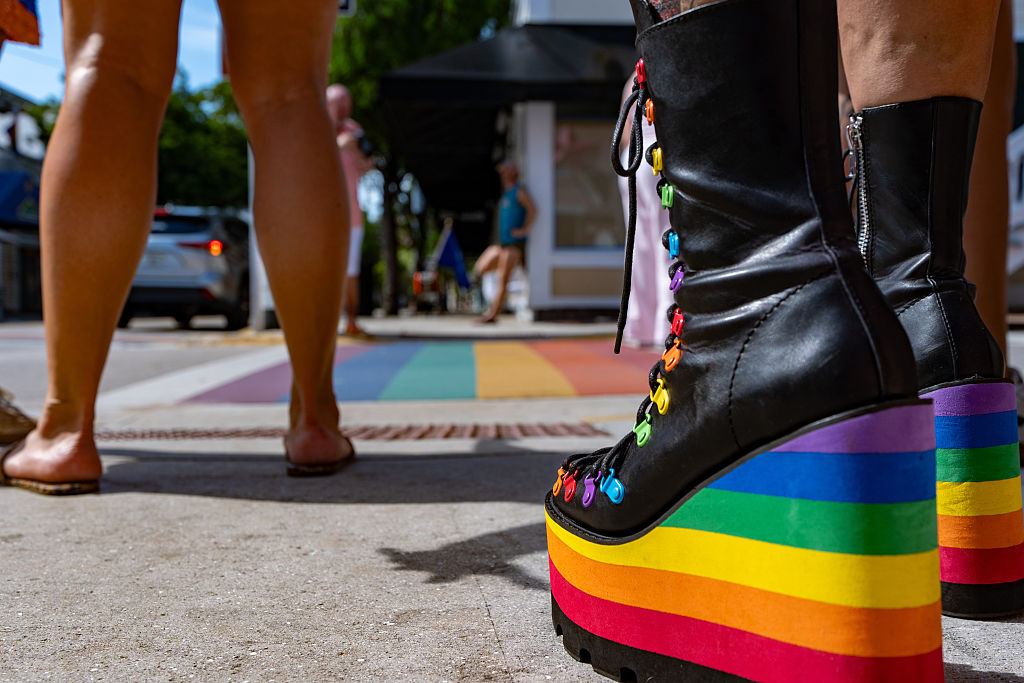
The Se7en Bites restaurant opened 49 parking spaces to artists after Florida banned rainbow crosswalks statewide.
Featured image by Jen Golbeck/SOPA Images/LightRocket via Getty Images
An Orlando restaurant turned its parking lot into a large-scale art project this week, inviting community members to paint 49 parking spaces in rainbow colors and other designs. The event served as a direct response to Florida’s recent ban on rainbow crosswalks and similar street art.
Se7en Bites, a popular bakery and brunch spot, opened its private lot to artists for what was called “Parking Space for Pride — A Rainbow Connection.” Organizers said they received around 1,000 applications to participate. The number of spaces available matched the 49 victims killed in the 2016 Pulse nightclub shooting, an intentional connection to the Orlando site.
Related: Community Recolors Pulse Rainbow Crosswalk After State Erasure, Only To See It Painted Over Again
The move follows enforcement of a state transportation code that prohibits painted crosswalks and other markings featuring “non-standard” images or colors. The Florida Department of Transportation issued a memo this summer warning municipalities that funding could be withheld if the rules were not followed. The restrictions specifically target surface art carrying social or political themes, including rainbow designs installed in recent years in cities across the state.
Last month, transportation crews painted over the rainbow crosswalk at the Pulse memorial, replacing it with standard black and white striping. The removal sparked backlash from local leaders, survivors, and residents, many of whom gathered to chalk over the intersection in protest. Police have since monitored the site and restricted the use of paint at demonstrations.
Related: Florida AG Nails New Kind Of Stupid: Subpoenas Restaurant Over Drag Queen Show
At Se7en Bites, participants used paint, chalk, and mixed media to fill each parking space with individual messages and designs. The artwork remains on private land, meaning it does not fall under state jurisdiction.
Opponents see the measure as another step in a series of policies affecting LGBTQ+ communities. The state has framed it as a traffic control issue.
The parking lot project is one of several ways people across Florida are adjusting to the new restrictions. From murals to chalk drawings, communities keep finding creative ways to bring color back into public spaces, even as state rules try to limit where that can happen.