

New York City Dyke March: From 1993 To Today

“The NYC Dyke March has always been political in nature,” a spokesperson told GO.
Featured Image: NYC Dyke March 2025. Photo by Keegan Stewart.
Every sapphic worth their salt in New York City knows about the Dyke March. In an age of rainbow capitalism and Trumpism, it’s a welcome return to a good, old-fashioned protest. Very butch.
The Dyke March began at a time when LGBTQ+ rights were abysmal; gay marriage and job protections were still merely aspirational, the AIDS epidemic dominated the narrative around gay rights, and lesbians were being pushed aside by the movement at large. That’s why, in 1993, the Dyke March was founded on the basis of sexual liberation and basic human rights.
Of course, in 2025, these same rights are once again threatened. Minorities within the queer community, including women, are still being left out of the dominant push for gay rights. But despite all the changes (and lack thereof) around LGBTQ+ narratives, the Dyke March has remained a stronghold of Pride Month across the country for over thirty years.
Let’s flash back to 1993. Melissa Etheridge and the Cranberries were the faces of lesbian angst. Riot Grrrl music highlighted feminine rage. That April, a group called “The Lesbian Avengers” was planning a protest in Washington, D.C., which would take place the night before the general LGBT walk. Two months later, due to its success in D.C., the Lesbian Avengers brought the Dyke March to New York City.
GO Magazine reviewed footage of the first two years of the Dyke March from “Dyke TV,” a public access channel founded by one of the original Avengers and preserved by The Lesbian Herstory Archives. In one of these interviews, a protester said a march specifically for gay women “is so important because as lesbians, we’re always subsumed under the queer movement in general, and it’s time that we be visible as dykes and as lesbians here in New York City and everywhere.”
Despite being from over thirty years ago, the sentiments among the interviews in the ’90s and those in 2025 are remarkably similar. For example, one unnamed marcher told Dyke TV, “ I like walking in the Dyke March because it’s a lot more political than the pride parade, so I always enjoy it more.” This year, Anna Keenan, a marcher, gave GO an equivalent take: “ I love that it’s not corporate. It feels more like a protest, and I just love seeing my community come together.”
In fact, since its inception, the Dyke March’s politicality has been what separates it from other events during Pride Month. During its inception, the issues addressed were the bread and butter of lesbian rights. “Well, I think our experience as women makes us not single issue; we care about ending gay and lesbian oppression. We also care about changing the second-class status of women. We care about making the world a safer place because we deal with and live with violence. We care about economic issues because we get paid less than men do. There are a lot of things that we have to bring to the forefront,” one of the original protestors told Dyke TV.
When asked why they were marching, another said, “Mostly things like breast cancer and things that affect the lesbian community. Parental rights are a big thing for us- the ability to adopt my lover’s little girl.” Over the years, the March’s political roots have expanded to encompass a wider array of causes. Today, the Dyke March Committee’s values statement discusses issues as varied as ageism, body positivity, and immigration.

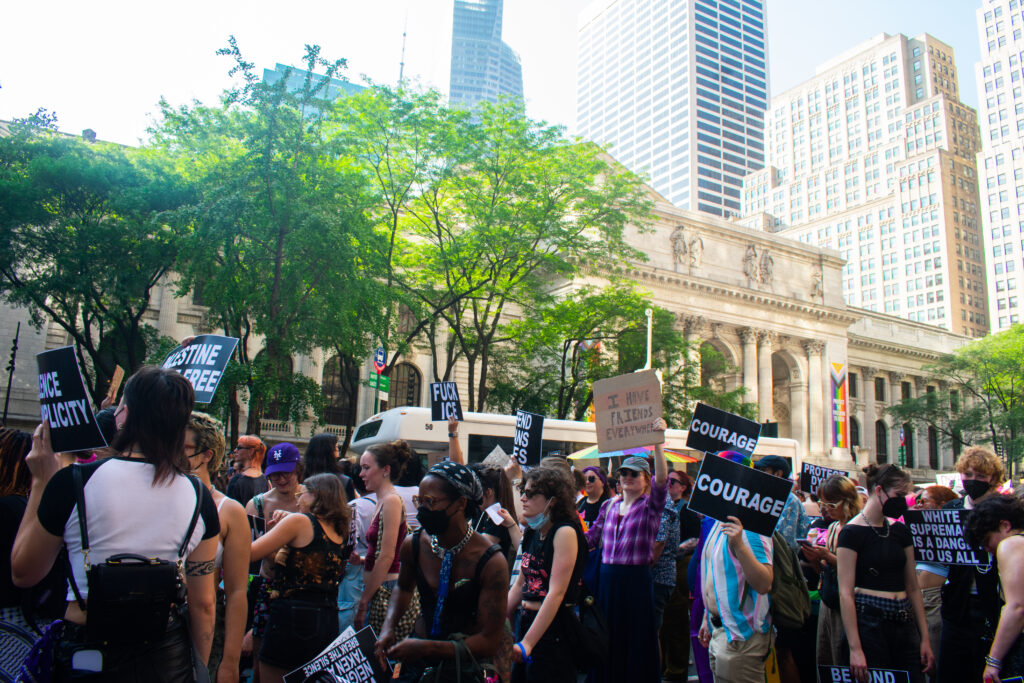
This year, the cardboard signs and hoarsely yelled chants covered far more than “traditionally lesbian” issues. Last year, this caused some major turmoil. Their tagline for 2024 was “Dykes Against Genocide.” While it was intended to be all-encompassing, it was mainly in response to the ongoing humanitarian crisis in Palestine. In addition to the theme, the committee posted a statement on the official Instagram account explicitly stating the Dyke March is anti-Zionist. Many people in the post’s comments said that this excluded Jewish lesbians and failed to understand what Zionism means. Others say it was a necessary stance to take as an activist organization in the face of a genocide.
A spokesperson for the Dyke March Committee, who asked to be referred to as D, told GO, “The NYC Dyke March has always been political in nature, and our community clearly wanted to address this issue.” However, there was quite an internal fallout in response to the anti-Zionist position. A statement from the committee posted in January said, “The 2024 season started with over 100 committee members- our largest committee ever. Now, as we look toward the 2025 march, we’re down to about 10 active members.”
An additional internal debate arose when the 2024 masking requirement was largely unenforced, disappointing those who had counted on it for their safety. In 2025, they created a mask-mandatory section at the march and encouraged everyone to wear them outside of the area as well. The announcement read, “We learned that we’re not able to guarantee complete masking because there are simply not enough marshals to enforce a policy like this among 30,000 dykes. We take accountability for those we let down.”
The fractures within the Dyke March reflect larger rifts within the LGBTQ+ community. Keenan said the biggest divider among lesbians is racism. “ There’s a lot of discourse about queer spaces, especially lesbian spaces, and POCs not being welcome in a lot of white dominated parties. I also think the influencer realm of lesbianism is very white-leaning, and there have definitely been a lot of people called out for bad behavior in the past.”
In addition, Leah, a participant in 2025’s Brooklyn Pride Parade, said that the discourse around bi-erasure is also dividing the community. “ Bi-erasure is real. And also, a lot of people can exist in the world without experiencing oppression on a regular basis. Some people can take off their queer identity, and some people can’t. And so I think being able to recognize that there are levels of privilege within the community at the same time as not gatekeeping as best as possible.”
Going forward, the committee (which, as of January, was down to five people) may have to make some tough decisions about how to approach sensitive topics. Leah agrees that it’s tough having productive discourse about queer issues. “ Having nuance in the conversation is really hard when you’re in an oppressed community and you’re attempting to show a united front to the outside.” How can the Dyke March stay true to its mission of being a political protest without spreading its message so thin that the whole thing falls apart?
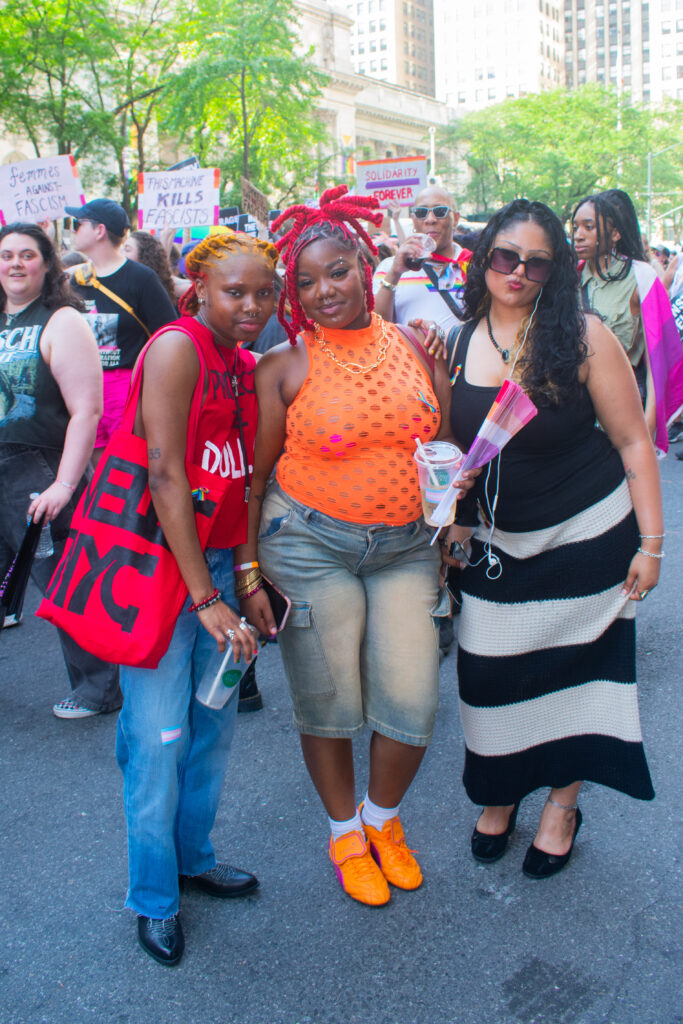
That being said, contrary to any internal strife, the protest on June 28th appeared to be nothing less than inspiring and solidaric. People volunteered as marshals to keep the group safe, especially considering that, just like in 1993, they refused to apply for a protest permit as an homage to the event’s defiance. A 2025 marcher, Olivia Bannerman, said the Dyke March “feels like an instant, safe place. All this lesbian energy, (it’s) just very wholesome, and I feel so welcome.” Dykes and allies of all generations lined the streets in support of queer rights. Marching bands played in sync, and someone dressed as Mary Magdalene grinded on NYPD cars. And even though they insisted it was not a parade but a protest, it was hard to disregard the pure, queer joy that radiated through the crowd.
Annie is a multimedia reporter in Brooklyn, New York. She is getting her Master’s Degree from NYU in Podcasting and Audio Reportage. Annie enjoys covering the LGBTQ+ community and climate policy. She is currently working for Radio Catskill and as a freelance journalist. In their free time, they listen to Taylor Swift, perform stand-up comedy, and hang out with their dog, Ivy.