

My Queer Journey Back To Church
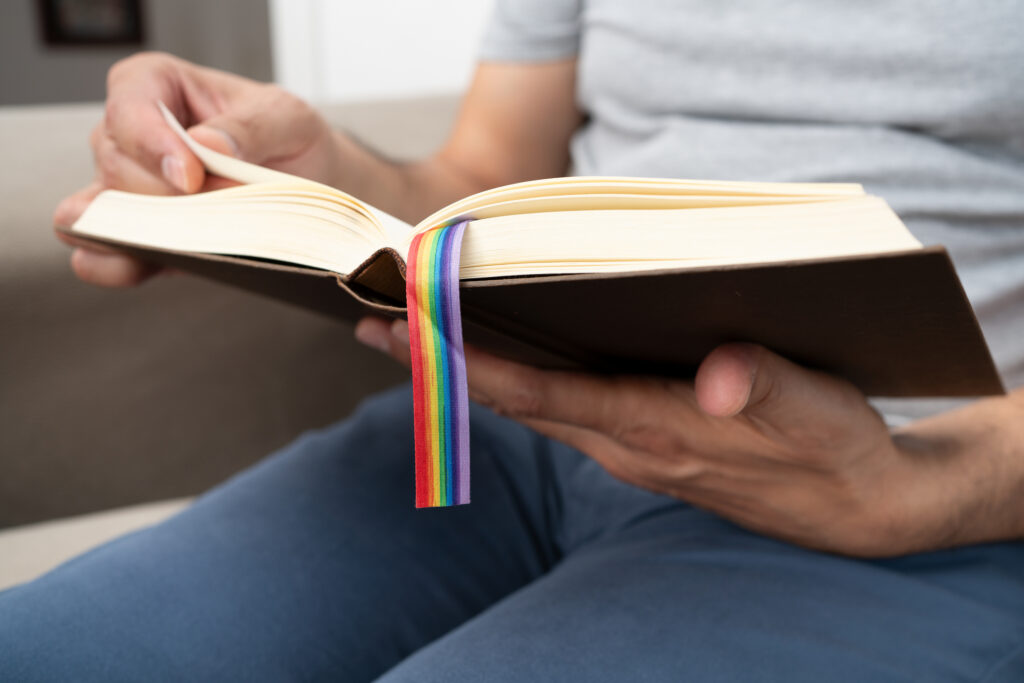
To my surprise, more than anyone else’s, my queerness led me from private silent prayers, back to church.
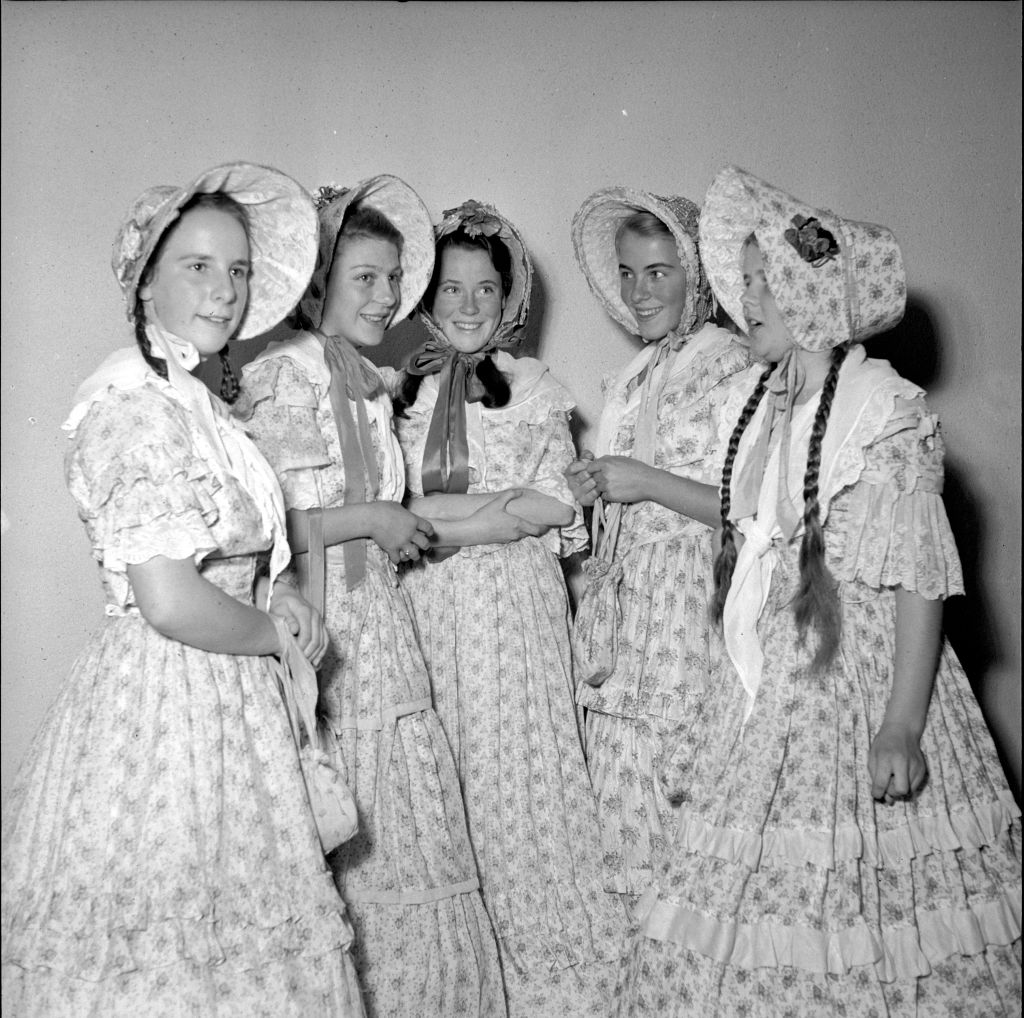
Featured Image: Cunaplus M. Faba via Getty Images
The idea of putting the words “different” and “Jesus” together in a sentence would never have occurred to me as a child. Now, as a queer adult, I have a more nuanced understanding of Christianity. One that centers the idea that Jesus was, in his day, an outsider and an outlaw. Someone who spoke with and built family and community alongside women, sex workers, and people of the time deemed morally lesser. Jesus aligned himself with those who were poor and disenfranchised, flying in the face of the leaders of his time. While those weren’t the lessons I learned about Jesus in my fundamentalist Christian upbringing, I now know that God does not exist primarily to punish and judge
This Christmas season, I was delighted to see Tim McGraw had released a new song, paired with a simple caption: “In this world right now, this message has never been more relevant and true.” The song immediately appealed to my queer, country-loving heart. It was also doing something unexpectedly queer. Tim McGraw has long had a reputation for being liberal in a stereotypically conservative industry, especially after his oldest daughter came out as queer this year. The unreleased song, titled “Different,” touched my heart deeply.
“I’m not like most other men…
Some like to criticize the way I live my life.
You see, I like my wine, and I spend my time with a bunch of guys.
I ain’t afraid to admit that some of my best friends live their lives
and sometimes die out on the edge.
You might call them whores and freaks,
but they are just like me… different.”
This song was an unexpectedly beautiful reminder of why, this year, I’ve spent more time in church than I have since I was a kid. I never expected that, as a queer, trans, leather, polyamorous person, I’d find myself attending weekly church services, out and proud, but life has a way of offering unexpected twists and turns, and here I am. Jesus, in his time, was a freak, an outsider, and recognizing that, along with his solidarity with the marginalized and his commitment to calling out injustice, became part of my journey back to Christianity as an adult.
Checking Out on God
I was raised very religious in an abusive tangle of Judaism, Catholicism, and evangelical Christianity. My mother was born Catholic, converted to Judaism before I was born to marry my biological father, and then, when I was a toddler, converted again, this time to fundamentalist Christianity during her second marriage. I knew there were a variety of religious options available to me, but as a kid, I latched onto Christianity. I was that elementary school kid wearing the “Know Fear” early-’90s Jesus shirt with Christian rock cassettes in my Walkman. Needless to say, I was a proud “Jesus freak.”
Related: Seeing Jesus As A Femme Connected Me To My Religion
My parents were extremely religious—and also unpredictable. They taught Sunday school, and we spent every weekend at church. As my abusive home life deteriorated into substance-abuse–fueled chaos, and I became aware of my own queerness, God and religion felt less and less safe. In my later teenage years, as my stepdad left and my mom spiraled further into addiction. I stopped going to church, and not long after, ran away from home to save my life.
This was the early 2000s, and Westboro Baptist Church “God Hates Fags” protestors were at Pride. I didn’t see a place for myself in church, and I made peace with that—chalked my religion up to one more phase of my strange childhood. Most of my friends had also fled conservative religious families, and we didn’t talk much about what we did or didn’t believe.
I spent my twenties mostly checked out of religion entirely. For me, this was absolutely part of healing and building a life separate from the worlds I had grown up in. At the same time, I carried a private awareness of my own spiritual beliefs, even if I rarely shared them. Privately, I knew I wanted a religious practice—I just didn’t want the one I knew I was called to. I researched Judaism, Buddhism, and Paganism. Anything but Christianity.
Living in NYC, surrounded by a diversity of religious practices, I often said I was jealous because I didn’t have a belief system. But what I really meant was that I didn’t like my religious home. Christianity carries earned baggage, and I wasn’t sure I wanted to pick it back up. Though religion had been weaponized against queerness in the communities that raised me, I didn’t feel failed by God. Still, I was surrounded by people with little patience for religion, so I kept my beliefs quiet and private.
Quiet Reconnecting
Even while publicly checked out of organized religion, I kept finding myself drawn to religious queers. I read widely, dabbled in different practices, and tried to figure out what made sense for my life. Members of my chosen family held deep religious beliefs. They never pushed me, and we rarely discussed it, but their queer, outsider faith stayed in my periphery. My life has often been complicated at best. In moments of joy and struggle, I held onto the quiet knowledge that there was something bigger than me, even if I didn’t want to name it. I found God in unexpected places: the weight of a leather dog leash in my hand on a cold morning; the quiet of an empty park. These moments brought me the same closeness to God my grandmother described, clutching her rosary beads.
When I toured with my book Kicked Out, an anthology of current and former homeless LGBTQ+ youth, I made sponsored stops at churches and synagogues where I spoke to their congregations—and then immediately left. Religious spaces made me uneasy. I never imagined I’d attend church again.
In 2024, one of my closest friends and chosen family members, Reverend Evan Smith of Westdale United Church in Ontario, Canada, mentioned that their services were livestreamed on YouTube. I was intrigued but didn’t respond. Secretly, I started setting my alarm and watching on Sunday mornings. Seeing a queer, trans, formerly homeless youth preach was an entirely different biblical interpretation, one that felt empowering. Before long, I was sending screenshots and sermon reflections.
Related: History Made As Cherry Vann Becomes First Woman And Lesbian Archbishop In Britain
Some friends scoffed, shocked that I could still believe in anything at all. But reckless, gritty belief has always been how I survive. Watching church from home, anonymous if I chose, felt safe. When Evan asked if I would do a short scripture reading, I was nervous. I’ve spoken to huge audiences, but recording a three-minute scripture reading to be played in a church terrified me. Still, I did it—and it felt right.
That same year, my mom died alone in her hoarded house. I had been estranged from her for 24 years, and it took the medical examiner a week to track me down as next of kin. Unexpectedly, I found myself literally dumpster-diving through her belongings. Beneath feet of debris, I found my childhood—and proof of the faith that had both haunted and held me.
Before the trash companies came, I found toys and photo artifacts that proved I had existed. I found journals going back to late elementary school. In those puffy Lisa Frank notebooks in faded glitter pen, I asked, no begged god to not make me gay. I also found the ashes of my childhood dog, who I had left with my grandparents so he wouldn’t become homeless with me. I got to bring him home, along with my closeted childhood prayers. Bringing him home felt like an answer to a prayer I hadn’t ever dared utter.
Back to Church
Early this fall, Evan messaged one day to ask if I wanted to join the church in November for an early, chosen-family Christmas. “No pressure,” he assured me. For the better part of two decades, I never thought I would step into a church again. Even as I started to re-center religion in my life, I didn’t think I would go to a church. But, when faced with the question, I already knew the answer was yes because in my heart I already had. Even on busy dog show mornings that have me out of bed at 5 am, I stream church services from my car.
Because of the government shutdown, I ended up not being able to fly for a chosen family Christmas in November, and instead, six weeks after getting a driver’s license for the first time, I loaded my dogs into the car and drove 3500 miles across the United States from Portland, Oregon to Ontario, Canada. Showing up physically at church, reading at church, turned this very private experience into something tangible and public. The cornerstone of my return to church has been the understanding that all of me was welcome and wanted in that space. No longer was I the kid writing letters to God in the middle of the night begging me not to be gay. Instead, I was openly queer, walking into a church glowing with stained glass
I was lucky enough during my visit to Ontario to be in attendance in person for Reverend Evan’s Transgender Day of Remembrance service. I started to see tangible ways that radical queer politics weren’t at odds with some aspects of organized religion, and instead complemented it completely. In this service, Evan spoke of the joy but also the fear and exhaustion of being trans in our world. “Being tired does not mean being defeated, and it does not mean giving in. It does not mean losing hope …. hope, deep, stubborn, and gritty hope.”
Hope. I think that more than anything it is reckless and gritty hope that has been a guiding light for me in my abusive childhood, running away, in my chaotic young adult years, and still to this day. This week, the Sunday before Christmas, I was asked to read at church for the lighting of the Advent candle. I recorded the video sitting on my living room floor, my senior dog’s head resting on my knee:
“May this flicker of light help us remember that even in a fearful world,
Love is here.
Love is world-changing.
Love is shining bright.
We only have to look for it.”
I’ve been accused of being toxically positive, but I don’t think I am. I see myself as relentlessly and recklessly optimistic. I know that bad things happen, but there is also joy and wonder and light. And for me, that all radiates from queerness, a queerness that—to my surprise more than anyone else’s—led me from private silent prayers, back to church.