

Marissa Bode Is Unlimited
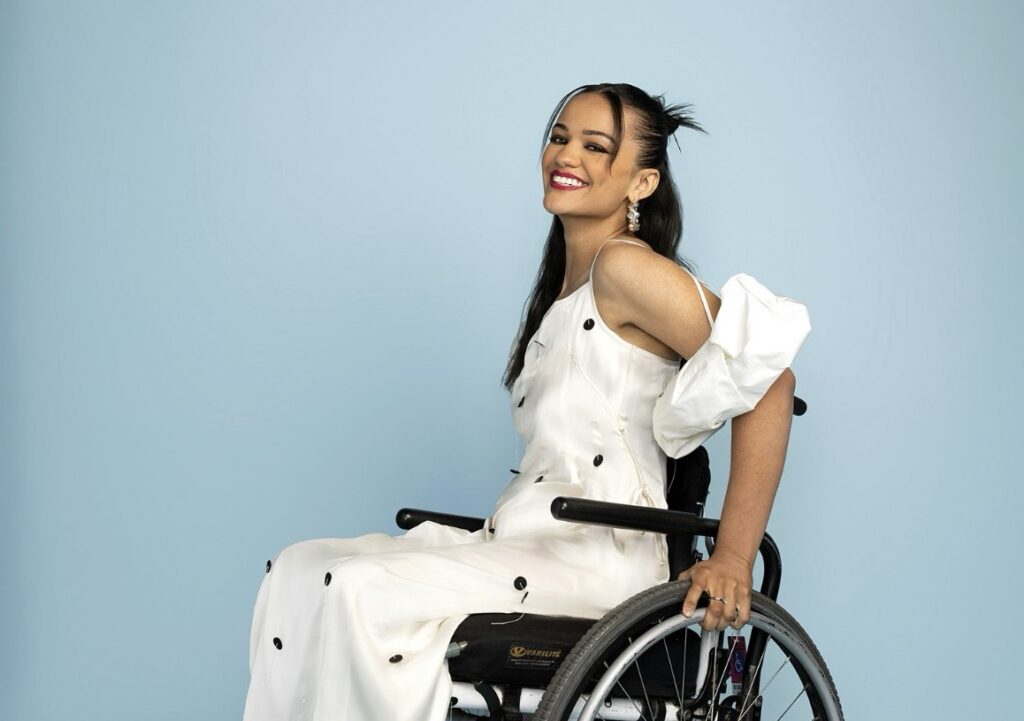
Between scrapbooking sessions and spewing “fruity” Wicked theories online, rising star Marissa Bode is redefining Nessarose’s dreams and desires. The groundbreaking actress opens up to GO ahead of the upcoming sequel, ‘Wicked: For Good.’
Featured Image: Marissa Bode. Photo by Sami Drasin for Universal Pictures.
Long before Marissa Bode graced the big screen as Nessarose in the smash movie musical Wicked, she was dancing through life in fairytale plays in her small Wisconsin town. Becoming disabled at 11 didn’t stop her—she just found new ways to take the stage. As a queer, disabled actor, Bode was determined to break through Hollywood’s barriers and offer fans something that felt hard to come by: an authentic voice. “I am always for the girls and the gays, first and foremost,” Bode says.
Sure, on-screen representation is improving, but queer viewers have long been forced to read between the lines to find characters they could identify with. For Bode, Wicked’s Elphaba and Glinda filled that gap. Their closeness helps explain all the “Gelphie” fan theories. “When there [are] characters like Elphaba and Glinda, I think naturally a lot of queer people are drawn to that,” she tells GO. Like many fans, she’s gleefully theorized that the two witches are secretly in love, and she’d be up for a sapphic twist ending. On social media, she’s shared her queer-coded Wicked thoughts on the entire cast: “Glinda is a lesbian, Elphaba is bisexual, Nessarose is bisexual, Fiyero is bisexual, Boq is questioning but queer in some way, Doctor Dillamond…gay,” she laughs. In Bode’s Oz, “there is fruitiness happening.”
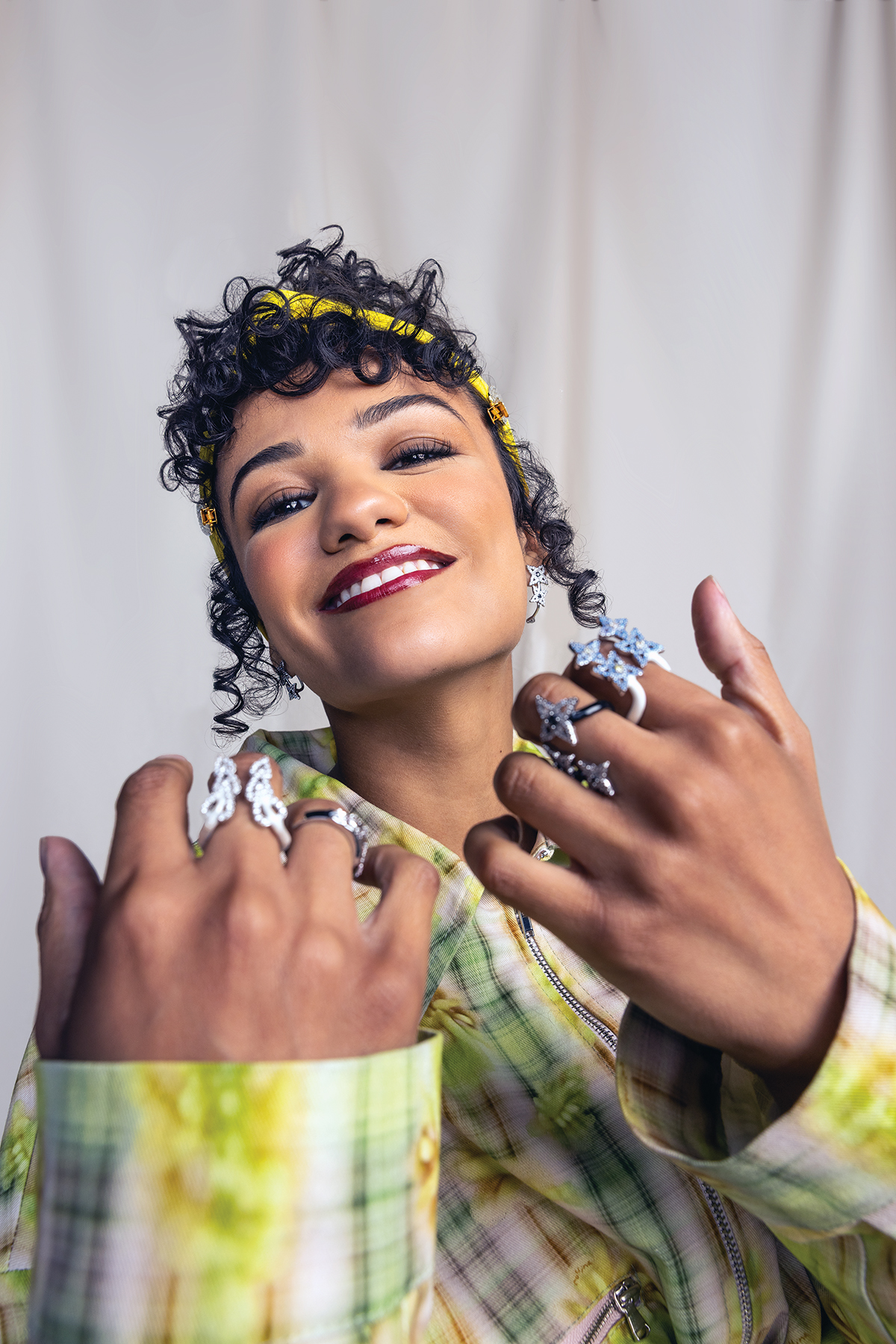
For the uninitiated, Wicked reimagines the world of The Wizard of Oz from the witches’ perspectives: Elphaba, the misunderstood greenskinned outcast who becomes the Wicked Witch of the West, and Glinda, her dazzlingly popular roommate-turned-friend. Bode plays Nessarose, Elphaba’s beautiful younger sister who later becomes the Wicked Witch of the East. Her love interest is Boq, a Munchkin who becomes the Tin Man.
While Bode values the fierce platonic love at the heart of the two witches’ relationship, she loves a sapphic reimagining. Wicked’s bold and bright colors, characters, costuming, and magical sets feel rich with queer undercurrents, as does Elphaba’s insistence on freedom and self-expression—core tenets of queerness. “Elphaba’s decisions are queer-coded. These are things that she knows in her heart are right, much like queerness.” When Elphaba chooses to remain green rather than conform, Bode feels a personal resonance: “For the first time, when she says she’s green, there’s not an undertone of hatred. It’s her truly embracing herself in that moment and being proud.” The message that difference can be a source of pride has carried Bode through her own arc of self-acceptance, having been marginalized because of her queerness, disability, and race.
Elphaba’s story also mirrors Bode’s when it comes to “speaking up for what I believe in and what I know is right.” Watching Elphaba reach a place of self-love and confidence resonated with the actor. “If you know in your heart what’s right and what’s wrong, it’s always worth it to speak up,” she says. “It’s gonna feel maybe a little bit uncomfortable to speak out at first. And you might feel uncertain if you are the first one to do it. But truly, I think, always trust your gut.” Her castmates Cynthia Erivo and Ariana Grande modeled that confidence. “Seeing people like Ariana and Cynthia who have been in this business for years, and looking up to them in how they’ve handled and navigated the industry, I think that has also been helpful.” Erivo, in particular, left her with a simple mantra: just breathe. “I think it’s something that a lot of us forget to do, even just in regular everyday life…just breathing in between.”
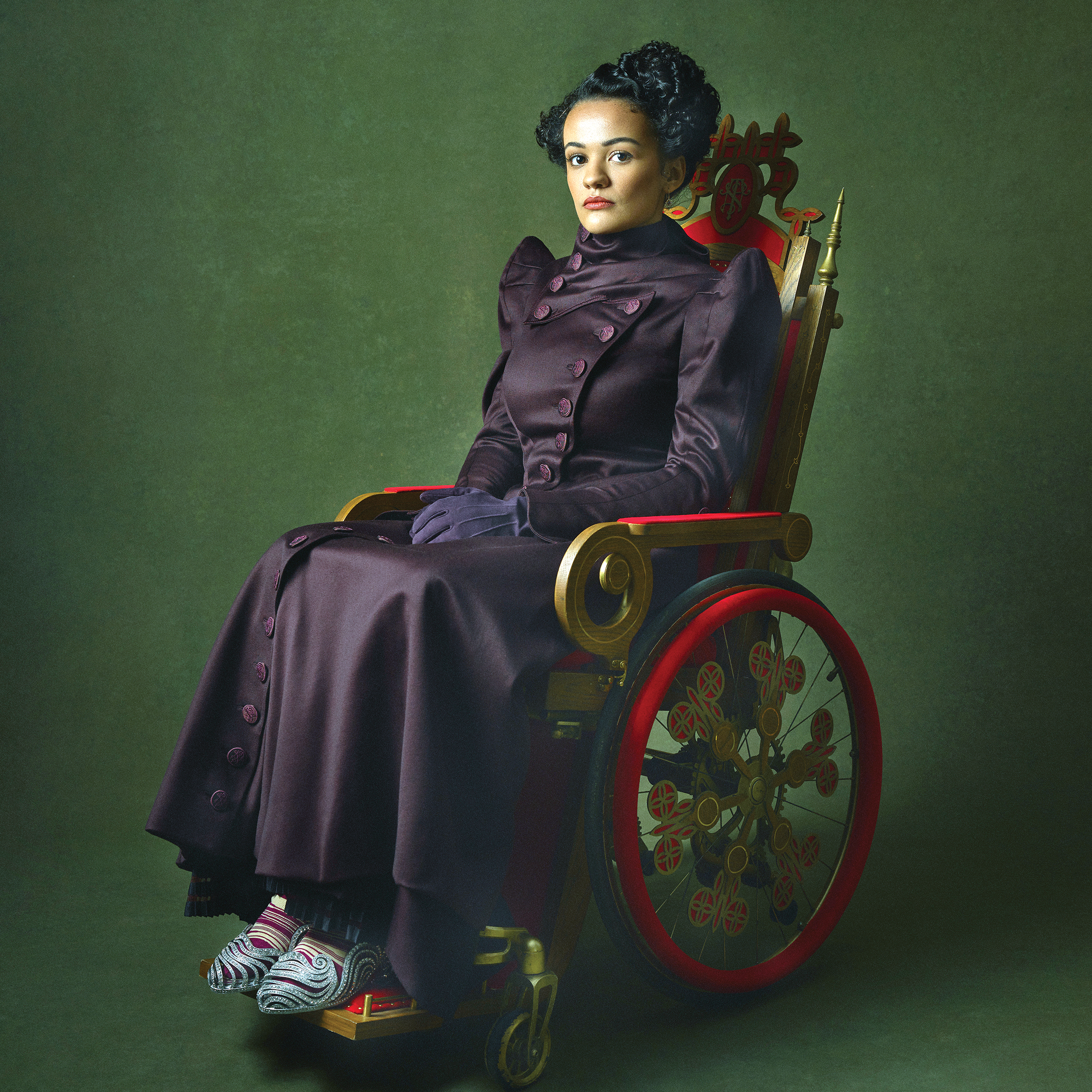
It was Erivo who helped Bode face the larger role she would step into in the sequel, Wicked: For Good, which features a heavily emotional arc for Nessarose. “It was intimidating to enter the world of Wicked— it’s so loved by fans and has been on Broadway for so long…There were so many emotional scenes, and I really had to keep my focus,” she says. “Cynthia was incredible at keeping me grounded and in the moment, especially during those harder moments.”
Bode’s own Nessarose is different from the Broadway version audiences have known since 2003. “We just wanted something where it wasn’t looking at [Nessa’s] disability as the ultimate negative or end-all be-all.” Nessa’s arc, she says, reflects the danger of overprotection: “She feels seen by Elphaba in a lot of ways, while, at the same time, Elphaba does often take over and intrude when Nessa doesn’t necessarily want or ask for that.” The result is a more nuanced character, one who can express frustration over autonomy, or her lack thereof—and whose story isn’t defined by a wish to walk. “All the characters in Wicked are complex in their own ways. I did my best to make Nessarose not just the bratty little sister, but a character that desired the autonomy she never gained from her father.”
Bode cites Nessa’s young and sheltered life as the reason it’s difficult for her character “to take off those damned rose-colored glasses” when it comes to her on-screen romance. Even so, Bode can laugh about her character’s messy love life. Boq may be the Wicked embodiment of Tinder’s most diabolical ‘nice guy,’ but Bode wants people to know that “another person never defines your worth.” She draws a parallel to queer experience: “If somebody says you’re not queer, that it’s just a phase, you know in your heart who you are and that nobody except you can tell you who you are.”
Representation has been Bode’s mission. As the first wheelchair-using actor to play Nessa, Bode has consistently challenged the limitations that Hollywood imposes. “A lot of the time, disabled people have to do the heavy lifting of navigating their accessibility,” she explains. Though the Wicked set was supportive, beginning with the casting directors seeking disabled actors for the role, Bode continues to stand up for equal treatment across the industry. “Hiring a disabled actor is one thing, but also following up and making sure that they’re given the proper accommodations makes a world of difference, and shows that you actually genuinely care.” She applauds the 2025 casting of Jenna Bainbridge as the first wheelchair-using Nessa on Broadway: “I don’t think we should slow down now by any means.”
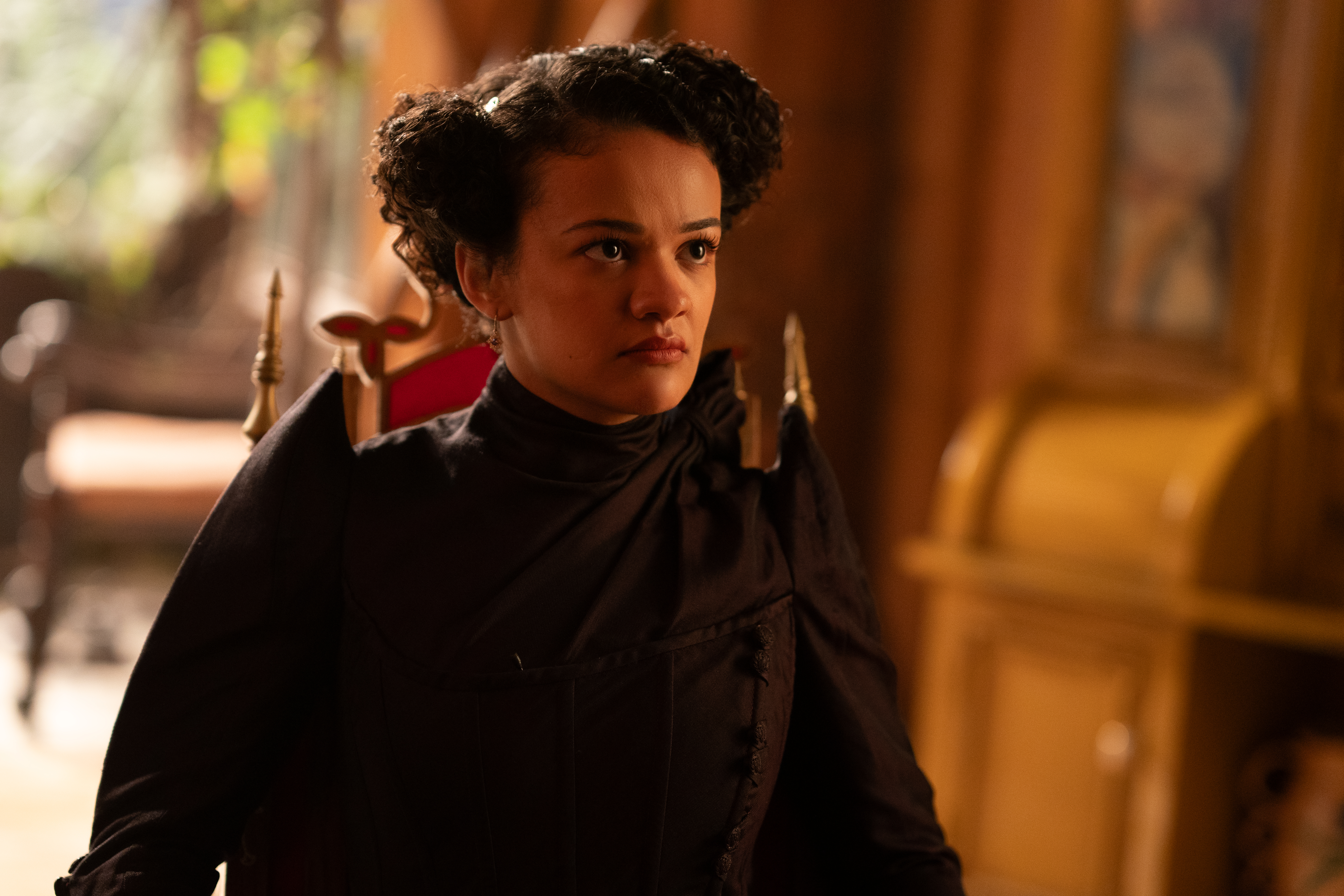
Growing up, theater was Bode’s first refuge. “It really was a great space for me,” she says. “Although I love my small town, and there [are] a handful of people that are open-minded there, there [are] a handful that are not.” That experience fuels her passion for advocacy. The 25-year-old’s parents taught her that “when there was a will, there was a way.” Whether it was buying a ramp for stage access or advocating for accommodations, they gave Bode every tool she needed to pursue her dream. She’s frustrated by venues and events, like Pride, that brand themselves as inclusive while remaining inaccessible: “I’ve definitely seen buildings with a sign that says ‘all are welcome’ in the window, and then having stairs as the only means to get in. I think all should always mean all.”
For Bode, queerness and Midwestern identity aren’t in conflict—they inform each other. She feels a kinship with pop star Chappell Roan, whose album The Rise and Fall of a Midwest Princess is her personal hype soundtrack. “She’s talked about having a lot of love for the Midwest and a lot of love for the people within the Midwest, while at the same time knowing that there are a lot of spaces where you didn’t necessarily have the opportunity to fully express yourself as much as you’d like to or feel uncomfortable coming out.” Like Roan, Bode has made peace with the push-pull of Midwestern roots. By seeing Roan represent herself as a queer Midwesterner, Bode’s own coming out felt like she was finally embodying her “free, authentic self” after navigating something of an “identity crisis.”
“It really helps set up more of a sense of self-identity and truly have a feeling of who you are,” she adds. Though coming out felt like a weight off her shoulders, it dawned on Bode that she might have to keep fighting for access and visibility for the rest of her life. The process was liberating but sobering: “It can be a disheartening feeling, but also oddly empowering.”
In these polarized times, Bode believes in mutual care within the queer community. “There’s not one group of us that I feel is safe currently—especially under this current administration,” she admits. “[It’s] just really looking out for one another and being mindful of all of [the intersections] within the LGBTQ+ community. I think that is where we’ll survive and that is where we’ll thrive, for sure.” That commitment fuels her art as well. She wants to play more queer roles in the future—especially in coming-of-age stories or horror, where she can channel her love of Clea DuVall’s Graham from one of her favorite films, But I’m a Cheerleader. “I think that’d be fun to play like the mysterious, edgy, queer lady,” she says.
But casting directors have notoriously had tunnel vision. To combat bias, Bode invites creatives to keep an open mind when a character’s arc doesn’t specifically call for a certain appearance or physical traits. She asks, “Why can’t an actor that looks a little bit differently than what you had in your head play that role? I would love to see more people with disabilities cast in roles that don’t just focus on the disability, because that’s just our everyday.”
Of course, even when a plotline includes a character with a disability, the underlying message can be problematic. In the Broadway show, Nessa’s greatest wish is the ability to walk. Thankfully, the movie is ditching that narrative. Instead, “her ultimate true desire is love.” In the film, Nessa will fly in her wheelchair, working around the traditional walking plotline used in the stage show and fans are ecstatic about the new take on Nessa’s plot. Bode shares that she was told about the change by Winnie Holzman, writer of Wicked on Broadway and co-writer of the films’ screenplays, who heard feedback from the disabled community and consulted a disabled friend about the much-needed creative choice. “I am so happy with the change, the old narrative was outdated, and I’ll be honest, it was really fun to fly through the air on set,” Bode says. “Overall, the shift makes a lot of sense to me, considering ‘everyone deserves a chance to fly.’”
Nessa’s arc in the movie highlights how frustrating it can be to get “fussed over”—even by people you love. Bode encourages people to ask before stepping in to help someone who’s disabled. “Sometimes, disabled people do need help. All disabled people are different, so levels of mobility are different,” she says. “Asking for help is okay, while at the same time, letting non-disabled people know that they shouldn’t always assume.”
Bode credits her friends and family for being there for her, a support system that is also demonstrated in the film by the central characters’ friendship. “I think that’s definitely something that Elphaba and Glinda feel. Even when they’re apart, I think they know that they’re there for one another, even if they don’t necessarily say it.”
Beyond her passion for disability representation and advocacy, Bode spends much of her free time scrapbooking and choosing the perfect stickers. Fans can also look out for her upcoming short film, The Hog Queen, currently slated for a November release. Bode channels some “Pink Pony Club” energy during the short, which centers on a small-town Texas gay bar during its Hog Fest Drag Show. Their mission? Survive the hogs! And of course, there’s Wicked: For Good, which soars into theaters November 21. Bode can’t reveal much but is excited for long term fans and new Ozians alike to hear the film’s two new songs and promises “more witchiness to come.”
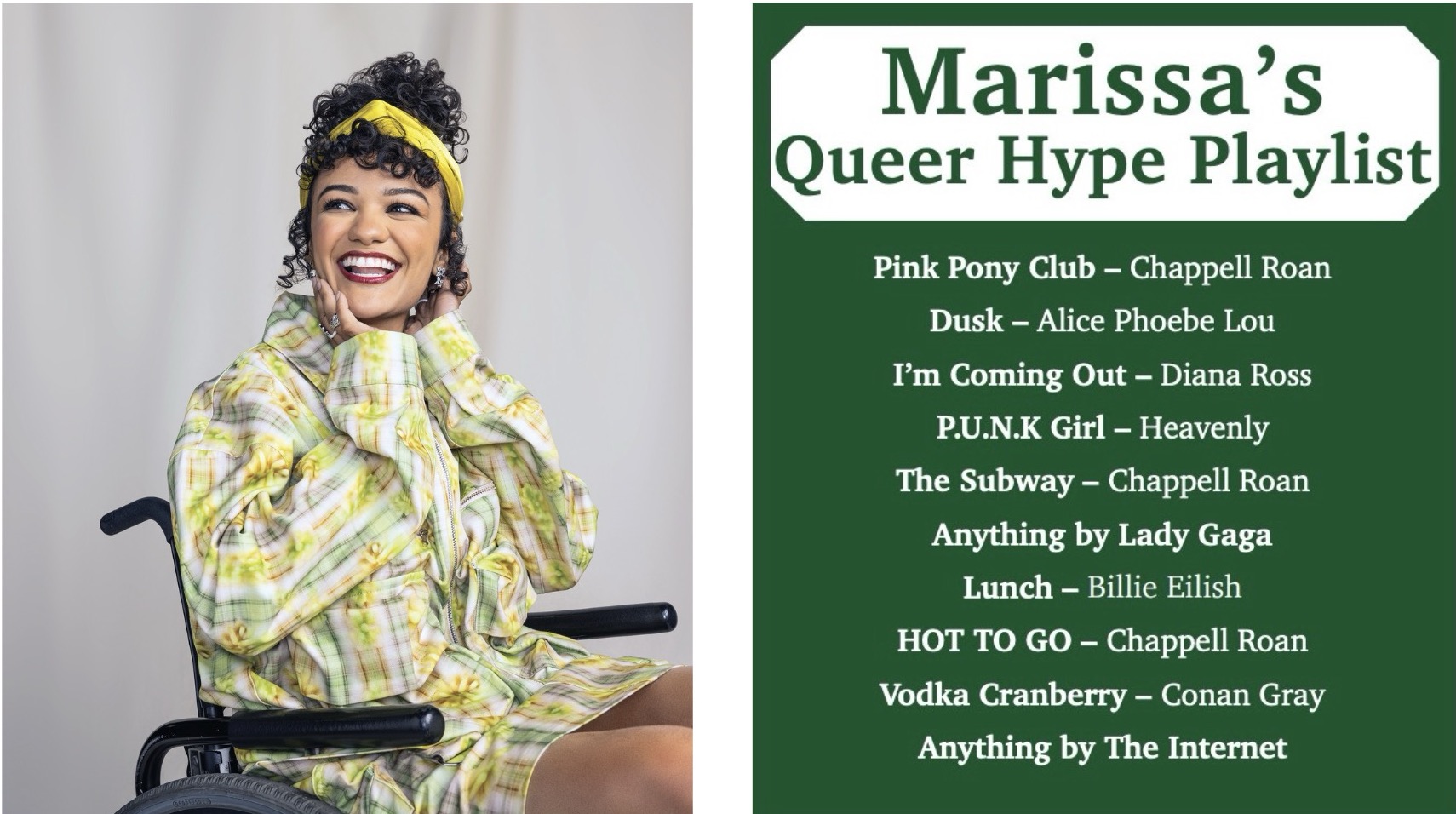
As for Bode? She’s still writing her next act. Whether on stage or screen, celebrating at Pride, or on TikTok, breaking down queercoded subtext, Bode is carving out a place for herself in Oz and beyond. One thing is certain: she’s unapologetically taking up space, and she’s determined to make sure others can, too.
Xandra Harbet is an entertainment journalist with eight years of experience angsting over pop culture for a living. Her clips have appeared in HuffPost, Salon, StyleCaster, Business Insider, and Broadway World. You can follow her 3 AM chai-fueled ramblings@XandraHarbet.