

Lawsuit Reveals DOGE Bros Used ChatGPT To Cancel LGBTQ Grants
Two former DOGE staffers used keywords like “gay” and “BIPOC” in a hunt for DEI-related content – resulting in the largest mass termination of grants in the history of NEH.
Featured Image: photo by Jim WATSON / AFP) (Photo by JIM WATSON/AFP via Getty Images
Discovery documentation in a lawsuit against the National Endowment for the Humanities (NEH) revealed that two former DOGE staffers had used ChatGPT to flag for DEI-related projects. According to the March 6 filing of a “motion for summary judgment”, former staffer Nathan Cavanaugh, 29, testified under oath, that he, and another staffer, Justin Fox, had used ChatGPT to locate terms like “gay,” “BIPOC,” and “indigenous.”
The result was the largest mass termination of grants in the history of the NEH.
The lawsuit, filed in the U.S. District Court for the Southern District of New York, is against both the Department of Government Efficiency (DOGE) and the National Endowment for the Humanities. It is being brought forward by the American Council of Learned Societies (ACLS), the American Historical Association (AHA), and the Modern Language Association.
According to the filing, in a quest to terminate grants deemed to be associated with DEI or the Biden Administration: “Working outside NEH’s established processes, the two DOGE members used ChatGPT to identify grants associated with a disfavored and supposedly dangerous viewpoint: promoting “DEI.” In so doing, they selected some grants for termination solely because they involved a specific race, national origin, ethnicity, religion, gender, or sexual orientation. The official “rationale” for terminating certain grants, for example, was that they were about a “Black lawyer,” “Black children,” a “woman writer,” or “Jewish writers.”
After selecting more than 1,000 grants for termination for purportedly involving DEI, “they expanded the sweep to every remaining Biden-era grant promoting ideas not deemed aligned with the current Administration’s priorities.” With an assist from AI, Fox had searched the public repository at www.grants.gov for all active NEH grant descriptions containing keywords like “gay,” “BIPOC (Black, Indigenous, People of Color),” “indigenous,” “tribal,” “melting pot,” “equality,” and similar terms.
Grants focused on white or heterosexual perspectives were not flagged.
Specifically, Fox used ChatGPT—submitting the description of 1,162 grants in the NEH database with the prompt: “Does the following relate at all to DEI? Respond factually in less than 120 characters. Begin with ‘Yes.’ or ‘No.’ followed by a brief explanation. Do not use ‘this initiative’ or ‘this description’ in your response.”
During testimony, when Fox was asked if he did anything to ensure that ChatGPT’s conception of DEI wouldn’t discriminate on the basis of race, he replied, “No.” When asked if he did anything to ensure that ChatGPT’s perception of DEI wouldn’t discriminate on the basis of sex, he said, “It didn’t matter. We didn’t need to.”
As one example of how a grant was flagged, a documentary about the 1873 Colfax Massacre, described as the single greatest incidence of anti-Black violence during Reconstruction, was classified as “DEI” because “[t]he documentary explores a historical event that significantly impacted Black civil rights, making it relevant to the topic of DEI.”
On May 20, 2025, DOGE took to X to boast, selectively mentioning a few LGBTQ-related grants they slashed:
During the previous administration, the National Endowment for the Humanities (NEH) awarded the following grants to spend taxpayer dollars, all of which have been cancelled ($163M in overall savings). NEH grants will be merit-based and awarded to non-DEI, pro-America causes:
— Department of Government Efficiency (@DOGE) May 20, 2025
-…
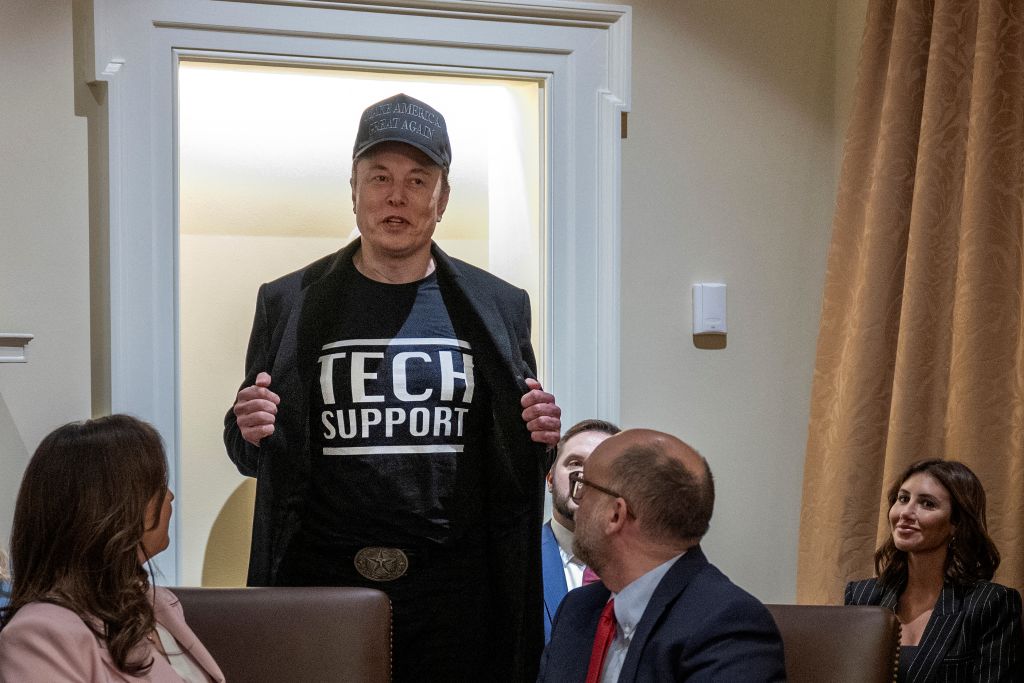
Fox and Cavanaugh reported to DOGE (primarily run by Elon Musk) not NEH. The National Endowment for the Humanities appears to have been left out of decision-making, with responsibility for the process largely relegated to two inexperienced DOGE bros without relevant scholarly backgrounds.
“No grantee received any individualized explanation of why their specific grant was selected for termination. No NEH program officer participated in the termination decision. No peer-review body was consulted,” per the filing.
The result: more than 1,400 active grants, representing over $100 million in congressionally appropriated funds were canceled. This included oral history projects documenting the racial and ethnic community experiences; archival preservation efforts relating to Indigenous cultures; fellowships supporting scholarship on gender, sexuality, and identity; documentary projects on immigration and diaspora; and hundreds of other projects.
When asked in his deposition, if he felt it was inappropriate that someone in his 20’s with no relevant experience would be responsible to make judgment calls about what grants to cancel, Nathan Cavanaugh replied: “No… I think a person can have enough judgment from reading books and being well-informed outside traditional experience to make judgment calls about grants that literally lists DEI in its description, to know whether it violates an executive order. I don’t think you need to have a scholarly peer-reviewed background to do that.”
“What books would you have read that would have informed your opinion on what grants to cancel based on DEI?” Cavanaugh was asked.
“There were no books,” he replied.
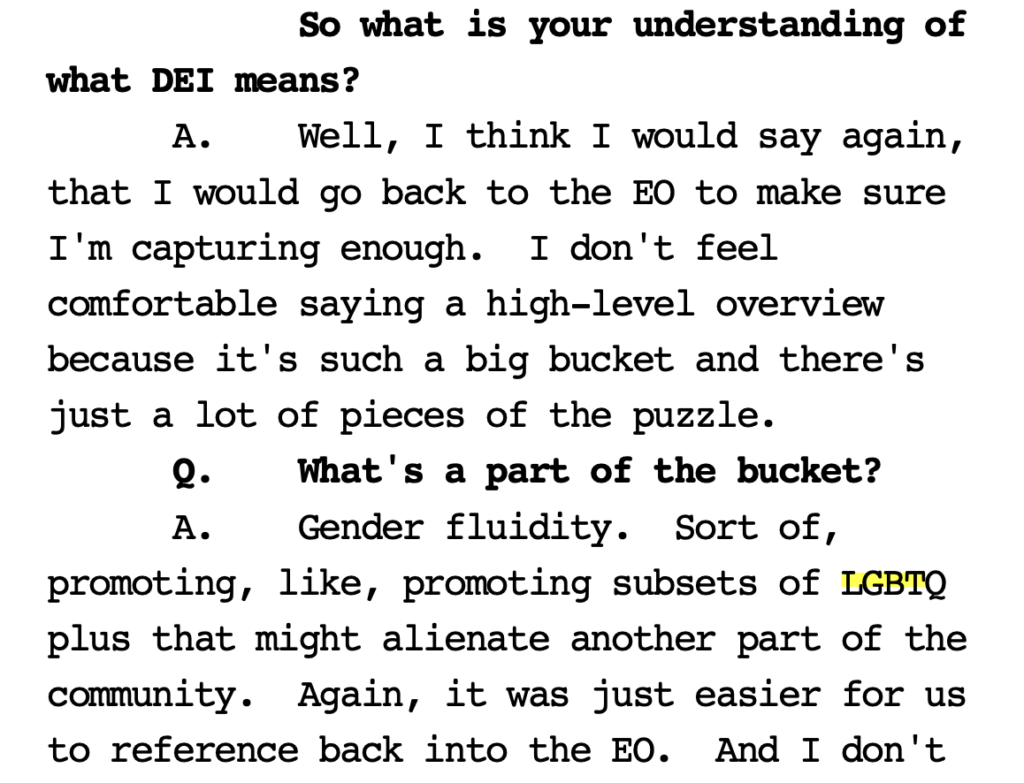
Image: portion of transcript of deposition of DOGE staffer, Justin Fox
“Your grant no longer effectuates the agency’s needs and priorities,” read the letter received by by Professor Sasha Senderovich, who with Harriet Murav, had used NEH grant money to translate prose for their book, In the Shadow of the Holocaust: Short Fiction by Jewish Writers from the Soviet Union. According to the lawsuit filing, their work was flagged as DEI because “[t]his anthology explores Jewish writers’ engagement with the Holocaust in the USSR… ”
Senderovich tells GO that even so, he is better off than many who received the same notice.
“When you look at the full list of canceled grants, you see that projects across the humanities—many with nothing to do with Jewish topics or, indeed, any identity-based categories—were eliminated,” Senerovich says. “What we’re seeing is a much broader dismantling of the public humanities infrastructure that the NEH has supported for decades. At the same time, the agency itself is being remade around a very different—and narrowly defined along MAGA lines—ideological vision.”
Senerovich tells GO that instead of funding independent scholarship that examines histories and cultures from around the world, it’s now devoting resources to initiatives like commissions of lifelike statues in marble or bronze—durable materials that regimes prone to monumental propaganda adore—that celebrate figures from the American past.
“That shift—toward patriotic commemoration, projects narrowly centered on celebrating the United States, and a particular conservative understanding of “Western civilization”—is exactly what authoritarian governments tend to do: weaken the institutions that sustain open inquiry and replace them with ones designed to promote an emerging official narrative, in this case of supposedly “making America great again.”’