

‘Homophobic And Hostile’: Destanee Aiava’s Blistering Farewell Letter Condemns Tennis Culture
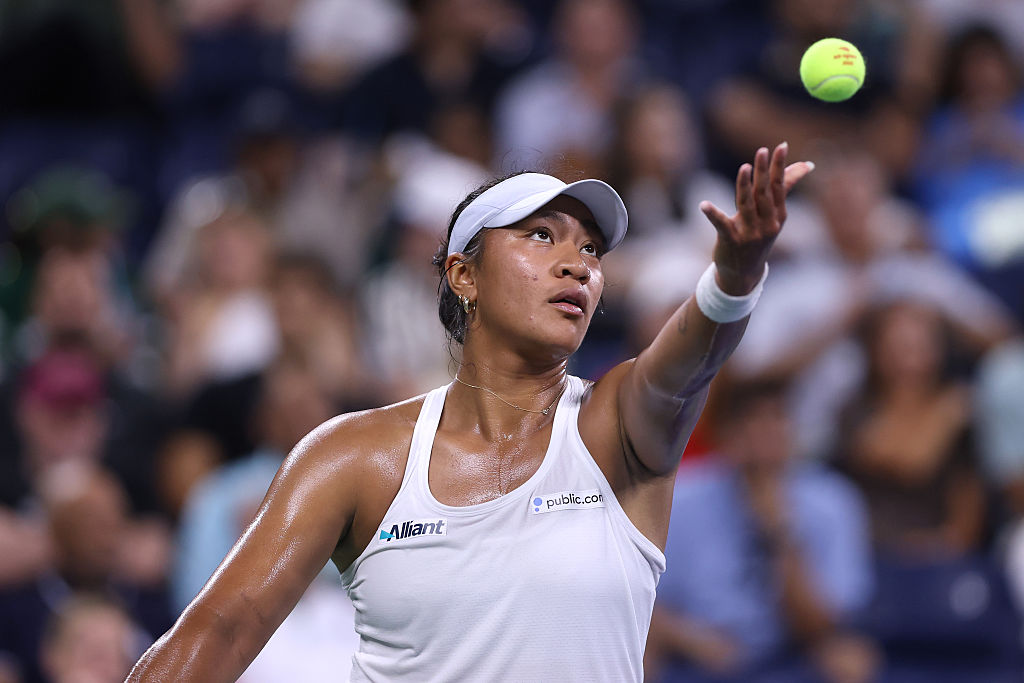
The 25-year-old Australian announced her retirement in a fiery letter that brands tennis culture “racist, misogynistic, homophobic and hostile.”
Australian tennis player Destanee Aiava has announced she will retire from professional tennis at the end of the 2026 season, delivering a searing critique of what she described as a “racist, misogynistic, homophobic and hostile” culture within the sport.
The 25 year old, who made headlines in 2017 as the first player born in 2000 or later to compete in a Grand Slam main draw at the Australian Open, explained her decision in an Instagram post on Feb. 14.
“2026 will be my final year on tour playing professional tennis,” Aiava wrote. “From the moment I had my first lesson at Casey Tennis Club, my entire life was tennis.”
Related: Ashlyn Harris Opens Up About The “Really Dark” Side Of Her College Sports Experience
Aiava reached a career high singles ranking of world No. 147 in 2017 and claimed 10 International Tennis Federation singles titles and 14 ITF doubles titles over the course of her career. A player of Samoan heritage, she is one of the few Pacific Islander women competing at the highest levels of the game.
In her statement, Aiava compared her relationship with tennis to that of a toxic partnership.
“Sometimes I kept playing because I felt like I owed it to not only myself but to everyone who had helped me throughout my career, to try and get back to where (on paper) I belonged,” she wrote. “Other times I kept going because I was too scared to start again. Or I was bored. I also didn’t know who I was outside of tennis and what my true passion was. I was constantly looking for that thing that gave me peace instead of grief. In other words tennis was my toxic boyfriend.”
“Behind the white outfits and traditions is a culture that’s racist, misogynistic, homophobic and hostile to anyone who doesn’t fit the mould,” she added.
She continued: “I want to say a ginormous f— you to everyone in the tennis community who’s ever made me feel less than. F— you to every single gambler who’s sent me hate or death threats. F— you to the people who sit behind screens on social media, commenting on my body, my career, or whatever the f— they want to nitpick. And f— you to a sport that hides behind so-called class and gentlemanly values.”
Aiava also reflected on the personal toll of two decades in elite sport.
“It also took things from me. My relationship with my body. My health. My family. My self-worth. Would I do it all again? I really don’t know, but one thing this sport taught me is that there is always a chance to start fresh.”
Related: Inside Lesbian Garros: How Lesbians Are Transforming Madrid’s Tennis Culture
Despite her criticisms, Aiava expressed gratitude for the opportunities tennis provided, including travel, friendships and a public platform. She reserved particular thanks for the Pacific Islander community.
“I am deeply humbled I have been able to inspire young girls and boys who look like me, to not be afraid to chase their dreams — no matter what the room looks like,” she wrote. “Without you, there wouldn’t be me. I am proud to have been one of the few you saw on a stage that wasn’t built for us. I am proud to have made history for our people. And I am proud of where I come from — because of all of you.”
Aiava acknowledged uncertainty about her next chapter.
“I’m 25, turning 26 this year and I feel so far behind everyone else, like I’m starting from scratch. I’m also scared. But that’s better than living a life that’s misaligned, or being around constant comparison and losing yourself.”
She added: “My ultimate goal is to be able to wake up every day and genuinely say that I love what I do – which I think everyone deserves a chance at.”